
“Rebecca’s eyes were like faith—’the substance of things hoped for, the evidence of things not seen.'” — Kate Douglas Wiggin (1856–1923). American author and educator best remembered for Rebecca of Sunnybrook Farm (1903).
“Please, Dr. Callison. I beg you. Can’t you give us something to read that will uplift our souls?”
We’d had one too many excursions into the moral fog of Macbeth, where ambition presses past conscience and the night closes in. One too many attempts to reason our way around guilt in Crime and Punishment, where Raskolnikov discovers that ideas carry consequences the mind cannot endlessly excuse. One too many evasions in The Cherry Orchard, where denial delays action until loss becomes irreversible. One too many quiet acceptances in The Metamorphosis, where losing one’s humanity happens gradually, until the self vacates. One too many distortions of truth in 1984, where language bends until reality itself begins to give way. One too many days spent waiting in Waiting for Godot, hoping someone else will arrive to solve what we ourselves must confront.
We had dealt with too many such moments all at one time, sitting in an Old Main classroom, all in one semester, where we were expected to linger attentively and enthusiastically and responsively, class after class after class, at the bedside of lost hopes and deep despair.
My boldness left me as soon as my question found voice. Now I cringed, waiting for response. Dr. Callison was more than my professor. She was also my advisor at Alderson-Broaddus, and, on top of that, I was her Work Study assistant. Would she take my plea personally?
I wasn’t certain.
As I sat there, I expected a stern reminder that World Literature was, after all, a required class for Humanities majors like me and that she had little control over the curriculum.
She didn’t go there at all. Instead she stood a little taller and more erect than usual, paced more briskly than usual, turned around, and smiled as she looked directly at me. Her eyes danced:
“Yes, Rebecca of Sunnybrook Farm. I’ll see what I can do.”
My “thank you” seemed muffled by a mingling of laughs and gasps.
Neither mattered to me. I had never heard of Rebecca, but if she lived at a place called Sunnybrook Farm, she no doubt had a positive disposition just like mine.
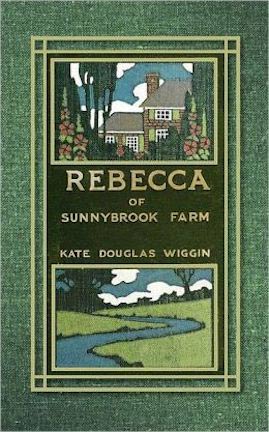
It was only later that I came to know more about her. Rebecca, as it turned out, had a habit of looking at the world a little differently from those around her. She could walk into difficulty without entirely surrendering to it. She noticed hardship, certainly, but she also noticed possibility. She saw light through a window. She saw kindness where others missed it. She held fast to the belief that things were not beyond repair.
Years later, I met up with Dr. Callison for lunch. In the midst of our banter, I asked whether she remembered that class and my question. When she acknowledged that she did, her eyes twinkled just as they had the day she called me Rebecca of Sunnybrook Farm, and I swear, she even sat up in her chair a little straighter.
Later still, I fulfilled a dream I had carried since the third grade: becoming an English professor. Then I found myself teaching many of the same “dark” works I had studied under Dr. Callison. I always laughed because I stayed true to my Rebecca temperament.
Rebecca, as I came to understand her, is not sentimental. She is interpretive. She looks at the world assuming that meaning is possible and that people are capable of growth. That is not naïveté. It is a way of reading—of choosing where to place attention. Seen that way, she is not an escape from serious literature but a companion to it.
Reading through Rebecca’s eyes, the works no longer simply catalogue human failure. They begin to reveal human choice—again and again, moment by moment, often in the smallest of turns. Macbeth is not only a tragedy of ambition, but a reminder that ambition can be governed before it governs us. Crime and Punishment is not merely psychological torment, but evidence that conscience persists, even when we try to reason our way past it. The Cherry Orchard is not just loss, but a warning against postponing what must be faced until the cost can no longer be avoided. The Metamorphosis is not only a portrait of alienation, but a call to notice the humanity of those who feel unseen before their silence hardens into something permanent. 1984 becomes a reason to guard language carefully, knowing how easily words can be bent until truth itself begins to blur. Waiting for Godot is not only an exercise in waiting, but a warning not to spend one’s life waiting for permission to live it.
Like Rebecca, I do not deny darkness. I simply refuse to grant darkness interpretive authority.
That, I think, is why my Rebecca perspective works in the classroom. I am not shielding students from the bleakness of these works. I am asking them to read actively rather than passively—to look not only at what goes wrong, but also at what might be done differently. Not only What happens here? but How might I live otherwise?
These days I laugh harder than ever. These days I know. When Dr. Callison called me Rebecca of Sunnybrook Farm, she did what all good educators do: she saw the best in me before I could see it myself.

