What Rebecca Saw


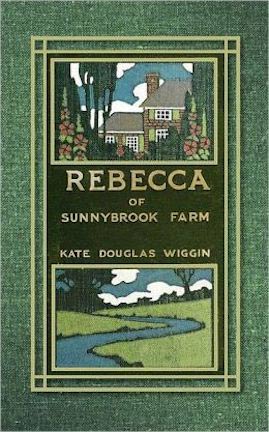
“Rebecca’s eyes were like faith—’the substance of things hoped for, the evidence of things not seen.'” — Kate Douglas Wiggin (1856–1923). American author and educator best remembered for Rebecca of Sunnybrook Farm (1903).


“Please, Dr. Callison. I beg you. Can’t you give us something to read that will uplift our souls?”

We’d had one too many excursions into the moral fog of Macbeth, where ambition presses past conscience and the night closes in. One too many attempts to reason our way around guilt in Crime and Punishment, where Raskolnikov discovers that ideas carry consequences the mind cannot endlessly excuse. One too many evasions in The Cherry Orchard, where denial delays action until loss becomes irreversible. One too many quiet acceptances in The Metamorphosis, where losing one’s humanity happens gradually, until the self vacates. One too many distortions of truth in 1984, where language bends until reality itself begins to give way. One too many days spent waiting in Waiting for Godot, hoping someone else will arrive to solve what we ourselves must confront.

We had dealt with too many such moments all at one time, sitting in an Old Main classroom, all in one semester, where we were expected to linger attentively and enthusiastically and responsively, class after class after class, at the bedside of lost hopes and deep despair.

My boldness left me as soon as my question found voice. Now I cringed, waiting for response. Dr. Callison was more than my professor. She was also my advisor at Alderson-Broaddus, and, on top of that, I was her Work Study assistant. Would she take my plea personally?

I wasn’t certain.

As I sat there, I expected a stern reminder that World Literature was, after all, a required class for Humanities majors like me and that she had little control over the curriculum.

She didn’t go there at all. Instead she stood a little taller and more erect than usual, paced more briskly than usual, turned around, and smiled as she looked directly at me. Her eyes danced:

“Yes, Rebecca of Sunnybrook Farm. I’ll see what I can do.”

My “thank you” seemed muffled by a mingling of laughs and gasps.

Neither mattered to me. I had never heard of Rebecca, but if she lived at a place called Sunnybrook Farm, she no doubt had a positive disposition just like mine.

It was only later that I came to know more about her. Rebecca, as it turned out, had a habit of looking at the world a little differently from those around her. She could walk into difficulty without entirely surrendering to it. She noticed hardship, certainly, but she also noticed possibility. She saw light through a window. She saw kindness where others missed it. She held fast to the belief that things were not beyond repair.

Years later, I met up with Dr. Callison for lunch. In the midst of our banter, I asked whether she remembered that class and my question. When she acknowledged that she did, her eyes twinkled just as they had the day she called me Rebecca of Sunnybrook Farm, and I swear, she even sat up in her chair a little straighter.

Later still, I fulfilled a dream I had carried since the third grade: becoming an English professor. Then I found myself teaching many of the same “dark” works I had studied under Dr. Callison. I always laughed because I stayed true to my Rebecca temperament.

Rebecca, as I came to understand her, is not sentimental. She is interpretive. She looks at the world assuming that meaning is possible and that people are capable of growth. That is not naïveté. It is a way of reading—of choosing where to place attention. Seen that way, she is not an escape from serious literature but a companion to it.

Reading through Rebecca’s eyes, the works no longer simply catalogue human failure. They begin to reveal human choice—again and again, moment by moment, often in the smallest of turns. Macbeth is not only a tragedy of ambition, but a reminder that ambition can be governed before it governs us. Crime and Punishment is not merely psychological torment, but evidence that conscience persists, even when we try to reason our way past it. The Cherry Orchard is not just loss, but a warning against postponing what must be faced until the cost can no longer be avoided. The Metamorphosis is not only a portrait of alienation, but a call to notice the humanity of those who feel unseen before their silence hardens into something permanent. 1984 becomes a reason to guard language carefully, knowing how easily words can be bent until truth itself begins to blur. Waiting for Godot is not only an exercise in waiting, but a warning not to spend one’s life waiting for permission to live it.

Like Rebecca, I do not deny darkness. I simply refuse to grant darkness interpretive authority.

That, I think, is why my Rebecca perspective works in the classroom. I am not shielding students from the bleakness of these works. I am asking them to read actively rather than passively—to look not only at what goes wrong, but also at what might be done differently. Not only What happens here? but How might I live otherwise?

These days I laugh harder than ever. These days I know. When Dr. Callison called me Rebecca of Sunnybrook Farm, she did what all good educators do: she saw the best in me before I could see it myself.

Once More: Glimpses of My Mother’s Hands

On this Mother’s Day weekend, I’m thinking not only of mothers, but of everyone who has nurtured, steadied, comforted, protected, and loved—often quietly, often without recognition.

For those celebrating mothers, missing mothers, remembering mothers, or mothering others in their own ways, I wanted to share this post again.


“Mothers hold their children’s hands for a short while, but their hearts forever.”
–Unknown


On top of my bedroom chest of drawers is a pair of studio portraits of my father and my mother. They’re hand-colored originals, each measuring 3 inches by 4 inches, taken a year or so after my parents’ 1932 marriage. The portraits are in hinged gold frames. My father is on the left. My mother is on the right. A lamp behind illuminates both.

Right now, as I lie in bed, I’m focusing on my mother. Even though her portrait is five feet or so away, she is as clear to my sight as if she were right beside my bed. I’m glimpsing into a distant past, where memories of her linger like whispers.

She’s seated on a bench, wooden, perhaps. The artistic backdrop transports me outdoors. Trees frame the scene, a tall one behind her, their branches reaching skyward, and shorter ones in the background, on the bank of a calm body of water, perhaps a serene river.

She’s wearing a dark dress with short sleeves and a deep-cut neckline, accentuated by a glistening leaf-shaped brooch.

Her finger-waved hair, parted in the middle, falls softly just below her ears. Her eyes are dark and intense, with a gaze that seems to pierce through the image. They are surrounded by her soft, light skin tone, which provides a striking contrast. Their depth and intensity draw me in and make me wonder. What secrets lie hidden behind them? What stories and dreams do they hold? Are they looking into the depths of the world, seeking answers and understanding? Are they inviting me to join in their quest for knowledge?

Her features captivate and mesmerize me, regardless of how often I look at her portrait. Somehow, though, I seem to see my mother’s hands the most. Their contours are soft and graceful, and the fingers curve delicately, one hand gently clasping the other hand.

I see my mother’s hands the most because I know her hands the best.

My mother’s hands are engaging handsHer hands held mine when I was but a child, and we scurried down the path behind our home where two boulders stood sentinel on either side as colored snow fell down in green and pink and blue flakes, making me believe in magic. Her hands held mine when I was a few years older, and she led me outdoors when our world was covered in snow and showed me how to lie down in stillness, moving arms and legs left and right to create angel wings, making me believe in flight. Her hands held mine a few years later when our world was green with summer and led me to lie down in warm grass, eyes skyward, discovering cloud figures, pointing out the details to one another so vividly that each could see brand new worlds of our own imaginings, making me believe in sharing visions so that others might see.

My mother’s hands are cooking hands. Her hands could transform pinto beans, onions, cornbread, buttermilk, and sweet potato cobbler into a feast, making me want it weekly. Her hands could turn a 25-pound turkey into a bronzed Thanksgiving dinner that rivaled Norman Rockwell’s iconic oil painting Freedom from Want, making art come alive in our own coal camp kitchen. Her hands could measure out with perfection all the ingredients for any dish from any cuisine that she had tasted with no need for recipe and with no need for measurements, teaching me to trust my senses.

My mother’s hands are versatile hands. Her hands could make our clothing without pattern, simply by taking our measure with her hands, making me aware that some things are more felt than seen. Her hands could cut my hair using scissors, comb, and the soft stretch of her fingers, reinforcing in my mind the marriage of expertise and craftsmanship. Her hands could take a pastry brush and turn a greased baking sheet or cake pan into a perfect likeness of Christ, making me see Holiness in the everyday.

My mother’s hands are industrious hands. Her hands could transform a grassy field into a kaleidoscope of gladiolas or dahlias, bursting with vibrant hues, teaching me to see potential in the ordinary. Her hands could hold her side of a wooden pole stretched through handles of a galvanized tub, carrying water to the garden, making me realize that many hands can carry heavy loads. Her hands could hang wallpaper with finesse, demonstrating how effort can elevate even the smallest task to art.

My mother’s hands are inclusive hands. Her hands always opened wide the door, welcoming everyone as guests into our home, making me value open-heartedness and acceptance of others, regardless of differences. Her hands always set a place for them at our modest table, making me understand that meager becomes abundance when shared with others. Her hands always held theirs in loving celebration and thanksgiving, making me a witness to the genuine communion of mankind.

My mother’s hands are nurturing hands. Her hands cared for her father and her mother in times when they could not take care of themselves, impressing on me the importance of helping others. Her hands cared for my dad and me and all my siblings, even when our hands might well have lessened the weight that she carried in hers, showing me that strength comes with sacrifice. Her hands took pine rosin to hold tight and heal the gash in my foot, the scar on my sole still a reminder of what she had learned from her mother’s hands, helping me appreciate generational know-how and wisdom.

My mother’s hands are writing hands. Her hands penned sermons when she pastored a church, making me realize that the intellect can lead the heart to be slain by the Holy Spirit. Her hands sent letters out into the world to those she knew well and to those she hardly knew at all, making me see that the power of words reaches beyond the pulpit. Her hands discovered typewriter keys late in life, determined that hand tremors would not tame her self-expression, making me realize the strength of determination.

My mother’s hands are spiritual hands. Her hands joined the hands of other warriors, praying over me as a child with polio, making me–one of the lucky, uncrippled survivors–a believer in the power of prayer. Her hands walked their way through her Bible and her commentary books–from cover to cover–more than thirty times in her lifetime, making me know the richness to be gained through close readings and research. Her hands clapped, sending thunderous applause into the Heavens to show her thankfulness and gratitude, making me know the joy of praise.

My mother’s hands are clasped hands. As she lay in her casket after her funeral, I removed her rings, took her hands and clasped one gently on top of the other, leaned in for a farewell kiss, and, then, closed the lid.

After her burial, my hands–strong from the strength of hers–released from their cage three white doves, flying upward toward the celestial realm, perhaps at that same mysterious moment when my mother found her way back home and celebrated her arrival with outstretched hands.

§ § §

Bertha Pearl Witt Kendrick (May 16, 1912–May 30, 2010)

How a 300-Year-Old Voice Ended Up on a Listserv


“But this is not the final word on Alexander Gordon. In many ways, it is only the beginning.” —Brent L. Kendrick (b. 1947). Author/editor of Unmasking The Humourist: Alexander Gordon’s Lost Essays of Colonial Charleston, South Carolina (2025).


Sometimes scholarship moves quietly through archives, footnotes, and years of patient reading. And sometimes—if we are very lucky—it suddenly circles back into public conversation after centuries of silence.

Yesterday, I did something that felt equal parts scholarly, hopeful, and just a little audacious: I posted a Call for Papers to the Society of Early Americanists Listserv proposing a conference panel built around The Humourist essays of 1753–54—essays that circulated for nearly three centuries without a known author before I definitively identified Alexander Gordon as the writer behind them in Unmasking The Humourist: Alexander Gordon’s Lost Essays of Colonial Charleston, South Carolina (2025).

The panel proposal grows out of a question that has increasingly occupied my thinking since the book appeared: What happens when a substantial colonial voice—one hidden in plain sight for nearly 300 years—suddenly reenters the conversation?

Not simply the classroom conversation, though that matters too. I mean the larger conversation about early American literary history itself.

The more I have lived with these essays, the more convinced I have become that Gordon’s work has implications extending well beyond a solved literary mystery. The Humourist complicates familiar narratives centered primarily on New England and Philadelphia. It invites fresh consideration of the colonial South as a site of literary sophistication and intellectual exchange. And because Gordon himself moved so fluidly between Scotland, London, antiquarian scholarship, theater, and colonial Charleston, the essays also open intriguing transatlantic questions about literary identity, influence, and cultural circulation in mid-eighteenth-century British America.

Will the idea for the panel succeed? Honestly, I have no idea. Academic conferences are busy ecosystems, deadlines are tight, and assembling a thoughtful interdisciplinary panel in just a few weeks may prove wildly optimistic.

But some ideas are too interesting not to toss into the scholarly waters.

So yesterday, that is exactly what I did. Below is the call that went out to the Society of Early Americanists membership.


Call for Papers | Society of Early Americanists | March 18-20, 2027

Hidden in Plain Sight:

The Humourist and the Rewriting of Early American Literary History 

For nearly three centuries, the essays of The Humourist (1753–54), published in the South-Carolina Gazette, circulated pseudonymously without an author—admired but ultimately unclaimed and unstudied. That silence has now been broken. Unmasking The Humourist: Alexander Gordon’s Lost Essays of Colonial Charleston, South Carolina (2025) definitively establishes Alexander Gordon, Clerk of His Majesty’s Council in South Carolina, as the author of these essays, restoring to early American studies a substantial and long-missing colonial voice.

The implications are considerable.

The Humourist introduces into mid-eighteenth-century colonial literature a voice that is satirical, learned, rhetorically sophisticated, and deeply embedded in the intellectual and political life of Charleston. Written during the same years that Benjamin Franklin was shaping his public literary persona, these essays compel us to reconsider the contours of early American literary culture: its geography, its centers of influence, its relationship to British models, and its internal diversity.

This panel asks what follows from that recognition.

How does the presence of Gordon and The Humourist alter prevailing accounts of early American literary history? What happens to a canon long organized around New England and Philadelphia when a sustained, sophisticated essay tradition emerges from the colonial South? How might these essays reshape our understanding of authorship, anonymity, print culture, and the relationship between colonial and metropolitan literary forms? What new lines of inquiry—literary, historical, and transatlantic—open once this body of work is taken seriously?

At the same time, the recovery of The Humourist raises a second, equally pressing question: how does a newly established body of work move from archive into interpretation, and from interpretation into the classroom?

Possible topics include, but are not limited to:

  • the implications of Gordon’s authorship for early American literary history
  • The Humourist in relation to Franklin and the periodical essay tradition
  • regional imbalance and the place of the colonial South in the canon
  • transatlantic literary identity and British-American cultural exchange
  • satire, persona, and public discourse in colonial print culture
  • political knowledge and insider perspective in the essays
  • literary, historical, or rhetorical analysis of specific essays
  • future directions for research suggested by the recovery of this corpus
  • the movement from recovery to curriculum: teaching newly established texts

Panelists will be asked to engage with a shared selection of The Humourist essays in order to ground discussion in the texts themselves. The essays are included in Unmasking The Humourist (2025), accessible via Kindle; a PDF of the text can be shared with panel participants.

Please send a 250–300-word abstract and brief bio directly to Professor Brent L. Kendrick at brentlkendrick@gmail.com by May 16, 2026.

Questions and expressions of interest are warmly welcome.


Whether the panel materializes or not, the act of sending the call felt like its own small ceremony. It’s one more way of insisting that this voice, so long unheard, deserves a seat at the table. The deadline for panel submissions is May 16th. The conference is scheduled for March 2027. And Alexander Gordon has already waited nearly three hundred years. Sure, we can give him a little more time.

What Goes Unseen


“It’s not what you look at that matters, it’s what you see.”

Henry David Thoreau (1817–1862). American essayist, naturalist, and philosopher whose Walden made him a foundational voice in the tradition of contemplative attention to the natural world.


Not long ago—on a warm spring Saturday morning, I stopped weedwhacking just long enough to rewind the twine so that I could have at it again. While I was at it, I decided to clean the underside of the guard.

That’s when I saw it.

A small, flat blade, tucked along the inner rim of the guard. It was so unassuming it might as well have been part of the plastic. Rectangular. Steel. Fixed in place with a single screw, its edge squared off and purposeful. Not sharp in the dramatic sense, not gleaming, not new—but worn to a quiet efficiency.

It didn’t move. It didn’t need to.

Set at just the right angle, it waited where the spinning line would meet it—again and again—shearing it back to proper length with each pass. No noise of its own. No flourish. Just a precise cut, a limit imposed, a boundary kept.

What struck me wasn’t what it did, but that I had never noticed it doing it.

All that time—decades of weedwhacking—this little blade had been there, keeping things in check. Silently. Reliably. Without ever asking to be seen.

But as I sat there seeing it for the first time, I was drawn—in a moment that seemed mysteriously magical—to a rhododendron in full bloom, its entire orb covered with flowers.

A burst of color rising from the green—full, rounded, almost extravagant—each cluster pressing outward as if the whole shrub could hardly contain what it was doing.
Then a single flower—open and inviting, its petals soft and flared, a quiet architecture of color and form, drawing the eye inward without insisting.

Then a blossom—closer now—where the curves deepen, the colors gather, and something more intricate begins to reveal itself.

And then—at the center—the pistil and stamen. Slender. Reaching. Dusted and deliberate.
It’s the latter I had never quite seen before—stamens bearing pollen, a pistil poised to receive it—the quiet exchange that makes the next bloom possible.

And as I sat there, momentarily mesmerized, I heard the sonorous buzzing of a bee—
thick-bodied and deliberate, its wings a blur against the stillness, its black-and-gold frame pressing into the bloom as if it belonged there, as if it knew exactly where to go and what to do.

It moved without hesitation—dipping, turning, pushing past petal and filament—gathering as it went, brushing against what needed to be brushed, carrying what needed to be carried.
Not for beauty. Not for show. But for the work.

And there, along its legs, dusted and clinging—
pollen.

A thing so small, yet so bold as to carry the world to its foretold future.

How many other things go unseen in life that keep the engines running—

The tightening at the corners of the eyes—subtle at first, almost imperceptible, until something gathers there, waiting.

A glance held a fraction longer than needed—just beyond the ordinary exchange, between two people.

The tug to say less—a quiet restraint, felt rather than reasoned, that keeps a word from tipping.

The faint sense of standing there before—a recognition unannounced.

The deep inhale that comes—slowly, almost deliberately, as if the body knows.