“The truth is, no one of us can be free until everybody is free.” —Maya Angelou(1928–2014). American poet, author, and civil rights activist whose writings explored identity, dignity, freedom, and the shared humanity of all people.
“Write. Just write.”
That’s what I always tell aspiring writers.
“Write as if this will be your last line and your life depends on it. Or maybe your life after death depends on your last line.”
They stare. They roll their eyes. They purse their lips. They start. They write.
And after they’ve written several pages, I interrupt, knowing the gasps that will follow:
“Ignore the first page or two. Writers often discover their real starting point at the top of page two or three.”
“Ignore it? Throw it away?”
“Yeah, usually. Think of those pages as a warm-up exercise. Think of those pages as a way of finding the starting point.”
Ironically, it’s almost always true, even for seasoned writers. Maybe especially for seasoned writers.
I wish it were true for me. This time. This post.
But it’s not.
There’s no way—there’s just no way—that I’m going to start this post with the line I’d have to start it with if I applied my own advice:
“Are you a friend of Dorothy’s?”
Here’s why I wouldn’t.
I’m betting you’d ask:
“Who’s Dorothy?”
That’s what I asked myself yesterday when I stumbled accidentally upon the question. After I found the answer, I kept wishing I had known about it in the 1950s when I was growing up, wondering how on earth I’d ever recognize someone else like me. Queer.
Let’s face it. The eye contact thing—the looking back to see if he was looking back to see—was a hard if not impossible way to identify a kindred soul. How could I be sure? And I wasn’t about to come out and ask:
“Are you, you know—like me.”
But if I had known about Dorothy, I would have let it slip casually into the conversation:
“And are you a friend of Dorothy’s?”
“Yes” would have moved the conversation far, far away from small talk.
But I didn’t know then that the question was a coded phrase used by the LGBTQ+ community—particularly gay men—throughout the mid-20th century to discreetly identify one another.
Safe. Veiled. No risk. No exposure. No hostility. No legal trouble.
I’m surprised that it took me seventy-eight years to learn about the question and its answer. But I’m not surprised that I did so during Pride Month.
I had been paying close attention to the June headlines.
Some were celebratory. Governor Hochul proclaimed June 2026 LGBTQ+ Pride Month in New York. Orange County recognized Pride Month for the first time. Richmond listed eleven events to check out this June.
Others were not. Indiana’s governor declared Pride Month “Nuclear Family Month.” Republican governors across the country rebranded it with conservative alternatives. Tennessee followed Indiana’s lead. In Pinellas, Pride met “Faith and Family” pushback.
Then came a headline closer to home. It hit hard. Someone I knew shamed their former employer on FB for celebrating Pride Month and used a classic but outlandish propaganda technique: mix a few kernels of truth with a few outdated statistics, several disputed claims, some outright falsehoods, and then present everything under the banner:
“No Pride in Gay Life: THE FACTS.”
It only took me a minute or so to read the FB post. But it took me far longer to process my emotions. Anger. Sadness. Disappointment. Exhaustion. Surprise that it came from—someone I knew.
It took me even longer as I questioned what exactly we’re celebrating in June. Being gay, lesbian, bisexual, transgender, or queer? Hard-won advances that allow millions of people to live more openly than they could a generation ago? Battles that remain to be fought?
They’re not the same things. One is identity: human beings with shared blood pulsing in our veins and with shared hopes living in our hearts. The second is history: yesterday. The third is hope: today and tomorrow.
Suddenly, I realized that when we celebrate Pride Month, June ends and LGBTQ+ people remain marginalized.
Suddenly, I realized that when we celebrate Black History Month, February ends and Black Americans remain marginalized.
Suddenly, I realized that when we celebrate Women’s History Month, March ends and women remain marginalized.
Suddenly, I realized that when we celebrate Native American History Month, November ends and Native Americans remain marginalized.
Suddenly, I realized that we’ve gotten very good at celebrating people we’re still marginalizing.
We can do better.
We can be better.
We must.
I hope I live to see the day when Pride Month never ends.
I hope I live to see the day when Black History month never ends.
I hope I live to see the day when Women’s History Month never ends.
I hope I live to see the day when Native American Month never ends.
I hope I live to see the day when special months never end because we no longer need a special time to remind us that we are special humans every moment of every day of every month—all the time.
A day when dignity is not reserved for June or February or March or November.
A day when respect does not depend upon race, religion, gender, orientation, age, birthplace, wealth, education, politics, or any of the countless labels we use to divide ourselves into tribes.
A day when we stop asking who belongs and start assuming that everyone does.
Come fast the day when we see the person before we see the category.
Come fast the day when our differences invite our curiosity rather than our suspicion.
Come fast the day when no child grows up wondering whether there is anyone else in the world like them.
Come fast the day when we won’t need to ask, “Are you a friend of Dorothy’s?”
The rake lay across the heart, as if it were Cupid’s arrow. Beads of water gathered on the thermos, upright on the nearby stone bench, right beside St. Francis of Assisi. Leather gloves and pruning shears bore witness to a gardener. Gary.
I couldn’t see him, but I knew he couldn’t be far away because his seafoam, floppy hat was not on the bench with his other things.
I knew what he was up to.
The time had come for him to do what I had done down through the years since I built the garden, filling it in with tons of tan pea gravel and surrounding it with a hedge of Little Missy boxwood.
Early on, the labor of weeding was easy. The pea gravel kept unwanted growth under control and beneath the surface. But over time the AngelinaSedum, filling the two circles in the heart’s upper lobes and surrounding the Magnolia in the lower cusp’s circle, died out but not before leaping over the rings that held them. Small chartreuse-yellow clusters softened the heart but lessened its definition.
Gary, my partner—the man who now shares this mountain life me—was doing more than weeding. He had already restored the flagstone pathway leading from heart to home and back again. Now he was planting healing Ajuga that will settle in and stay within the upper rings, eventually sending up purple spikes. Now he was cleaning, making everything as pristine as the day I finished my handiwork. I sat down on the bench, surveyed the slope, and sighed,
“Well done.”
I never had any intention of building the heart garden. My late partner Allen and I had tamed our mountaintop wilderness with so many paradisiacal garden beds that we had declared a moratorium:
“No more.”
But when Allen died and I reflected on where I would scatter his ashes, as mutually agreed upon, I could not for the life of me decide upon the right spot.
We had talked about resting places on our mountaintop, usually settling on the peony garden. Once, even, Allen suggested the Koi Pond would be perfect, but amid laughter, we both exclaimed:
“Oh, no! What happens when the pond filters get cleaned.”
Then, a few months after his death, he came to me in a dream, his voice carrying into my awakening and lingering there:
“Build my heart.”
I knew where. Near the house, at road’s edge—an untamed area we thought about gardening if we ever gave our moratorium a reprieve.
I had no idea how, but I figured a little math and lots of heart would make it happen.
And it did. I marked off an area twenty feet wide and thirty feet deep, sketched a heart with a black water hose, freed the earth of weeds, and blanketed it with pea gravel running deep. For Allen’s celebration of life, I surrounded the heart with SunPatiens, alternating red and white with tears and rain. I bought a wooden Zen rake, perfect for committing Allen’s ashes to the gravel, leaving tracings that mirrored the heart’s design, growing smaller and smaller as the center neared. Later, I planted the boxwood hedge.
Thus, the heart’s beginning.
Time has been kind. But still, the heart needs Gary’s loving care and tenderness. It rests within the landscape, its presence a part of forever.
The morning after Gary finished, we decided to amble down the path, pristinely cleaned and gently curved, with the heart in clear view.
“You go ahead. I’ll be there shortly.”
“No. I’ll wait. For you.”
It was peaceful and inviting.
We talked a little less than usual, as the morning chill quickened us and a Northern Cardinal in the treetops above whistled out its own litany of little questions.
“I want your ashes to be happy here.”
They will.
And when Gary’s time comes, I’ll board the train, his weight on my lap, my hands on the box, making his final journey to Minnesota where his story began.
“The first porch is where you find your voice. The second porch is where your voice finds others.” —Poor Brentford Lee (b. 1947. Keeper of two porches, one mountain, one dog, and an inexhaustible supply of things worth saying—none of which he has to say alone anymore, thanks to his partner, Gary.)
Dear Faithful Readers,
You’ve been here with me on the porch since—well, some of you since the very beginning, back when I built it as nothing more than a place where you could pull up a chair and talk with me about the joys, challenges, and discoveries of research. We kept right on doing that from 2012 to 2021 when I decided to make the porch a little more fun by bringing you weekly creative nonfiction essays.
I’m still at it. Nearly 750,000 words later. Yes, you read it right. Foolin’ around in bed every night with ideas and words adds up. I’m spurred on by you, my Dear Readers, whose numbers keep increasing annually! Last year, we shared more than 35,000 views right here on the porch.
But I’ve built a brand-new porch, and I want you to be the first to know about it.
Don’t worry, though. I’m not leaving The Wired Researcher porch. It will remain open virtually forever. Same Monday mornings. Same voice–mine, with Poor Brentford’s voice chiming in from time to time. We’ll both be there, waiting for you.
I just heard someone shout out:
“So, why are you building a new porch? What’s that all about?”
Well, for starters, it has better lighting, and it might just bring in more neighbors for all of us to visit and exchange ideas.
I’m counting on you to check it out. I’ve named the second porch The Kendrick Chronicles.
“Where on earth is this new porch of yours?”
Gracious me! You know that I like to take my time–slow and easy like. In a sec, I’ll give you the link so that you can check it out for yourself. And when you do, go ahead and Subscribe! From that point forward, my essays–ever goldern new one that hits the world, every Monday morning like a neighbor who always brings something worth reading and never overstays his welcome–will find their way directly to your Inbox.
You can find this new porch of mine in Substack. Here’s the link:
“What will I find when I get to this new porch of yours?”
Why, gracious me! You’ll find a comfy chair with your name on it and a handful of your favorite essays with my name on ’em:
● Redbuds of Remembrance
● Learning to Love in New Ways
● I Am Afraid
● Poor Brentford Cleans the Wax Out of His Ears
● Two, Together
● Glimpses of My Mother’s Hands
● The Ghost of Palmyra Church Road
● Truths Half-Told. Letters Half-Burned. A Legacy Waiting to Be Fully Heard.
● Carrying the Bags of Colonial America’s Humourist
And get this. If you subscribe, next week you’ll get an essay about a kitchen disaster beyond belief: “Oh, No! No Sourdough!” And the week after that, “What We Know. What We Believe.” It may be the most complete thing I’ve ever written about who I am and what I believe about what comes next.
So go on now. Pull up a chair. Same voice. Wider porch.
It could be any morning up here on the mountain. Any season. The light spills over the valley like it’s been rehearsing for centuries, finding its way to the deck that I sanded and painted myself. Ruby’s already made her first round of the yard, nose to the wind, tail announcing that all is well in our little dominion—hers and mine and Gary’s.
From the outside, it might look like the middle of nowhere. But to us, it’s home. It’s our mountaintop oasis. It speaks peace. It speaks love. It knows both.
And yet—I am afraid.
I’m not afraid of dying.
I’m not afraid of the questions at my annual doctor’s visit—how’s the sleep, how’s the balance, any falls lately? I know the drill, know the tone. It’s the small talk we make with time itself.
I am afraid of more than that. Much more.
I am afraid of living.
I am afraid when I watch our nation take one step, then another, back and back and back toward what too many call the “Good Ole Days.” Days that weren’t always that good in reality—at least not for everyone. I’ve seen real progress during my seventy-seven years, hard-won and deeply felt. But now I know what it feels like to watch it slip away.
I am afraidwhen I see the National Guard deployed to American cities—unbidden, uninvited—storming in under the cloak of “security,” while local leaders protest and courts rule against the deployment as unconstitutional.
I am afraidwhen I see streams of homeless men, women, and children forcibly cleared from our Nation’s capital—not relocated, but shamed off the sidewalks, invisible again to the people who run the city.
I am afraidwhen masked men wearing ICE uniforms sweep through neighborhoods in unmarked vans—when people are grabbed at early hours, dragged from their routines, as children watch from windows.
I am afraid when I see our public health agencies bend—when the CDC overturns or ignores scientific consensus, issuing guidelines that feel political more than medical, eroding trust in what should be shields, not targets.
I am afraidwhen I see older Americans treated as burdens instead of blessings—when Social Security and food programs are cut under the banner of “efficiency,” when Medicare oversight is weakened and the sickest lose coverage, when senior housing programs vanish from federal budgets as if aging were a mistake. When growing old becomes a liability instead of an honor, a nation has lost its sense of inheritance.
I am afraidwhen I see poor and working families once again blamed for their poverty—when SNAP and WIC are gutted, when rent assistance dries up, when wages shrink while profits soar. Poverty is being rebranded as personal failure again, as though the system itself weren’t tilting the table.
I am afraid when I see classrooms and libraries turned into battlegrounds—when teachers are monitored, words are banned, and curiosity is treated as defiance. When education becomes indoctrination, the light that should guide us turns inward and burns.
I am afraidwhen I see our museums stripped of independence—when curators are told which histories to showcase and which to hide, when funding depends on keeping donors and politicians comfortable instead of keeping the record honest. When museums are told what stories to tell, history itself becomes propaganda.
I am afraid when I see the earth itself crying out—when wildfires, floods, and droughts speak the truth our leaders refuse to hear. When those in power in Washington call climate change a hoax, mock science, and dismantle what fragile protections remain—treating the planet not as inheritance but as inventory. The soil, the rivers, the air—they are not ours to own. They are the breath of every living thing that will come after us.
I am afraidwhen I see our history books rewritten—when the ugliness of our past is softened or omitted altogether, as if truth were a stain to be scrubbed away. I am afraid when textbooks trade context for comfort, when children are taught pride without responsibility. That’s not education. That’s amnesia dressed as virtue.
I am afraidwhen I see books banned from shelves—works of art, witness, and imagination stripped from students’ hands because someone decided fear should be the curriculum. A nation that fears its own words is a nation already forgetting how to think.
I am afraid when I see faith itself being rewritten—when those who hold the Bible high forget the heart of its message: love thy neighbor as thyself. When “the least of these” are ignored or condemned, when compassion is replaced with control, when the name of Christ is used not to comfort but to conquer.
I am afraid when I see the Department of Defense renamed the War Department—as if we’ve abandoned even the language of restraint, as if the goal were not defense but dominance. Words matter. Change the name, and you change the story. Change the story, and you change what we become.
I’ve lived long enough to see this nation inch closer to its promise, step by hard-won step. I watched the Civil Rights Movement force open doors that had been locked for centuries. I watched women claim the rights and respect they were long denied. I watched same-sex marriage move from silence to law, from whispers to weddings. I watched a Black man take the oath of office as President of the United States and felt, for the first time in my life, that maybe—just maybe—we were learning what equality really means.
And yet, I’m watching so much of that progress being undone in plain sight—rolled back by men who smile as they sign the papers. That’s what eats at me. We came so far. We proved we could change. And now I fear we’re proving how quickly we can forget.
I have one more fear—one that hits closer to home for me than any of the others, and yet it reaches out and encompasses them all.
I am afraid when I see LGBTQ freedoms stripped away in bill after state bill—protections withdrawn, rights revoked, marriages questioned, school policies reversed—while the rhetoric whispers “return to order,” but the victims are many.
It hits me hard, like a gut punch, because I know what it feels like to live quietly on the margins of acceptance. I had a place at the table—as long as I behaved. As long as I laughed at the right jokes. As long as I didn’t speak the truth of who I was. I was welcome, yes—but only in disguise. That was the unspoken bargain: conformity in exchange for belonging. A seat, but not a voice. Presence without personhood.
It took me years to understand that silence isn’t peace—it’s erasure wrapped in politeness. And acceptance that depends on pretending is not acceptance at all. So when I see hard-won freedoms for LGBTQ people being stripped away, I don’t see politics. I see people—people like me—being pushed back into the shadows we worked so long to escape.
Iamafraid, too, of the silence that wears love’s disguise. Of families who say they accept us—so long as it’s private. Who love their gay brother or their trans child quietly, behind closed doors, but never speak that love out loud. Because public love takes courage, and private love costs nothing.
Iam afraidthat if the reckoning comes—and it may—some of us will look around and find that the people who said they loved us privately will deny us publicly.
And I am afraid that the ground is shifting for all of us—that what’s being erased is not just rights, but recognition of value.
I am afraid that we are being bombarded deliberately with so much chaos and confusion that we are forgetting what lies at the core of who we are—as Americans, yes, but more deeply, as human beings: the value of the individual.
The gay and the straight. The trans and the cis. The believer and the atheist. The refugee and the citizen. The imprisoned and the free. The Black and the white. The immigrant and the native-born. The woman and the man. The poor and the privileged. The child and the elder. The body that moves easily, and the one that cannot. The mind that remembers, and the mind that forgets. The one who speaks, and the one who has no voice. The one who is seen, and the one who is invisible.
Each carries the same sacred value. Each bears the image of us all. Leave one behind, and the whole is diminished. Forget one, and the soul of the people forgets itself.
I am afraidthat this forgetting has already begun. It’s not just in Washington, though Washington leads the charge. It seeps into pulpits, classrooms, living rooms—into the quiet corners of our own decency. It’s in the news we scroll past, the cruelty we explain away, the silence we call “staying out of it.”
I am afraid because I see what happens when the faceless stay faceless—when the homeless become numbers, when the refugee becomes a threat, when the trans child becomes a talking point. I am afraid because I know what happens when we stop seeing each other as sacred.
And I am afraidbecause I’m not sure what I can do.
But I know I have to do something. We all do.
We can vote. We can write. We can reach out to those in power and to those who believe they hold it. But maybe more than any of those things, we can be fearless in proclaiming that we are afraid—afraid of what is happening, afraid of what might come, afraid of becoming numb to it all.
We can name it. We can put a face to it. We can be the moral engine of one— each of us reaching further than comfort, further than tribe or label— to hold on to what makes us human, to reclaim it before it slips away.
One human being girding up another. One hand extended. One voice saying, I see you. That’s where resistance begins.
We can show, by the way we live, that each person matters—every single one. The forgotten, the dismissed, the weary, the silenced. Because the measure of a democracy—like the measure of a soul—is not how it treats the powerful, but how it protects the powerless.
So yes, I am afraid. But fear, spoken aloud, can become light. And light, once shared, can become strength.
Maybe that’s where our healing begins: in the courage to care out loud, to stand with the one beside us and say, You are not forgotten.
Because the next person erased could be someone we love. Or it could be us. You. Me. But if we stand together—if we keep standing— it will not be all of us.
⸻ ✦ ⸻ ⸻ ✦ ⸻ ⸻ ✦ ⸻
If this essay speaks to your heart, please like it. Please share it. Let it travel further than fear—and bring us closer to hope.
The knock at the door was as gentle as any I had ever heard before, yet it frightened me with its persistence. After all, it was the middle of the night, and I rarely have visitors here on my mountain, and when I do, I anticipate their arrival and meet them in the walkway.
After a while, my curiosity overcame my fear. I went to the kitchen door and opened it. There, not on all fours, but standing as upright and erect as any human I had ever seen was my dog Hazel.
Lit by the spill of the floodlights—like some mythic creature caught mid-transformation—Hazel looked less like a pet and more like a story I hadn’t yet written: fifty-nine pounds of sinewy poise, all confidence and oversized paws planted with purpose. Her coat shimmered with its reddish golden shades of ember and mischief—Husky in spirit, Shepherd in legacy, and wholly herself.
Her tail curled tight; her head slightly tilted—alert, noble, a whisper of the wild. Her ears twitched once as if tuning in to something I would never hear. And her eyes? They saw, as if piercing through the darkness that found me standing there.
She wasn’t waiting. She was watching. And in that moment, so was I—awed by her stillness, her strength, and a quiet reminder of something I had yet to remember.
And, as naturally as anything you would never expect a dog to say, she looked at me:
“I’m just a monkey. I’m a howler.”
Then I awakened. Amused. Grinning. Lying there in bed. Musing. Hazel. Fifteen years of fierce love, muddy pawprints, and conversations that needed no translation, except in dreams.
As I lay there, I realized the dream’s significance. In a way, it was the oldest kind of magic: a name spoken often comes true.
For years and years and years, Hazel’s bark reminded me of a monkey. Not just any monkey—a howler. One of those wild-voiced beings that belt their souls into the sky from treetop pulpits at dawn. Her bark had that same deep, echoing wildness—less a request than a proclamation.
Some dogs bark. Hazel declared.
And so it came to be. I would say to her over and over again:
“You’re just a monkey! You’re a howler.”
She didn’t seem offended. If anything, I think she took it as a compliment. Obviously, Hazel was not a monkey, nor could she become one. Except in my dream.
But here’s the thing:
She became what I had named her.
And that truth deserves repeating:
She became what I had named her.
That dream set me to thinking long and hard about what it means to name.
To Name.
I started wondering when the phrase was first used and in what context. And if you know me as I know you do, you know that I headed off to the Oxford English Dictionary (OED) where I discovered that it was first used in Old English:
“[Hælend] gefregn hine huætd ðe tonoma is? & cuæð to him here tonoma me is, forðon monig we sindon” (Lindisfarne Gospels Mark v. 9).
Right! That doesn’t look like English to you either, does it? Let’s look at the translation.
“[The Savior] asked him, ‘What is your name?’ And he said to him, ‘My name is Legion, for we are many.'”
It’s a well-known moment in the Gospels—Jesus (the Hælend) encountering a man possessed by demons. The phrase “My name is Legion, for we are many” comes from Mark 5:9 (and Luke 8:30), rendered above in Old English.
This is an incredible example of what happens when we name something. The name Legion does far more than identify. It reveals nature, condition, and moral alignment. When Jesus asks for a name, he isn’t just asking for a label—he’s uncloaking the essence of what possesses the man.
Did you catch that? A name reveals essence.
And I ask you–right here, right now, as I am about to do–to start thinking about names swirling around in your head. Maybe the names associated with you: the names that others call you.
As you reflect, let me share with you the significance of the names swirling around in my head.
The Names that Others Called Me.
The first that I remember was not my given name—Brentford Lee. Rather, it was LittleMisterSunshine. My mother gave me that name because—as she loved to tell others, including me–I was born smiling and radiating happiness. Now, 77 years later? Others say that I’m still smiling. Still radiating happiness.
Clearly, my mother saw the essence of who I am and named it.
Or how’s this? My siblings, for as far back as I can remember, had another way of naming me. They always called me different.
“You don’t look like us.
“You don’t talk like us.
“You don’t walk like us.
“You’re different.“
Truth be told, I was different, and I knew it. Ironically and for my own well-being, when they called me different, I leaned into it as compliment rather than condemnation.
It didn’t take me long, however, until I came to feel and understand the word they weren’t naming, the word that others, later, named. Queer. Either way–and even though I continued to see myself as special, a way of looking at myself that would stay with me for a lifetime, even now–it was a label of notquite, a soft-spokenexile and an unspokenache.
Clearly, my siblings and others saw my essence—and named it.
And I ask you—right here, right now, as I am about to do—to think about the names you’ve claimed for yourself. Not the ones others gave you. The ones you whispered into being. The ones that changed how you stood in the world.
As you reflect, let me share with you the significance of the names swirling around in my head.
The Names that I Called Myself.
The first that I remember was when I was in the third grade. Professor. Can you imagine anything more outlandish than that coming from a coal-camp kid in a town with not one professor? I have no idea where I had heard the word or came to know it. But I knew that in order to be a professor–in order to teach in a college or university—I would have to earn the highest degree conferred in my field. I picked English because I believed—no, I knew—that words mattered. Yes, words could wound. I had learned firsthand how they could cut to the soul. But I also knew something else. Words could heal. Words could save. Words could give wings.
I earned my Ph.D. in literature. I became a college professor—”full” no less. And when students called me Dr. Kendrick at the institutions where I taught–the University of South Carolina, the Library of Congress, and Laurel Ridge Community College–in deference to my degree, I always suggested Professor in deference to the earliest name I called myself–the name that captured my essence.
More recently, I call myself Reinventor. I came up with that name at the start of 2023–after my 23-year career at Laurel Ridge. Most folks retire. Not me. I’ve never liked the word—because right there in the middle of retired is tired. Trust me. I ain’t no ways tired. I have more books to write–far more than the five I’ve already published since 2023. I have more life to live than the one I’ve lived. I have more love to give than the love I’ve given. My colleagues and friends may call themselves retired—and that’s fine. But me? I’ll keep saying I’m a reinventor. It’s not just who I am now. It’s who I’m still becoming.
These days, I call myself Writer. I’ve always been one—researching, digging, unraveling stories. But since reinventing myself, being a writer has taken on a new, truer shape. I write in bed every night, publish my blog posts every Monday morning, and every year, I bring forth a new book of creative nonfiction essays, stories that bear my name and my soul.
I’ve branched out, too—seeing through to publication my Unmasking The Humourist: Alexander Gordon’s Lost Essays of Colonial Charleston, South Carolina and immersing myself a two-volume biography of Mary E. Wilkins Freeman, a labor of love and legacy.
Yes, right now, the name I call myself is Writer. It captures the essence of who I am— what I do, what I am becoming, and who I cannot stop being.
As we continue reflecting on the power of names, I ask you—right here, right now, as I am about to do—to think about names that wound others, perhaps forever or perhaps giving them a transformative moment to heal.
The Names that Wound or Heal.
The first that comes to mind is a word in Countee Cullen’s “Incident.” It’s painful—inflicted on an innocent child, standing at the edge of razzle-dazzle wonder.
Once riding in old Baltimore, Heart-filled, head-filled with glee, I saw a Baltimorean Keep looking straight at me.
Now I was eight and very small, And he was no whit bigger, And so I smiled, but he poked out His tongue and called me, “Nigger.”
I saw the whole of Baltimore From May until December: Of all the things that happened there That’s all that I remember.
What the speaker in the poem remembers being called Nigger. One word. It shattered an eight-year-old’s heart—and likely left a lifetime crack.
It’s haunting—how a single word, spoken with cruelty, can eclipse everything else.
I’ve known that kind of eclipse, too. Different.Queer.Faggot.Fag. Words I never asked for—words that crawled in and clung, no matter how often I repeated what my mother had taught me:
“Sticks and stones may break my bones, but words can never hurt me.”
Of course, they hurt, but I rose above the pain, smoothing over my soul like a balm the names that lifted me—Little Mister Sunshine, and the one I whispered in those early, tender years—Professor. But here’s the strange and saving truth: I didn’t start to heal until I explicitly named the sexual dimension of myself. Ironically, I had to declare it publicly before I could begin to claim the healing I didn’t yet realize I needed. I had to say gay—not in a whisper, not in code, but openly. Aloud. Loud. In front of the world.
Gay.
Only then could I begin to gather all the pieces I’d hidden away. The softness. The brilliance. The full shape of who I was—who I had always been. One word. My word. Spoken not with shame, but with quiet certainty. And for the first time, I didn’t flinch. I stood. Proud. With that naming, I finally gave myself permission to shine—fully and fiercely, without apology.
I have one more request–one more “ask” of you–as we grapple with what might just be the most powerful part of naming. I ask you—right here, right now, as I am about to do—what are the names we whisper when we reach for meaning? The names we murmur in awe, in need, in love? The names we give the force that calls us?
The Names We Call the Force that Calls.
Whenever I think that thought–and the older I get, the more often I think it–I recall Bill Gaither’s interview with acclaimed Gospel singer Jessy Dixon–one of my favorites. Gaither was bold and direct as the interview neared its end:
“When your time comes—as it will surely come for each of us—what do you want people to remember about you?”
After a soft pause, the answer came with quiet certainty:
“Tell them I am redeemed.”
In those five words, Jessy Dixon named–and claimed–the essence of his destiny.
Redeemed.
I can’t help but wonder: what name rises up in you when you reach for meaning? God? Creator? Oversoul? Spirit? Light? Love? Source? Mystery?
And in my wonder, I’m mindful that names like those are what we call the ungraspable—the presence that nudges us forward, the light that finds us when we didn’t even know we were lost. We reach for names when we reach for meaning. And whatever we call it—it calls us, too.
Whatever name you use, My Dear Reader— whoever you are, wherever you are:
Say it loud and clear.
Speak it like it matters— because it does.
Speak it like it carries the full weight of your becoming— because it does.
Let the world see the essence of who you are.
Name it— knowing that names have power.
Remember: you are enough— not despite all the names you carry, but because of them.
You are every name you’ve claimed and every name you have yet to whisper into being.
And when the time comes— I hope you’ll speak your name as boldly as I speak mine.
Let others know: their names can never hurt you.
But your name? It roots you deep in everything that matters— your truth, your becoming, your essence.
won’t you celebrate with me what i have shaped into a kind of life? i had no model. born in babylon both nonwhite and woman what did i see to be except myself? i made it up here on this bridge between starshine and clay, my one hand holding tight my other hand; come celebrate with me that everyday something has tried to kill me and has failed.
—Lucille Clifton (1936–2010), award-winning American poet and former Poet Laureate of Maryland, celebrated for her spare, powerful verse that gave voice to Black womanhood, resilience, and self-invention.
It hangs there—dripping in crystal like it’s late for a curtain call at the Kennedy Center. A blazing burst of light and glamour. A chandelier so decadently faceted it might’ve been smuggled out of a Versailles estate sale or rescued from a Broadway set mid-strike. And yet, here it is: mounted proudly on a ceiling so low you could toast it with your coffee mug.
Where?
Why, right here on my mountaintop, in my rustic foyer wrapped in pine-paneled nostalgia, with a Shenandoah Valley pie safe, stoically anchoring one side and a polished silver chest on the other. An antique Asian vase—graceful and aloof—presides atop the chest like it’s seen empires rise and fall. Beneath it all, an Oriental runner unspools like a red carpet nobody asked for, but everybody deserves.
And then—just beyond the shimmer—a French door opens into another room, as if the whole scene is a prelude to a slow reveal.
It shouldn’t work. I know that fully well. A chandelier like this belongs somewhere fancy and regal. But guess what? Somehow, its sparkle doesn’t clash with the country charm, at least in my mind. In fact, it crowns it. And you can rest assured. It isn’t a mistake. It’s my way of declaring that my home isn’t just a home. It’s a story–actually, it’s lots of stories–told in light and shadow. And at the center of it all? My refusal to decorate according to rules. I couldn’t even if I wanted to because I have no idea what the rules are.
But a week or so ago, my Tennessee Gary stood smackdab beneath the chandelier—looking right at me, poised (I was certain) on the cusp of praise or profundity. But the next thing I knew, he spoke six words, which made me a tad uncertain about my certainty.
“I’m not sure it belongs there.”
“What?”
“The chandelier.”
“Well, I think it’s perfect. I wasn’t about to leave it in my Capitol Hill home when I moved here. It cost me a small fortune, and besides—I like it.”
That ended it. For then.
But a few days later, Gary brought it up again.
“Actually,” he said, studying the ceiling with a fresh softness, “the chandelier grows on you. It looks quite good there.”
If that’s not a kiss-and-make-amends moment, then lay one on me.
I grinned and agreed.
And let me tell you—that right there? That’s the moment that stuck. Not the first comment, but the second. The way Gary circled back. The way he didn’t double down, but opened up. That takes grace. That takes someone who sees with more than just their eyes.
He didn’t just help me see the chandelier differently. He helped me see the whole house—and maybe even myself—with a little more curiosity. A little more clarity. And that’s when I started walking through the rooms again—not to judge or justify, but to really look. Through his eyes. Through my eyes. Through the eyes of everyone who’s ever stepped inside and wondered how on earth all of this could possibly make sense.
And yet—to me—all of this makes perfectly good sense. Placed with memory, not trend. Positioned not for symmetry but sentiment. A lifetime’s worth of objects tucked wherever I could fit them, arranged with a kind of chaotic confidence that, somehow, glows.
But, still, I heard echoes rumbling around in my memory’s storehouse:
“It’s so homey.”
“I feel so comfortable here.”
“Wow! It’s like walking through a museum.”
In the midst of those echoes, I figured out how to find comfort: find someone else who decorates the way I do! It didn’t take me long at all before I remembered someone who had lived—and decorated—with the same truth: Mary E. Wilkins Freeman.
As soon as I had that recall moment, I scooched up beside her so close that I could peek over her shoulder as she penned a letter to Kate Upson Clark. And Lord have Mercy Jesus! You can’t imagine my joy when I realized that folks said the same sort of things about her home decor as they say about my mine:
“I light this room with candles in old brass candlesticks. I have dull blue-and-gilt paper on the walls, and a striped Madagascar rug over a door, and a fur rug before the hearth. It is one of the queerest looking places you ever saw, I expect. You ought to see the Randolph folks when they come in. They look doubtful in the front room, but they say it is ‘pretty.’ When they get out into the back room, they say it ‘looks just like me’. I don’t know when I shall ever find out if that is a compliment.” (Letter 46, August 12, 1889. The Infant Sphinx: Collected Letters of Mary E. Wilkins Freeman. Edited with Biographical/Critical Introductions and Annotations by Brent L. Kendrick. Scarecrow, 1985)
I was thrilled to know that I was “keeping house,” if you will, in style with Freeman herself, especially since she and Mark Twain were America’s most beloved late-nineteenth-century writers. It didn’t really matter that I’m as much in the dark as she was when it comes to figuring out whether folks’ comments about my home-decorating talents are compliments or not.
And believe me. My home is filled with things far-more out of place than anything in Freeman’s or even the chandelier in my foyer.
If you need more proof, just walk around the corner and take a gander at my kitchen.
Who, in their wildest imagination, would expect to see an antique, cast-iron corn sheller anchoring a kitchen wall painted a rather dull gold. There it stands—bold, barn-red wood frame worn just enough to whisper stories, and a great black flywheel so theatrical it looks like it could power Mark Twain’s steamboat. Its jagged steel teeth peer out from one side like a warning or a dare. And yes, that’s a Buddha head poised gracefully on top. And a crystal vase of dried hydrangeas beside that. And behind it all, a painting of apples that, frankly, looks like it might have been pilfered from a still-life museum.
The whole wall, absurd as it may sound, radiates a kind of balance. It shouldn’t work. But neither should a chandelier in a pine-paneled foyer—yet here we are.
Even Ruby’s dog bowls sit below it like they were placed by a set designer with a sense of humor or a flair for the unexpected. And maybe they were. After all, this isn’t just décor. It’s a declaration. I live here. I made this up.
I did. I made it all up. And if these examples of how I decorate aren’t duncified enough, walk with me to the master bedroom where you’ll witness equally outlandish shenanigans.
I mean when you walk through the door you see a full wall of glass rising two stories high, flanked in clean wood trim like a frame around nature’s own oil painting, dappled with sunlight or clouds or rain or snow depending on the season. It’s modern, no question—open, architectural, and bright. The trees outside don’t just peek in—they wave, as I peek out and wave back.
Yet, in the midst of that modernity, you see a primitive wardrobe planted firmly against the Narragansett Green wall like it wandered in from a barn and decided to stay. It doesn’t whisper for attention—it claims it, with its wide plank doors, turned feet, and a latch that looks like it could keep out winter or wolves or well-meaning minimalists. It stands there like a wooden exclamation mark at the end of a free verse stanza.
And on top? Oh, mercy. You won’t believe it.
A faux flow-blue cachepot stuffed full of peacock feathers–a riot of iridescence exploding upward. Liberace himself would approve. And to its right is a clay figure with a gaze both weary and wise, like she’s been through it all and chose to dress up anyway.
This is not a design decision. This is pageantry. This is poetry. This is proof. If you’re bold enough to mix the primitive with the peacock, you might just get something startlingly close to the divine.
I could take you through the whole house—room by room—and you’d see the same thing.
A treasure here. A treasure there. (Yes. Sometimes another person’s trash became my treasure.) And for each, I can tell you when and where I bought it, along with what I paid. But here’s the thing. I never made one single solitary purchase with an eye toward resale. I never made one single solitary purchase with an eye toward decorating. I bought each and every treasure simply because I liked it. And when I brought it home, I put it wherever I had a spot on the floor or a space on the wall.
Now, don’t go jumping to the wrong conclusion. My decorating is not as haphazard as it might sound. I do have a few notions about “where things belong” and “what goes with what.” And when I visit other folks’ homes, I never hesitate to step back and declare:
“Oh. My. God. Look at that painting. I love the way it pops on that wall.”
Well, hello. Of course, it pops. With all that negative space around it, it would have to.
Let me add this, too. I love it when I see that kind of plain, simple, and powerful artistry at play–in other people’s homes.
And who knows. Perhaps, moving forward, there might even be a snowball’s chance in hell that, with some subtle, indirect and loving guidance, I could learn to value and appreciate negative space here on the mountain, too.
But for now, my goodness! I don’t have any negative space. Everywhere you look, you see a glorious mishmash. Sentiment over symmetry. Memory over minimalism.
I know. I know. It’s homey. It’s so comfortable. It’s a museum. Also, I know it’s not for everyone. But as I look around, I realize something majorly important.
I’ve decorated my house the way I’ve lived my life.
I had no blueprint. I had no Pinterest board. I didn’t consult trends. I didn’t ask for permission. I placed things where they felt right. I trusted instinct, not instruction. I listened to heart, not head.
And I’ve done the same with the living of my days.
I didn’t wait for others to validate the things that mattered to me—my work, my relationships, my choices, or my way of making a way in a world that hadn’t made a way for gay guys like me. I’ve been both the curator and the interpreter of it all. I’ve decided what stays, what goes, what gets the spotlight, and what quietly holds meaning just for me.
And maybe—just maybe—there’s something to be said for that kind of decorating. For that kind of living. One made up along the way. One that, in the end, fits and feels just right.
Who knows what kind of unruly hodgepodge I’ll have gathered by the time I reach the end. Or what I’ll do with it when I arrive—wherever it is that I’m headed—that place none of us is exactly rushing to, despite tantalizing rumors of eternal rest and better acoustics.
But this much I do know.
If I take a notion, I might just take the chandelier with me. Not for the lighting. Not for the resale value. But as glowing, glittering, slightly-too-low-hanging proof that I never followed the map—I just kept decorating the journey. With memory. With mischief. With mismatched joy. And with the quiet grace of learning to see things through someone else’s eyes—sometimes anew.
And when I show up at whatever comes next—the pearly gates, some velvet ropes, or a reincarnation waiting room—I want folks to look at that chandelier, then look at me, and say with raised eyebrows and holy disbelief:
“I’m not sure it belongs here.”
To which I’ll smile as wide as I’m smiling right now and reply,
“Well, I wasn’t about to leave it behind. Besides, I have it on good authority—it’ll grow on you.”
And that’s the truth. It’ll grow on you. I should know because I made it all up, all along my way.
“To be fully seen by somebody, then, and be loved anyhow—this is a human offering that can border on miraculous.”
—Elizabeth Gilbert, b. 1969. Author of Eat, Pray, Love (2006), A modern meditation on love, loss, and the sacredness of being seen.
YOU—MYDEAR READER (WHEREVER YOU ARE) What Age Can Finally Teach You About Love
You’ve heard it over and over again, so often that no one wants to hear it anymore. But here I go, tossing it out into a yawning world once more:
You can’t teach an old dog new tricks.
To which I reply—
Balderdash! Phooey!
You’re not a dog. And you’re not old. Well—not in your mind, at least. You may be 77–just like me–but in your head, you’re somewhere between way back when and right here and now—and on most days–just like me–your way-back-when wins.
All right. Fine. I confess. I’m into time travel. Say what? You are, too? Excellent! You might also be a lifelong learner who loves staying on top of things—especially new things, just like me. I have been learning forever, but I won’t bore you with details about my past adventures. I don’t have time to rehash the past, and even if I did, I wouldn’t want to.
These days, I’m too excited about something new that I’m learning. I’m sharing it with you right here, right now, hoping that it will help you learn something new, too. It’s quiet, but it’s rad. Really rad.
I’m learning to love in new ways.
Here’s what I’ve come to believe so far. You can’t really learn these lessons when you’re young. You have to reach a certain kind of readiness—the kind that comes with age, with experience, and with edges—softened with heartache and suffering. Only then can you flip the old cliché on its head:
You can teach an old dog new tricks.
When you’re younger, love often begins with the fall—swept up, headlong, into fire and passion. But as you age, as you lean into love again, falling isn’t enough. In the falling, there must also be learning. Sustained, steady learning—about how to love differently.
You discover that love doesn’t always arrive with trumpets and roses. Sometimes, it just quietly walks in—a dimpled smile, a vase of flowers, a gardening trowel, a hammer, a grocery list, a notepad, or even a look of disbelief. No violins, no swelling strings. Just shirts ironed with care. Meals admired with gratitude. The gentle act of sharing space.
You begin to understand that silence isn’t absence—it’s a kind of presence. Two people in the same house, moving at different tempos—one resting, one reorganizing the basement—and somehow, the house hums with harmony.
You no longer expect to always be engaged in the same thing at the same time. You lean into your different skills, your different interests—knowing that when the day ends, you’ll have twice as much accomplished and twice as much worth celebrating.
And when your talents converge on the same plane—when brilliance meets brilliance—you might pull back just enough to let the other person shine a little brighter.
Sometimes, you step back—not to disappear, but to admire. You let the other person lead the dance for a while. And it feels good.
You make room—not just in your heart, but in your home. You move your wardrobe somewhere else to make space for someone else’s dresser. You swap out your kitchen table not because it’s broken but because someone else’s table carries stories too. And now, you’ve got one together.
You learn that your footsteps don’t need to land on top of one another. They can move side by side, on parallel paths, converging when it matters—and that’s most of the time and that’s more than enough.
You watch your partner do something in a way you wouldn’t—folding the towels, arranging the chairs—and instead of correcting, you smile. You let it be. Love grows well in the soil of gentle restraint.
When you notice a difference—how to load the dishwasher, how to water the plants—you ask yourself, Does this matter? Most times, it doesn’t. But the grace in letting it go? That always matters.
And when you catch yourself about to suggest doing something just slightly differently than the perfectly good way your partner is already doing it, you pull back from the familiar impulse to course-correct. You resist the urge to say:
I wonder what would happen if… Have you considered… Somewhere or other I saw…
Because you know—truly know—that your partner has likely already been there and done that, maybe even better than you could have imagined. And even if not, you realize: kingdoms and principalities will neither rise nor fall because of how this one thing gets done. But love? Love will continue to grow richly in the kind of soil that lets what wants to rise, rise.
So you build the cake you’re building. And you let your partner put on the proverbial frosting.
And get this—I’m betting you’ll let out a humongous sigh of relief. You no longer have to rely on the old lines:
Honey, I’ve got a headache. Not tonight.
Why not? Chances are good that you both already know whether tonight is the night. There’s no posturing. No pretending. You listen to your body. You honor the rhythm. You know—Yay or Nay—affection is still there.
So take that old cultural script—the one that said you always had to be “on,” always seductive, always dazzling–and toss it. If tonight’s not the night, it’s not the night. No drama. No guilt. The love doesn’t vanish. It simply waits.
This kind of love doesn’t need fireworks. It needs kindling. It’s not performance—it’s patience. It’s not the honeymoon suite—it’s two mugs on the counter beside the coffee maker. A light or three left on for the night even when far too many lights are burning already. A dinner napkin placed next to yours. A drawer cleared to hold the socks and underwear folded far better than you ever knew how to fold them.
Over time, you start to realize—sometimes slowly, sometimes with the clarity of a lightning bolt—that love at this stage of life teaches different lessons than the ones you were handed in your youth.
It’s not about falling anymore, not really. It’s about forming. Shaping. Inviting.
It’s less about being swept off your feet, and more about standing firmly beside—presence over drama, steadiness over spectacle.
And if you’re lucky, you’re still learning—every single day—that love, like anything worth tending, changes its shape over time.
So, no. You’re not old. You’re ripening.
And if that’s not a new trick worth learning, I don’t know what is.
ME
MyLearningNotesforaWork-in-Progress
I can never be civilized— but I can be reminded that the Romaine probably wasn’t prewashed. I can be inspired to put things where they belong the first time. And I can be organized a little better.
I’m discovering that little by little, bit by bit, I might find my way to An OHIO state of mind.
I’m discovering that when the day ends, and we’re both tired, and I hear,
“Ruby and I walked down your garden path with the steps that go nowhere,”
I don’t need to explain where the steps once led. Instead, I can talk about where they might one day lead.
I’m discovering that falling in love happens faster now— not because the fire is hotter, but because the walls are lower, the noise is quieter, and I no longer mistake caution for wisdom.
I’m discovering it doesn’t matter what we call it— Sex. Making love. We both know the truth: if there’s no heart, no heat, and no brushing teeth first, it’s not happening.
I’m discovering the contours of a body— no longer shaped by youth’s smooth muscle, but by time, by tenderness, by all the sharpened, weathered lines of a well-lived life, and a well-bloomed love.
I’m discovering that what’s heart-healthy for one is heart-healthy for the other — in food, in movement, and especially in tenderness.
I’m discovering that love, at this stage, isn’t about recapturing youth or chasing fireworks. It’s about something quieter. Stronger. Truer. A love that folds laundry and picks out flooring— but also whispers stay when the silence gets long.
I’m discovering that a kneeler protects my knees just as well in the garden as it does while tending the soul.
I’m discovering that Ruby’s not the only one who snores. We do, too, even if we think we don’t. But when it’s the three of us? It’s just another rhythm to fall asleep to.
I’m discovering that I only need to be shown some things once. Like how to fold a grocery store plastic bag into a teeny-weeny triangle for storage. I nailed it. Once might have been enough. (“Wait. Wait. Let me do one more, my Love. This is almost like meditation.”)
I’m discovering that the Henkel-Harris bed really does look better with the bedding tucked inside the side rails. Gracious me—how could I have lived threescore-and-seventeen years without that life-saver of a bedroom tip?
I’m discovering, anew, that sharing is 99% of the joy. The story, the supper, the last bite of dessert—for Ruby, of course. Even the silence tastes better when it’s passed between two.
I’m discovering—more than anything else—that together isn’t just better. It’s braver. It’s kinder. It’s more us. More alive.
WE
Our Lessons
Clearly, you can teach old dogs new tricks, especially if they’re Tennessee Gary and me. We aren’t just any old dogs. We’re two clever ones, willing to learn together. And in case you’re wondering how people react when we tell them what we’re up to, most folks seem happy. Some, wishful. Others, wistful. Sometimes, some look twice. They blink. They tilt their heads. They ask—sometimes aloud, sometimes with raised eyebrows—
Aren’t you too old for shenanigans like this?
To which we say:
Balderdash!
Phooey!
We are not too old for love. We are not too late for wonder. We are not past the season for becoming.
Because when the day is done— the goodnight kiss planted, the I-love-you dreamily reaffirmed—we’re not winding down. We’re bedding down.
And come morning, we rise again— not just from sleep, but into this shared, surprising, still-unfolding life.
What keeps us going isn’t mystery or magic. It’s the anchors that hold love through storms and stillness:
Trust. Fidelity. Respect. Communication. Collaboration. Compromise. Intentional love. Intimacy. Empathy. Acceptance. And perhaps most vital of all: Forgiveness.
So, dare we clue you in on what two old dogs are learning about love—maybe better than most, certainly better than our younger selves ever did?
Do you really want to know the bottom line?
Are you sure?
You do? You really do?
Alrighteez, tighty-whities. If you insist…
Lean in and listen carefully.
We’ll tell you once and once only:
Love at our age isn’t the final act. It’s the encore.
“To be remembered, to have one’s name spoken—these are the most powerful things anyone can hope for.“
–Paul Monette (1945–1995; award-winning gay author, poet, and activist. His 1988 Borrowed Time: An AIDS Memoir was one of the first memoirs to document the AIDS crisis from a personal, unflinching perspective.)
Cercis canadensis—or Redbud, as we call it here in the Shenandoah Valley of Virginia—is blooming now, as April unfurls, splashing the forest with an unmistakable purple that defies subtlety. Not pink. Not lavender. But a wild, jubilant purple that dares the bare trees around it to remember what life feels like. Its blossoms don’t wait for leaves, and they don’t hide behind foliage. They burst straight from the bark, bold and tender all at once—like a memory that insists on being remembered.
They seem more magnificent this year, tugging at my heart more fiercely than ever before, making David’s words ring out above his gentle whisper:
“When the Redbuds bloom, remember me.”
David and I knew one another decades ago at the Library of Congress where we both worked in the United States Copyright Office. When we first met, David was a Cataloger, and I was a Technical Support Specialist and then Copyright Training Coordinator. We were hello-in-passing colleagues.
Later, a close and unexpected bond developed between us. I became the Library of Congress Intern Director, coordinating a 9-month program that brought together a dozen or so highly talented librarians from within the Library and across the nation, providing them with an in-depth understanding of the library’s collections, its services, and its management infrastructure.
Sitting in my office about two weeks before the program’s start, I looked up and saw David standing there. After I congratulated him on being selected for that year’s Intern class, he gave me a troubled look:
“Thanks. Can we talk?”
“Of course. Come on in.”
He closed the door as he entered. He sat down, sighed, and shot me another look that to this day remains in my memory as one of existential angst:
“I have AIDS.”
My reply hung in the air, like eternity:
“I’m so sorry.”
What else could I have said? It was 1985. Even though AIDS (Acquired ImmunoDeficiency Syndrome) was generally known to most Americans, as it spread within the gay community, it started making its way to sensational articles in national newspapers, leaving all of us–especially in the gay community–terror stricken.
● 37% in Poll Say AIDS Altered Their Attitude to Homosexuals
● Saliva Discounted as an AIDS Threat
● More and More AIDS Cases Found Among Drug Users
● Panel Disagrees Over AIDS Risk for Public
● Grim New Ravage of AIDS: Brain Damage
● Rock Hudson, Screen Idol, Dies at 59
I had read those articles and more, but they had not prepared me for this moment.
Sitting across the desk from me was not Rock Hudson. Not a brain-ravaged AIDS person. Not a drug user. Not any of the things that I had read about.
Sitting across the desk from me was my friend David. David, poised at a high point in his career. David, diagnosed with AIDS. David. Death.
Before my three words had reached David’s ears, I walked around to where he sat. As I stretched out my arms, David stood to receive my embrace. Each knowing that friends stand for friends. Each knowing that friends stand with friends.
“I don’t know what to do?”
“About what?”
“About starting the Intern program.”
I knew the answer that I was about to give David was true. It had nothing to do with being gay. Nothing to do with AIDS. It had everything to do with being. Everything to do with living.
“I don’t have a magic ball, David, but it seems to me that as you face unknown health issues, a structured program like this might just be the anchor that you need.”
“But what about my fellow interns?”
David was well aware that for the next nine months, we would all share a small classroom–with top library officials appearing and making presentations throughout the day. It was close quarters. It was rigorous. It was intense.
He was also well aware of the public reaction to AIDS. Fear was thick in the air—fear of infection, fear of proximity, even fear within the gay community itself. At one point, some wondered whether poppers had caused the epidemic.
“I don’t know how your fellow Interns will react, but I’d urge you to stick with the program. I’ll be with you every day, and I’ll have your back.”
David left my office, leaving each of us with lots to think about.
For David, thinking about whether to continue with the program or let a disease with an unknown trajectory–other than eventual death–take charge of his life and spirit.
For me, thinking about navigating the months ahead while remembering that I was directing the most prestigious Library Intern program in the nation.
Two weeks passed. No word from David. Hopeful, I went ahead and made his name tent, stacking it with the others. As I stood at the door, greeting each of the Interns, I saw David walking my way:
“Let’s do it!”
And do it, we did, for a succession of days strung together like a strand of survival pearls. Then, one day, just before we were breaking for lunch, David asked whether he could share something with his classmates.
I knew what was coming. I knew, too, that anyone with something to share knows better than anyone else not only when to share but also how to share.
David shared his news with them as bluntly as he had shared it with me, but his existential angst had softened, perhaps in the hope that a burden shared would become a burden lessened.
I watched each face in the room. I listened to every word. To every breath between the words. One by one, each Intern summoned courage to offer consolation, support, hope, and help. When the last among them had offered all they had to give, one spoke again, laying one thing more upon love’s altar:
“Let’s have lunch brought in so we can all stay here together. Today. With David.”
We did.
The spirit that shone around the room that day continued to shine upon us day after day, month after month, all the way through a triumphant Intern graduation with David as one of our speakers.
David and his fellow Interns proved themselves to be a class beyond measure.
Where many people spoke of separation, the Interns spoke of inclusion.
Where many people chose to remain socially ignorant, the Interns chose to embrace information as power.
Where many people practiced discrimination, the Interns practiced acceptance.
I like to think that all of us rose to the occasion. We did. At the same time, I know that it was David who helped us rise higher than we ever imagined simply because we were not trying to rise. We were just trying to be … ourselves. We were just trying to let him be … himself.
InDavid, we did not see the face of AIDS.
InDavid, we saw the face of humanity.
InDavid, we saw the face of ourselves.
InDavid, we saw the depth of our empathy.
InDavid, we saw the things that each of us valued most.
InDavid, we saw opportunities to be more present, to say “I love you” more, and to recalibrate the course of our own lives.
InDavid, we saw the face of our own mortality, our fears of not having lived fully, of leaving things unsaid, and of being forgotten.
ThroughDavidand with David, we grappled with all of those grave issues–spoken and unspoken–confident of being fellow travelers on a shared journey.
ThroughDavid, with the arrival of every new spring since–now numbering forty–I am wrapt by redbuds of remembrance.
—Henry David Thoreau (1817–1862; American philosopher, naturalist, and writer whose reflections on love, like his views on life, emphasize depth, authenticity, and resilience.)
Trust me: I can’t sing. I can’t hit the high notes. I can’t hit the low notes. Honestly, I’m not even sure I recognize the notes. But that doesn’t stop me from trying, and when my vocal efforts disappoint even me, I just switch to humming and keep right on going.
I’ve been doing that a lot for the last few days, I guess because February is the month of love, and, at 77, I have a large repertoire of love songs filed away mentally in my jukebox of melodies, most from the 1960s when my teenage head was full of love notions.
I could croon on and on with those golden oldies. But right now, I’m thinking of one that was released on November 21, 1961, the day after I turned fourteen. It’s Elvis Presley’s “Can’t Help Falling in Love”:
Wise men say Only fools, only fools rush in Oh, but I, but I, I can’t help falling in love with you
[…]
Take my hand Take my whole life too For I can’t help falling in love with you For I can’t help falling in love with you
Those lyrics capture a truth about love that we’ve all experienced and know first-hand. When Cupid shoots his arrow, you’re filled with uncontrollable desire. You just can’t help yourself. You’re a goner.
Here’s another thing to consider. Cupid strikes at times when you least expect it and in places where you’d never dream. Remember Manfred Mann’s “Do Wah Diddy Diddy”?
There he was just a-walkin’ down the street, singin’ “Do wah diddy diddy dum diddy do” Snappin’ his fingers and shufflin’ his feet, singin’ “Do wah diddy diddy dum diddy do” He looked good (Looked good) He looked fine (Looked fine) He looked good, he looked fine And I nearly lost my mind
Lord knows he looked mighty fine to me. Lord knows, too, that I lost my mind, many a time, in those days. When nothing came of my uncontrollable desires, I just hummed another classic love song, “Some Day My Prince Will Come”:
Some day my prince will come Some day I’ll find my love And how thrilling that moment will be When the prince of my dreams comes to me He’ll whisper, I love you And steal a kiss or two Though he’s far away I’ll find my love some day
All of those lyrics are spot on, and you know why as well as I do.
When you’re young, you’re convinced that your prince will come.
When you’re young, you fully believe that he’ll come a-walkin’ down the street, right toward you. When he passes, he’ll look back to see if you’re looking back to see.
When you’re young, you’re so full of yourself that you’re not about to listen to all the wisdom in the world pleading with you not to rush into love, telling you that only fools are brazen enough to do so.
When you’re young, you’re certain that you’re ready to love, ready to find your soulmate, and ready to offer up your whole life. Why not? Your whole life lies ahead of you as you lie in bed, dreaming about how sweet it will be when “I” becomes “We.” You create little mantras each beginning with We Can:
● buy our first home together, pick out furniture, argue over paint colors, and plant roots.
● build careers together, support each other’s ambitions, and figure out work-life balance.
● start a family (or not), decide whether to have children, get a pet, and shape a shared future.
● travel together, dream about Sedona and Scotland, and road-trip just because.
● make traditions, holidays, Sunday morning pancakes, little rituals that become “ours.”
● grow old together idyllically, just as English poet Robert Browning would have everyone do:
Grow old along with me! The best is yet to be, The last of life, for which the first was made.
All of these things feel right when you’re young because time is on your side. Love feels like an open road. And it is. More lies ahead than behind.
Trust me. I know. I’ve been there. I’ve done that. The love I shared with Allen was like a twenty-year fairy tale, even if it did come along later in life than I expected. But love doesn’t always last a lifetime. Sometimes, death claims it, as it did mine. Other times, it’s cut short by separation or divorce. And for some, it never arrives at all—not for lack of wanting, but because life has a way of unfolding differently than we imagined.
Now here’s where you have to work with me, especially if you’re an older person like me looking for love once more to round out life’s final act.
When you’re older, things are a little different. You’ve already bought your first home together, built careers together, started a family (or not) together, traveled together, made traditions together, and grown old together.
You get it, I’m sure. When you’re older, you’ve already done all of the We Can’s that you dreamt of when you were young. Those love feats shaped you, molded you, and will be with you forever. It’s your baggage, and even if you wanted to get rid of it you couldn’t. When you’re looking for love later in life, you realize that in all likelihood more lies behind you that ahead of you. No problem. Longevity is not guaranteed to anyone, not even the young. So, be bold and be willing to step into a bright new tomorrow with a brand-new lover, but as you do, be ready to reconcile the past, yours and his.
It is possible to do that, you know. I’m thinking of a famous American short story where the protagonist is able to reconcile four past lives that ironically come together in ways that cannot be avoided. In Edith Wharton’s “The Other Two” (1904), it happens with an almost comedic inevitability.
Waythorn, a successful businessman in his late 30s, has just married Alice, a poised and pragmatic woman in her mid-to-late 30s, twice divorced with a 12-year-old daughter. He assumes her past is neatly behind her—until it isn’t. First, he finds himself dealing with Haskett, Alice’s first husband, a quiet, working-class man likely in his late 40s or 50s, who remains involved in their daughter’s life. Then comes Varick, Alice’s second husband, a smooth and socially active businessman in his 40s, who reappears through business dealings.
Before long, all three men find themselves in the same room, sipping tea like old acquaintances, their lives inextricably linked by Alice. What should be unsettling instead becomes an exercise in adaptation. Waythorn comes to accept that Alice isn’t burdened by her past—she’s shaped by it. Indeed, she has baggage—but baggage is just another word for experience, and experience, he realizes, isn’t necessarily a bad thing. Waythorn may not have married an untouched ideal, but he has married a woman seasoned by life—poised, pragmatic, and undeniably her own person.
I’m thinking, too, of a more recent literary work where the protagonists must reconcile their pasts as they navigate love later in life. In Elizabeth Strout’s Olive, Again (2019), it happens with an almost startling inevitability.
Olive Kitteridge, in her 70s, has spent a lifetime being sharp, independent, and sometimes difficult. She’s lost her husband, Henry, and has settled into widowhood, resigned to a future of solitude. Then along comes Jack Kennison, a retired Harvard professor, also in his 70s, widowed, stubborn, and carrying regrets of his own. They meet hesitantly, two people who never expected to find companionship again, both acutely aware that their pasts don’t just vanish with a new beginning.
Their baggage doesn’t disappear; it sits beside them at the table. Olive and Jack don’t have the luxury of youthful romance, where love is a blank slate. Instead, love at their age requires a different kind of bravery. Not the reckless kind of “jump in and build something new,” but the quiet courage of “I accept you, scars and all. Can we walk forward together?” And somehow, despite everything that came before, they do.
Isn’t that something? Love can come even later in life—maybe even for me. I’ll carry my baggage with me, including Allen’s love that can never be replaced. And let’s face it: if the man I fall in love with as we write our final chapters together is the right fit for me, he knows that Allen can’t be replaced. He accepts it because he has his own past loves, too, and I will accept them. More importantly, he knows that he and I can have a brand-new love, unique and special, unlike any love that either of us has ever enjoyed in the past.
For now, I just can’t help myself. I’m in a Do-Wah-Diddy-Diddy place in my life—hopeful, open, humming along. And why not? Love has found its way to others, even when it seemed unlikely. I am confident that my prince will come.
Maybe love won’t come the way it did when I was young, but I know this: the heart doesn’t close with age, and mine is still wide open as I keep reminding myself that love is all about:
● knowing the past is always present—but choosing to love anyway.
● making space at the table, even if there are ghosts.
● finding someone whose baggage complements my own.
● laughing over dinner, even if we’ve both told the same old stories before.
● realizing that February isn’t just for the young.
●looking ahead, even when there’s more behind.
Perhaps, most important of all is this: believing that it’s still possible to find love later in life–baggage and all.
“Never doubt that a small group of thoughtful, committed citizens can change the world; indeed, it’s the only thing that ever has.”
—Margaret Mead (1901–1978; renowned American cultural anthropologist; strong advocate for social change and human rights, influencing discussions on gender, family, and education.)
Blue-tipped flames, shooting up from the oak logs burning in my kitchen fireplace, are chasing away a mid-September, early-morning chill. I’m sitting at the table, facing the flames, enjoying the warmth. I’m fresh shaven and freshly showered. I’m wearing my best casual shirt and my favorite Chinos–both from acclaimed clothier Charles Tyrwhitt of London–along with my Allen Edmonds loafers. I’ve even fragranced myself with a delicate spray of Sage & Citrus Oud, my favorite cologne by Habibi of New York.
Where am I going? No where. I’m hunkered down right here, sipping a decadent whip-creamed-topped hot chocolate in my favorite stoneware mug with a simple wooden handle that bespeaks rustic elegance.
But even though I’m staying right here, I’m working on a critically important task, and when something’s critical, I believe in getting myself in the right frame of mind.
Let me tell you about what I’m doing. I’m a volunteer, sending out postcards to voters in Swing States. I’m writing my message, a simple, straightforward reminder to vote on Tuesday, November 5. I’m taking my time. I’m making sure that every word is clear and legible, signaling the heavy duty that all eligible voters have to vote. I’m writing in a slower and more deliberate manner, mirroring our slow and deliberate choices when we vote.
I’m writing cards to people living in little towns I’ve never heard of. They’ll be getting cards from someone living in a little town they’ve never heard of. That doesn’t matter. What matters is getting people to vote on Tuesday, November 5.
As I address my 300 postcards—each one a small but powerful step toward change–I can’t help but reflect on the significance of volunteer work in the United States and how we have a long tradition of citizen-led efforts that have changed our nation for the better.
I’m thinking, for example, about the American Revolution. Who doesn’t remember Paul Revere’s midnight ride to warn the people of Concord that the British were coming? He was an ordinary citizen, just like the other 230,000 Minutemen who volunteered to fight for independence. Without the commitment of these volunteer soldiers, the struggle for freedom might have turned out very differently.
Fast forward to the Abolitionist Movement. I’m thinking of Harriet Tubman who was born into slavery, escaped to freedom in the North, and then risked her own life to lead other enslaved people to freedom through the Underground Railroad, a volunteer movement operating secretly across 14 northern states and parts of Canada. By some accounts, more than 100,000 enslaved people escape to freedom through the help of the Underground Railroad.
Without this vast network of volunteers, the escape routes and freedom efforts would have been far less successful, and many would have remained enslaved.
Or what about the Women’s Rights Movement? Volunteers like Susan B. Anthony and Elizabeth Cady Stanton come to mind. They and thousands of other activists worked tirelessly for decades to secure the right to vote for women. But one volunteer in particular looms large in my mind because she loomed large in life: Sojourner Truth, one of the most powerful advocates for women’s rights in the nineteenth century. At the 1851 Women’s Rights Convention held in Akron, Ohio, she delivered what is now recognized as one of the most famous abolitionist and women’s rights speeches in American history, “Ain’t I a Woman?” If you haven’t read it, this would be the perfect time, so that you’ll appreciate more fully subsequent volunteers whose steadfast work and determination led to the eventual passage of the 19th Amendment in 1920, giving over 26 million women the right to vote.
Sadly, that victory was only a partial win for women. Three years later, Alice Paul introduced the first version of the Equal Rights Amendment (ERA), aimed at ensuring that “men and women shall have equal rights throughout the United States and every place subject to its jurisdiction.” I have not the ability to explain the complicated chronology of the ERA Campaign since then, nor can I comprehend why the amendment has not been ratified. Most recently–on January 27, 2020–Virginia made history to become the 38th state to ratify the Equal Rights Amendment, thereby reaching the required number of states for ratification. Now, the attention is focused on the fight for Congress to remove its 1982 deadline. I am convinced that eventually, the amendment will ratify its way to the Constitution, and when it does, it will be largely because of grassroots volunteers from 1923 until now.
Without those volunteers, the fight for women’s voting rights and gender equality would not have achieved the critical progress it has, and the ongoing efforts to secure full legal equality might not exist at all.
Then we have Voter Registration Drives and the Civil Rights Movement. How well I remember both. I lived through them. I’m thinking especially of The Freedom Summer of 1964. It’s a perfect example of grassroots volunteerism. Over 1,000 volunteers, many of them college students, traveled to Mississippi and other Southern states to register African American voters. Despite the dangers, including arrests, beatings, and even the murders of three civil rights workers, these volunteers worked door to door, held freedom schools, and organized workshops to encourage African Americans to exercise their right to vote. And let’s not forget this fact: Black women domestic workers led community efforts to organize and advance voter registration drives as well as the Civil Rights Movement. Equally important, let’s not forget the grave danger that more than 60,000 African Americans in Mississippi risked by attending local meetings and choosing candidates. 17,000 African Americans attempted to register, though only 1,200 were allowed to do so because of the restrictive laws. However, these efforts were pivotal in raising awareness and helping to pass the Voting Rights Act of 1965, which banned discriminatory voting practices.
Even today, grassroots voter registration drives continue. I’m thinking about those led by Stacey Abrams’ Fair Fight Action aimed at empowering marginalized communities. Through her efforts, over 800,000 new voters were registered in Georgia between 2018 and 2020.
Without those volunteers, both today and in the 1960s, critical voting rights victories and the enfranchisement of marginalized communities might never have been achieved.
I’m also mindful of several other initiatives dear to me where volunteers have made a powerful difference.
How well I remember the start of the Earth Movement with the first Earth Day, on April 22, 1970. It was a massive grassroots effort with over 20 million Americans—about 10% of the U.S. population at the time—participating in events like cleanups, rallies, and educational forums, making it one of the largest civic demonstrations in our history. Organizers reached out to schools, universities, and local communities to mobilize people, and the idea spread rapidly through word of mouth, local environmental clubs, and volunteer-driven networks. How vividly I remember that Seventeen magazine took out an ad in the New YorkTimes. I just looked it up so that I could provide the poignant text that appeared beneath a photo of a couple strolling, hand in hand, along a beach:
“Today—Earth Day—we salute millions of earnest young people who have accepted the challenge of seeking solutions for our environmental ills. Having reached the moon in the Sixties, perhaps in the Seventies we shall rediscover the earth!”
Volunteer participation helped generate the momentum that led to the creation of the Environmental Protection Agency (EPA) later that year and the passage of key environmental laws, including the Clean Air Act and the Clean Water Act. Today, who is not familiar with Greta Thunberg, who at 19 years of age became a Swedish environmental activist and rose to fame worldwide. She has become one of the world’s most famous figures and has been nominated for the Nobel Peace Prize.
Without Greta and the long line of volunteers just like her, the modern environmental movement, and critical regulatory bodies like the EPA, might never have gained the traction needed to protect our natural resources.
As a gay man, I am mindful of the role that volunteers have played going all the way back to Henry Gerber, who founded The Society for Human Rights in 1924—the first gay rights organization in the United States. That was long before I was born, but I well remember the Stonewall Uprising in the summer of 1969, when New York City police raided the Stonewall Inn, a gay club in Greenwich Village. Those riots served as a catalyst for the gay rights movement in the United States and around the world.
And look how far we’ve come. Thanks to tireless volunteers, in 2015, marriage equality became the law of the land. More recently, in 2020, Pete Buttigieg made history as the first openly gay candidate to make a serious run for president and later serve in a key role during the Democratic campaign. His rise is a testament to the hard work of volunteers who have pushed for visibility and inclusion at the highest levels of politics.
Without those volunteers, none of this progress would have been possible.
Or what about the AIDS Crisis? In the 1980s and 1990s, ACT UP (AIDS Coalition to Unleash Power) and GMHC (Gay Men’s Health Crisis) were grassroots organizations at their core. Thousands of ordinary citizens, many directly affected by the AIDS crisis, volunteered for roles in advocacy, caregiving, and public awareness. By 1986, ACT UP had grown to over 10,000 volunteers and by 1991 GMHC provided services to over 15,000 people living with AIDS by 1991, thanks to volunteers who offered emotional and practical support. One person, though, haunts my memory: David Kirby, a Gay Rights Activist who died prematurely from HIV/AIDS. As he drew his last breath, surrounded by his family, Therese Frare took a picture that was published in November 1990, LIFEMagazine. It was titled “the picture that changed the face of AIDS.” After its public display, the photograph became one of the most powerful photos identified with the HIV/AIDS pandemic.
Without those volunteers, the public response and the government’s response to the AIDS crisis would have been delayed, and countless lives might not have been saved by the advancements that followed.
Most recently, we’ve all grappled with the COVID-19 pandemic. Once again, volunteers played an essential role in responding to its challenges. From helping with vaccine distribution to supporting food banks and providing community care, volunteers were at the forefront of the response. In the U.S., over 80,000 volunteers with the Medical Reserve Corps (MRC) assisted at vaccination sites, helping to administer vaccines, manage logistics, and ensure smooth operations. At the same time, grassroots efforts like Mutual Aid Networks connected volunteers with elderly and vulnerable populations, delivering essentials like groceries and medications to those unable to leave their homes. Food banks, facing a 60% increase in demand, relied heavily on volunteers to distribute meals to millions of families affected by the economic fallout. Retired healthcare professionals and medical students also volunteered in hospitals and clinics, providing critical support to overwhelmed healthcare systems. Volunteers even staffed crisis hotlines, offering mental health support to individuals struggling with isolation and loss. But one small group of five volunteers stand out to me because they embody the true spirit of volunteerism. They were healthcare workers at New York-Presbyterian Morgan Stanley Children’s Hospital who made headlines for their bravery and dedication. They volunteered to clean the rooms of COVID-19 patients, a task that involved significant risk. Their willingness to step up and ensure the safety and cleanliness of the hospital environment was crucial in preventing the spread of the virus and in setting a model for others to follow.
Without thousands upon thousands of volunteers, the pandemic response would have been far less effective, and countless communities would have lacked the support they needed during one of the most challenging times in modern history.
I could continue my reveries and showcase more volunteers and their extraordinary power even more fully. If I were to do so, the same adjectives could be used to describe them.
With such noble traits, it’s easy to see why so many are eager to contribute to meaningful causes. I’m fortunate to be involved in one right now, and that brings me back to where I began. I’m sending out postcards to voters in Swing States, an effort that feels critically important.
I’m just one volunteer, and I’m only writing 300 postcards. But get this. I’m working with more than 265,000 other volunteers, all part of the Progressive Turnout ProjectInitiative. Together, we’ll be sending out more than 40 million postcards. Vote by vote, we will make a difference.
And what about you? What can you do?Ifyou’reanAmerican voter, I urge you to exercise your right to voteon November 5. Together, we can change history once again.
Remember, too, that volunteerism is a powerful tool for change regardless of who you are and regardless of where you live. Look around your own corner of the world for a cause that you can champion. As you do, you will join hands with more than 1 billion volunteers worldwide. As you do, celebrate the realization that as a volunteer, you have the power to change history, one act at a time.

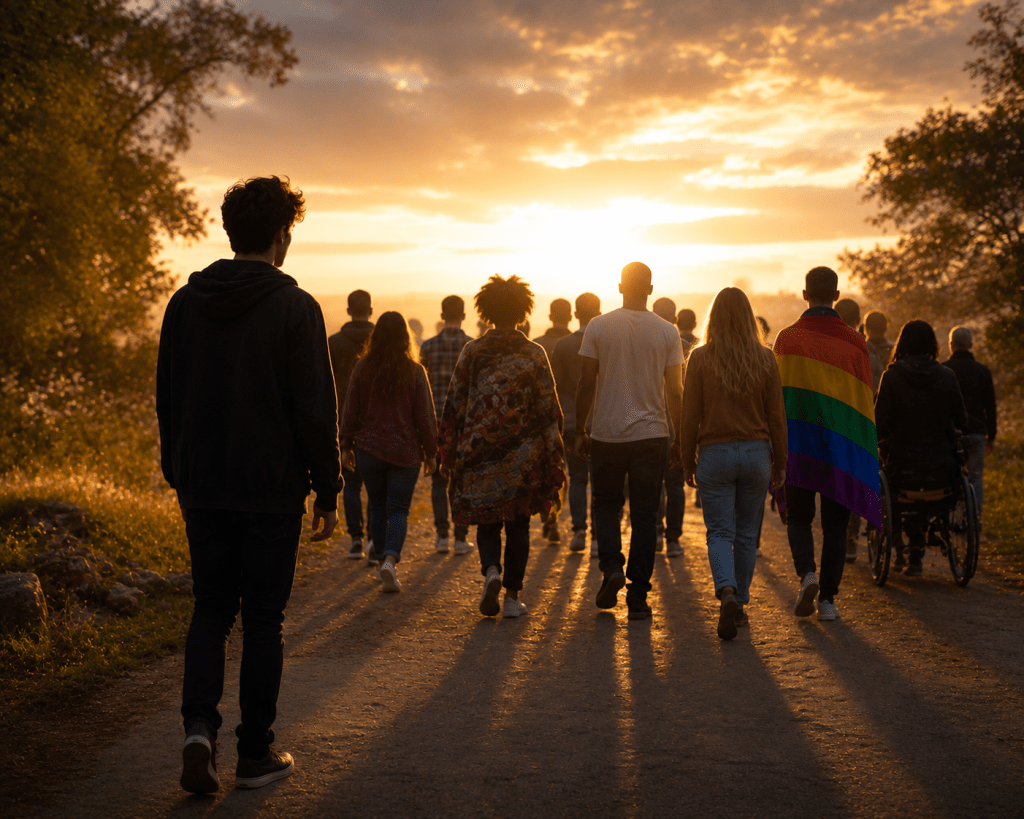

 The Wired Researcher