—Bret Lott (b. 1958; American author and memoirist whose themes focus on family, faith, and the complexities of human relationships.)
Next week I’ll be circling back home to the Library of Congress (LOC) where I enjoyed a glorious career spanning twenty-five years. I won’t be going home alone. Joining me will be the woman I’ve had an affair with for the last fifty years or so. I’m speaking, of course, of none other than my lady, Mary E. Wilkins Freeman. As part of my ongoing work on my two-volume Dolly: Life and Letters of Mary E. Wilkins Freeman, I’m circling back to LOC’s Rare Book and Special Collections to revisit some important Freeman materials. The beautiful part, however, is that the Washington Area Group for Print Culture Studies (WAGPCS) has invited me to talk about my research. I am thrilled beyond thrilled to be circling back home and to have the opportunity to share my ongoing and exciting work on Freeman.
Below is the abstract of my talk followed by a WAGPCS promotional for the event!
ABSTRACT
On March 15, 1930, the acclaimed American short story writer, Mary E. Wilkins Freeman, passed away. Her legacy, however, continues to resonate. At the turn of the twentieth century, Freeman and Mark Twain stood as America’s most beloved writers. She blazed a trail for women in literature, becoming the first recipient of the William Dean Howells Gold Medal for Distinguished Work in Fiction (awarded by the American Academy of Arts and Letters in 1925). She achieved the distinction of being among the first women elected to membership in the National Institute of Arts and Letters in 1926. Additionally, the bronze doors at the American Academy of Arts and Letters in New York (West 155 Street Administration Building) bear the inscription, “Dedicated to the Memory of Mary E. Wilkins Freeman and the Women Writers of America.”
Enter Thomas Shuler Shaw, a librarian at the Library of Congress, who embarked on an ambitious project in December 1931: writing what would have been the first biography of Mary E. Wilkins Freeman. His goal was to illuminate the life and literary contributions of this remarkable author.
However, fate had other plans. Shaw’s biography, titled A Nineteenth Century Puritan, faced rejection from prominent publishers such as Harper & Brothers, Ladies’ Home Journal, and The Saturday Evening Post. Despite setbacks, Shaw persevered. His meticulously curated scrapbooks and the typescript of his unpublished biography found a home in the Rare Book & Special Collections Division. These artifacts, along with Freeman’s books donated by Shaw to the Library of Congress, provide a rich tapestry of insights into her life and work. Notably, some of these materials reside in the Rare Book/Special Collections, while others find their place in the General Collections.
Fast-forward to 1985. Dr. Brent L. Kendrick, then serving as the Training Coordinator for United States Copyright at the Library of Congress, unveiled a literary treasure: The Infant Sphinx: Collected Letters of Mary E. Wilkins Freeman. Kendrick’s work, enriched by Shaw’s scrapbooks and unpublished biography, delves into Freeman’s correspondence. Through these letters, we glimpse the inner world of a prolific writer who defied conventions and left an indelible mark on American literature.
Fast forward again to May 2023. Kendrick continues his scholarly immersion into Freeman’s world and edits a new edition of her first collection of short stories for adults. Originally published as A Humble Romance and Other Stories in 1887, the book was meant to bear the title Green Mountain Stories. Now, 136 years later, it finally emerges under its intended name: Green Mountain Stories. Kendrick’s edition includes extensive critical commentary, unraveling the intriguing backstory behind this literary transformation.
But Kendrick’s scholarly pursuits don’t end there. Armed with fresh discoveries—significant letters previously absent from his earlier work, The Infant Sphinx—he embarks on a new two-volume project: Dolly: Life and Letters of Mary E. Wilkins Freeman. Vol. I: The New England Years (1852-1901). Vol. II: The New Jersey Years (1902-1930).
With these ongoing scholarly endeavors in mind, Dr. Kendrick returns full circle to the Library of Congress, a place where both he and Shaw once contributed their efforts. Here, he plans to delve once more into Shaw’s meticulously curated scrapbooks and unpublished biography, reexamining their contents to discern fresh insights that could enrich his comprehensive exploration of Freeman’s life and correspondence. This return to the archives not only honors the legacy of Shaw’s dedication but also underscores the enduring significance of the Library of Congress as a nexus for scholarly inquiry into the lives and works of American literary figures.
—Socrates (470-399 BCE; classical Greek philosopher best known for his Socratic method, which aims to elicit truth by asking questions and engaging in dialogue.)
One of my favorite short stories is Mark Twain’s “The Celebrated Jumping Frog of Calaveras County” (1865). No doubt you’ve read it, too, and will recall how old garrulous Simon Wheeler traps the narrator with a long-winded tale about a man named Jim Smiley and his famous jumping frog. Wheeler’s rambling accounts of Jim Smiley’s exploits appeal to me, especially as they become increasingly elaborate and exaggerated. Smiley and Wheeler are portrayed as eccentric characters with idiosyncratic behaviors and quirks. Who can forget Smiley’s obsession with betting on animals or Wheeler’s folksy storytelling. The premise of the entire story—a man who trains a frog to jump competitively and then loses a bet because the frog has been tampered with—is inherently absurd, adding to the comedic tone.
More than any of those dimensions, however, I like the story’s situational humor. The narrator is “backed into a corner” by Simon Wheeler and unable to escape until the end of his monotonous monologue. If you look at the story closely, you will discover that everything from the fourth paragraph all the way up to and including the next to the last paragraph is enclosed in quotation marks. This setup creates a sense of trapped amusement. The narrator is helpless in the face of Wheeler’s relentless storytelling and remember, as well, that Wheeler physically corners the narrator with his chair, thereby adding a visual element to the absurd humor.
The juxtaposition of the narrator’s predicament and Wheeler’s obliviousness to his captive audience adds a richness to the subtle humor. Here’s why. Even if readers are not consciously aware of that aspect of the story–that the narrator is literally backed into a corner–it seems to me that they pick up on it intuitively because we can all relate to feeling trapped in real-life situations where we are unable to escape.
Twain succeeded in tapping into a universal experience that readers understand. It’s a perfect “been there, done that” moment.
No doubt, you’ve been there, done that, too. Remember that party where you found yourself cornered by the resident “over-sharer”? They regale you with the intricate details of their recent colonoscopy, leaving you desperately searching for an escape route while nodding along, trapped in a vortex of TMI. Hopefully, over time, you came to terms with your boundaries, and you’re comfortable with giving an assertive but diplomatic response:
“I appreciate your openness, but I have to admit, discussing medical procedures makes me a bit squeamish. Let’s shift the conversation to something more lighthearted.”
Such a response communicates your discomfort with the topic, sets a clear boundary in a respectful manner, redirects the conversation without dismissing the other person, and maintains a friendly and polite tone.
Or maybe your friends dragged you off to a karaoke bar, and despite your protests that you couldn’t carry a tune to save your life, they insisted that you join in. As you droned an off-key rendition of “Every Breath You Take,” you felt like a reluctant participant in a musical hostage situation.
Getting backed into a corner by peers happens over and over again until we take time to reflect on our personal boundaries with a determination to be more assertive. When we gain insights into those areas, we know our limits, we know how to stand firm, and we know how to say “no.”
Or maybe you got backed into a corner at a family gathering where you’re bombarded with questions about your career, relationship status, and future plans. Despite your discomfort, you navigated the awkward interrogations with forced smiles and vague answers, feeling trapped in a whirlwind of familial expectations and scrutiny.
How can you avoid feeling trapped in future family gatherings? Consider your comfort level with discussing personal topics. Set your own boundaries. Once again, by gaining insights into those areas, you can navigate future events with greater ease and respond to questions assertively and confidently.
Hopefully, you’re getting my point. We’re all backed into corners by family and friends in social situations where we never expected to be in the corner, feeling so uncomfortable.
But if we seize those encounters as opportunities to examine why we felt uncomfortable, to clarify in our own minds our beliefs, to understand the nature of our boundaries, and to resolve to assert ourselves, we can navigate future social situations like that with far greater confidence, simply because we took the time to examine ourselves.
I am reminded of something that acclaimed writer Mary E. Wilkins Freeman once said:
Sometimes I believe that the greatest thing a man’s friends can do for him is to drive him in a corner with God.
Whoever, whatever, whenever, wherever or even if God is, we all know exactly what Freeman has in mind. It’s that final moment of reckoning when we are accountable unto ourselves.
But here’s the thing. Why wait for friends? More likely than not, our friends are too polite. More likely than not, our friends are too nonconfrontational. More likely than not, our friends are too diplomatic. Let’s not wait, then, for our friends to drive us in a corner. Let’s not expect God to be in the corner waiting for us, either. Let’s just go on and do it. Let’s just go ahead and back ourselves into our own uncomfortable corners so that once and for all, we have to address major issues that we can’t escape. Let’s not avoid them. Let’s not pay lip service to them. Let’s not talk out of both sides of our mouths about them. Let’s simply back ourselves into our respective corners, examine the issues, and discover where we stand.
God knows that I’ve lived long enough to back myself into lots of corners. For some, I’ve been in them so often and so long that they’re rounded. For others, I’ve just gotten in them, and I’m discovering their recency, their rawness, and their sharpness. Let me share some of my corners. As you read about mine, be mindful that I am not trying to convince you to share my beliefs. You’ve got your own beliefs and your own corners–soft or hard. At the same time, I am encouraging you to back yourself into your own corners and to examine your issues and concerns in private before the world forces you to examine them in public.
One of my corners deals with Racism and Discrimination. Growing up in West Virginia coal camps alongside African Americans, Whites, Greeks Hispanics, Jews, Italians, and Hungarians, I witnessed the power of unity and mutual respect. Our dads worked together in the mines; our moms cooked together in the kitchens; and we kids played together in the yards. We recognized each other’s humanity and worth. Today, I cringe when I witness racism and discrimination that cast a dark shadow over all of us. I am pained as I examine the harsh reality of ongoing injustices and the destructive impact of discrimination. Yet, I remain steadfast in my belief in the interconnectedness of humanity and our entitlement to equal rights. Simply acknowledging the problem isn’t sufficient; we must actively advocate for change and dismantle oppressive structures. By standing in solidarity with marginalized communities and confronting racism abd discrimination head-on, we can move towards a more just and cohesive society. Every individual, regardless of race or background, deserves to be valued and respected. It’s time to build a future where equality and inclusion are the cornerstones of our society.
The Russia-Ukraine War and the Israel-Gaza Crisis leave me speechless in disbelief as I examine the issues in my corner. How can this be happening in our world today? The unprovoked invasion by Russia into Ukraine and the attacks from Gaza into Israel are stark reminders of the fragility of peace and stability in our world. In these tumultuous times, I firmly believe that the United States and other nations must stand together on the side of justice and righteousness. We cannot turn a blind eye to aggression and violence. It’s imperative for the international community to rally behind efforts for peace, diplomacy, and the protection of innocent lives. We must advocate for dialogue, de-escalation, and respect for international law to ensure a safer and more just world for all.
Another corner that I’m examining is Artificial Intelligence (AI). As a staunch AI supporter, I’m deeply concerned by the lack of awareness surrounding its potential and our collective responsibility in shaping its trajectory for the greater good of mankind. AI has the power to revolutionize countless aspects of our lives, from healthcare to transportation, education to entertainment. However, without careful consideration and ethical oversight, there’s a risk of unintended consequences and misuse. We must advocate for transparency, accountability, and inclusivity in the development and deployment of AI technologies. By promoting education and fostering informed dialogue, we can ensure that AI is harnessed responsibly to benefit humanity as a whole, rather than serving narrow interests or exacerbating existing inequalities. Let’s work together to shape a future where AI serves as a force for progress and empowerment, guided by principles of ethics, empathy, and equity.
You’ll find me in a corner, too, with Global Warming. It terrifies me. Its effects are undeniable. Extreme weather and melting ice caps make it clear. Our planet is in crisis. I’m so alarmed that I even contemplate solutions like space colonization. But while this idea may gain traction, it shouldn’t be our first resort. Instead, urgent action is needed. Transitioning to renewables and reducing emissions are crucial steps. The time for change is now. We must prioritize Earth’s preservation, ensuring space colonization remains a last resort.
My next corner is a hard one because discussing politics has never been my cup of tea. But with a Presidential Election ahead of us–presumably between President Biden and Donald Trump–I feel compelled to examine where I stand. Key issues like the economy, world trade, green investments, race, and criminal justice weigh heavily on my mind. In those areas–and others–President Biden earns my support with his comprehensive plans and commitment to progress. However, there’s one more crucial factor that will sway my vote: morality and decency. In this election, every vote cast will shape the narrative of a major morality play. The character and integrity of our leaders matter deeply. It’s about more than policies; it’s about the soul of our nation. I believe President Biden embodies the values of empathy, integrity, and decency that are essential for effective leadership. While I may not agree with every decision or policy, I trust that President Biden will lead with compassion and integrity, prioritizing the well-being of all Americans. At the end of the day, my vote for him may just tip the scales towards a more just and compassionate future.
Economic Inequality hits home for me, too. As the son of a West Virginia coal miner whose family often lived from paycheck to paycheck, I know firsthand all about economic inequality. Despite some progress, I still see in my own community the struggle of living on an inadequate minimum wage. It’s frustrating to witness marginalized groups face barriers to advancement, especially when it comes to leadership roles and fair pay. Addressing these issues demands systemic change in workplaces. Additionally, the current minimum wage barely covers basic needs, widening the wealth gap. I firmly believe in raising the minimum wage, implementing fair tax policies, and investing in education as crucial steps. We must break barriers so that everyone can have a shot at a better future.
What can I say about my LGBTQ+ corner? I’m intimately familiar with the journey of self-discovery, self-examination, and the courage it takes to live authentically. Growing up, I carried the weight of my identity, aware of my differences before I even started school. All along my journey, I assumed that everyone knew that I was gay. However, it wasn’t until I reached the age of 50 and found my soulmate that I felt emboldened to “come out.” I had Allen’s support. I had Emerson’s backing, expressed so eloquently in his “Self-Reliance.” My colleagues, my students, and my friends made me know the warmth and authenticity of their embraces, yet I encountered unexpected pushback, rebuke, and rejection from some members of my own family. My personal journey underscores the importance of advocating for LGBTQ+ rights. While we’ve made significant progress, regressive actions both domestically and internationally threaten the rights and protections we’ve fought for. Discriminatory laws persist, jeopardizing the hard-won gains of the LGBTQ+ community. From rollbacks on protections for transgender individuals to the criminalization of same-sex relationships, the fight for equality continues. Despite the challenges we face, I remain steadfast in my belief in our right to live authentically, free from discrimination. We must persevere in our advocacy efforts, challenging discriminatory practices and demanding equality for all LGBTQ+ individuals. Together, we can work towards a future where LGBTQ+ individuals are fully recognized, respected, and afforded the same rights as everyone else.
In addition to these societal challenges, what about Women’s Rights? The persisting inequities within homes and workplaces, coupled with debates on reproductive autonomy, require examination, too. The burden of domestic responsibilities disproportionately falls on women, intertwining with workplace disparities like the unyielding gender pay gap. Conversations surrounding women’s reproductive rights, notably access to abortions, remain a contentious battleground. Addressing these issues isn’t merely a call for justice; it’s an urgent plea for societal transformation. Let us back ourselves into the corners of these crucial discussions, questioning norms, challenging biases, and advocating for a world where women stand on equal ground in every facet of life.
I’ve saved my overarching corner for last. Am I my brother’s keeper? Absolutely. Yes. It doesn’t matter whether you’re gay or straight; poor or wealthy; Democrat or Republication; believer in climate change or not; for or against AI; Russian or Ukrainian; Jew or Palestinian; African American, White, Greek Hispanic, Italian, Hungarian, or any other cultural group. My conviction runs deep and is rooted in my belief that we are all interconnected, all part of the same human family. My brother isn’t just a blood relative; they’re every person I encounter, every life I touch. Witnessing and examining the struggles and injustices faced by one or faced by all fuels my passion for advocacy and compassion. It’s not enough to stand idly by; I am compelled to act, to uplift, and to support those in need. Whether through lending a helping hand, speaking out against injustice, or simply offering a listening ear, I embrace my role as my brother’s keeper. Together, we can build a world where empathy and solidarity reign, where every individual is valued and empowered to thrive.
Obviously, numerous other issues weigh heavily on my spirit, too. Environmental Sustainability. Healthcare Access. Education Equity. Immigration Reform. Their significance is not lost on me. Often, I’m in my corner examining them, too.
I know all too well that life’s demands and distractions can easily cause us to sidestep uncomfortable truths and to skirt prickly issues that challenge our beliefs and convictions. However, I maintain that one of the most enlightening experiences we can gift ourselves is to willingly back ourselves into a corner, metaphorically speaking, where we are compelled to confront and examine the depths of our convictions and the authenticity of our beliefs. By immersing ourselves in situations that demand introspection and self-examination, we open the door to profound personal growth and a deeper understanding of ourselves and the world around us.
I didn’t intend for today’s post to end up being a call to action. Yet, it is. I’m asking that we examine our core beliefs about the issues that matter most to us. We don’t have to march out onto the world’s stage and be advocates if we’re uncomfortable being front and center, wearing the shield of our beliefs. However, when the world comes to us–as it most assuredly will, at parties, at family gatherings, among peers, or even at work–I hope that we are bold enough not only to share our beliefs but also to stand by them.
Today, I challenge you to examine your life and to examine the issues that surround not only you but also the rest of the world. Go on. Do it. Back yourself into a corner.
–Ursula K. Le Guin (1929-2018; American novelist and essayist renowned for her contributions to science fiction and fantasy literature; from her 1969 novel, The Left Hand of Darkness.)
Every now and then, a Silly Notion finds its way inside my head and takes up residence there. Try as I will, it won’t move out, even when I threaten it with eviction notices.
The Silly Notion that I can’t get rid of now is that I might be happier if I were to move away from my mountaintop oasis and find myself a lower-maintenance oasis downtown in a fabulous city somewhere. This Silly Notion has been living quietly in my head for a long, long time. I’ll give you an example.
In the fall of 2019, my late partner and I spent a week in Brattleboro (VT), where I was the keynote speaker at the Brattleboro Literary Festival. I had been to Brattleboro many times before, but it was Allen’s first visit. He fell in love with the mountains and the river and the funky downtown, a little San Francisco rolled up into a few blocks.
When it was obvious that our Brattleboro love was a shared one, we had some serious conversations about packin’ up and movin’. I was a little surprised that Allen–a Floridian–would even consider such a northerly move, especially Brattleboro’s average snowfall of 56 inches. However, I didn’t even have to bring up that topic. Allen settled the whole discussion when he gave me his coy, twinkly-eyed angelic smile that only he could give:
“Sure, we’ll move to Brattleboro, but we’ll have to airlift our gardens if we do.”
I laughed. We had had similar conversations before, and I had heard Allen’s response before when we visited Asheville (NC), Charleston (SC), and Savanah (GA). He and I loved the downtown vibes of small cities.
Obviously, we loved our mountaintop oasis more. Obviously, too, I still love it more because I’m still here, but that Silly Notion of moving is still in my head, too. Here’s what’s really funny. The notion is so silly that it actually thinks that I could sell my mountaintop home rather quickly. Hmmm. On reflection, I probably could. One of my neighbors told me once that if I ever sold, he’d like first dibs on my upper lots.
“I doubt that I’d ever sell just a part of my property. If I ever sell, it will be a total package, and I come with it.”
I guess he didn’t like my on-the-spot, standing-up proposal because he didn’t accept. Too bad. He would have gotten a damned good bargain.
I imagine, however, if I approached him now with the opportunity to buy–knowing that I’m no longer part of the deal–he might give it some serious thought. He should. If he didn’t, I’m sure some city slicker would, just as I did when I became a DC refugee. City slickers would love my Shenandoah Valley heaven. They could trade their car horns for my bird songs and their traffic jams for my stargazing escapades. My serene landscape and tranquil nights would woo even the most urban soul. Plus, and I’m not boasting, my oasis has one of the most commanding views anyone could ever hope to find in this part of the Shenandoah Valley.
§ § §
Selling my home, then, isn’t the challenge. The challenge is straightforward: where would I go? I have lots of options. So that I don’t show my leanings and inclinations–Scorpions like me, after all, like to keep people guessing–I’ll talk about them in alpha(betical) order.
Asheville, NC.: I’ve been to Asheville countless times, and the idea of living in that vibrant city is enticing. It might be wonderful to return, immerse myself in its artistic culture, and walk around the neighborhood where Thomas Wolfe lived. I could stand on the Square where Grover stood in Wolfe’s “The Lost Boy,” listening to his thoughts:
“Here,” thought Grover, “here is the Square as it has always been–and papa’s shop, the fire department and the City Hall, the fountain pulsing with its plume, the street cars coming in and halting at the quarter hour, the hardware store on the corner there, the row of old brick buildings oil this side of the street, the people passing and the light that comes and changes and that always will come back again, and everything that comes and goes and changes in the Square, and yet will be the same again. And here,” the boy thought, “is Grover with his paper bag. Here is old Grover, almost twelve years old. Here is the month of April, 1904. Here is the courthouse bell and three o’clock. Here is Grover on the Square that never changes. Here is Grover, caught upon this point of time.”
Aside from the literary appeal is the culinary one. Cúrate’s thriving treasure troves of Mediterranean food and wine would beckon me for regular lunches. I could take in art exhibits at the Asheville Art Museum, shop at all the funky shops, and enjoy chocolates at French Broad Chocolate Lounge. The sound of street musicians and the sight of quirky art installations would inspire and heighten my own bursts of creative energy. Add to all those joys the high of hiking Mount Mitchell and DuPont State Forest.
Let me check out some condos. Wow! I would have lots of options–to rent or to buy–but I am gobsmacked by the amazing condo that I just stumbled upon. It’s in downtown Asheville, above Ben and Jerry’s, near parks, shopping, dining, and all the action. 2 bedrooms. 2 baths. 1,130 square feet. OMG. It has a cozy balcony with views of Pritchard Park and Haywood Street, a working brick fireplace, gorgeous hardwood floors, and tons of windows with mountain breeze. It’s my reinvention dream come true. Say whaaaat? $749,000, plus monthly condo fees! Hmmm. Next time, I’ll look at the price first before my soaring hopes get sore.
Even if I could find a less-expensive condo (and I’m sure that I could), I wonder. How long would the initial creative rush of downtown Asheville continue to nourish me?
Brattleboro, VT: I did as I said that I would do. I looked at the price first: $279,000! I’ll tell you more about that gem after contemplating the treasures that Brattleboro offers. Those who know me well know that I love Brattleboro. I’ve been visiting there since the 1970s when I started my research on Mary E. Wilkins Freeman, who launched her acclaimed literary career while living in Brattleboro and captured the spirit of the town beautifully:
“Oh how wonderfully beautiful it was in Brattleboro. I used to walk to the head of High Street, and stand and look at the mountain in winter. The beauty in Brattleboro made a great difference in my life.” (To the Citizens of Brattleboro, Vermont, December 14, 1925. Letter 461. The Infant Sphinx: Collected Letters of Mary E. Wilkins Freeman. Edited with Biographical/Critical Introductions and Annotations by Brent L. Kendrick. Scarecrow, 1985.)
Every time that I’m in Brattleboro, I explore the streets where Freeman lived and walked. If I moved there, it would be a real boost to my ongoing Freeman research. Aside from that perk, Brattleboro is a delightfully charming town. I always refer to it as Vermont’s own Asheville. It’s artsy, and it has a bohemian vibe with free spirits roaming freely. It’s nestled along the Connecticut River with Mount Wantastiquet rising up on the other side.
But, whoa! You’re not going to believe the gem of a home that I found there. Picture this: a charming pergola, a delightful stone terrace, and enchanting gardens. It’s like stepping into a world that beautifully blends Old-World charm with the vibrant vibes of downtown living. And here’s the real treat–not one, but two porches that would allow me to admire those picturesque gardens and stonework. But the icing on the cake has to be the view. I can soak in the breathtaking Wantastiquet ridgeline and witness the moon climbing up the mountain just as Freeman did:
“The memory of the moon rising over the mountain causes the same surprise, the old leaping thrill of wonder at unexpected loveliness. […] I cannot now rid myself of the conviction that it was a special moon, rising nowhere else in the world. Its glory would fling out its road before it, then the first gleam of celestial fire would show over the mountain summit, and an elderly woman, for whom the good of her soul the old remained new, would call out: ‘there it is, the moon.'” (To the Citizens of Brattleboro, Vermont, December 14, 1925. Letter 461. The Infant Sphinx: Collected Letters of Mary E. Wilkins Freeman. Edited with Biographical/Critical Introductions and Annotations by Brent L. Kendrick. Scarecrow, 1985.)
This place really might be a dream come true. Oh. My. Yes. If I moved to Brattleboro, I would become a citizen of Vermont. I’d be a Vermonter, and I wouldn’t have to keep waiting for my friends or benevolent groups or the governor himself to bestow honorary citizenship.
My Freeman research would keep me enchanted, just as it has for five decades. But I wonder. How long would the other creative rushes of Brattleboro continue to nourish me, especially during the heavy snows of winter?
Savannah, GA: I must confess. Of all the places that my Silly Notion keeps making me think about, Savannah seems to have the least charm. It’s not as if I don’t like the city. I do. I’ve stayed there on several occasions, once at the awesome Planter’s Inn, in the epicenter of Savannah’s historic district and just a stone’s throw from River Street and the Savannah River. Another time, I stayed in a gorgeous historic home facing Forsyth Square, an enchanting urban oasis adorned with centuries-old oaks, cobblestone paths, and a mesmerizing central fountain. Living there, I could explore each of its historic squares, enjoy its coastal charm, and feel a sense of timelessness.
As for finding a condo there, I just stumbled upon an extraordinary gem. Actually, it’s an absolute dream. How about a 3-bed, 2-bath waterfront unit with exposed brick, hardwood floors, and iron detailing. The real showstopper? It overlooks the majestic Savannah River! The open layout is bathed in natural light. But wait for it… the price tag? A cool 1.1 million! Gasp! I forgot to look at the price first.
Well, I need not wonder whether Savannah’s charm would see me through the long haul. It’s a certainty: I won’t be going there. Now, all that I have to do is make the Silly Notion in my head understand my decision.
Washington, DC (Capitol Hill): Capitol Hill is awesomely significant to me. After all, I lived there for a quarter of a century, working at The Library of Congress, in whose hallowed, marble halls I grew up and became a professional. It was at the Library of Congress that I got turned on to research and decided to pursue my Ph. D. in American Literature. After I earned the degree, I returned to the Library of Congress, where I enjoyed a glorious and life-changing career.
Even though I’ve been away from DC for about as long as I lived there, when I return for daytrips, nostalgia and belonging wash over me. Even after the passage of so many years, when I visit the iconic Eastern Market, many vendors still remember me, and I am reminded of the neighborhood’s small-town, vibrant community spirit. Living at the heart of a dynamic city, where history, culture, and politics converge always made each day an exciting journey for me, and I am sure it would do the same once more.
Wait! Wait! Here’s the clincher that might just make moving to DC a no-brainer. I’ve just uncovered a condo conveniently situated right across the street from the prestigious Hart Senate Office Building and various other Senate offices. Natural light pours through oversized, brand-new windows. The modern, white kitchen features granite countertops, a gas range, dishwasher, and microwave–perfect for whipping up my culinary masterpieces. The updated bathroom is a retreat with its soaking tub shower, a stylish vanity, and a generously sized window with lots of sunlight. The entire unit has been tastefully updated, freshly painted, and boasts new flooring throughout. But here’s the kicker: no full bedroom! Where in the world would I catch some Zs? Holy smokes! But it’s only $385,000. Trust me: I know how to bloom wherever I’m planted. I see an outlandishly elegant Murphy Bed in my future.
Without a doubt, DC is as close to home as I can ever hope to be. I know that living there again would stimulate me intellectually, culturally, and socially. But I wonder. Would all of its parks, the Botanical Gardens, the Tidal Basin. Rock Creek Parkway, and the National Zoo give me the soul food that I get here on my mountaintop oasis when I do my down-and-dirty gardening?
§ § §
Well, let me say simply what Scarlet O’Hara would say:
“I can’t think about that today. I’ll have to think about that tomorrow.”
Right now, I have to think about other things. Clearly, I have some idyllic cities calling out my name. It’s equally clear that I’d be able to find a buyer for my mountaintop paradise.
But I’ve moved several times in the past, and I know what I have to do to prepare my home for the market. I realize that it will be a wild ride, so I need to start thinking and planning.
The Great Stuff Purge: I’ll start with the hardest part first. After all, I have kept everything forever. Now I wonder why. Who on earth cares about all of my canceled checks from the first one until I shifted to electronic banking? Who on earth cares about all of my tax returns going back to the first one heat I ever filed? Who on earth cares about all of the personal letters and cards that I have ever received? Those are only three categories of things that I’ve kept forever. I need to get rid of all that stuff. Then, I’ll tackle my loft, chock-full of Shenandoah Valley collectibles bought at auctions down through the years. OMG! I just had a marvelous idea. I acquired most of that stuff at Laughlin Brothers Auctions! I’ll sell it back to those guys. Then my loft will be empty, and I can convert it into a Zen-like meditation room. Dark hardwood floors. Light-colored walls. Wall-mounted light panels made of Himalayan salt. Meditation cushions. It will create a perfect ambiance, especially with an Anjali Namaste Mudra Buddhist Monk statue standing at top of the stairs bidding a prayerful welcome to the inner sanctum. What an asset that will be when the house hits the market. (I know. I’m brilliant. Thank you, for reminding me.)
The Deep Clean Extravaganza: This won’t be too bad because I’ve been deep cleaning since the Covid Pandemic started. I’m sure that you remember how “My Imaginary Guests” helped me keep my home spic-and-span clean. But I’ll arm myself once more with a mop, a feather duster, and a metaphorical superhero cape (purple, of course), and I’ll tackle dust bunnies and cobwebs with unmatched determination.
The Decor Remix: Honestly, I like my decor exactly as it is. It’s a perfect mix of antiques and modern–old and new. My guests always feel at home, so I imagine prospective buyers will, too.
The Garden Magic: I have been working diligently to restore my gardens into the pristine beds they once were. If I time everything just right, I can have the house ready for showing by mid-May 2024, when my peonies will be in bloom, ready to steal the heart of anyone who takes one look.
The “Fix It” Finale: Luckily, I fix things when they need to be fixed. Just yesterday, I had the plumber expertly snake my sluggish kitchen drain. It swirls around effortlessly and melodiously now. In a week or so, my new double wall ovens and my new stove top will be installed. I’ll probably go ahead and replace my inefficient electric water heater with a space-saving, more efficient, on-demand, gas water heater. The major fix-it, however, will be the road. Right before the house goes on the market, I’ll have crush-and-run put down so that prospective buyers will have a smooth ride up. I want the first one up to want to stay here forever!
Photoshoot Mania: I love to take photos, but I’ll need a professional photographer who can make my home and the spectacular surrounding views blush with flattering lighting and expert angles.
Baked Goods Invasion: Nothing makes a home smell better than freshly baked bread and pastries. I’ll be baking every day that my agent plans to show my home. I may even leave a gift basket of goodies on the kitchen table.
§ § §
I believe that’s it, but bear with me while I give the above pre-sale preparations a quick review. I don’t know what you think, but I think I have laid out a wonderful and workable plan.
“Would you two just knock it off! I’m trying to think.”
I guess I had better explain. You know all about the Silly Notion that lives in my head. However, I haven’t told you about the Sensible Notion that also lives in my head. Usually, they coexist peacefully on opposite sides of my brain, but right now, they are having a major squabble. Geez! I can’t get any peace at all.
Silly Notion: Butt out. This is my brilliant idea, and you have absolutely no right whatsoever to show up now.
Sensible Notion: Of course, I do. Remember: I have exclusive life rights. All you have is a towering stack of eviction notices.
Silly Notion: Scoot over. I don’t want you encroaching on my side of his brain.
Sensible Notion: Well, excuse me. I’ll graciously give you all the space that you want. Fortunately, I don’t require much space. With just a smidgen, I’ll work my magic and make him forget your delightful silliness and return to his senses.
Have you ever heard such a racket in all your life? I can’t enjoy a moment’s silence even within the domain of my own brain. I think that I feel a headache coming on. Oh. No. I think it might be a migraine.
Whew. It was neither as bad nor as lingering as I initially feared. An apple cider vinegar cloth applied to the temple always works wonders.
As I reclined on my sofa, allowing the vinegar vapors to perform their enchanting alchemy, I suddenly had an epiphany. It was yet another option, perhaps even more dazzling—if such a thing be possible—than the ones that previously danced around in my head, demanding to go on stage right here in my blog!
Let me explain. I will charge ahead with The Great Stuff Purge, The Deep Clean Extravaganza, The Garden Magic, and The “Fix-It” Finale. When I get all of that done, my mountaintop oasis will be transformed into a pristine paradise, so incredibly paradisical that I wouldn’t dare entertain the thought of moving.
But wait, here’s the pièce de résistance. Since I won’t be moving, I won’t have to fork over a hefty commission to a real estate broker. Instead, I can squirrel away those substantial savings and treat myself to several weeks (or maybe even a full month) each year in my cherished duo of cities that will forever hold a special place in my heart: DC, and Brattleboro. Who knows? I might even sprinkle in some vacation time in Asheville, Charleston, and Savannah.
Who says I can’t have the best of both worlds? I certainly can. My plan lets me live in my luxurious and enchanting mountaintop world for most of the year and, for a month or two each year, I can savor the richness of my favorite metropolitan worlds. You bet. I had to do some hefty packin’ up and gettin’ ready, but I ain’t movin’ nowhere (at least, no time soon anyway).
“No one can see their reflection in running water. It is only in still water that we can see.”
—Taoist proverb
The extraordinary connection between self-reflection and performance is well-known and well-documented. For example, in their Harvard Business Review article “Don’t Underestimate the Power of Self-Reflection,” James R. Bailey and Scheherazade Rehman show that the “habit of reflection can separate extraordinary professionals from mediocre ones. We would go so far as to argue that it’s the foundation that all other soft skills grow from.”
Luckily for me, I’ve been doing self-reflection since early childhood. At dinner, as we all sat around the kitchen table, we had a regular ritual. Everyone reflected on their day. We turned our dinner-table sharings into dinner-table learning moments. Each of us reflected on–and talked about–what had happened during the day and what impact it had on us.
My dad’s coal-mining reflections always impressed me the most. His pay was based on how many coal cars he loaded each day, shovel by shovel, working in seams of coal sometimes no higher than 40 inches. He and his fellow coal miners shoveled coal while lying on their backs or kneeling on their knees. Generally, my dad was pleased by what he accomplished–he actually enjoyed being a coal miner. But since his pay and his family’s livelihood depended on how many coal cars he loaded, he would strategize what he might do to load one more car the next day. It was a succession of what-ifs. The next day, he’d let us know whether his strategy had worked.
Looking back, I realize that day after day, my dad was measuring his performance against his plan. Looking back, I realize that we were all doing the same thing as we gathered around our kitchen table and shared thoughtful, deliberate, and sometimes courageous self-reflections.
● Self-reflection.
● Measuring performance against plan.
I have always done that, willingly and enthusiastically throughout my careers. During the years that I taught at Laurel Ridge Community College (formerly Lord Fairfax Community College; 1999-2022), I spent the better part of December standing still, reflecting on my year of teaching that had just ended. I turned my self-reflections into my annual self-evaluation, complete with supporting documentation. Generally, those self-evaluations were longer than 150 pages, covering accomplishments as well as areas that I wanted to work on and explore during the next year. They meant so much to me that I had them bound in leather. Most of the time, those self-evaluations weren’t required, and even when they were, the requirement was never as great as the distance that I went. It was my ongoing way of ensuring that I measured my performance against my plan.
In January of this year, I started reinventing myself. Now, with seven months behind me, I’m standing still long enough to reflect and to share my self-reflections with you.
Obviously, I had been working on both books long before I started my reinvention. Books don’t spring into existence overnight. At the same time, seeing two books through the publication process brought me great joy.
On reflection, however, I wish that I had allowed more time between the two books. I had to do far more heavy lifting, getting them published than I ever expected. I don’t think that I will ever again have two books in the publication hopper at the same time.
On Sunday, July 9, I was the guest speaker at the New Market Area Library (New Market, VA). My topic? Reinvention and my own attempts to begin new “chapters” in my life.
I targeted my presentation toward anyone considering a new beginning, aspiring writers, and lovers of short stories.
CHALLENGES
1. Giving Myself Permission to Chill.
I have an incredibly strong work ethic, which has always kept me hard at work doing something. It brings me great joy.
Even though I have set up my own work schedule, I have discovered that I have more time now to just chill. I’m not talking about meditation. I’ve done that forever. I’m talking about curling up with a book for the entire day. I did just that last week when I re-read (for the fifth time) George Saunders’ Lincoln in the Bardo. It was a luxurious experience, but from time to time, I had to chase away the thought that I should be up and about doing something.
It will take me some time, but I’m working on chilling.
2. Reassessing My Structure.
This challenge is related closely to my first one. I’m a laid-back, go-with-the-flow guy. Right? Well, I am. However, I like my days to be structured. Actually, that’s an understatement. I like–and live–a regimented existence. I always have. If I shared my day-planner–(Don’t ask; I won’t share.) –you would discover that all the timeslots are full, from sunup to sundown.
These days, I’m discovering that I can accomplish everything that I want to accomplish in a day and still have some free time slots for me. Mine. All mine. This is a new sensation for me, and I like it. I had no idea before that 30 minutes here and there could expand into such vastly soft and silky luxuriousness.
ONGOING AND UPCOMING PROJECTS
1. Weekly Blog Posts.
I never dreamt how important my weekly blog posts would become to me. In the midst of whatever might be going on, writing my posts anchors me. They are essential components of who I am and of who I am yet to become.
2. Dolly: Life and Letters of Mary E. Wilkins Freeman.
My goodness. You know you’re in love when the love grows richer over time. My love affair with Mary E. Wilkins Freeman is now in its fifth decade.
Since that publication, more letters have surfaced. Rather than simply updating The Infant Sphinx, I am working on a two-volume book: Dolly: Life and Letters of Mary E. Wilkins Freeman. Vol. 1: The New England Years (1852-1901). Vol II: The New Jersey Years (1902-1930).
This is a major scholarly work will take several more years. I am hopeful that Volume I will be published by the end of 2024 or the beginning of 2025.
3. Edinburg Ole Time Festival Authors Tent.
Look for me on September 16 and 17 in the lineup with other local authors. If you live in the area, please stop by not only to say “Hi” but also to support the festival.
4. The Humourist Essays.
This blog had its birth when I was a Chancellor’s Professor (2012-2014). My project focused on a remarkable collection of Colonial American essays, songs, poems, and advertisements published pseudonymously under the name of “The Humourist” in the South Carolina Gazette during 1753-1754. The Encyclopedia of the Essay (ed. Tracy Chevalier, 1997) places “The Humourist” essays in the tradition of Samuel Johnson’s Rambler essays and observes that they are the only “full-fledged literary” works to have appeared in the South Carolina Gazette. J. A. Leo Lemay (du Pont Winterthur Professor of English at the University of Delaware) noted in A Bibliographical Guide to the Study of Southern Literature (1969) that the essays should be edited, published, and the author identified.
I completed all of those tasks. My plan is to start sending the completed manuscript to publishers by the end of September, with an eye toward publication in January/February2024.
ACCOUNTABILITY PARTNERS
I’m really glad that I’m continuing my decades-old practice of regularly reflecting on my performance. This time, though, is singularly different. I’m sharing my self-reflections with you. I like that. Actually, I like that a lot. By sharing my plans with you, I am, of course, holding myself accountable to readers from around the world. The ramifications are far-reaching. Equally important, by sharing my plans with you, you become my virtual accountability partners. You can count on me, and I know that I can count on you!
But Mousie, thou art no thy-lane, In proving foresight may be vain: The best laid schemes o’ Mice an’ Men Gang aft agley, An’ lea’e us nought but grief an’ pain, For promis’d joy!
Robert Burns (1759-1796; considered to be the National Poet of Scotland; from his “To a Mouse”)
Without a doubt, you’re familiar with the poetic lines, “The best laid schemes of mice and men often go astray,” even if you don’t know that Robert Burns penned them.
The lines express a universal truth. Yet, many people have trouble accepting it. Or, maybe, they simply have trouble admitting it when their meticulous plans go awry, sometimes dreadfully so.
Down through the years, it’s happened to me so often that I can accept the poem’s truth readily. More important, I don’t mind admitting it when my best-laid plans flop.
My recent trip to Vermont is a perfect example. I planned it way back in March, just as soon as I knew that my edition of Green Mountain Stories would be launched in Burlington on May 25 and again in Brattleboro on May 30.
I decided that it could also be a much-needed vay-kay for me and my dog Ruby.
But let me ask you this. Have you ever gone on a 10-day road trip with your furry, four-legged best friend, alone with no other person traveling with you?
If so, you know already what I had to learn the hard way: it’s not really your road trip. It’s your dog’s. As I made my careful plans, it became obvious to me that everything was being built around Ruby’s needs:
● How far could she ride in a day?
● Would the hotel mid-way up and mid-way back accept a dog?
● Would the VRBO home rental in Burlington accept a dog? What about a yard so that Ruby could play?
● Would the VRBO home rental in Brattleboro accept a dog? What about a yard so that Ruby could play?
Those were my big concerns. I won’t bother you with the small ones because just a few days before my trip, my best-laid plans fell apart.
It became clear to me, to Ruby, and to our veterinarian that she would be happier staying at a pet spa rather than staying stressed out for such a long trip.
By then, it was too late to change any of my lodging arrangements. The cancellation windows had closed.
● Yeah. It would have been great to stay in swanky downtown hotels and walk to restaurants and nightspots.
● Yeah. It would have been great to fly to Vermont. Or, maybe, drive to DC’s Union Station and journey by Amtrak.
But those options were never part of my Rubyesque best-laid plans. Now it was too late. Fine. I knew that the book launches would go well. As for the rest of the road trip without Ruby, I was determined to make the most of the situation.
At that point, I had no great expectations. None. But that was okay, too. Sometimes life gets better when we expect less. And so it came to be on this trip. My serendipitous encounters took me far greater distances than the distance I would travel. Let me share a few with you.
By the time that I reached Hazelton, PA–three hours or so from my home in Edinburg, VA, driving North on I-81–it was as if I had stepped back into early Spring. The forest canopy was see-through thin, and the leaves were so small, so new, so filled with promise that I immediately started reciting to myself, aloud, for no one else was around to hear, Robert Frost’s “Nothing Gold Can Stay”:
Nature’s first green is gold, Her hardest hue to hold. Her early leaf’s a flower; But only so an hour. Then leaf subsides to leaf. So Eden sank to grief. So dawn goes down to day. Nothing gold can stay.
I love that poem on so many levels, not the least of which is knowing how much effort Frost put into revising it. It didn’t spring into existence as the exquisite 8-line octave that we know. The revision history of the poem–even my sketchy recollection of it–fascinates me because Frost maintained that he did not revise his poems a lot. Here’s how he put it:
A poem may be worked over once it is in being, but may not be worried into being. Its most precious quality will remain its having run itself and having carried the poet with it (“The Figure a Poem Makes,” Collected Poems, 1939).
Frost might disagree, but it seems to me that he worried “Nothing Gold Can Stay” into existence. Let me explain. It started out as three octaves, for a total of 24 lines. More important, the original title was “Nothing Golden Stays.” Well, hello. Duh! Of course, nothing golden stays. Golden is a characteristic. It’s not the real thing.
But after four or five needed revisions, Frost distilled 24 poetic lines into the 8 that we enjoy today, and he changed golden to gold, knowing fully well that if nothing gold can stay we had all damned well better sit up and take notice, especially considering that even Eden sank to grief.
I could go on and on about this poem, but if I do, I’ll not be able to share other parts of my road trip that exceeded expectations. I had better put the pedal to the metal.
Wow! Two asphalt-hours are in my rear-view mirror, I didn’t get a speeding ticket, and I’ve reached my trip’s mid-way destination, headed north: a hotel in Johnson City, NY.
Approaching the city, I was thrilled beyond expectations to see a sign: HOME OF DAVID SEDARIS. Sedaris is one of my favorite writers, yet I had no idea that he was from Johnson City. Imagine that! And here I was sleeping … right in his … home … town. That’s almost downright sultry.
I’ve known Sedaris–not personally but rather as a humorist, comedian, and author–for decades, going all the way back to 1992 when National Public Radio broadcast his essay “Santaland Diaries.” I have always appreciated and enjoyed his self-deprecating humor, his candor about growing up gay in middle-class America in the late Sixties and the early Seventies, and his open-and-oft-written-about commitment to his long-time partner Hugh Hamrick. Hamrick has a few things to say about their relationship, too: “Hugh Hamrick—David Sedaris’ Boyfriend—Finally Tells His Side of Their Story.”
After I got settled in my Johnson City hotel room, I decided that I’d spend the evening in bed with Sedaris. (Re-reading some of his essays on my all-time favorites list.)
It was a “wild night, wild night.“ (Of reading.) I awakened the next morning refreshed and ready to continue my journey.
Not long after leaving Johnson City, I saw signs announcing that I was in New York State’s Southern Tier. I’m not sure why, but I always chuckle when I see those Southern Tier signs. But my laughter subsided as I started seeing birch trees everywhere, as far as I could see. And I immediately thought of Robert Frost’s poem, “Birches,” but since I have written extensively about that poem already in my “A Swinger of Birches,” I will say no more about the poem here except to quote its opening lines:
When I see birches bend to left and right
Across the lines of straighter darker trees,
I like to think some boy’s been swinging them.
An hour or so later, I started seeing signs for Cooperstown, NY. It goes without saying that I fully expected to see a sign: HOME OF JAMES FENIMORE COOPER. I had every right to have that expectation since the town was named after the Cooper family, since Cooper was America’s first novelist to earn his living as a writer, and since Cooperstown and the surrounding frontier served as the backdrop for The Pioneers, the first of five novels in his Leatherstocking Tales.
I did not see the sign that I had expected. Instead, I saw signs announcing Cooperstown as Home of the National Baseball Hall of Fame and Museum. It’s too bad that Cooper’s hometown doesn’t consider him to be a Major League player.
An hour or so later, I approached Saratoga Springs, NY. I was ecstatic. Saratoga Springs. The setting for most of the action in Sherwood Anderson’s famous rite-of-passage short story “I Want to Know Why.”
But about Saratoga. We was there six days and not a soul from home seen us and everything came off just as we wanted it to, fine weather and horses and races and all. We beat our way home and Bildad gave us a basket with fried chicken and bread and other eatables in, and I had eighteen dollars when we got back to Beckersville. Mother jawed and cried but Pop didn’t say much. I told everything we done except one thing. I did and saw that alone. That’s what I’m writing about. It got me upset. I think about it at night. Here it is.
How’s that. The unnamed fifteen-year-old narrator goes back home and tells his parents everything that happened in Saratoga except for the one thing that he “did and saw alone.”
What he doesn’t tell his parents is the passion and love that he feels for Jerry Tilford, a horse trainer. What he doesn’t tell his parents is what he saw Tilford doing in a farmhouse with a “bad woman.” What he doesn’t tell his parents is how he felt about Tilford when he saw what he saw:
Then, all of a sudden, I began to hate that man. I wanted to scream and rush into the room and kill him. I never had such a feeling before. I was mad clean through and I cried and my fists were doubled up so my finger nails cut my hands.
The story ends the next spring with the narrator, nearly sixteen, still wanting to know why Jerry Tilford did what he did. I suspect that the narrator spent his entire life being upset by his feelings and by Jerry’s actions. I suspect that the narrator spent his entire life wondering why things didn’t work out as he hoped they would work out.
It’s one of the most haunting stories about coming-of-age, sexual desire, and rejection that you can ever hope to read. Anderson deals with the topic far more overtly in his story “The Man Who Became a Woman.” After you read that story, you simply must read Anderson’s Winesburg, Ohio (1919). It’s an overlooked classic in American literature.
Two hours or so later, I reached my first book-launch destination: Burlington, VT. I am embarrassed to say that even though I love Ben & Jerry’s Ice-Cream, I had no idea that Burlington has been its home since 1978 when they started dishing it out. Today, it’s still their home, with 282 million pints of deliciousness churned annually.
After Burlington, I headed south to Brattleboro for a second launch of Green Mountain Stories. Obviously, I need not remind you that Mary E. Wilkins Freeman–the author of Green Mountain Stories–launched her career in Brattleboro.
What else can I share about Brattleboro that might exceed your expectations?
Royall Tyler, America’s first playwright whose The Contrast(1787) still enjoys theatrical productions, moved to Brattleboro in 1801 and is buried there in Prospect Hill Cemetery.
Then, of course, we have Rudyard Kipling, English novelist, short-story writer, poet, and journalist, known for being the first English-language writer to receive the Nobel Prize in Literature (1907). What most folks don’t know is that he married Caroline Balestier of Brattleboro in 1892, moved there–initially living in Bliss Cottage where he wrote The Jungle Book(1894)–and then built Naulakha, which is on the Landmark Trust USA. What even fewer people know is that Freeman met Kipling in the Spring of 1892, on one of her return visits to Brattleboro. Later, she wrote to a friend:
The spell of Ruddy’s eyes have faded away, but my heart still clings to the coupe driver. (Letter 111 to Evelyn Sawyer Severance, The Infant Sphinx: Collected Letters of Mary E. Wilkins Freeman, ed. with Biographical/Critical Introductions by Brent L. Kendrick. Scarecrow, 1985.)
And what almost no one knows is that Saul Bellow–acclaimed Canadian-American Nobel Laureate in Literature and author of such noteworthy novels as Dangling Man (1944), The Adventures of Augie March (1953), Seize the Day (1956), and Henderson the Rain King (1959)–lived in Brattleboro for the last 26 years of his life and is buried there in the Shir He Harim Jewish Cemetery section of Morningside Cemetery.
The morning after my Brattleboro book launch, I started the long drive back home. I intended it to be a straight shot on interstates. Somehow–accidentally, I should add–my Gladiator’s Navigation System was programmed to AVOID HIGHWAYS. And I was programmed to DON’T THINK. I just kept right on going down one country back road after another, paying them nary no mind whatsoever. After all, I was getting an up-close-and-personal view of Vermont’s Green Mountains.
The next thing I knew, I was approaching Ulster, NY, with signs announcing HEADLESS HORSEMAN HAYRIDES AND HAUNTED HOUSES. Oh. My. God. How the hell did I end up in the Lower Catskills where folks still scare themselves with Washington Irving’s “The Legend of Sleepy Hollow” (1820).
Suffice it to say, I had given myself my own fright. Immediately, I adjusted my Navigation System, got back on my intended route, settled in to Cruise Control, and clicked my boots together three times, saying “There’s no place like home.”
Before I knew it, I had picked up Ruby from the pet spa. As I drove back up my mountain road, I shared with her brief highlights of my road trip beyond expectations. But as soon as I saw our house, I stopped my storytelling and shouted:
“I love the winter landscapes, Oh how wonderfully beautiful it was in Brattleboro. I used to walk to the head of High Street, and stand and look at the mountain in winter. The beauty in Brattleboro made a great difference in my life.”
Mary E. Wilkins Freeman, 1852-1930 (Letter 509 to Allie Morse. The Infant Sphinx: Collected Letters of Mary E. Wilkins Freeman. Edited with Biographical/Critical Introductions and Annotations by Brent L. Kendrick. Scarecrow, 1985.)
I don’t know about you, but when I hear “Made in Vermont,” many things come to my mind.
The first thing that always defies gravity by flowing upwards to the top of my list is Maple Syrup. Vermont and maple syrup are synonymous in my mind. Imagine a stack of sourdough pancakes, topped with melting butter, all amber-glazed with hot maple syrup. (Well, I’ve got the starter, and I’ve got the maple syrup. I can feel breakfast coming on. Actually, once when I was in Vermont, my hosts insisted that we have pancakes and maple syrup for dinner, with dill pickle spears on the side. Scrumptious!) Maple syrup must taste good to lots and lots and lots of people: on average, Vermont produces 2.55 million gallons of maple syrupannually. Is that sweet or what?
The second thing on my Made-in-Vermont list–since I’m a baker–would have to be King Arthur Flour. Is there any other? Of course, other brands of flour exist. But when it comes to my own baking–biscuits, cakes, cobblers, muffins, pancakes, pie crust, puff pastry, and scones–I always use King Arthur Flour. (No. I am not being paid by advertising affiliates. Hmmm. That is a thought.) I even use it to start my sourdough starter and to replenish it. Located in Norwich, Vermont, King Arthur Flour produces 100 million pounds annually. Can you imagine?
Cheese, of course, is on my list, too. Vermont produces 147 million pounds of cheese annually. Its artisanal cheeses are some of the best in the world. I’m thinking of Cabot’s Clothbound Cheddar, Jasper Hill’s Bayley Hazen Blue, Lazy Lady Farm Goat Cheese, and Vermont Creamery’s Bonnie Bouche. Those are some of my favorites. They seem to be everyone’s favorites when served alongside some fresh fruit and a warm loaf of my fresh sourdough bread made, of course, with King Arthur Flour.
And since I have a sweet tooth, you won’t be surprised to know that Ben & Jerry’s Ice Cream (out of Burlington, Vermont) makes my list and lots of others’, too, confirmed by 282 million pints churned annually. Best-selling? Half Baked, followed by Cherry Garcia. I’ll take a triple-scoop, waffle cone of each, one for each hand. Yum! Thank you for the extra napkins. I’ll need them.
To that list, a new Made-in-Vermont item can be added as of May 23. Surprisingly, it’s not food related. On further thought, however, it really is food related. It’s food for the soul. That’s the best kind. It’s a book of short stories, many of them as timeless and as universal as you can ever hope to find, in Vermont or anywhere else in the world.
My regular followers know, of course, that I am referring to my recently published edition of Green Mountain Stories, a collection of 28 stories by Mary E. Wilkins Freeman. Originally published in 1887 under the title A Humble Romance and Other Stories, it’s now in print–136 years later–under what appears to have been the title that Freeman and her editor, Mary Louise Booth, had agreed upon: Green Mountain Stories. You can read all about the book’s backstory in the “Introduction” and the “Critical Commentary” that I wrote for the publication.
I won’t go into the details here. If I do, you will have no incentive to buy Green Mountain Stories. And if you don’t buy the book, how will I–a former community college professor–be able to afford reinventing myself, a process that I started in January 2023. I can’t stop now, sung to the tune of Tom Petty and the Heartbreakers’ “I Won’t Back Down.” Lord only knows what might become of me if I did. I must finish whatever it is that I have started in this new chapter of my life. Trust me: I’ll stand my ground, won’t be turned around.
But let me get back to Green Mountain Stories. I was in Burlington, Vermont, for a launch on May 25, and then, on May 30, I was in Brattleboro, Vermont, for another launch. At both launches, I emphasized a few of Freeman’s major literary accomplishments:
■ In 1925, she was the first recipient of the William Dean Howells Gold Medal for Distinguished Work in Fiction. The award is given every five years. Some subsequent winners include Pearl Buck, Eudora Welty, William Faulkner, Thomas Pynchon, John Updike, Don DeLillo, and, most recently, Richard Powers.
■ In 1926, she was one of the first women elected to membership in the American Institute of Arts and Letters. It “marked the letting down of the bars to women.”
■ In 1938, the American Academy and Institute of Arts and Letters dedicated its bronze doors to “The Memory of Mary E. Wilkins Freeman and the Women Writers of America.”
At both launches, I also noted something truly extraordinary about the publication of Green Mountain Stories.
From the time that I came up with my plan for the book, I decided that the publisher of Green Mountain Stories would have to be a Vermont publisher. I would not settle for less.
Now, Vermonters can take great pride in knowing that Green Mountain Stories is Made in Vermont.
■ The book’s designer—Jenny Lyons— lives in Vermont.
■ The book’s launches took place in Vermont, initially in Burlington–sponsored by Onion River Press and Vermont bookseller Phoenix Books–and then in Brattleboro–sponsored by three Vermont organizations: Brattleboro Literary Festival, Brooks Memorial Library, and the Words Trail.
■ And, most important of all, the author of Green Mountain Stories–Mary E. Wilkins Freeman– launched her acclaimed literary career in Brattleboro, Vermont.
Green Mountain Stories is Made inVermont.
■ I hope that Green Mountain Storiesbringsgreat inspiration to readers across Vermont.
■ I hope that each of the 262,852 households in Vermont buys a copy.
■ I hope that each of the 185 public libraries in Vermont buys at least one copy.
■ And I hope that each of the 250 public schools in Vermont figures out a way to incorporate at least one Mary E. Wilkins Freeman short story into their curriculum. They will find many suitable ones in Green Mountain Stories–stories on par with the best in American Literature, right up there with Nathaniel Hawthorne, Edgar Allan Poe, Sarah Orne Jewett, Mark Twain, Stephen Crane, Sherwood Anderson, and William Faulkner.
Those are my hopes. I know. They are high hopes. I do not hold those hopes with the expectation of selling lots of copies of Green Mountain Stories, though bringing home a little green wouldn’t be a bad thing. Instead, I hope that Vermont and Vermonters will welcome home with welcome arms its most famous literary daughter, Mary E. Wilkins Freeman: Made in Vermont.
When I started my research on acclaimed American short story writer Mary E. Wilkins Freeman, in the mid-1970s, I made many research trips to the towns where she lived. Randolph, Massachusetts, where she was born in 1852. Brattleboro, Vermont, where she moved with her family in 1867, where she launched her distinguished literary career, and where she remained until the death of her mother (1880) and her father (1883). A year or so later, she returned to Randolph. Metuchen, New Jersey, where she moved after her marriage to Charles Manning Freeman in 1902 and where she remained until her death in 1930.
Without fail, during those research trips, I would stop people on the street:
“Hi, I’m doing research on Mary E. Wilkins Freeman and …”
“Mary WHO?“
Since those early days of my research, several major contributions to Freeman studies have been published, including my The Infant Sphinx: Collected Letters of Mary of Wilkins Freeman (Scarecrow, 1985), praised by The Journal of Modern Literature as “the most complete record to date of Freeman’s life as writer and woman.” More recent is the noteworthy collection of scholarly essays New Perspectives on Mary E. Wilkins Freeman: Reading with and against the Grain. Eds. Stephanie Palmer, Myrto Drizou, and Cécile Roudeau (Edinburgh University Press, 2023).
Since those early days of my research, Freeman has regained her status as a significant nineteenth century writer, especially among lovers of the American short story tradition. More and more people understand why she was the first recipient of the William Dean Howells Gold Medal for Distinguished Work in Fiction:
Freeman Receiving from Hamlin Garland the First William Dean Howells Gold Medal for Distinguished Work in Fiction (The Infant Sphinx: Collected Letters of Mary E. Wilkins Freeman. Ed. with Biographical/Critical Introductions and Annotations by Brent L. Kendrick, Scarecrow, 1985, Special Insert, Plate O).
Also, more and more people understand why the American Academy and Institute of Arts and Letters dedicated its bronze doors to “The Memory of Mary E. Wilkins Freeman and the Women Writers of America”:
Bronze Doors, American Academy and Institute of Arts and Letters, New York (The Infant Sphinx: Collected Letters of Mary E. Wilkins Freeman. Ed. with Biographical/Critical Introductions and Annotations by Brent L. Kendrick, Scarecrow, 1985, Special Insert, Plate P).
Even so, Freeman is still not the household name that she was at the turn of the 20th century when she and Mark Twain were America’s most beloved writers.
But that’s about to change, especially in Vermont.
On May 23, a book will be released that will anchor her to Vermont, now and forever.
I’m the author, and I’ll be headed to Burlington, Vermont, for the official May 25 book launch, hosted by Onion River Press and Phoenix Books.
The book is a short story collection by Mary E. Wilkins Freeman. It was originally published under the title A Humble Romance and Other Stories (1887). But it was supposed to be published as Green Mountain Stories. Now, 136 years later, the collection is being published under its intended title, Green Mountain Stories, with an extensive critical commentary providing the intriguing backstory. This publication anchors Freeman solidly, unequivocally, and forever to Vermont—The Green Mountain State—where she launched her acclaimed literary career. Vermont can now claim Freeman as its own, just as exclusively as Freeman claimed Vermont as her own, from the start of her career until the end. The publication marks the beginning of Freeman’s long journey back home to Vermont.
I hope that you can join me at the book launch–especially if you are a Vermonter–so that you can hear all about it in person!
You can preorder your copy of the book now, using the link below:
“Dedicated to the Memory of Mary E. Wilkins Freeman and the Women Writers of America”
Bronze Doors Inscription, American Academy of Arts and Letters, New York.
If the wheels of progress turn exceedingly slow–and they do–then the wheels of scholarly publishing turn even more slowly. Many steps are involved in publishing a book, especially an academic one with multiple contributors: finding a publisher; issuing the call for proposals (CFP); accepting proposals; writing; peer reviewing; revising; copy editing; and, finally, publishing. On average, it takes about two years for a scholarly book to find its way into print.
But the quality of the scholarship and the advances made by the research make the wait worthwhile.
New Perspectives on Mary E. Wilkins Freeman: Reading with and against the Grain is a perfect example. The editors–professors Stephanie Palmer (Nottingham Trent University, United Kingdom); Myrto Drizou (Boğaziçi University, Turkey); and Cécile Roudeau (Université Paris Cité, France) issued the book’s CFP all the way back in April 2019.
As a well-known Freeman scholar, I responded and proposed a chapter. I am sharing my chapter’s abstract below, not to promote myself but rather to provide general background information for my blog readers who may not be familiar with Freeman.
The distinguished accolades enjoyed by Mary E. Wilkins Freeman are numerous and well known. At the start of the Twentieth Century—when her career was at its height—she and Mark Twain were considered America’s most beloved writers. She was the first recipient of the William Dean Howells Gold Medal for Distinguished Work in Fiction (1925). She was among the first women elected to membership in the National Institute of Arts and Letters (1926). And the bronze doors at the American Academy of Arts and Letters in New York (installed at its West 155 Street Administration Building in 1938) bear the inscription, “Dedicated to the Memory of Mary E. Wilkins Freeman and the Women Writers of America.”
What is not well known, however, is Freeman’s financial success as a businesswoman. Freeman started her career in 1883 with $962.09 in cash and with one-half interest in a piece of Brattleboro, Vermont, property. Yet after her death in 1930, the value of her estate at the height of the Great Depression—even after her personal property had been auctioned off at embarrassingly low prices—came to a grand and spectacular finale of $117,285.41. Adjusted for inflation, that would be equivalent to starting out with $24,214.38 in 1883 and ending up with $1,804,925 in 1930 when the market was at its worst.
By any standard, that’s quite a financial success story, especially for a writer who at the start of her career maintained, “I know so little about business and business customs.”
Careful research into the business side of Freeman’s life demonstrates that necessity taught her a lot about business and business customs.
This chapter zooms in on Freeman’s career not only as a successful writer but also as an independent woman. Single for most of her life and without financial backing (unlike her contemporaries Harriet Beecher Stowe, Sarah Orne Jewett, and Kate Chopin), she knew that she had to fend for herself. Or, as she herself commented in a 1919 letter to American literary scholar Fred Lewis Pattee, “I wrote no more vers de societe. No more Cherries in Blossom. My dear Sir, do you remember I wrote you that I had to earn my living? I did not write this, but I had an Aunt to support. How could I have accomplished these feats on poetry?”
She couldn’t accomplish it by poetry alone, but she could by exploiting multiple genres: 3 plays, 14 novels, 3 volumes of poetry, 22 volumes of short stories, over 50 uncollected short stories and prose essays, and 1 motion picture play.
Over the course of a career that spanned nearly 50 years and through nothing more than the power of her pen and her astute business acumen, she amassed a fortune. Hers is a story of phenomenal magnitude, unparalleled in all of nineteenth century American literature, especially among women writers, and this paper will chronicle her financial success story.
Now, nearly four years later (delayed, no doubt, by the COVID-19 Pandemic), the book was published this month by Edinburgh University Press.
My contribution–“Literary Businesswoman Extraordinaire”–appears as Chapter 9 in the section Women’s Work: Capital, Business, Labor.
Kinship Outside of Normative Structures 1. Mary E. Wilkins Freeman’s Neighborly Encounters and the Project of Neighborliness – Jana Tigchelaar 2. “Her Own Creed of Bloom”: The Transcendental Ecofeminism of Mary E. Wilkins Freeman – Susan M. Stone 3. “Preposterous Fancies” or a “Plain, Common World?” Queer World-Making in Mary E. Wilkins Freeman’s “The Prism” (1901) – H.J.E. Champion
Violent, Criminal, and Infanticidal: Freeman’s Odd Women 4. The Reign of the Dolls: Violence and the Nonhuman in Mary E. Wilkins Freeman – Donna M. Campbell 5. Transatlantic Lloronas: Infanticide and Gender in Mary E. Wilkins Freeman and Alexandros Papadiamantis – Myrto Drizou 6. Redefining the New England Nun: A Revisionist Reading in the Context of Pembroke and Irish American Fiction – Aušra Paulauskienė
Women’s Work: Capital, Business, Labor 7. Hunger Strikes:Queer Naturalism and the Gendering of Solidarity in Mary E. Wilkins Freeman’s The Portion of Labor – Justin Rogers-Cooper 8. “It Won’t Be Long Before the Grind-Mill in There Will Get Hold of Him”: The Theft of Childhood in Mary E. Wilkins Freeman’s The Portion of Labor – Laura Dawkins 9. Literary Businesswoman Extraordinaire – Brent L. Kendrick 10. “Deconstructing Upper-Middle-Class Rites and Rituals: Reading Mary E. Wilkins Freeman’s Stories Alongside Mary Louise Booth’s Harper’s Bazar“– Audrey Fogels
Periodization Reconsidered 11. Mobilizing the Great War in Mary E. Wilkins Freeman’s Edgewater People – Daniel Mrozowski 12. A Cacophony of Voices: Freeman’s Modernism – Monika Elbert 13. Underground Influence: Sylvia Townsend Warner’s Pastiche of Mary E. Wilkins Freeman – Stephanie Palmer 14. Untimely Freeman – Cécile Roudeau
Afterword: Why Mary E. Wilkins Freeman? Why Now? Where Next? – Sandra A. Zagarell
New Perspectives on Mary E. Wilkins Freeman is rich and robust, adding new dimensions to earlier book-length studies:
Edward Foster, Mary E. Wilkins Freeman (Hendricks House, 1956). Foster started his Freeman biography right after her death in 1930. At the time, he was a doctoral student at Harvard. One of the book’s many strengths is its inclusion of information gained from interviewing Freeman’s friends and relatives.
Perry Westbrook, Mary Wilkins Freeman (Twayne, 1967; rev. 1988). Westbrook explores some of Freeman’s richest and most significant works, anchoring them to the New England local color tradition as well as to women writers.
Brent L. Kendrick, ed., The Infant Sphinx: Collected Letters of Mary E. Wilkins Freeman (Scarecrow, 1985). Praised by The Journal of Modern Literature as “the most complete record to date of Freeman’s life as writer and woman.” I have a new two-volume update in progress: Dolly: Life and Letters of Mary E. Wilkins Freeman. Vol I: The New England Years (1852-1901). Vol II: The New Jersey Years (1902-1930).
Leah Blatt Glasser, In a Closet Hidden (University of Massachusetts Press, 1996). Glasser’s work is a literary biography that “traces Freeman’s evolution as a writer, showing how her own inner conflicts repeatedly found expression in her art.”
Aside from book publications, Freeman has merited state-wide celebrations, too.
In 1991, Newark Public Library, the New Jersey College English Association, and the English Department of Kean College celebrated Freeman’s life and works in a series of free public programs. Jim Florio, New Jersey’s governor at the time, issued a formal proclamation, declaring “November, 1991 as Mary E. Wilkins Freeman Month.”
Additionally, in October 2019, Freeman was featured as part of the Brattleboro (VT) Literary Festival. Recognizing her connections to Brattleboro and to the Green Mountain State, Vermont Governor Phillip B. Scott proclaimed October 17, 2019, as “MARY E. WILKINS FREEMAN DAY in Vermont.”
On January 17 the next year, Freeman’s home at 207 Lake Avenue in the Borough of Metuchen in Middlesex County, New Jersey, where she lived and wrote from 1902 to 1907, was added to the National Register of Historic Places.
New Perspectives on Mary E. Wilkins Freeman is a welcome addition to Freeman scholarship. Taken as a whole, the book provides a greater understanding of Freeman’s unequivocal–and sometimes unrivaled–impact on American letters.
The roldengod and the soneyhuckle the sack eyed blusan and the wistle theed are all tangled with the oison pivy the fallen nine peedles and the wumbleteed.
I know. I know. It’s Halloween. BOO! That’s as far as I’m going to go. Don’t expect any tricks in this post. You won’t find any. With a little luck, though, you might find a treat. Perhaps two. I found a big one, and I was not even expecting it.
But before I tell you about my big treat, I must tell you that I am spooked. Truly and positively spooked. Yep. I am.
I cannot believe the batty thing that I have done.
Somehow, I have allowed myself to be spirited into the notion that just because October 31 this year happens to fall on a Monday–the day that I publish my blog–I somehow have to make this post fit the hobgoblin occasion.
To spooked, let me now add phooey. So, phooey. It’s all a bunch of hocus pocus.
Since when have I ever written anything for an occasion? Sure, I write from time to time, as in occasionally. But an occasional writer is one who writes for specific occasions, with or without the benefit of a patron who supports the arts.
Two Colonial Americans known for writing on specific occasions come to mind when I think of occasional writers.
No doubt the ending of her poem left Colonial Christians feeling jittery and unbalanced. If they didn’t feel that way, they should have. Wheatley saw the truth that they may have been too blind to see.
But since Wheatley and Bradstreet were both poets, I started wondering whether occasional writers are always poets.
A quick google search chilled me to the bone because I had to read what I uncovered several times. Even then I was not certain that I could break the spell of what it really meant.
Read an excerpt for yourself and then we can compare our fright notes.
[…]the key concept of occasional literature and its specific position between writer and patron, fiction and reality. The latter is defined in terms of two kinds of referentiality: on the one hand, the text’s connection to the occasion (pretext/performance); on the other, its (literary/potentially fictive) representation of a ‘reality’ that is relevant to that occasion.
All right. I get it, but only because I bring to the reading of the paragraph prior knowledge of occasional literature. Without that prior knowledge, would I get it? I don’t think so.
I suppose that I could rewrite the passage in plain English, but since the original was written in academic English, it might lose something in translation. And what if the author heard about my translation and decided to translate it back to academic English. That version might be even more frightful.
Wouldn’t that be a hoot!
I had not thought of it until now, but that scenario is incredibly similar to what happened to Mark Twain and his “Jumping Frog of Calaveras County.” Twain wrote the story in English with lots of dialect. Then it was pirated and translated into French–literally, word for word– with no attempt to capture the many colorful nuances of dialect. Twain found out about the French version and translated it back into English. The intriguing literary menage de trois was exposed to the entire world in 1903 as The Jumping Frog : In English, Then in French, Then Clawed Back into a Civilized Language Once More by Patient, Unremunerated Toil.
While my google search for occasional writers thrilled me because it prompted me to conjure up how Mark Twain clawed his famed story back into civilized English, it spooked me away from digging further into the catacombs of occasional writers.
Nonetheless, my goblinesque spell was not broken.
Somehow, I remained cauldron-bent that this post would ride along on some sort of literary broom.
I soon came up with what I thought was a perfect slant: famous writers who died on Halloween. Wouldn’t that be fun! Indeed, a number of famous people died on Halloween, including Henri Houdini (1874-1926) who made a career out of defying all odds, but in the end could not out-magician the Grim Reaper. However, I found only one writer who died on Halloween: Natalie Babbitt (1932-2016), writer and illustrator of children’s books. In her best-known work, Tuck Everlasting, a family discovers life everlasting.
Obviously, that angle handed me no real treats. How about the flip side: writers who were born on Halloween?
Lest I be accused of being a trickster, let me tell you up front that I know already of one writer whose birthday is October 31. (But I will swear on a stack of pumpkins that I had forgotten all about it until I started writing this part of the post.) She, however, will follow John Keats (1795-1821), English Romantic poet, whose poem “‘Tis the Witching Time of Night” is fitting, perhaps, for Halloween:
‘Tis ” the witching time of night”, Orbed is the moon and bright, And the stars they glisten, glisten, Seeming with bright eyes to listen — For what listen they?
The opening line of Keat’s poem is, of course, a play on the Soliloquy in Shakespeare’s Hamlet.
With that out of the way, let’s move on to the woman writer who shares her birthday with Halloween. She is none other than my lady, Mary E. Wilkins Freeman (1852-1930). I say “my lady” because she has bewitched me into spending five decades digging up her life and letters, and I am still not finished. At the turn of the twentieth century, she and Mark Twain were America’s most beloved writers. And when Twain was celebrated with lavish abandon on the occasion of his 70th birthday, Freeman was his guest, and he escorted her into Delmonico’s where she dined at his table. Anyway, I just perused my The Infant Sphinx: Collected Letters of Mary E. Wilkins Freeman to see whether she had written any letters on any of her birthdays. I found two, but neither mentioned her birthday or Halloween.
But in one letter written late in her life, she reflects on the October 4, 1869, flood, which was among the most disastrous floods in the history of Brattleboro (VT) where she lived at the time:
I remember the Flood with a capital F, when Whetstone brook went on a rampage, and Brattleboro was cut in twain by a raging torrent, in which lives were lost, and–a minor tragedy, savoring of comedy to all save the chief actor–a rooster went sailing past on a rolling pumpkin into the furious Connecticut river. [Letter 461]
Maybe Freeman was always out trick-or-treating. I doubt it. More likely than not she was at home, working on one of her own spooky supernatural stories for which she is well known, most notably her The Wind in the Rose-Bush and Other Stories of the Supernatural (1903). If you like stories about body-snatchers–of sorts–you might enjoy her “Luella Miller,” one of her most critically acclaimed supernatural stories with Luella cast as a New England vampire:
Weak heart; weak fiddlesticks! There ain’t nothin’ weak about that woman. She’s got strength enough to hang onto other folks till she kills ’em.
Actually, talking about Freeman’s stories of the supernatural requires a brief nod to two of her literary ancestors.
If you’re thinking Edgar Allan Poe, you’re right. Although Freeman claimed that she read nothing which she thought might influence her, in the same letter she acknowledges that she read Poe. [Letter 441] Without doubt, the madness in Poe’s “The Fall of the House of Usher” and Freeman’s “The Hall Bedroom” are kin, with both stories calling into question the sanity of their respective narrators.
And if you are thinking of Nathaniel Hawthorne in addition to Poe, good for you. Freeman read him as well. Just as Hawthorne was heir to a Puritan tradition, think of Freeman as heiress to the same Puritan tradition but with a far greater emphasis on psychological probing and on characters with such warped wills they border on the grotesque. Sir Arthur Conan Doyle called Freeman’s novel Pembroke “the greatest piece of fiction in America since [Hawthorne’s] The Scarlet Letter” (The Infant Sphinx, 2-3). A good Hawthorne story to read on Halloween might be his “Young Goodman Brown“:
“Welcome, my children,” said the dark figure, “to the communion of your race! Ye have found, thus young, your nature and your destiny. My children, look behind you!” They turned; and flashing forth, as it were, in a sheet of flame, the fiend-worshippers were seen; the smile of welcome gleamed darkly on every visage.
And we can’t look back at Freeman’s literary ancestors without noting several of her literary offspring. Freeman’s exploration of grotesque characters–village types with strong-wills, walking blindly the warped paths of their own existence–made heads turn in her own time and paved the way for future writers who were equally fixated on unearthing their own grotesque characters.
It’s not too great a stretch of the imaginative web of literary influence to say that without Freeman, we wouldn’t have Sherwood Anderson’s tales of grotesque village types memorialized in his Winesburg, Ohio. Don’t be fearful. Open the book and read “The Book of the Grotesque” or “Hands.” Or go beyond Winesburg and read one of Anderson’s later stories “The Man Who Became a Woman.”
The web grows larger with another writer known for his Southern Gothicism. Who does not recall the macabre ending to William Faulkner’s “A Rose for Emily”?
For a long while we just stood there, looking down at the profound and fleshless grin. The body had apparently once lain in the attitude of an embrace, but now the long sleep that outlasts love, that conquers even the grimace of love, had cuckolded him. What was left of him, rotted beneath what was left of the nightshirt, had become inextricable from the bed in which he lay; and upon him and upon the pillow beside him lay that even coating of the patient and biding dust.
Then we noticed that in the second pillow was the indentation of a head. One of us lifted something from it, and leaning forward, that faint and invisible dust dry and acrid in the nostrils, we saw a long strand of iron-gray hair.
And somewhere in the web we might even find Toni Morrison. Though she denied it, she was heavily influenced by Faulkner. (She had to have been influenced by him. After all, she did her master’s thesis on Faulkner.) Therefore, Morrison could have been indirectly influenced by Freeman as well, at least by Freeman’s significant role in the American Gothic literary tradition. In fact, in Freeman’s “Old Woman Magoun,” the grandmother’s decision to murder her granddaughter Lily to save her from a fate worse than death is not too unlike Sethe’s decision in Morrison’s Beloved to murder her daughter rather than have her face the horrors of slavery.
Well, one thing is not up for conjecture. This post has taken twists and turns that I never expected. Go figure.
Now the challenge is how to bring the post to its logical conclusion. Initially, I had every intention to end with the last few lines of “A Nosty Fright”:
Will it ever be morning, Nofember virst,
skue bly and the sappy hun, our friend?
With light breaves of wall by the fayside?
I sope ho, so that this oem can pend.
But now another ending is required.
I am shrieking with laughter. To think that I started this post by protesting that I was not an occasional writer–one who writes on special occasions. Yet look at what I’ve gone and done. I’ve managed to dig up a lot of literary supernatural greats and, without any original intent whatsoever, I’ve managed to explain how they’re all connected in one way or another to my lady, Mary E. Wilkins Freeman, known to her closest friends (and to me) as Dolly.
How twisted is that? And just think. I did it all quite by accident on the occasion of her Halloween birthday! That makes it even more bizarre!
I believe fully that I am bewitched! No, I believe fully that I am possessed. Either way, I have a solid defense: the goblins made me do it.
Bewitched and possessed, let me mount my broom, summit my mountain, and screech in a voice sufficiently loud to wake the living and the dead:
“We make a living by what we get, but we make a life by what we give.” Sir Winston Churchill
As a student and as a professor, I have learned some of my best life-lessons through classroom repartee—those lively, light-hearted and spontaneous exchanges that give way to intellectual magic.
As this season of celebrating and gifting winds down and as the year 2021 that gave us all fantods comes to a thankful end, I am reminded of one those magically powerful exchanges from long, long ago. However, its initial significance has been outdistanced by its long-range influence: perpetual mind food (more accurately, soul food) given freely (perhaps, unknowingly). It matters little or not at all whether it was intended for mind or soul. It matters little or not at all whether it was given deliberately or unknowingly. I have savored it and relished it down through the years.
I knew that I had better know all the intricacies of the story before going to class. It was, after all, a graduate class. Equally important, the class was so small that we met in a small conference room and sat around a small oval conference table, with Professor Myerson charismatically leading us. Youthful (only several years older than I and the rest of the class), energetic, and intellectually stimulating, he inspired us to come to class prepared to engage in stimulating conversations, demonstrating our abilities to analyze literary works. Professor Myerson was a Formalist and a Textual Bibliographer. Nothing mattered but the literary work itself. Nothing mattered but the text. Without doubt, I needed to give that story my best.
I had been introduced to Freeman the semester before when another professor gave us some of her stories to read, and I had fallen in love with her fiction. Having to read her “Life Everlastin'” was a joy for me.
I read the story initially, and I gave it a second reading, and I am confident that I gave it yet a third reading. Professor Myerson loved giving literary works a close reading. So did I.
I wondered what take he would give the story.
Would he give it a close reading based on the story’s accurate depiction of New England village life?
Would he give it a close reading focusing on the sharp character delineations of the two diametrically opposite sisters? Maybe Mrs. Ansel who is totally preoccupied with being fitted for a new bonnet: “She was always pleased and satisfied with anything that was her own, and possession was to her the law of beauty.”
Maybe her spinster, non-churchgoing sister, Luella Norcross, who was always giving to others, who was always going “somewheres after life-everlastin’ blossoms. … If she was not in full orthodox favor among the respectable part of the town, her fame was bright among the poor and maybe lawless element, whom she befriended.”
Would he take the conversation up a notch or three by pitting seemingly shallow churchgoers (e. g. Mrs. Ansel) against those of seemingly deeper convictions (e. g. Luella Norcross) who stayed home and foraged the fields in search of life everlasting blossoms to give away, much in the same spirit of Emily Dickinson’s “Some keep the Sabbath going to Church”? Or would he perhaps compare Mrs. Ansel’s apparent lack of religious depth to E. E. Cummings’ poem “the Cambridge ladies who live in furnished souls”?
Or might he go even deeper and explore the story as a subtle indictment of religion similar to the charge that Mark Twain gave organized religion in his “Jumping Frog of Calaveras County.” Who does not recall the fact that Dan’l, the frog, was so full of quail-shot that he when he went to hop, “he couldn’t budge: he was planted as solid as a church and he couldn’t no more stir than if he was anchored out.”
And, without doubt, Professor Myerson had to give the backbone of the story lots of attention: Luella’s discovery of two murdered neighbors; her discovery that the alleged murderer (John Gleason) was holed up in a vacant house next to her home; her realization that she had to give him up to the law; and her dramatic decision that she had to give in to her faith: “I don’t see any other way out of it for John Gleason!”
I went to class fully prepared to give my own two cents worth on any or all of those angles.
Indeed, we gave all of them lively pursuits, all that is save one. We did NOT discuss what seemed to me to be the very essence of the story: life everlasting.
I was stunned. No. I was surprised. I suspected that it was with deliberate intent that Professor Myerson did not take the conversation in the direction of the story’s obvious eschatological meaning: the destiny of the soul and of humankind after death. I knew that he wanted us to think about—and talk about—that aspect of the story independently without giving us any coaching.
Silence fell over the class.
There I sat, feeling that we had an obligation to move toward the eschatological and that he had an obligation to take us there. I gave a question that broke the silence.
“So, Professor Myerson, what exactly IS life everlasting?” I was hoping that the question I gave him would make him squirm.
But he had the upper hand and knew precisely how to make me squirm. An expert in the Socratic method, he gave the question right back to me. “What do YOU think it is, Brent?”
Aha! The chance for repartee had arrived! I gave in to the moment. I seized it.
I looked him square in the eye, with an ever-so-innocent look, as I gave him nothing more than the straight botanical definition—a flowering plant in the mint family, noted for its healing, medicinal properties. Then I rambled on about Luella’s inclusion of life-everlasting in the pillows that she made and gave to help neighbors, especially those who were asthmatic.
I could tell that Professor Myerson was on to me. I was known for this sort of academic maneuvering, and he was not amused. He gave me his over-the-glasses look that he was so skilled in giving.
I waited to see what he would say—he always said something whenever he gave that look—but we both had to give up for the time being. Class ended.
But Professor Myerson always had a way of getting his way, in one way or another. This time would be no exception. A few days later he stopped me in the hall. With a twinkle in his eyes, he gave me an offprint of one of his articles that had been published in a scholarly magazine. On the front, he had written:
Brent,
This is life everlasting.
Joel Myerson
“What does THAT mean?” I pondered, as I walked away. I confess, however, to no small degree of jealousy. At that point in my life, I was unpublished. Nothing had appeared in print under my name. But here was Professor Myerson—already a well-known, published scholar, albeit a young one—giving me an inscribed, offprint of his most recent scholarly article.
I had to give this gift more thought.
Did he realize the full impact of his gift?
Or was he a young professor giving me the selfsame banter that I had given him in class?
Or was his gift more serious? Was he giving me another way to look at life everlasting—perhaps different from the traditional eschatological view? Was he suggesting that we live on forever through what we share with others, especially ideas that are immortalized in print? Maybe so. After all, some cultures believe that we live as long as our name is spoken. If that was his intent, he succeeded. Here I am blogging about him, nearly fifty years later. Here I am placing his name in public view, albeit this time under my own name. Whoever reads this blog post will speak his name, even if silently. They may even share my story with others. Professor Myerson continues to live.
His inscribed offprint had an immediate impact. It gave me some extra encouragement not only to finish my doctoral degree in American Literature but also to publish my own scholarly articles and books. I wanted to give my ideas away to others through the printed word. When that happened for the first time, I was thrilled, and the high that I experience now through being published is as high as it was then.
But here’s the greater truth. His gift touched my soul perhaps more than it touched my mind. It kept me mindful that as human beings we all have needs—immediate and long-range.
It kept me mindful that the needs are great, always and in all ways. In fact, during these pandemic years, the needs are daunting. No. They are staggering.
Fortunately, for us and for others, the ways that we can touch lives through giving— whatever it is that we have within ourselves to give—are countless.
We can give our ideas.
We can give our talents.
We can give our time.
We can give our purse.
We can give our love.
We can give ourselves—mind, body, and soul.
Our gifts need not be large. Our gifts need not be given with any expectation of ever knowing how much they touch others’ lives or of how much they impact others’ lives. This much, though, we do know about giving. It connects us to one another. It binds us to one another. It makes us aware of our relatedness to one another.
Who knows? Maybe, just maybe, when we touch others’ lives by giving freely of ourselves—without any expectation of receiving anything in return—we might be edging our way, even if unawares, closer and closer and closer toward the very essence of life everlasting.

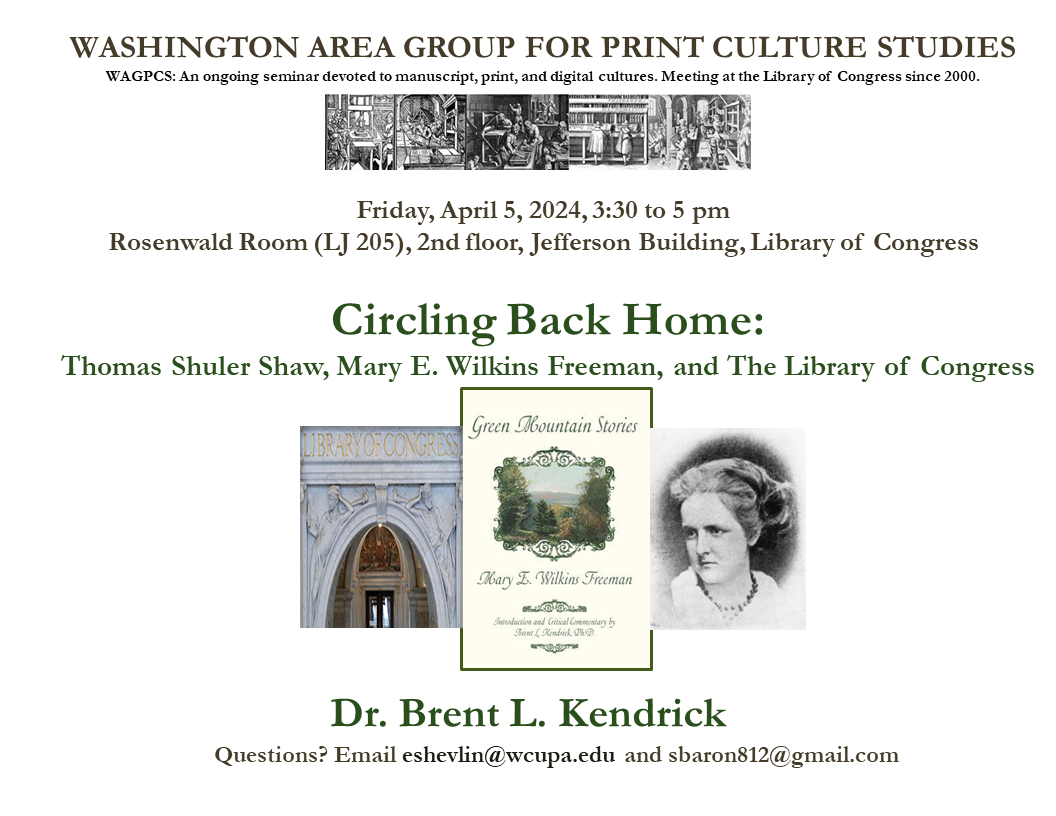


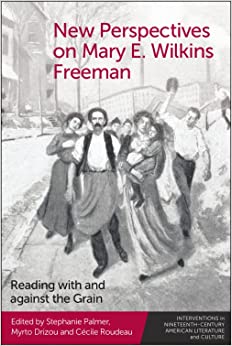
 The Wired Researcher