“To toot one’s own horn is to sound the music of one’s journey. And today, my friends, the notes are jubilant, triumphant, unmistakably heartfelt, and wrapped in a little holiday cheer!”
–TheWiredResearcher (b. 1947; self-effacing educator, essayist, Green Mountain scholar, and Humourist—patiently awaiting long-overdue New York Times recognition.)
Beloved readers–of all ages and from all corners of the globe–I’m going to toot my horn proudly today!
At 11:22am today, my blog hit 15,000 views in 2024! Is that a special Christmas gift or what!
Let me pause and let that sink in: FIFTEEN. THOUSAND. VIEWS.
Can you hear the confetti cannons? Feel the glitter raining down? That’s the energy I’m channeling today. Because let’s be honest—this doesn’t happen by accident. It’s the result of showing up week after week, pouring my heart and soul into every post, and, most importantly, connecting with YOU, my remarkable readers.
If you’re like me, you know that milestones mean more when you see where they began. Let’s rewind:
● 2021: 3,940 views. A small but solid readership.
● 2022: 6,655 views. Growth doubling and momentum building.
● 2024: 15,000 views… and the year isn’t over yet!
From 3,940 to 15,000 in just a few years—this isn’t just growth. It’s a story of connection. It’s a story of us.
What Does 15,000 Look Like?
It looks like 140 countries—stretching from the United States’ plains and mountain ranges to Afghanistan’s rugged peaks, India’s vibrant deserts and Himalayas, and France’s vineyards, all the way to Zimbabwe’s sweeping savannahs. It looks like comments from faithful followers. It looks like early risers sipping coffee as they dive into my Monday morning musings. It looks like connections that transcend borders, reminding us all of the power of words.
The Greatest Hits (According to You!)
As we bask in this milestone, let’s revisit the top-ten posts that you’ve loved the most this year:
● “From Stars to Soil.” A nostalgic return to childhood gardening and the realization that it gave me a profound appreciation for the interconnectedness and sacredness of all life.
● “My Mother’s Dress.” A story exploring how a dress that my mother made for herself included her hopes, her visions, her aspirations, and her dreams for her family and her world.
● “Sister’s Hands.” A celebration of decades of selfless love, compassion, and service.
● “My Taxing Review.” A humorous exploration of opening personal archives as a way to create a rich personal narrative.
● “Not Alone.” A triumphant tale of my own Coming Out.
A Milestone Worth Celebrating
Fifteen thousand views aren’t just numbers—they’re stories, connections, and a shared love of learning. Each one represents someone who paused in their day to engage with my words. Together, we’ve created a space where ideas flourish, where history meets memoir, where research mingles with creativity, and where we never stop asking the big questions.
The Future Is Bright
What’s next? More posts that inspire, challenge, and delight. More glimpses into the magic of the everyday. More stories that remind us why we love the written word.
To everyone who has ever clicked, read, commented, or shared—THANKYOU. You are the symphony that makes this blog sing. And as the music swells, I can’t help but toot my own horn just a little louder.
Because today, it’s not just my achievement—it’s ours.
Here’s to 15,000 views—and the countless stories and connections that brought us here.
“The joy of publishing is in sharing your stories with the world and knowing that they’ll live on long after you’re gone.”
–Maya Angelou (1928-2014; a renowned American author, poet, and Civil Rights activist whose works explore themes of identity, race, and resilience.)
DearReaders, gather ’round!
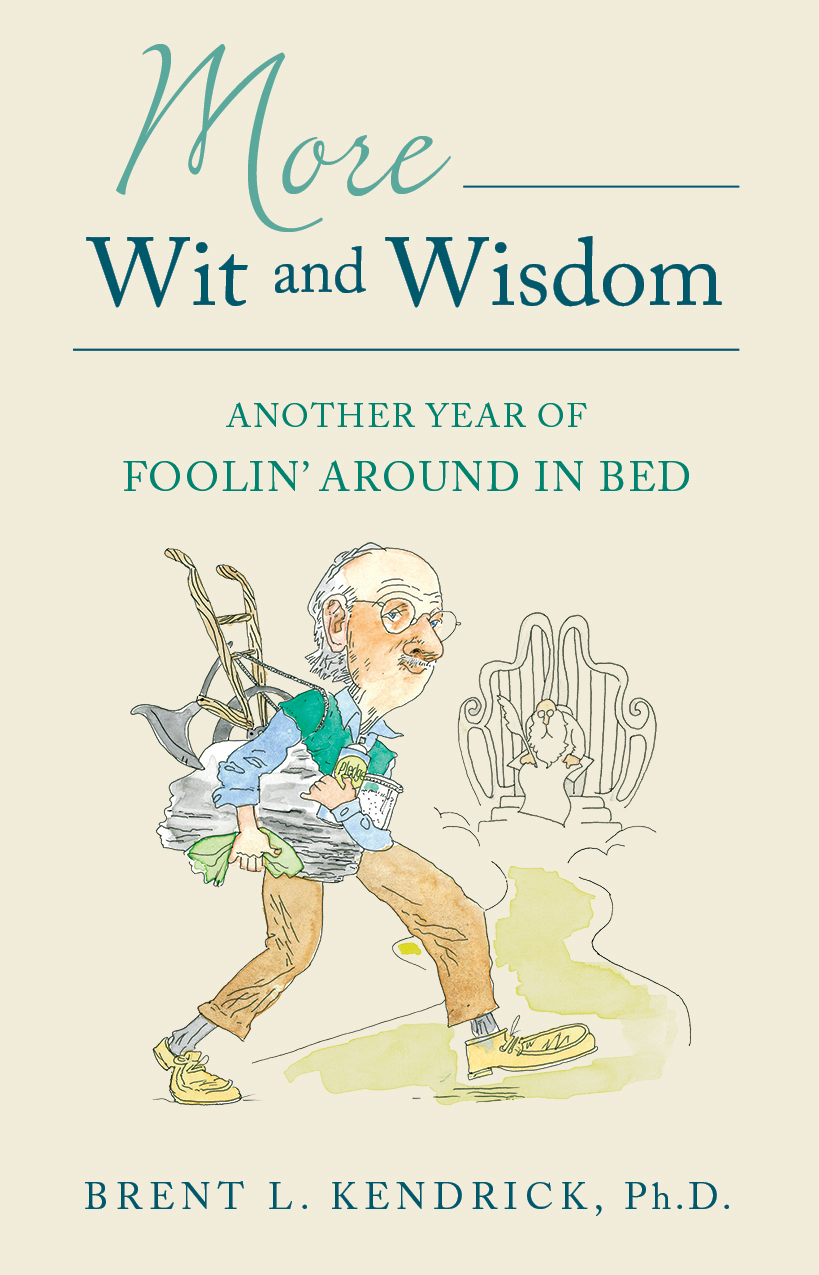
The moment we’re all eagerly waiting for is just around the corner. That’s right—my new book, More Wit and Wisdom: Another Year of Foolin’ Around in Bed–is getting closer and closer to its grand debut in late April, and boy, oh boy, do I have some juicy updates to share with you!
I’m thrilled to announce that I’ve personally PDFed every single one of the 380 interior pages, ensuring that each word, each sentence, shines as bright as a star in my mountaintop night sky. Proofing? Poof! Completed!
Whoever you are and wherever you are, your unwavering support means the world to me. MoreWitandWisdom: AnotherYearofFoolin’ AroundinBed isn’t just ink on paper. It’s a journey shared across 88 countries with 7,320 readers from the Shenandoah Valley to Okinawa.
But wait, wait! Don’t go! There’s one more thing. Feast your eyes upon the cover art for this new upcoming literary escapade. Just imagine it gracing your bookshelf, waiting to be cracked open and devoured, page by page. It will be available in hardback and paperback from Amazon, Barnes and Noble, and, hopefully, your own hometown bookstore. (Drumming up anticipation yet?)
Grand Publication Debut of a Soon-to-Be American Classic Expected by the End of April 2024. (Coverartbyacclaimedillustrator, Mike Caplanis.)
“I write entirely to find out what I’m thinking, what I’m looking at, what I see and what it means.”
–Joan Didion (1934-2021; renowned American Essayist and novelist whose distinctive writing style and introspective approach earned her a lasting place in contemporary literature).
Maintaining friendships can be a delicate dance, and I’ve learned that silence is golden when it comes to my own writing. My friends–especially those who are writers–know that I abide by Robert Frost’s sage counsel:
“Talking is a hydrant in the yard and writing is a faucet upstairs in the house. Opening the first takes the pressure off the second ” (Letter to Sydney Cox, 3January 1937; quoted in Robert Frost and Sidney Cox: Forty Years of Friendship. By William Richard Evans. 1981).
Rarely, then, do I talk with friends about what I’m writing in my weekly blog posts. Talking about it diminishes my focus and my belief. Oh, to be certain, I may tease by divulging a topic or a working title. I love teasing. I’ve done it before, and I’ll do it again right now by telling you the working titles of some future posts:
● “What My Father Saw.”
● “Packin’ Up. Gettin’ Ready to Go.”
● “My Right to Know.”
● “Somewhere Called Home.”
● “What If Artificial Intelligence (AI) Makes Us Even Better than We Are?”
● “Grappling with Unknowns.”
● “The Cake Stops Here.”
● “When Did Tomorrow Begin?”
See there. I didn’t mind sharing those titles at all. Like I said, I’m a tease.
Truth be told, though, that’s all that I can share in advance because I’m clueless as to how those tentative titles will play out. I never know the end of a post until it leads me to its ending.
Clearly, I am not one of those writers–of whom there are many–who align themselves with Edgar Allan Poe. I’m thinking now about his focus on “unity of effect” and that a writer must know the intended effect from the beginning:
[…] in almost all classes of composition, the unity of effect or impression is a point of the greatest importance. […] If his very initial sentence tend not to the outbringing of this effect, then he has failed in his first step. In the whole composition there should be no word written, of which the tendency, direct or indirect, is not to the one pre-established design (Poe’s review of Hawthorne’s Twice-Told Tales, Graham’s Magazine, May 1842).
A few years later, he reiterated that point:
Nothing is more clear than that every plot, worth the name, must be elaborated to its dénouement before anything be attempted with the pen. It is only with the dénouement constantly in view that we can give a plot its indispensable air of consequence, or causation, by making the incidents, and especially the tone at all points, tend to the development of the intention (“The Philosophy of Composition,” Graham’s American Monthly Magazine, April 1846).
Poe’s way of writing is not my way of writing. Mine is just the opposite. Mine is the Frostian way:
Like a piece of ice on a hot stove the poem must ride on its own melting. A poem may be worked over once it is in being, but may not be worried into being. Its most precious quality will remain its having run itself and carried away the poet with it (“The Figure a Poem Makes,” Atlantic Monthly, June 1939).
I am not trying to compare my writing to Frost or to Poe. Yet, as a writer, I have every right to align my methods with someone. I choose Frost for alignment, and I choose Frost for ally.
Like Frost, I am unwilling to talk about the content of what I am writing: opening the hydrant [talking] lessens the pressure on the upstairs faucet [writing]. At the same time, I am more than willing to talk about my writing methods: melting like a piece of ice on a hot stove, carrying me away with it.
Actually, I have talked about my writing process extensively in several blog posts. I’m tempted to suggest that you browse my posts and find them for yourself. But that would be mean spirited. So let me recap the main points here.
1. I write my posts in bed–every day, seven days a week–starting at 8:00 pm and continuing until I decide to stop, usually around 9:30 pm or so. Sometimes, I ignore my body’s call for rest, and I write until 11:00 pm. I don’t think that I’ve ever written past 11:30 pm. (However, I do recall writing until 12:30 am once, just to prove to a friend that I could stay up that late.)
2. I write my blog posts exclusively on my smartphone. Yes. On my smartphone. I hold it in my left hand (as I am doing now), and I touch type my text, letter by letter, with the index finger of my right hand (as I am doing now). I know: it’s slow. I know: it’s tedious. But guess what? It works.
3. I write my blog posts while sipping on a Bunnahabhain Scotch, neat.
4. I have a large number of drafts in progress at any given time: everything that I experience is copy. Right now, for example, I have 29 drafts in various stages of development.
5. Whenever I have an idea and start a draft, I develop it enough so that I can leap back into the idea whenever I return to it, even if it’s weeks or months after the idea leapt into my head.
6. Usually, one draft among all the others calls to me and demands my attention. I listen. I focus on it for seven nights, hanging on tight and never letting go.
7. On Sunday of each week–the day before publishing a post–I read it out loud by telephone to my oldest sister, Audrey. Reading it aloud gives me the opportunity to find any remaining mistakes. (Inevitably, I still miss a few.) More importantly, however, it gives me the opportunity to hear the rhythm, and if I have an off-key passage, my ear speaks to me. Sometimes, I pick up on a rhythm, and I decide to play it more fully in one final revision before going to bed. But here’s the important thing: it’s the hearing aloud–what Frost would call the “sound of sense–that allows me to know my degree of accomplishment.
Those are the main steps that I follow in writing my posts.
Recently, however, I noticed a recurring practice that I’ve been unintentionally following. Let me share it with you.
As I open a draft, I revisit the beginning instead of scrolling down to where I left off the night before. This practice offers a fresh perspective on my words and ideas.
I circle back to the beginning, I start from there, and the Frostian melt starts anew.
As I circle back, I take my time. I savor every word. I savor every nuance. I savor all the possibilities, including the white space between words where so many meanings live–and hide. And, as I circle back, I change whatever it is that calls to be changed.
To be sure, circling back flies in the face of the process that I and other English professors are hell-bent on teaching our students. Generally, we teach a straightforward, linear process without much room for deviation, except for an occasional reminder that writing can be recursive, especially when we need to do additional research to strengthen content. The process that we teach goes something like this:
First. Prewriting (Topic, Audience, Brainstorming, Research, Thesis, and Outlining).
Second.Drafting (Creating an initial version).
Third.Revising (Reconsidering content and context).
Fourth. Editing (Looking at grammar and mechanics).
Fifth.Proofreading (Taking a final look to discover mistakes, including formatting).
Undoubtedly, the 5-step method works, especially for beginning writers who often have no method.
It works for seasoned writers, too, but as we gain more and more writing experience, we follow that method subconsciously. For example, even though I write my posts in bed, I’m well aware that whatever I’m working on is simmering on my writer’s back burner throughout the day and throughout the night as I sleep. My ideas and insights come unexpectedly and without invitation.
For me, then, as a writer–especially a writer of Creative Nonfiction Essays like my blog posts–I’m tapping into the tried and tested steps of the writing process, but I’m really unaware that I’m doing so.
Yet, I am exceedingly aware of my circling back, and I find that keen awareness fascinating. It’s a conscious choice that I make every night when I open my WordPress draft to pick up where I left off. The starting point is always same: I circle back to the beginning. Most nights, I spend half of my writing time revisiting, rethinking, and modifying what I’ve written already.
I’m not suggesting that the “circling back” part of my writing strategy is revolutionary or unique. Perhaps lots of writers circle back in like manner.
What I am suggesting, however, is this: Circling back becomes a dance of words, a waltz with sentences that have already found their footing. It’s a writer’s serenade to their own creation, a harmonious echo of ideas that resonates and refines. Circling back is an invitation to linger in the labyrinth of language, to savor the richness of thinking, and to let the journey unfold in its own enchanting way. In the quiet act of returning to the starting point, I find my path illuminated by the wisdom of Frost and by the freedom of my narrative.


 The Wired Researcher