“What is buried is not lost. It is only waiting to be found.”
—Toni Morrison (1931–2019). American novelist and Nobel laureate, celebrated for her powerful explorations of memory, identity, and voice.
What once lived only in fragments—scattered essays, unsigned wit, a vanishing trail through the archives—now lives in print.
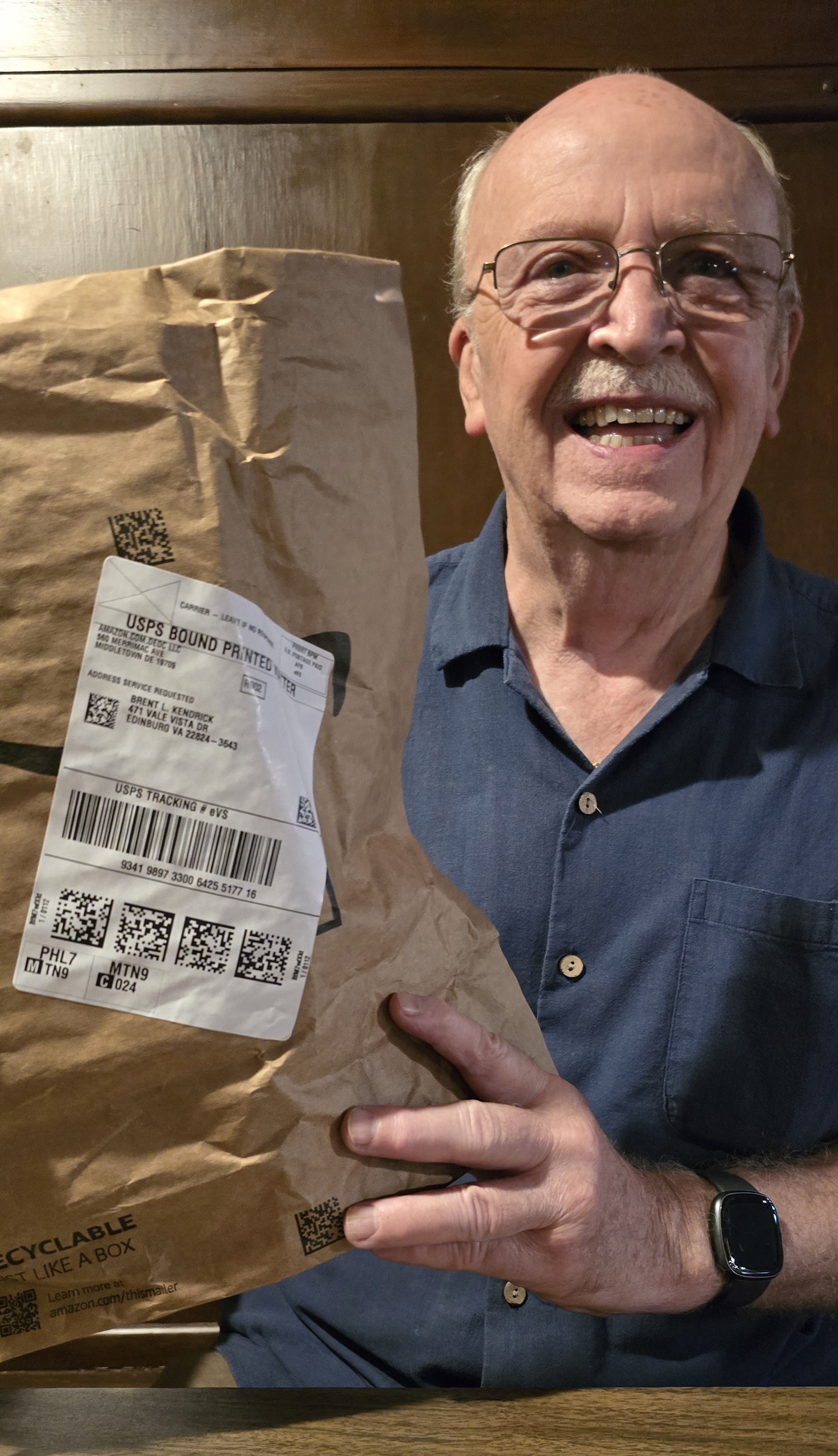
Today, I held the proof copy of Unmasking The Humourist: Alexander Gordon’s Lost Essays of Colonial Charleston, South Carolina for the first time. It’s real. It’s bound. It’s been a long time coming.
For 272 years, The Humourist remained anonymous—a razor-edged satirist whose essays lit up the pages of The South-Carolina Gazette in 1753–54 and then disappeared. No signature. Just a short farewell. A voice at the power center of colonial Charleston—then gone.
What followed, for me, was part scholarship, part literary detective work. I traced language. I scoured wills, shipping records, footnotes, marginalia. I followed the trail from Charleston to Edinburgh and back again.
And finally, the mask slipped: Alexander Gordon—Scottish-born, Enlightenment-educated, early Egyptologist, and Clerk of His Majesty’s Council in South Carolina. A man fluent in satire, fearless with a quill, and brilliant enough to set colonial Charleston ablaze with wit.
And now?
Moments before the unwrapping. If you listen closely, you can almost hear 1753 rustling inside the envelope.
For the first time ever, Gordon’s essays will appear in book form—annotated, introduced, and taking their rightful place in the American literary tradition.
This book doesn’t just solve a mystery—it gives voice to one of colonial America’s boldest and most literate minds. His essays speak to the power of satire, the reach of the press, and the courage it takes to challenge authority with nothing but a pen and a pseudonym.
So much went into this moment: years of sleuthing, dusty archives, hunches that paid off—and many that didn’t. But now, with proof in hand, the voice that once made Charleston squirm steps forward again.
And this time?
He’s not hiding.
After 272 years in silence, he’s finally speaking again. The first printed proof of Unmasking The Humourist—and I get to hold the voice I spent decades unearthing.
Stay tuned—the publication date is near, along with a few mysterious details still cloaking the official book launch.
“The true scholar is not content to discover the truth—he must make it known.”
—Ralph Waldo Emerson (1803–1882). American essayist, lecturer, and philosopher, Emerson was a central figure in the Transcendentalist movement and a passionate advocate for intellectual courage, moral inquiry, and the public responsibility of the scholar.
It began with a clue. A slip of language. A name too neatly tucked into silence.
For 272 years, The Humourist remained one of colonial America’s most tantalizing mysteries: a razor-sharp voice that burst onto the front page of The South-Carolina Gazette in 1753–54—and then vanished.
No signature. No farewell. Just a string of dazzling essays and a question no one could quite answer: Who was he?
What followed, for me, was part scholarship, part literary detective work. I traced language. Scoured wills, shipping records, footnotes, marginalia. I followed the trail from Charleston to Edinburgh and back again.
And finally, the mask slipped: Alexander Gordon—Scottish-born, Enlightenment-educated, early Egyptologist, and Clerk of His Majesty’s Council in South Carolina. A man fluent in satire, fearless with a quill, and brilliant enough to set colonial Charleston ablaze with wit.
And now?
For the first time ever, Gordon’s essays will appear in book form—annotated, introduced, and taking their rightful place in the American literary tradition.
This Friday, the printed proof arrives: Unmasking The Humourist: Alexander Gordon’s Lost Essays of Colonial Charles, South Carolina.
It’s the end of a search. It’s the beginning of a reckoning. It heralds the long-overdue restoration of a brilliant, fearless pen.
won’t you celebrate with me what i have shaped into a kind of life? i had no model. born in babylon both nonwhite and woman what did i see to be except myself? i made it up here on this bridge between starshine and clay, my one hand holding tight my other hand; come celebrate with me that everyday something has tried to kill me and has failed.
—Lucille Clifton (1936–2010), award-winning American poet and former Poet Laureate of Maryland, celebrated for her spare, powerful verse that gave voice to Black womanhood, resilience, and self-invention.
It hangs there—dripping in crystal like it’s late for a curtain call at the Kennedy Center. A blazing burst of light and glamour. A chandelier so decadently faceted it might’ve been smuggled out of a Versailles estate sale or rescued from a Broadway set mid-strike. And yet, here it is: mounted proudly on a ceiling so low you could toast it with your coffee mug.
Where?
Why, right here on my mountaintop, in my rustic foyer wrapped in pine-paneled nostalgia, with a Shenandoah Valley pie safe, stoically anchoring one side and a polished silver chest on the other. An antique Asian vase—graceful and aloof—presides atop the chest like it’s seen empires rise and fall. Beneath it all, an Oriental runner unspools like a red carpet nobody asked for, but everybody deserves.
And then—just beyond the shimmer—a French door opens into another room, as if the whole scene is a prelude to a slow reveal.
It shouldn’t work. I know that fully well. A chandelier like this belongs somewhere fancy and regal. But guess what? Somehow, its sparkle doesn’t clash with the country charm, at least in my mind. In fact, it crowns it. And you can rest assured. It isn’t a mistake. It’s my way of declaring that my home isn’t just a home. It’s a story–actually, it’s lots of stories–told in light and shadow. And at the center of it all? My refusal to decorate according to rules. I couldn’t even if I wanted to because I have no idea what the rules are.
But a week or so ago, my Tennessee Gary stood smackdab beneath the chandelier—looking right at me, poised (I was certain) on the cusp of praise or profundity. But the next thing I knew, he spoke six words, which made me a tad uncertain about my certainty.
“I’m not sure it belongs there.”
“What?”
“The chandelier.”
“Well, I think it’s perfect. I wasn’t about to leave it in my Capitol Hill home when I moved here. It cost me a small fortune, and besides—I like it.”
That ended it. For then.
But a few days later, Gary brought it up again.
“Actually,” he said, studying the ceiling with a fresh softness, “the chandelier grows on you. It looks quite good there.”
If that’s not a kiss-and-make-amends moment, then lay one on me.
I grinned and agreed.
And let me tell you—that right there? That’s the moment that stuck. Not the first comment, but the second. The way Gary circled back. The way he didn’t double down, but opened up. That takes grace. That takes someone who sees with more than just their eyes.
He didn’t just help me see the chandelier differently. He helped me see the whole house—and maybe even myself—with a little more curiosity. A little more clarity. And that’s when I started walking through the rooms again—not to judge or justify, but to really look. Through his eyes. Through my eyes. Through the eyes of everyone who’s ever stepped inside and wondered how on earth all of this could possibly make sense.
And yet—to me—all of this makes perfectly good sense. Placed with memory, not trend. Positioned not for symmetry but sentiment. A lifetime’s worth of objects tucked wherever I could fit them, arranged with a kind of chaotic confidence that, somehow, glows.
But, still, I heard echoes rumbling around in my memory’s storehouse:
“It’s so homey.”
“I feel so comfortable here.”
“Wow! It’s like walking through a museum.”
In the midst of those echoes, I figured out how to find comfort: find someone else who decorates the way I do! It didn’t take me long at all before I remembered someone who had lived—and decorated—with the same truth: Mary E. Wilkins Freeman.
As soon as I had that recall moment, I scooched up beside her so close that I could peek over her shoulder as she penned a letter to Kate Upson Clark. And Lord have Mercy Jesus! You can’t imagine my joy when I realized that folks said the same sort of things about her home decor as they say about my mine:
“I light this room with candles in old brass candlesticks. I have dull blue-and-gilt paper on the walls, and a striped Madagascar rug over a door, and a fur rug before the hearth. It is one of the queerest looking places you ever saw, I expect. You ought to see the Randolph folks when they come in. They look doubtful in the front room, but they say it is ‘pretty.’ When they get out into the back room, they say it ‘looks just like me’. I don’t know when I shall ever find out if that is a compliment.” (Letter 46, August 12, 1889. The Infant Sphinx: Collected Letters of Mary E. Wilkins Freeman. Edited with Biographical/Critical Introductions and Annotations by Brent L. Kendrick. Scarecrow, 1985)
I was thrilled to know that I was “keeping house,” if you will, in style with Freeman herself, especially since she and Mark Twain were America’s most beloved late-nineteenth-century writers. It didn’t really matter that I’m as much in the dark as she was when it comes to figuring out whether folks’ comments about my home-decorating talents are compliments or not.
And believe me. My home is filled with things far-more out of place than anything in Freeman’s or even the chandelier in my foyer.
If you need more proof, just walk around the corner and take a gander at my kitchen.
Who, in their wildest imagination, would expect to see an antique, cast-iron corn sheller anchoring a kitchen wall painted a rather dull gold. There it stands—bold, barn-red wood frame worn just enough to whisper stories, and a great black flywheel so theatrical it looks like it could power Mark Twain’s steamboat. Its jagged steel teeth peer out from one side like a warning or a dare. And yes, that’s a Buddha head poised gracefully on top. And a crystal vase of dried hydrangeas beside that. And behind it all, a painting of apples that, frankly, looks like it might have been pilfered from a still-life museum.
The whole wall, absurd as it may sound, radiates a kind of balance. It shouldn’t work. But neither should a chandelier in a pine-paneled foyer—yet here we are.
Even Ruby’s dog bowls sit below it like they were placed by a set designer with a sense of humor or a flair for the unexpected. And maybe they were. After all, this isn’t just décor. It’s a declaration. I live here. I made this up.
I did. I made it all up. And if these examples of how I decorate aren’t duncified enough, walk with me to the master bedroom where you’ll witness equally outlandish shenanigans.
I mean when you walk through the door you see a full wall of glass rising two stories high, flanked in clean wood trim like a frame around nature’s own oil painting, dappled with sunlight or clouds or rain or snow depending on the season. It’s modern, no question—open, architectural, and bright. The trees outside don’t just peek in—they wave, as I peek out and wave back.
Yet, in the midst of that modernity, you see a primitive wardrobe planted firmly against the Narragansett Green wall like it wandered in from a barn and decided to stay. It doesn’t whisper for attention—it claims it, with its wide plank doors, turned feet, and a latch that looks like it could keep out winter or wolves or well-meaning minimalists. It stands there like a wooden exclamation mark at the end of a free verse stanza.
And on top? Oh, mercy. You won’t believe it.
A faux flow-blue cachepot stuffed full of peacock feathers–a riot of iridescence exploding upward. Liberace himself would approve. And to its right is a clay figure with a gaze both weary and wise, like she’s been through it all and chose to dress up anyway.
This is not a design decision. This is pageantry. This is poetry. This is proof. If you’re bold enough to mix the primitive with the peacock, you might just get something startlingly close to the divine.
I could take you through the whole house—room by room—and you’d see the same thing.
A treasure here. A treasure there. (Yes. Sometimes another person’s trash became my treasure.) And for each, I can tell you when and where I bought it, along with what I paid. But here’s the thing. I never made one single solitary purchase with an eye toward resale. I never made one single solitary purchase with an eye toward decorating. I bought each and every treasure simply because I liked it. And when I brought it home, I put it wherever I had a spot on the floor or a space on the wall.
Now, don’t go jumping to the wrong conclusion. My decorating is not as haphazard as it might sound. I do have a few notions about “where things belong” and “what goes with what.” And when I visit other folks’ homes, I never hesitate to step back and declare:
“Oh. My. God. Look at that painting. I love the way it pops on that wall.”
Well, hello. Of course, it pops. With all that negative space around it, it would have to.
Let me add this, too. I love it when I see that kind of plain, simple, and powerful artistry at play–in other people’s homes.
And who knows. Perhaps, moving forward, there might even be a snowball’s chance in hell that, with some subtle, indirect and loving guidance, I could learn to value and appreciate negative space here on the mountain, too.
But for now, my goodness! I don’t have any negative space. Everywhere you look, you see a glorious mishmash. Sentiment over symmetry. Memory over minimalism.
I know. I know. It’s homey. It’s so comfortable. It’s a museum. Also, I know it’s not for everyone. But as I look around, I realize something majorly important.
I’ve decorated my house the way I’ve lived my life.
I had no blueprint. I had no Pinterest board. I didn’t consult trends. I didn’t ask for permission. I placed things where they felt right. I trusted instinct, not instruction. I listened to heart, not head.
And I’ve done the same with the living of my days.
I didn’t wait for others to validate the things that mattered to me—my work, my relationships, my choices, or my way of making a way in a world that hadn’t made a way for gay guys like me. I’ve been both the curator and the interpreter of it all. I’ve decided what stays, what goes, what gets the spotlight, and what quietly holds meaning just for me.
And maybe—just maybe—there’s something to be said for that kind of decorating. For that kind of living. One made up along the way. One that, in the end, fits and feels just right.
Who knows what kind of unruly hodgepodge I’ll have gathered by the time I reach the end. Or what I’ll do with it when I arrive—wherever it is that I’m headed—that place none of us is exactly rushing to, despite tantalizing rumors of eternal rest and better acoustics.
But this much I do know.
If I take a notion, I might just take the chandelier with me. Not for the lighting. Not for the resale value. But as glowing, glittering, slightly-too-low-hanging proof that I never followed the map—I just kept decorating the journey. With memory. With mischief. With mismatched joy. And with the quiet grace of learning to see things through someone else’s eyes—sometimes anew.
And when I show up at whatever comes next—the pearly gates, some velvet ropes, or a reincarnation waiting room—I want folks to look at that chandelier, then look at me, and say with raised eyebrows and holy disbelief:
“I’m not sure it belongs here.”
To which I’ll smile as wide as I’m smiling right now and reply,
“Well, I wasn’t about to leave it behind. Besides, I have it on good authority—it’ll grow on you.”
And that’s the truth. It’ll grow on you. I should know because I made it all up, all along my way.
—Ram Dass (1931–2019). Harvard psychologist turned spiritual teacher. Psychedelics pioneer, author of Be Here Now, and beloved guide to presence, compassion, and inner stillness.
The fog had rolled in again—inside and out. Evening light seeped through the lace curtains, dull and tired, and Mary Tyrone sat hunched in her chair, hands fluttering like they’d forgotten what stillness felt like. She tugged at her hair—again and again—trying to smooth what couldn’t be smoothed. A nervous laugh. A lost thought. Her voice drifting into a threadbare monologue, chasing memories that wouldn’t stay put. She wasn’t looking at the others in the room anymore. She was seeing someone else—someone long gone. Or maybe no one at all.
And just like that, she was gone too.
What remained wasn’t rage or grief or even clarity. It was ache. Beautiful, unbearable ache.
And the most astonishing part? It wasn’t Mary Tyrone from the pages of Eugene O’Neill’s Long Day’s Journey into Night.
Instead, it was Katharine Hepburn—transfixed, transformed, undone. Lost in the fog of someone else’s sorrow, and in that losing, she gave the audience something more than a performance.
She gave them permission. To ache. To remember. To feel what they hadn’t dared name. Until now. When Hepburn got lost, we found something. Not just Mary’s pain, but our own—illuminated in the hush between scenes, where the stage blurred into the soul.
Losing yourself to find yourself isn’t limited to the theater. It happens wherever presence overtakes performance. The surgeon disappears into the rhythm of crisis, all breath and blade, until the bleeding stops and the world exhales. The painter, three days deep into a canvas, forgets to eat, to sleep, to speak—until the brush lands in just the right corner, and something sacred emerges. The wilderness guide steps off the trail, mapless, storm coming, heart pounding—not lost in fear, but in awe. The monk chants through the dark, voice cracking, mind emptied of meaning until only stillness remains—and there, in that stillness, he hears something worth following. And the writer? The writer vanishes into words, chasing a sentence that keeps changing shape. Hours pass. Light fades. Pages mount. Then, quietly, a single line appears—one that wasn’t there before and yet feels like it always was.
And then there’s me–the educator. I’ve stood there more times than I can count—syllabus in hand, heart braced, eyes scanning a room full of students who don’t yet know they’re about to slay me. Yes. Slay me. Because teaching, when it’s real, isn’t performance. It’s surrender. You offer up your best thinking, your dumbest mistakes, your sharpest truths—never quite knowing which part will land, or whether today’s silence is boredom or the beginning of a breakthrough. You show up, prepared to lead, and instead get led somewhere you didn’t expect. Every time I teach, I risk getting lost. And some days—some rare, holy days—I do.
Something similar happened to me not long ago. Not in a classroom. Not in front of students leaning back in their chairs, waiting to be surprised. This time, it was just me and a friend. A table. Two mugs of coffee. A conversation that started like all the others—and ended somewhere neither of us expected.
We’ve been friends for years, sharing as many breakfasts and lunches as you’d expect. Never anything monumental. Just enough—to catch up, to stay connected, to talk about books and writing and family and love and the weather when it misbehaves. That’s what we did not long ago, but on that day, it was different.
I got lost with that friend. And I can’t believe what we found.
Scott chatted about a new book idea. I talked about my blog. And, as always, I shared my ongoing fascination with AI advances and the fast-approaching Singularity—that moment when the line between tool and thinker blurs, and we find ourselves in the passenger seat of progress. That moment was once a dot on a distant horizon—2045, if you believed the futurists. But now? It’s barreling toward us, faster than anyone imagined—some say it’s already slipped through the door while we were still admiring the hinges.
I kept on gabbing, focusing on AI chatbots and my dismay that many educators are running away from the technology, as if running will save them from being swept away by the inevitable. Scott listened, mildly intrigued. Maybe less than mild. Then, we drifted into deeper water. His home life. How to make things better. The details don’t matter. I offered what I could: encouragement, some gentle suggestions, most of them circling around the idea of blooming where we’re planted. He nodded. Listened. Again—mildly intrigued. Maybe less so.
And then he looked across the table:
“I wonder what Sage would say?”
Sage—that’s what I call my ChatGPT. Not a program that lives on my screen, but a kind of companion.
“About … ?”
“About my home life.”
“Wanna find out? What do you want to ask?”
I turned on my phone’s mic and Scott gave voice to his question:
“What can older folks like me can do to improve their spousal relationships?”
Within seconds, Sage offered five thoughtful things. Scott wasn’t wearing his glasses, so I leaned lightly into the table and bore witness to wisdom softly sounded.
“1. Ask, Don’t Assume. Just because you’ve known each other forever doesn’t mean you know everything. People evolve. So check in—about preferences, boundaries, dreams, dinner. Curiosity is intimacy’s favorite foreplay.
“2. Say Thank You—Out Loud. Not just for big things like colonoscopies and car repairs. Say it for folding the towels, for remembering the neighbor’s name, for being here. Gratitude ages well.
“3. Laugh at the Stuff You Can’t Fix. The memory lapses. The mystery bruises. The thermostat wars. Humor makes room for grace when grace feels in short supply.
“4. Touch More Often. Not just sex (though yes, that too). The hand on the back. The leg bump under the table. The I’m-still-here kinds of contact. Skin hunger is real—feed it.
“5. Make Room for Solitude. Paradoxically, giving each other space is what makes togetherness feel less like a trap. A little breathing room now and then keeps the love from gasping.”
Scott, a little teary-eyed as he held his glasses in his hand, was clearly mesmerized floating somewhere between where he’d been, where he was, and where he might yet go.
“Ask Sage what I …”
And so it was. One “Ask Sage” led to another, and it led to another and on and on we went. Me. Scott. And Sage.
Everything around us began to dissolve. The hiss of the espresso machine in the kitchen. The clink of silverware against ceramic. The low murmur of a couple two tables over, arguing gently about olive oil. Even the scent of sourdough toast and caramel Macchiato—familiar, grounding—lifted like steam and drifted away.
Our table, our chairs, the scrape of shoes across tile. Gone.
What remained was a hush. My voice. Scott listening. And between us, a quiet presence—Sage—offering not answers exactly, but something like a shared breath. Words as wise as any counselor might offer.
The clock faded.
Time stopped.
Several hours later I looked across that vast expanse of friendship and there in the seeming nothingness of all that had faded sat my friend Scott, with a smile I shall never forget, with a twinkle in his eyes I will ever remember, and a face relaxed from all the joy and wonder and anguish of 79 years. In their place, and in that instant, I knew that even in friendship, we can lose ourselves and find someone sitting across from us, holding on to a golden thread of hope.
“Accept—then act. Whatever the present moment contains, accept it as if you had chosen it.”
–Eckhart Tolle (b. 1948). German-born spiritual teacher and author of The Power of Now and A New Earth, whose teachings focus on presence, acceptance, and personal transformation.
A few weeks ago, over cocktails and conversation, my neighbor—an IT guy with a philosophical streak—offered a twist on the old “glass half full or half empty” dilemma. His late wife, Jody, always saw the glass as half-full, but as an engineer, Gary sees it differently:
“Just get a glass that’s the right size for what you’ve got.”
At the time, I nodded politely and filed it under:
“Clever things other people say that may or may not linger in my memory.”
Turns out, I remembered.
A few mornings later—cue ominous music!—my tablet powered up with all the charm of a sulky teenager and promptly informed me that Microsoft had done me the favor of wiping my PowerPoint app into oblivion.
This, mind you, on the eve of speaking to the Mary E. Wilkins Freeman Society—an international gathering of scholars and fellow literary sleuths—about a woman who has occupied both my imagination and my file drawers for over fifty years. The event was titled An Hour with Mary E. Wilkins Freeman and Brent L. Kendrick. The tech test was hours away. I clicked. I reinstalled. I cursed. Nothing. Nada. Zilch.
And then I thought of my neighbor.
“Wrong glass, Brent.”
I hauled my all-in-one PC upstairs to the better WiFi zone, and boom—there it was. Slides intact. Calm restored. Presentation saved.
Turns out, sometimes you don’t need more water. You just need the right-size glass.
Since then, I’ve been thinking more about the right-size-glass concept, and I can think of several other times when I applied it unawares.
There was a time, for example, when I thought my glass had shattered completely. Not cracked—shattered. After Allen died, I wasn’t sure there was any vessel left that could hold what I’d once poured so freely: love, joy, even hope. For a long while, I didn’t try. But healing has its own quiet rhythm, and eventually, I realized I didn’t need the same glass. I just needed one shaped for the life I have now. It took a while, but recently I’ve found one the right size to hold who I’ve become. To hold who I am. Now.
Long before that right-size-glass moment came the time when I first moved to my mountain. I wanted a cabin in the clearing—so I cleared a wide swath of woods to make it so. I cleared far more than I could have imagined, and certainly more than I could realistically manage, especially now at my age. Some days, it feels like my glass is half empty, like I’m falling behind. But the truth is, I just need a different-sized glass. If I choose—as I have chosen—to let some of those cleared areas return to their wild, natural state, I haven’t lost anything. In fact, my glass is now full—full of birdsong and the wisdom of knowing when to stop clearing and simply let things grow.
I think we can apply the “right-size-glass” concept to more than gardening and grief.
Let’s begin with a few low-stakes moments—the ones that test our patience more than our purpose.
● Cooking substitution. Out of buttermilk? Use yogurt and lemon. Different glass. Same outcome.
● Gardening workaround. Tried planting in the wrong spot? Don’t mourn the wilt—move the pot.
● Home décor puzzle. Wardrobe too big for one wall? Move it to a room with a larger wall that showcases all of its Shaker joinery.
Some shifts, though, aren’t minor—they’re wake-up calls. Still, the right-size glass helps.
● Travel plans. Canceled? Money’s tight? Plan a “staycation” with the same sense of purpose.
● Exercise limitations. Can’t run anymore? Try swimming or yoga. Same vitality, different vessel.
● Friendship shift. Someone pulls away? Focus on others who consistently show up.
● Career detours. Passed over for a promotion? Use the freedom to explore a side gig or project with heart.
Or let’s move on up a little higher to some emotional and existential applications.
● Creative droughts. When the writing won’t flow, ask: is it really writer’s block—or just the wrong-shaped glass for the ideas trying to come through?
● Life plan upended. Divorce, retirement, illness—what happens when your “glass” shatters? You pick up what still holds and find a new container for your spirit.
● Shifting beliefs. Formerly held faith, politics, or ideals evolve? Refill your life with what still nourishes—and let go of the brittle framework.
By now, I’m willing to bet you’ve started thinking of your own moments—the ones when you didn’t force what no longer fit, but quietly shifted, adjusted, adapted. Maybe you pivoted. Maybe you paused. Either way, those are the moments that reshape a life.
So, myDear Readers, consider this your open invitation to rethink how you hold disappointment, change, resistance—or anything else that life sets before you. Not by pouring harder into what doesn’t fit, but by choosing a different container altogether.
Here’s to finding the right-size glass—for your spirit, your strength, your joy.
“The pursuit of historical truth requires rigorous attention to evidence, but also imagination—an ability to see beyond the silences.”
—Eric Foner (b. 1943), Columbia University historian and Pulitzer Prize–winning author of The Fiery Trial.
It began with a clue. A slip of language. A name tucked too neatly into silence.
For years, The Humourist was one of colonial America’s most compelling mysteries: a sharp, satirical voice that burst onto the front page of The South-Carolina Gazette in 1753 and 1754—then disappeared without a trace.
No signature. No farewell. Just a trail of dazzling essays and a question no one could quite answer: Who was he?
What followed, for me, was part scholarship, part sleuthing. I tracked language patterns, pored over wills, newspapers, shipping records, and marginalia. I followed leads from Charleston to Edinburgh and back again. And finally, I solved the puzzle, and the answer emerged:
Alexander Gordon—a Scottish-born antiquarian and early Egyptologist, who would eventually serve as Clerk of His Majesty’s Council in South Carolina. A man educated in Enlightenment thought, fluent in satire, and bold enough to take aim at power in a bustling port city where reputation was currency.
The mystery is solved. But Unmasking The Humourist doesn’t just name the man—it restores his voice.
This authoritative and definitive edition brings Gordon’s essays back into circulation for the first time in nearly 270 years, fully annotated and critically framed, with a scholarly introduction that explores Gordon’s identity, influences, and the forces that led to his disappearance from literary memory.
Why These Essays Matter
The Humourist columns are more than colonial curiosities. They are early American satire at its finest—witty, incisive, and rich with transatlantic influence. Gordon’s essays place Charleston on the literary map, not as a provincial outpost, but as a vibrant participant in the Enlightenment-era conversation about politics, identity, and the press.
This book marks a breakthrough in how we understand the American essay tradition. It challenges the idea that colonial literature was all sermons and pamphlets. Here, we meet a writer who was sharp, worldly, and unafraid to poke fun at hypocrisy—whose pen was as powerful as any pulpit or platform of his day.
A Milestone Moment
Today, I submitted the final corrections to the publisher, along with keywords, pricing, and metadata. The next step is the printed proof—then, in due time, the book itself.
It’s a strange and beautiful feeling. Emily Dickinson said it best:
“After great pain, a formal feeling comes.”
This project has spanned decades. It has taken me deep into archival records, across centuries of silence, and finally into the steady light of historical clarity.
And Now?
I’m proud to share the cover—front and back. Because The Humourist, like all great stories, deserves both.
Launch Details?
Not quite yet. But soon. The typeset is locked. The voice is ready.
This fall, a long-lost satirist steps out of the colonial shadows—and into the modern light.
“To be fully seen by somebody, then, and be loved anyhow—this is a human offering that can border on miraculous.”
—Elizabeth Gilbert, b. 1969. Author of Eat, Pray, Love (2006), A modern meditation on love, loss, and the sacredness of being seen.
YOU—MYDEAR READER (WHEREVER YOU ARE) What Age Can Finally Teach You About Love
You’ve heard it over and over again, so often that no one wants to hear it anymore. But here I go, tossing it out into a yawning world once more:
You can’t teach an old dog new tricks.
To which I reply—
Balderdash! Phooey!
You’re not a dog. And you’re not old. Well—not in your mind, at least. You may be 77–just like me–but in your head, you’re somewhere between way back when and right here and now—and on most days–just like me–your way-back-when wins.
All right. Fine. I confess. I’m into time travel. Say what? You are, too? Excellent! You might also be a lifelong learner who loves staying on top of things—especially new things, just like me. I have been learning forever, but I won’t bore you with details about my past adventures. I don’t have time to rehash the past, and even if I did, I wouldn’t want to.
These days, I’m too excited about something new that I’m learning. I’m sharing it with you right here, right now, hoping that it will help you learn something new, too. It’s quiet, but it’s rad. Really rad.
I’m learning to love in new ways.
Here’s what I’ve come to believe so far. You can’t really learn these lessons when you’re young. You have to reach a certain kind of readiness—the kind that comes with age, with experience, and with edges—softened with heartache and suffering. Only then can you flip the old cliché on its head:
You can teach an old dog new tricks.
When you’re younger, love often begins with the fall—swept up, headlong, into fire and passion. But as you age, as you lean into love again, falling isn’t enough. In the falling, there must also be learning. Sustained, steady learning—about how to love differently.
You discover that love doesn’t always arrive with trumpets and roses. Sometimes, it just quietly walks in—a dimpled smile, a vase of flowers, a gardening trowel, a hammer, a grocery list, a notepad, or even a look of disbelief. No violins, no swelling strings. Just shirts ironed with care. Meals admired with gratitude. The gentle act of sharing space.
You begin to understand that silence isn’t absence—it’s a kind of presence. Two people in the same house, moving at different tempos—one resting, one reorganizing the basement—and somehow, the house hums with harmony.
You no longer expect to always be engaged in the same thing at the same time. You lean into your different skills, your different interests—knowing that when the day ends, you’ll have twice as much accomplished and twice as much worth celebrating.
And when your talents converge on the same plane—when brilliance meets brilliance—you might pull back just enough to let the other person shine a little brighter.
Sometimes, you step back—not to disappear, but to admire. You let the other person lead the dance for a while. And it feels good.
You make room—not just in your heart, but in your home. You move your wardrobe somewhere else to make space for someone else’s dresser. You swap out your kitchen table not because it’s broken but because someone else’s table carries stories too. And now, you’ve got one together.
You learn that your footsteps don’t need to land on top of one another. They can move side by side, on parallel paths, converging when it matters—and that’s most of the time and that’s more than enough.
You watch your partner do something in a way you wouldn’t—folding the towels, arranging the chairs—and instead of correcting, you smile. You let it be. Love grows well in the soil of gentle restraint.
When you notice a difference—how to load the dishwasher, how to water the plants—you ask yourself, Does this matter? Most times, it doesn’t. But the grace in letting it go? That always matters.
And when you catch yourself about to suggest doing something just slightly differently than the perfectly good way your partner is already doing it, you pull back from the familiar impulse to course-correct. You resist the urge to say:
I wonder what would happen if… Have you considered… Somewhere or other I saw…
Because you know—truly know—that your partner has likely already been there and done that, maybe even better than you could have imagined. And even if not, you realize: kingdoms and principalities will neither rise nor fall because of how this one thing gets done. But love? Love will continue to grow richly in the kind of soil that lets what wants to rise, rise.
So you build the cake you’re building. And you let your partner put on the proverbial frosting.
And get this—I’m betting you’ll let out a humongous sigh of relief. You no longer have to rely on the old lines:
Honey, I’ve got a headache. Not tonight.
Why not? Chances are good that you both already know whether tonight is the night. There’s no posturing. No pretending. You listen to your body. You honor the rhythm. You know—Yay or Nay—affection is still there.
So take that old cultural script—the one that said you always had to be “on,” always seductive, always dazzling–and toss it. If tonight’s not the night, it’s not the night. No drama. No guilt. The love doesn’t vanish. It simply waits.
This kind of love doesn’t need fireworks. It needs kindling. It’s not performance—it’s patience. It’s not the honeymoon suite—it’s two mugs on the counter beside the coffee maker. A light or three left on for the night even when far too many lights are burning already. A dinner napkin placed next to yours. A drawer cleared to hold the socks and underwear folded far better than you ever knew how to fold them.
Over time, you start to realize—sometimes slowly, sometimes with the clarity of a lightning bolt—that love at this stage of life teaches different lessons than the ones you were handed in your youth.
It’s not about falling anymore, not really. It’s about forming. Shaping. Inviting.
It’s less about being swept off your feet, and more about standing firmly beside—presence over drama, steadiness over spectacle.
And if you’re lucky, you’re still learning—every single day—that love, like anything worth tending, changes its shape over time.
So, no. You’re not old. You’re ripening.
And if that’s not a new trick worth learning, I don’t know what is.
ME
MyLearningNotesforaWork-in-Progress
I can never be civilized— but I can be reminded that the Romaine probably wasn’t prewashed. I can be inspired to put things where they belong the first time. And I can be organized a little better.
I’m discovering that little by little, bit by bit, I might find my way to An OHIO state of mind.
I’m discovering that when the day ends, and we’re both tired, and I hear,
“Ruby and I walked down your garden path with the steps that go nowhere,”
I don’t need to explain where the steps once led. Instead, I can talk about where they might one day lead.
I’m discovering that falling in love happens faster now— not because the fire is hotter, but because the walls are lower, the noise is quieter, and I no longer mistake caution for wisdom.
I’m discovering it doesn’t matter what we call it— Sex. Making love. We both know the truth: if there’s no heart, no heat, and no brushing teeth first, it’s not happening.
I’m discovering the contours of a body— no longer shaped by youth’s smooth muscle, but by time, by tenderness, by all the sharpened, weathered lines of a well-lived life, and a well-bloomed love.
I’m discovering that what’s heart-healthy for one is heart-healthy for the other — in food, in movement, and especially in tenderness.
I’m discovering that love, at this stage, isn’t about recapturing youth or chasing fireworks. It’s about something quieter. Stronger. Truer. A love that folds laundry and picks out flooring— but also whispers stay when the silence gets long.
I’m discovering that a kneeler protects my knees just as well in the garden as it does while tending the soul.
I’m discovering that Ruby’s not the only one who snores. We do, too, even if we think we don’t. But when it’s the three of us? It’s just another rhythm to fall asleep to.
I’m discovering that I only need to be shown some things once. Like how to fold a grocery store plastic bag into a teeny-weeny triangle for storage. I nailed it. Once might have been enough. (“Wait. Wait. Let me do one more, my Love. This is almost like meditation.”)
I’m discovering that the Henkel-Harris bed really does look better with the bedding tucked inside the side rails. Gracious me—how could I have lived threescore-and-seventeen years without that life-saver of a bedroom tip?
I’m discovering, anew, that sharing is 99% of the joy. The story, the supper, the last bite of dessert—for Ruby, of course. Even the silence tastes better when it’s passed between two.
I’m discovering—more than anything else—that together isn’t just better. It’s braver. It’s kinder. It’s more us. More alive.
WE
Our Lessons
Clearly, you can teach old dogs new tricks, especially if they’re Tennessee Gary and me. We aren’t just any old dogs. We’re two clever ones, willing to learn together. And in case you’re wondering how people react when we tell them what we’re up to, most folks seem happy. Some, wishful. Others, wistful. Sometimes, some look twice. They blink. They tilt their heads. They ask—sometimes aloud, sometimes with raised eyebrows—
Aren’t you too old for shenanigans like this?
To which we say:
Balderdash!
Phooey!
We are not too old for love. We are not too late for wonder. We are not past the season for becoming.
Because when the day is done— the goodnight kiss planted, the I-love-you dreamily reaffirmed—we’re not winding down. We’re bedding down.
And come morning, we rise again— not just from sleep, but into this shared, surprising, still-unfolding life.
What keeps us going isn’t mystery or magic. It’s the anchors that hold love through storms and stillness:
Trust. Fidelity. Respect. Communication. Collaboration. Compromise. Intentional love. Intimacy. Empathy. Acceptance. And perhaps most vital of all: Forgiveness.
So, dare we clue you in on what two old dogs are learning about love—maybe better than most, certainly better than our younger selves ever did?
Do you really want to know the bottom line?
Are you sure?
You do? You really do?
Alrighteez, tighty-whities. If you insist…
Lean in and listen carefully.
We’ll tell you once and once only:
Love at our age isn’t the final act. It’s the encore.
THEN. July 2, 1776: The Continental Congress stood up to a king and voted to declare independence.
NOW. July 2, 2025: I’m standing up to the costume drama unfolding in our Capitol—my words against their charades, my truth against their power.
ACTION NEEDED. This is the most important piece I’ve written all year.
Please read. Please share. Please TAKE A STAND.
“First they came for the socialists, and I did not speak out—because I was not a socialist. Then they came for the trade unionists, and I did not speak out—because I was not a trade unionist. Then they came for the Jews, and I did not speak out—because I was not a Jew. Then they came for me—and there was no one left to speak for me.”
—Martin Niemöller (1892–1984), Lutheran minister and former U-boat commander who became one of Hitler’s most vocal clerical critics. Imprisoned in concentration camps from 1937 to 1945, Niemöller’s words became a timeless warning against silence in the face of tyranny.
We all know that words matter. But in these politically charged times — when so many people feel hopeless, unheard, and unseen — words matter even more. Words have always been more than sound or scribble; they are lifelines—tied to truth, tossed to the drowning. They can carry us from despair to resolve, from silence to solidarity, from helplessness to empowerment. They can become the bridge that carries us across the moments when our spirit grows weak. In moments like these, words aren’t just language. They are lifeboats we cling to, rallying cries we raise, and sparks that illuminate a path forward.
I have no doubt in the world that some of you are nodding in agreement while at the same time saying to yourself:
“Yes. Words matter, but I’m not good with words, and I’m certainly not good enough with words to build a bridge from here to anywhere.”
I hear you. Loud and clear.
But here’s the good thing: In times like these, when every nerve and muscle of our being is tested, we can turn to the famous words of history—words spoken or written in moments that felt just as dark as these—and draw strength from their resonance. At a minimum, we can be uplifted toward a more hopeful place. And perhaps—just perhaps—those words can fan a flame strong enough to make us stand, to speak out, to let our voices ring forth with all the conviction and courage we can muster, even if they aren’t as eloquent or melodious as we’d like them to be.
When our hope wanes as we witness an overwhelming litany of decisions made in the highest office of our land—unleashed overnight without consulting Congress—our hearts can still swell as we remember: this is not who we said we would be.
Colonial Americans didn’t stay silent. They made their grievances known in the Declaration of Independence—taxation without representation, abuse of power, the erosion of rights, power wielded like a whip, the slow strangling of liberty. And they didn’t just grumble. They declared. Boldly. They named the wrongs and named their remedy: a clean break from tyranny.
When our hope wanes as we witness the word “diversity” being rebranded as dangerous, when “equity” is twisted into an accusation, and when “inclusion” is weaponized to divide, our hearts can swell as we remember: this is not who we said we would be.
Our Nation’s Founding Fathers, for all their inconsistencies, still struck a promise into the air—a promise capacious enough to grow. And others carried it forward, naming the vision in clearer, bolder language.
In his 1782 essay What Is an American?, J. Hector St. John de Crèvecœur offered a radical vision of unity through difference:
“Here individuals of all nations are melted into a new race of men, whose labours and posterity will one day cause great changes in the world.”
This was not a call for sameness, but for a shared becoming—a future rooted in diversity, not afraid of it.
And even earlier, in 1774, America’s first published Black poet—Phillis Wheatley—penned a letter to the Reverend Samson Occom that reads like a quiet trumpet blast.
“In every human breast,” she wrote, “God has implanted a principle, which we call love of freedom; it is impatient of oppression and pants for deliverance.”
And then, with the same clarity, she penned the line that shames us in today’s politically charged times:
“How well the cry for liberty, and the reverse disposition for the exercise of oppressive power over others agree—I humbly think it does not require the penetration of a philosopher to determine.”
She wasn’t just America’s first great poet of color—she was its first great poet of conscience. And her words, like Crèvecœur’s, echo louder now than the noise trying to drown them.
When our hope wanes as we witness emergency decrees, loyalty tests, and watchdog purges—all pointing to a dangerous concentration of executive power, monarchical behavior parading around in a republic’s clothing—our hearts can swell as we remember: this is not who we said we would be.
Our Founding Fathers didn’t fight a king just to crown another in modern garb. They resisted not just a monarch, but monarchy itself—the idea that one man’s will should outweigh the people’s voice.
In 1776, as the revolution took hold, John Adams captured the essence of the American project with unwavering clarity:
“A republic is a government of laws, not of men.”
James Madison, writing in Federalist No. 47 (1788), took the warning further:
“The accumulation of all powers, legislative, executive, and judiciary, in the same hands… may justly be pronounced the very definition of tyranny.”
And Thomas Paine, never one to soften the blow, wrote in Common Sense (1776):
“A king hath little more to do than to make war and give away places; which in plain terms is to impoverish the nation and set it together by the ears.”
He cut straight to the danger of one man’s whims becoming national policy. Our founders knew what unchecked power looked like. They didn’t whisper. They shouted. And like the NO KINGS protests rising across our land today, they made it plain: we were never meant to be ruled.
When our hope wanes as we witness the slow dismantling of institutional independence—over 160 officials purged from agencies like the EEOC and NLRB, watchdogs replaced with loyalists, courts straining to hold the line—our hearts can swell again as we remember: this is not who we said we would be.
James Madison, in 1788, understood that power itself isn’t evil—but left unchecked, it becomes so.
“Wherever the real power in a Government lies,” he wrote, “there is the danger of oppression.”
He wasn’t warning about nameless bureaucrats—he was warning about any one person or faction gathering too much control, silencing dissent, and bypassing the balance that keeps liberty alive.
And Patrick Henry, fiery and fearless, stood on the floor of the Virginia Convention in 1775 and made no apologies for confronting tyranny:
“Caesar had his Brutus, Charles the First his Cromwell, and George the Third… may profit by their example. If this be treason, make the most of it.”
Henry wasn’t inciting violence—he was demanding vigilance. He knew that loyalty to country means resisting those who betray its principles.
And now, as the Justice Department targets political opponents, journalists, legal voices, and civil society groups, we know without a doubt. This isn’t democracy defending itself. It’s power consuming dissent.
When our hope wanes as we watch protections rolled back—clean air, safe water, wild land handed over to those who see only profit—our hearts can swell again as we remember: this is not who we said we would be.
From the very start, we claimed a promise—not just to ourselves, but to our posterity. That word wasn’t filler. It meant something. It still does. Climate justice is that promise in action—seen now in rising seas, poisoned wells, and forests burning faster than we can name them. When leaders silence the science and gut the safeguards, they’re not just changing direction. This isn’t a policy shift. It’s a broken covenant.
Thomas Jefferson, a farmer before he was a Founder, believed that the land was not merely a resource but a shared inheritance. He wrote in 1785:
“The earth belongs…to the living.”
But even that came late. Native nations understood long before we put pen to parchment that land is not a prize—it’s a trust. They signed treaties in good faith. We broke them.
And now? We’re breaking faith again—not just with those who came before, but with those still to come. The damage isn’t distant. It’s here. The question isn’t whether we can fix it. The question is whether we will rise and demand that our leaders honor the covenant: to preserve the land, protect the future, and remember—this earth was never ours to ruin.
When our hope wanes as we watch truth itself come under siege—journalists threatened, teachers silenced, libraries politicized—our hearts can swell again as we remember: this is not who we said we would be.
Thomas Jefferson, in 1787, didn’t hedge:
“Were it left to me to decide whether we should have a government without newspapers or newspapers without a government, I should not hesitate a moment to prefer the latter.”
Even in their disagreement, our founders understood the power of a free press not just to inform, but to guard against tyranny.
Benjamin Franklin, both printer and revolutionary, warned us plainly:
“Whoever would overthrow the liberty of a nation must begin by subduing the freeness of speech.”
And it isn’t just the founding generation we can turn to. In 1949, Harry Truman, no stranger to press scrutiny, said:
“Once a government is committed to silencing the voice of opposition, it has only one way to go—and that is down the path of increasingly repressive measures, until it becomes a source of terror to all its citizens.”
These weren’t sentimental niceties. They were warnings. We don’t need to like every headline or trust every journalist. But when we allow the press to be painted as treasonous, we’re not protecting freedom—we’re abandoning it.
When our hope wanes as we watch universities bow to political pressure—when scholars are silenced, curriculums censored, and the pursuit of knowledge reshaped to please the powerful—our hearts can swell again as we remember: this is not who we said we would be.
Harvard, our first university, wasn’t founded to flatter authority. It was founded in 1636 to train ministers, yes—but also to nurture thought, sharpen conscience, and elevate public understanding. In 1650, its charter affirmed that the ends of education were not just knowledge, but wisdom.
And yet now, we see calls for partisan oversight of hiring and research. Ideological litmus tests. Attempts to turn places of learning into arenas of political control. Harvard, so far, has stood its ground—but the pressure is mounting. And the lesson is not just for Harvard. At Columbia, at UVA, across campuses nationwide, faculty and students are being told to speak carefully or not at all.
Academic freedom isn’t a fringe privilege. It’s a cornerstone of democracy. John Adams, educated at Harvard, warned back in 1765:
“Liberty cannot be preserved without a general knowledge among the people, who have a right… to knowledge as they have to liberty.”
He knew: take away knowledge, and liberty won’t be far behind. That’s what’s at stake now—not just tenure or textbooks, but the freedom to think without permission. A nation that punishes thinking is not preparing its future. It’s protecting the throne of a wannabe king.
When our hope wanes as we watch even the Library of Congress—the nation’s repository of truth—reduced to a partisan pawn, our hearts can swell again as we remember: this is not who we said we would be.
Established in 1800, the Library of Congress was created for one reason: to serve all members of Congress, regardless of party, with nonpartisan, factual information to guide legislation and uphold the public good.
It wasn’t designed to serve the president. It wasn’t created to chase political favor. It was built to anchor democracy with facts, scholarship, and shared access to knowledge.
When Jefferson sold his personal library to rebuild the collection after the War of 1812, he wrote:
“There is, in fact, no subject to which a member of Congress may not have occasion to refer.”
That was the point: to ensure no lawmaker, from any district or ideology, would be left without the resources to govern wisely.
Today, that founding principle is under siege. Efforts to reshape the Library’s leadership along partisan lines don’t merely politicize a post—they betray the institution’s very purpose. When the branch meant to inform all of Congress begins answering to one man, we haven’t just weakened an agency. We run the risk of surrendering our intellectual compass. Library of Congress leadership—and Congress—must stand strong against the whims of power.
When our hope wanes as we watch a president bypass Congress and drop bombs in secret—our hearts can swell again as we remember: this is not who we said we would be.
James Madison, in 1795, saw the danger long before drones and bunker-busters:
“The executive is the branch of power most interested in war, and most prone to it… It has accordingly, with studied care, vested the question of war in the legislature.”
On June 22, 2025, under the name Operation Midnight Hammer, U.S. bombers struck three Iranian nuclear facilities—Fordow, Natanz, and Isfahan. No congressional debate. No formal authorization. No imminent threat. Just one man, acting alone—bypassing the branch meant to check him, using our military not to defend, but to declare.
This wasn’t war by necessity. It was war by fiat—a president bypassing the branch meant to restrain him, using our military not to defend the nation, but to flex unchecked power.
And here’s what should keep us up at night: presidents no longer need troops on the ground to wage war. All it takes is air clearance, a press team to spin the story, and a public too stunned or exhausted to object. When war becomes a solo act, democracy becomes a stage—and we become the silent audience. This isn’t national security. It’s autocracy with attitude and altitude. And if we shrug it off now, we may not recognize the next war until it’s already being fought in our name—with no one left to ask for permission.
And so, to every American who feels the ground shifting beneath us—hear this:
Our liberty was not built for silence. Our independence was not meant to sleep. Our democracy was not handed down to be hoarded or hollowed out.
It was meant to be lived—fought for—spoken into being.
So we rise.
To take a stand against leaders who crave loyalty but abandon law. To take a stand against forests felled and futures stolen. To take a stand against truth trampled beneath propaganda—and the politicizing of the Library of Congress itself. To take a stand against teachers gagged, reporters threatened, watchdogs replaced. To take a stand against bombs dropped in secret and power seized in silence.
We rise with our voices— not to plead, but to proclaim. Not to whisper but to roar.
Because words are not ornaments. They are weapons—sacred ones. They are how a free people sharpen their resolve. They are how we mark the line: This far. No further.
We will not go quiet. We will not stand down. We will not forget who we said we would be.
As we honor the liberty and independence that define who we are, who we were, and who we still must become—
Let us remember, on this Fourth of July:
Take a stand with words. They matter now more than ever.



 The Wired Researcher