The Solitary Flag


“The care of human life and happiness, and not their destruction, is the first and only legitimate object of good government.” —Thomas Jefferson (1743–1826). Principal author of the Declaration of Independence and third President of the United States.


At the far end of the deck, beyond the flowers and conversation, the flag flew. The mountain breeze caught it softly, lifting and releasing it against the deep green of the forest. There was something almost reverential about its solitude.

Time was it would have had company. A flag flying on the opposite end. Two in the middle. And spanning the entire 70-foot deck, bunting—the classic pleated red, white, and blue fanned ones that unfurl patriotism, national unity, and civic belonging.

After all, this time was different. It was special. It was unlike any Fourth of July that has come before. We were not simply marking another birthday. We were celebrating the 250th anniversary of the signing of the Declaration of Independence. Two hundred and fifty years. It is an astonishing span of time, and I suspect most Americans, if they paused to think about it at all, felt at least a quiet sense of gratitude for having lived to witness such an anniversary.

I did.

Ordinarily, I would have looked for something even bolder than bunting and traditional flags to mark the occasion. After all, I enjoy celebrations of almost every kind. Give me the first tomato from the garden, a birthday, an anniversary, a hummingbird’s return, a friend’s good fortune, or even a pie that slices perfectly, and I can usually find a reason to raise a glass or gather people around the table. Celebration comes naturally to me.

This year, however, I couldn’t muster up more than one solitary flag flying in the northeast corner of our deck. Somehow that seemed enough.

If you are tempted to think that I’m less than patriotic, you would be mistaken. I love this country deeply. My family has lived on this soil for generations. Some of my ancestors fought in the American Revolution. Others answered their country’s call in wars that followed. Their sacrifices are woven into my family’s story, just as surely as they are woven into the story of our nation.

Perhaps that’s why I found myself standing on the deck, looking toward the flag, wondering why my heart felt quieter than usual.

The answer, I think, had been unfolding for days.

It had not been building toward any single event. Iran and the United States had exchanged military strikes, then edged toward a ceasefire. Venezuela’s government and Washington were trading threats over what might come next. Russia’s war in Ukraine ground on into another season, no closer to resolution than it had been the season before. And closer to home, even Greenland—a name I never expected to hear in a conversation about American power—had become a subject of dispute over sovereignty and strategic interest. Not all of these were wars in the traditional sense. But each was a test of what a nation is willing to risk, and what it is willing to say out loud that it wants.

What surprised me was not the speed of events.

It was the speed with which many of us seemed to move on.

I searched and listened for conversations at stores and among friends. I expected arguments. I expected anxiety. I expected outrage or relief—something to suggest that Americans were wrestling with the gravity of what had happened and were asking the tough questions.

Had military action become the only option? Were the stated objectives achieved? What might the long-term consequences be—for everyone involved?

Why weren’t more of us asking those questions?

Instead, I encountered what felt like an extraordinary calm.

Life simply continued. People packed restaurants. Families headed to the beach. Neighbors mowed their lawns. Social media filled with photographs of backyard cookouts, grandchildren chasing sparklers, fresh peaches, birthday cakes, and sunsets.

I smiled at many of those photographs. Some of them were my own, on Facebook.

Gary and I watered flowers. Ruby ran around the yard. We welcomed Gary’s daughter and her family into our home.

We did all those things and more. Life, after all, does not suspend itself because the world has become uncertain.

Yet a question continued to follow me from room to room.

When did war become something we simply live around?

I found myself looking for the national conversation I remembered from years ago. Not agreement. We have never agreed about war. During the Cold War, neighbors disagreed about nuclear weapons and foreign policy. During Vietnam, families argued around dinner tables. After September 11, Americans wrestled with difficult questions about security and liberty. The conversations were often messy, sometimes angry, but they happened.

But here’s why I’m uneasy now.

I grew up in a world where war mattered, not because I fought in one. I didn’t. But because nearly everyone around me had been touched by one.

As a boy growing up in the coal camps of southern West Virginia, I knew men whose lives had been interrupted by World War II. Others had served in Korea. They did not often tell long stories, but they didn’t have to. Sometimes a single sentence carried the weight of an entire lifetime. Sometimes it was a photograph on the mantel. Sometimes a missing friend whose name was spoken only once each Memorial Day.

War was never merely an item in the newspaper. It lived among us. We didn’t live around it. There is a difference.

We are, after all, a nation born in revolution. Our earliest history is inseparable from war—not because Americans glorified it, but because they believed certain principles were worth extraordinary sacrifice. Life. Liberty. The pursuit of happiness. Those words were never meant to make war ordinary. If anything, they remind us that the decision to wage war should never become ordinary.

Human beings were never designed to carry the weight of every tragedy occurring on every continent every hour of every day. We still have gardens to tend, meals to prepare, dogs to walk, children to raise, aging parents to love, and neighbors who need us.

Even after the wars I’ve known had ended, the possibility of another one lingered in the background of everyday life. My generation practiced air-raid drills in school. We learned unfamiliar words like “fallout” and “radiation” before we fully understood them. During the Cuban Missile Crisis, adults spoke in quieter voices, and children sensed enough to know that the world itself seemed less certain than it had the week before.

I suppose every generation grows accustomed to the anxieties of its own time.

Perhaps ours has simply grown accustomed to too many.

Pandemics.

Political divisions.

Economic uncertainties.

Iran. Venezuela. Ukraine. Greenland. Names that, a few years ago, would each have commanded a nation’s full attention for weeks. Now they arrive almost in the same breath, take their turn in the headlines, and give way to whatever comes next.

The headlines arrive with urgency, remain for a few days, and then quietly slide aside to make room for the next emergency waiting in line.

That is not entirely our fault. Life insists upon being lived.

And yet…

Conflict—and especially the prospect of war—ought to interrupt us.

It ought to remind us that somewhere a young American is standing watch far from home. Somewhere parents are waiting for a telephone call they hope never comes. Somewhere families in Iran, or Kyiv, or towns whose names we’re only now learning, are wondering whether tomorrow will resemble yesterday or whether everything familiar will disappear before morning.

Distance may explain why we do not feel their fear. However, it should not excuse forgetting it.

I have no grand solutions to offer. I cannot tell diplomats how to negotiate or generals how to wage war. I have lived long enough to distrust simple answers to complicated questions.

What I do know is this.

A nation that celebrates its freedom should never grow so accustomed to conflict, wherever it appears and whatever name it goes by, that it no longer pauses to consider what such conflict asks of everyone it touches.

On the morning of the Fourth of July, I stepped onto our deck and looked toward the flag flying quietly in the northeast corner. It moved gently in the mountain breeze, exactly as it had moved the day before and the day before that.

I realized then that I hadn’t celebrated less because I loved my country less. I simply chose to celebrate more quietly because I found myself loving my country differently.

Two hundred and fifty years ago, Americans pledged “our Lives, our Fortunes, and our sacred Honor.” That pledge was never only a declaration of independence. It was an invitation to keep asking, generation after generation, what independence should cost us and what it should demand of us.

That solitary flag in the corner of the deck was never a sign that I loved my country less.

It was a reminder that some anniversaries call not only for celebration, but for an honest reckoning with who we are, what we stand for, and what kind of nation we hope to become.
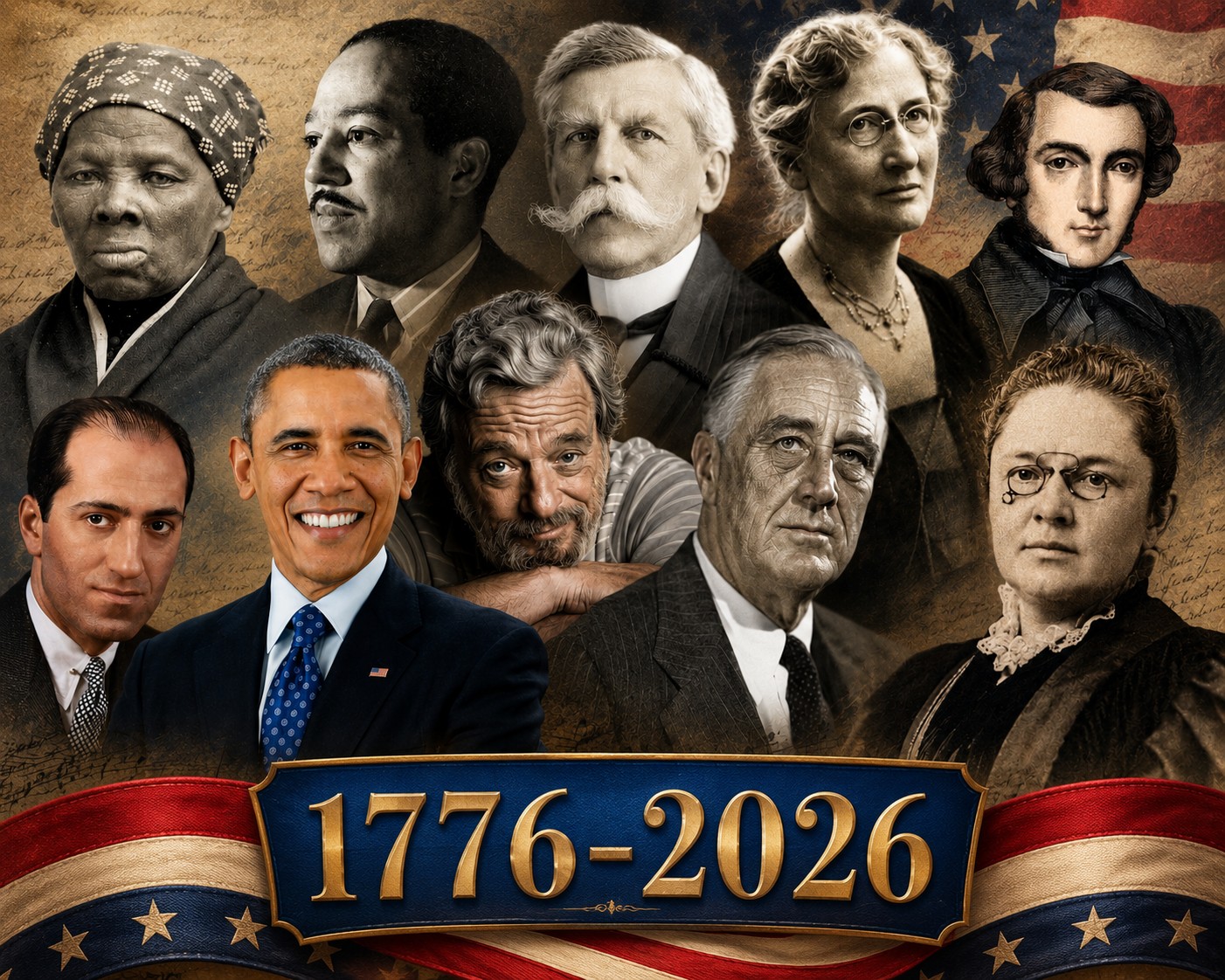
Friends in All Places


“The arts are not a way to make a living. They are a very human way of making life more bearable.” — Kurt Vonnegut (1922–2007). Acclaimed American novelist and satirist whose works blended humor, humanity, and sharp social insight.


“Wouldn’t it be funny if you bumped into someone you know!”

I knew it was a longshot. Gary was born in Minnesota, moved on to Illinois, then to Tennessee, and then to Virginia where we live now.

“I doubt it,” he whispered. “But you might. You taught here”

He was right.

“But that was ages ago.

It had been many years, in fact, since I had taught at the Fauquier Campus of Laurel Ridge Community College. Besides, we were at St. James Episcopal Church in downtown Warrenton.

We softened our laughter.

Shortly thereafter I glanced at the row ahead and sitting there was someone I knew.

“You’ll never believe it, but right in front of us is Eileen Rexrode, the former administrative assistant to the Humanities division at the college. I’d recognize the back of her head anywhere.”

A shoulder tap brought a gasp of joyful recognition, introductions–Eileen and Gary–and the news that another colleague from years gone by–Mary Ellen Welch who ran our bookstore–was sitting at the end of the row.

After a short chat with her, I settled down and began to focus on the printed program. I was hoping to see a familiar name–maybe another friend–among the singers, but I didn’t. However, I recognized Kristina Sheppard, artistic director of The Valley Chorale, whose name I remembered from a holiday concert last year.

Around us, the sanctuary slowly filled with sound. A piano tested a chord. Someone behind us turned a program page. Voices drifted out from somewhere unseen—scales, fragments, breaths finding pitch. Instruments tuned in brief uncertain bursts before settling into harmony. The room seemed to hover in that familiar moment between arrival and beginning.

I looked down again at the printed program.

ACT ONE, PART ONE: AMERICAN DREAMERS

“Every great dream begins with a dreamer.” — Harriet Tubman

Even before the first note was sung, I found myself smiling at the program in my hands. There was Harriet Tubman leading off the evening, still showing people the way after all these years.

Then another familiar friend appeared. Langston Hughes with his “Hold Fast to Dreams.” I have carried him with me for much of my adult life. Long after classrooms ended and lectures faded, his voice remained—wise, lyrical, hopeful, wounded, observant. Some writers stay on the page. Others take up residence within us.

And then came “No Time,” that haunting old camp meeting spiritual whose echoes linger somewhere as deep in my memory as in the American memory. The title alone summoned distant revivals, worn hymnals, wooden benches, and voices rising together into the night air. Some music entertains. Some music remembers.

Later came “Will the Circle Be Unbroken.” By then the pattern had become unmistakable. Everywhere I looked, I was running into old friends.

ACT ONE, PART TWO: FROM SEA TO SHINING SEA

Where we love is home—home that our feet may leave, but not our hearts.” — Oliver Wendell Holmes Jr.

Another old friend was waiting for me at the opening of the second section: Oliver Wendell Holmes Jr.

For years, Holmes has occupied a distinguished corner of my mental world—not merely as one of the most cited Supreme Court justices in American history, but as a powerful voice for civil liberties and the free exchange of ideas. Even now, his words still carry the calm authority of someone who understood that democracy depends upon allowing differing voices to be heard.

And then, just below him, another name stirred immediate recognition: Harriet Monroe.

My heart lifted when I saw her “The Blue Ridge.” The title alone felt close to home here in Virginia. But it was Monroe herself who truly drew me in. Long before most readers recognized them, she had opened the doors of Poetry Magazine to emerging writers like Ezra Pound and Robert Frost, helping shape the course of modern American poetry almost single-handedly. More than a founder, she became a quiet midwife to literary possibility, offering countless poets their first gentle nudge toward recognition.

By now, the afternoon had become something more than a concert. Everywhere I looked, old voices were rising again.

ACT ONE, PART THREE: WE GATHER TOGETHER

“Not until I went into the churches of America and heard her pulpits flame with righteousness did I understand the secret of her genius and power.” — Alexis de Tocqueville

By the third section, another deeply familiar voice appeared: Alexis de Tocqueville.

Few outsiders have ever understood America—or Americans—more perceptively than Tocqueville. Nearly two centuries ago, he looked past our politics and possessions and saw something more enduring: our restless idealism, our fierce independence, our faith communities, our belief that ordinary people could gather together and shape the moral character of a nation. Even now, his observations feel less like history than diagnosis.

Then came “I’m Going Home,” and my heart responded immediately.

I have long loved the old Sacred Harp tradition with its rawness, gravity, and communal force. The music does not perform itself delicately for an audience. It rises. It calls. It remembers. Even the title alone seemed to carry generations within it—voices lifted in wooden churches, harmonies swelling without ornament, faith carried not by perfection but by conviction.

Another old companion appeared: the African American spiritual “I Know I’ve Been Changed.”

No matter how many times I encounter these spirituals, they still move through me with unusual force. They are sorrow and endurance braided together. Survival transformed into music. Hope refusing to disappear. Some melodies entertain the ear. These seem to travel straight to the soul.

I was no longer merely reading a concert program. I was moving through a lifetime of voices that had shaped the way I understood literature, history, faith, music, and America itself.

ACT TWO, PART FOUR: THAT’S ENTERTAINMENT!

“Music must reflect the thoughts and aspirations of the people and the time. My people are American. My time is today.” — George Gershwin

Another familiar presence greeted me as the second act began: George Gershwin.

Who among Americans does not know Gershwin? More than any other American composer, he resides not merely in our musical history, but deep within our collective emotional memory. His melodies drift through concert halls, films, jazz clubs, television commercials, elevators, and childhood piano lessons alike. Even people who think they do not know Gershwin often do.

And what a marvelous quote to introduce this section. Music, Gershwin insisted, must reflect “the thoughts and aspirations of the people and the time.” Sitting there in that church in Warrenton, Virginia, listening to a concert that moved from spirituals to Sacred Harp to Broadway to jazz, it struck me that the entire afternoon had been built around that very idea.

But the title that reached out and grabbed me most forcefully was “It Don’t Mean a Thing (If It Ain’t Got That Swing).”

Oddly enough, my mind traveled immediately back to 2011 and an Evening of Poetry at the White House hosted by Barack Obama. Introducing Rita Dove, Obama remarked:

“As Rita Dove says, ‘If poetry doesn’t affect you on some level that cannot be explained in words, then the poem has not done its thing.’ Also known as: it don’t mean a thing if it ain’t got that swing.”

I can still hear the unified laughter that followed his aside.

The section closed with “Somewhere” from West Side Story, perhaps Stephen Sondheim’s most enduring song, and perhaps more poignant now than ever. Its longing for a place “for us” has lost none of its ache or urgency in an America still struggling toward tolerance, understanding, and peace.

ACT TWO, PART FIVE: LAND OF THE FREE, HOME OF THE BRAVE

“This great nation will endure as it has endured, will revive and will prosper.” — Franklin D. Roosevelt

The final section of the concert opened with the steady, reassuring voice of Franklin D. Roosevelt.

No American president ever spoke to the fears and hopes of ordinary citizens more directly than Roosevelt. Through depression and war, he reminded Americans not only that democracy could survive hardship, but that courage, resilience, and shared sacrifice still mattered. Reading his words, I could not help thinking how deeply they still resonate in our own uncertain moment. “This great nation will endure,” he insisted. The sentence reached across time itself.

Then came “America the Beautiful.” And truly—whose heart does not swell upon hearing it? Katharine Lee Bates managed to capture something rare in American life: patriotism without boasting and affection without blindness. Her lyrics celebrate not conquest, but aspiration—grace, brotherhood, generosity, and the hope that America might continue becoming worthy of its own ideals. Even now, the song carries enormous emotional force, especially when sung by many voices gathered together.

The section closed with “Homeland,” its title alone quietly gathering together everything the afternoon had been exploring all along: memory, belonging, community, endurance, and love of place. The concert no longer felt merely performative. It felt communal—almost liturgical in its affirmation of what Americans, at their best, still share.


As the final applause faded inside St. James Episcopal Church, I found myself thinking again about the title of the program: Of Thee I Sing: A Choral Love Letter to America.

It seemed to me that Kristina Sheppard and The Valley Chorale had quietly created something larger than a concert. Through spirituals, Broadway, folk traditions, poetry, jazz, and the voices of dreamers, reformers, composers, and presidents, the afternoon became a reminder of the many voices that continue to shape American life.

Not always in agreement. Not always in harmony. But still in conversation.

In these politically turbulent times, when democratic principles can sometimes feel fragile, the program struck me as a gentle and much-needed reminder of who we have been at our best for the 250 years of independence we’re celebrating this year as Americans—and who we still might become.

The afternoon reminded me that a lifetime spent reading, listening, teaching, and simply paying attention slowly fills the world with familiar voices. Some belong to the people we know personally. Others arrive through literature, music, history, faith, and art. Yet over time the distinction begins to blur. The writers, composers, poets, teachers, and dreamers who move us deeply enough eventually become part of our ongoing conversation with life itself.

At the beginning of the concert, Gary had whispered, “I doubt it. But you might.” As it turned out, he was right. I did bump into people I knew.

And I suspect nearly everyone there encountered an old friend somewhere along the way.

Unmasking The Humourist. From Colonial Shadows into Modern Light

“The pursuit of historical truth requires rigorous attention to evidence, but also imagination—an ability to see beyond the silences.”

Eric Foner (b. 1943), Columbia University historian and Pulitzer Prize–winning author of The Fiery Trial.

It began with a clue. A slip of language. A name tucked too neatly into silence.

For years, The Humourist was one of colonial America’s most compelling mysteries: a sharp, satirical voice that burst onto the front page of The South-Carolina Gazette in 1753 and 1754—then disappeared without a trace.

No signature. No farewell. Just a trail of dazzling essays and a question no one could quite answer: Who was he?

What followed, for me, was part scholarship, part sleuthing. I tracked language patterns, pored over wills, newspapers, shipping records, and marginalia. I followed leads from Charleston to Edinburgh and back again. And finally, I solved the puzzle, and the answer emerged:

Alexander Gordon—a Scottish-born antiquarian and early Egyptologist, who would eventually serve as Clerk of His Majesty’s Council in South Carolina. A man educated in Enlightenment thought, fluent in satire, and bold enough to take aim at power in a bustling port city where reputation was currency.

The mystery is solved. But Unmasking The Humourist doesn’t just name the man—it restores his voice.

This authoritative and definitive edition brings Gordon’s essays back into circulation for the first time in nearly 270 years, fully annotated and critically framed, with a scholarly introduction that explores Gordon’s identity, influences, and the forces that led to his disappearance from literary memory.


Why These Essays Matter

The Humourist columns are more than colonial curiosities. They are early American satire at its finest—witty, incisive, and rich with transatlantic influence. Gordon’s essays place Charleston on the literary map, not as a provincial outpost, but as a vibrant participant in the Enlightenment-era conversation about politics, identity, and the press.

This book marks a breakthrough in how we understand the American essay tradition. It challenges the idea that colonial literature was all sermons and pamphlets. Here, we meet a writer who was sharp, worldly, and unafraid to poke fun at hypocrisy—whose pen was as powerful as any pulpit or platform of his day.


A Milestone Moment

Today, I submitted the final corrections to the publisher, along with keywords, pricing, and metadata. The next step is the printed proof—then, in due time, the book itself.

It’s a strange and beautiful feeling. Emily Dickinson said it best:

“After great pain, a formal feeling comes.”

This project has spanned decades. It has taken me deep into archival records, across centuries of silence, and finally into the steady light of historical clarity.

And Now?

I’m proud to share the cover—front and back. Because The Humourist, like all great stories, deserves both.

Launch Details?

Not quite yet. But soon. The typeset is locked. The voice is ready.

This fall, a long-lost satirist steps out of the colonial shadows—and into the modern light.