Circling Back (Again, Again, and Again)

“I write entirely to find out what I’m thinking, what I’m looking at, what I see and what it means.”

–Joan Didion (1934-2021; renowned American Essayist and novelist whose distinctive writing style and introspective approach earned her a lasting place in contemporary literature).

Maintaining friendships can be a delicate dance, and I’ve learned that silence is golden when it comes to my own writing. My friends–especially those who are writers–know that I abide by Robert Frost’s sage counsel:

“Talking is a hydrant in the yard and writing is a faucet upstairs in the house. Opening the first takes the pressure off the second ” (Letter to Sydney Cox, 3January 1937; quoted in Robert Frost and Sidney Cox: Forty Years of Friendship. By William Richard Evans. 1981).

Rarely, then, do I talk with friends about what I’m writing in my weekly blog posts. Talking about it diminishes my focus and my belief. Oh, to be certain, I may tease by divulging a topic or a working title. I love teasing. I’ve done it before, and I’ll do it again right now by telling you the working titles of some future posts:

● “What My Father Saw.”

● “Packin’ Up. Gettin’ Ready to Go.”

● “My Right to Know.”

● “Somewhere Called Home.”

● “What If Artificial Intelligence (AI) Makes Us Even Better than We Are?”

● “Grappling with Unknowns.”

● “The Cake Stops Here.”

● “When Did Tomorrow Begin?”

See there. I didn’t mind sharing those titles at all. Like I said, I’m a tease.

Truth be told, though, that’s all that I can share in advance because I’m clueless as to how those tentative titles will play out. I never know the end of a post until it leads me to its ending.

Clearly, I am not one of those writers–of whom there are many–who align themselves with Edgar Allan Poe. I’m thinking now about his focus on “unity of effect” and that a writer must know the intended effect from the beginning:

[…] in almost all classes of composition, the unity of effect or impression is a point of the greatest importance. […] If his very initial sentence tend not to the outbringing of this effect, then he has failed in his first step. In the whole composition there should be no word written, of which the tendency, direct or indirect, is not to the one pre-established design (Poe’s review of Hawthorne’s Twice-Told Tales, Graham’s Magazine, May 1842).

A few years later, he reiterated that point:

Nothing is more clear than that every plot, worth the name, must be elaborated to its dénouement before anything be attempted with the pen. It is only with the dénouement constantly in view that we can give a plot its indispensable air of consequence, or causation, by making the incidents, and especially the tone at all points, tend to the development of the intention (“The Philosophy of Composition,” Graham’s American Monthly Magazine, April 1846).

Poe’s way of writing is not my way of writing.  Mine is just the opposite. Mine is the Frostian way:

Like a piece of ice on a hot stove the poem must ride on its own melting. A poem may be worked over once it is in being, but may not be worried into being. Its most precious quality will remain its having run itself and carried away the poet with it (“The Figure a Poem Makes,” Atlantic Monthly, June 1939).

I am not trying to compare my writing to Frost or to Poe. Yet, as a writer, I have every right to align my methods with someone. I choose Frost for alignment, and I choose Frost for ally.

Like Frost, I am unwilling to talk about the content of what I am writing: opening the hydrant [talking] lessens the pressure on the upstairs faucet [writing]. At the same time, I am more than willing to talk about my writing methods: melting like a piece of ice on a hot stove, carrying me away with it.

Actually, I have talked about my writing process extensively in several blog posts. I’m tempted to suggest that you browse my posts and find them for yourself. But that would be mean spirited. So let me recap the main points here.

1. I write my posts in bed–every day, seven days a week–starting at 8:00 pm and continuing until I decide to stop, usually around 9:30 pm or so. Sometimes, I ignore my body’s call for rest, and I write until 11:00 pm. I don’t think that I’ve ever written past 11:30 pm. (However, I do recall writing until 12:30 am once, just to prove to a friend that I could stay up that late.)

2. I write my blog posts exclusively on my smartphone. Yes. On my smartphone. I hold it in my left hand (as I am doing now), and I touch type my text, letter by letter, with the index finger of my right hand (as I am doing now). I know: it’s slow. I know: it’s tedious. But guess what? It works.

3. I write my blog posts while sipping on a Bunnahabhain Scotch, neat.

4. I have a large number of drafts in progress at any given time: everything that I experience is copy. Right now, for example, I have 29 drafts in various stages of development.

5. Whenever I have an idea and start a draft, I develop it enough so that I can leap back into the idea whenever I return to it, even if it’s weeks or months after the idea leapt into my head.

6. Usually, one draft among all the others calls to me and demands my attention. I listen. I focus on it for seven nights, hanging on tight and never letting go.

7. On Sunday of each week–the day before publishing a post–I read it out loud by telephone to my oldest sister, Audrey. Reading it aloud gives me the opportunity to find any remaining mistakes. (Inevitably, I still miss a few.) More importantly, however, it gives me the opportunity to hear the rhythm, and if I have an off-key passage, my ear speaks to me. Sometimes, I pick up on a rhythm, and I decide to play it more fully in one final revision before going to bed. But here’s the important thing: it’s the hearing aloud–what Frost would call the “sound of sense–that allows me to know my degree of accomplishment.

Those are the main steps that I follow in writing my posts.

Recently, however, I noticed a recurring practice that I’ve been unintentionally following. Let me share it with you.

As I open a draft, I revisit the beginning instead of scrolling down to where I left off the night before. This practice offers a fresh perspective on my words and ideas.

I circle back to the beginning, I start from there, and the Frostian melt starts anew.

As I circle back, I take my time. I savor every word. I savor every nuance. I savor all the possibilities, including the white space between words where so many meanings live–and hide. And, as I circle back, I change whatever it is that calls to be changed.

To be sure, circling back flies in the face of the process that I and other English professors are hell-bent on teaching our students. Generally, we teach a straightforward, linear process without much room for deviation, except for an occasional reminder that writing can be recursive, especially when we need to do additional research to strengthen content. The process that we teach goes something like this:

First. Prewriting (Topic, Audience, Brainstorming, Research, Thesis, and Outlining).

Second. Drafting (Creating an initial version).

Third. Revising (Reconsidering content and context).

Fourth. Editing (Looking at grammar and mechanics).

Fifth. Proofreading (Taking a final look to discover mistakes, including formatting).

Undoubtedly, the 5-step method works, especially for beginning writers who often have no method.

It works for seasoned writers, too, but as we gain more and more writing experience, we follow that method subconsciously. For example, even though I write my posts in bed, I’m well aware that whatever I’m working on is simmering on my writer’s back burner throughout the day and throughout the night as I sleep. My ideas and insights come unexpectedly and without invitation.

For me, then, as a writer–especially a writer of Creative Nonfiction Essays like my blog posts–I’m tapping into the tried and tested steps of the writing process, but I’m really unaware that I’m doing so.

Yet, I am exceedingly aware of my circling back, and I find that keen awareness fascinating. It’s a conscious choice that I make every night when I open my WordPress draft to pick up where I left off. The starting point is always same: I circle back to the beginning. Most nights, I spend half of my writing time revisiting, rethinking, and modifying what I’ve written already.

I’m not suggesting that the “circling back” part of my writing strategy is revolutionary or unique. Perhaps lots of writers circle back in like manner.

What I am suggesting, however, is this: Circling back becomes a dance of words, a waltz with sentences that have already found their footing. It’s a writer’s serenade to their own creation, a harmonious echo of ideas that resonates and refines. Circling back is an invitation to linger in the labyrinth of language, to savor the richness of thinking, and to let the journey unfold in its own enchanting way. In the quiet act of returning to the starting point, I find my path illuminated by the wisdom of Frost and by the freedom of my narrative.

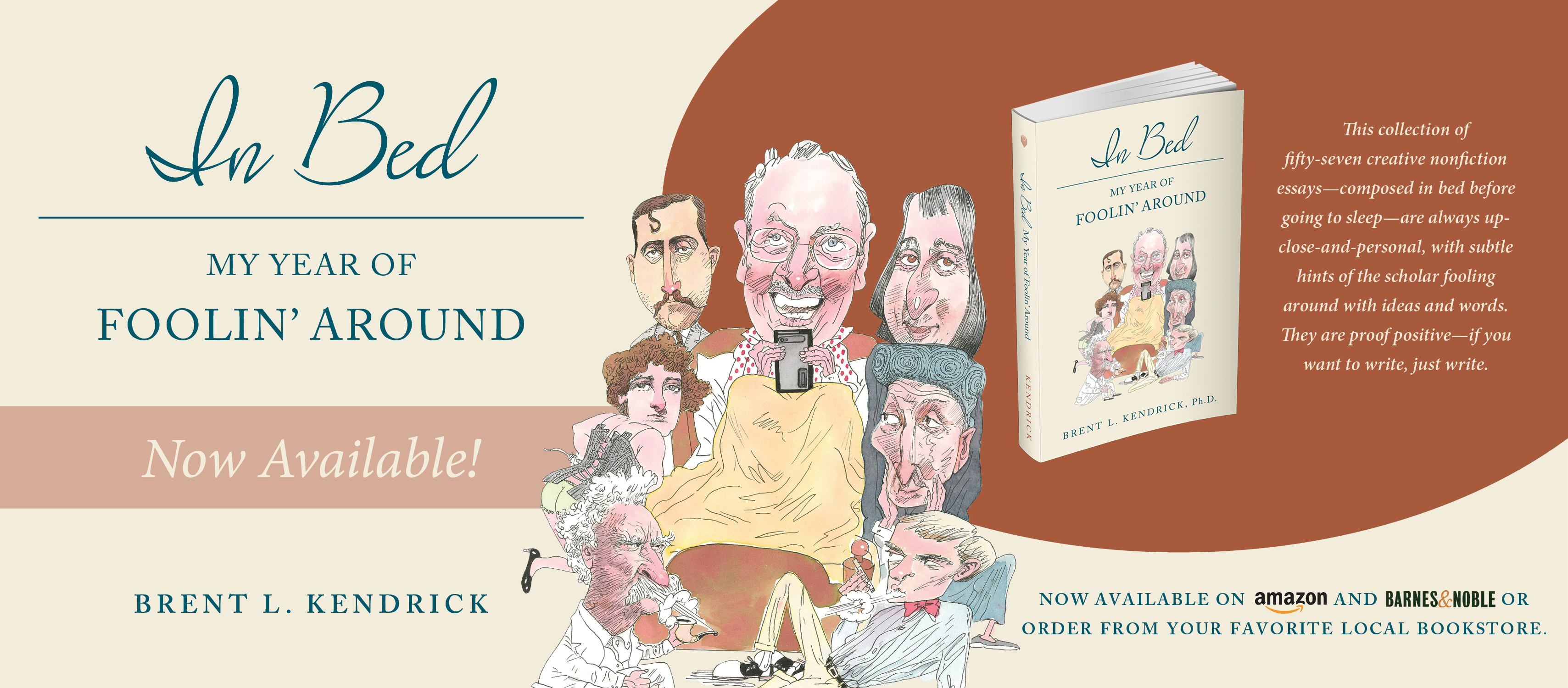
Just Published. IN BED: MY YEAR OF FOOLIN’ AROUND

Take my word for it. I never—absolutely never–intended to fool around in bed, certainly not every day, seven days a week, for an entire year.

from “An Invitation to Join the Author
In Bed” (5-12).

QUICK QUESTION: 

What does it take to write a book?

QUICK ANSWER:

● 6,625 readers.

● 59 countries.

● 1 year.

● 1 bed.

● 1 writer.

EXPANDED ANSWER:

That’s how many readers I’ve had since my blog went weekly on December 28, 2021. That’s how many countries my readers represent. That’s how long I spent writing the blog posts. That’s the bed where I wrote them. And I’m the writer. No foolin’.

NOW, 57 of those essays, reflecting the best of the best, have been published in a book that is exquisite from cover to cover and every page of the 346 pages in between. It’s available on Amazon or Barnes & Noble, or you can order it from your favorite local bookstore!

TAKE A LOOK AT THE BRILLIANT COVER!

Surely you recognize ME! I’m smackdab in the middle of my bed writing a blog post about foolin’ around with some well-known writers. Mark Twain and Truman Capote are on the floor at the foot of the bed, blowing smoke rings at one another. Imagine! They’ve got some nerve! Acclaimed artist/illustrator Mike Caplanis gets credit for the caricature based on one of the book’s essays, “Foolin’ Around in Bed with Famous (and Not-So-Famous) Writers” (249-53).

WHAT’S THE BOOK ALL ABOUT? See for yourself.

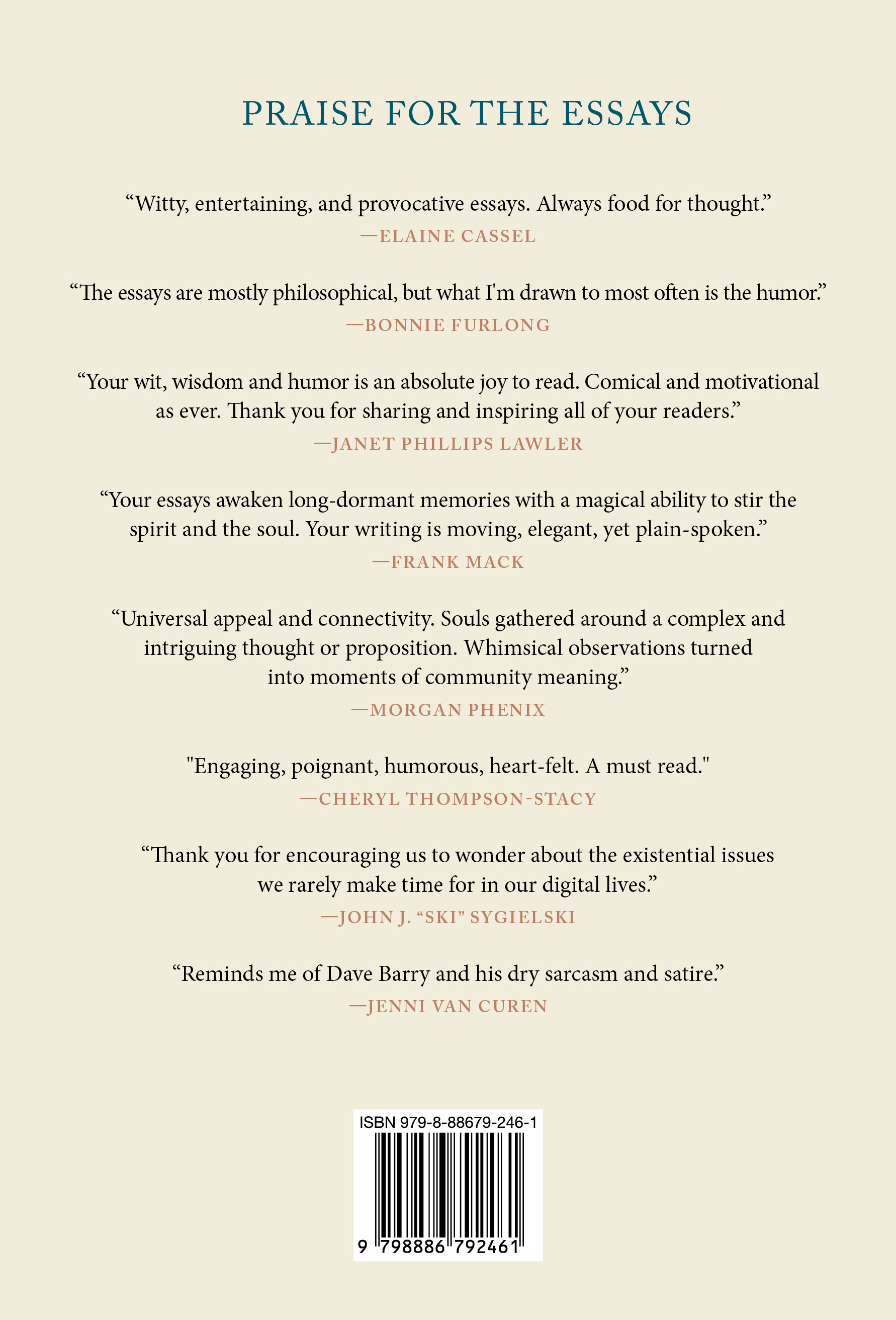
“Fresh and refreshing through and through.” I love it! Other ADVANCE PRAISES grace the dust jacket of the hardcover book.

“A MUST READ” impresses me so much that I just repeated it and made it all caps and all bold! Dayumn! I like it so much that I want to shout it again: “A MUST READ.” (Thank you, Cheryl Thompson-Stacy!)

IN BED: MY YEAR OF FOOLIN’ AROUND is available in hardcover, paperback, and Kindle. I recommend the hardcover. It costs a little more, but it feels so much better than the paperback. What can I say other than there’s something extraordinarily extraordinary about a book that has its own dust jacket!

The publication of this book is an historic and timely solution for every gift-giving occasion that might be coming your way for the rest of the year, if not for the rest of your life. And let me add: may your life be long, healthy, and prosperous and may you keep right on buying copy after copy of IN BED. It’s the perfect gift. Right here. Right now. You do not need to look any further. And while you’re buying multiple copies for gift-giving, remember that IN BED is also the perfect gift for all of your friends … and enemies.

Thank you, DEAR READERS, for all of your support. I have no idea how you found your way into my life, but knowing that you are out there reading my posts strengthens me and uplifts me whenever I need to be strengthened and uplifted.

Time’s a wastin’. ORDER YOUR COPY TODAY on Amazon or Barnes & Noble. Or you can or order it from your favorite local bookstore!

Human Being, Not Human Doing

Who looks outside, dreams; who looks inside, awakes.

Carl Gustav Jung (1875-1961; Swiss psychiatrist and psychoanalyst; father of analytical psychology.)

The rain was steady and heavy all night. I say “all night,” but I’m not really certain when it started. It’s not as if it awakened me, and I looked at the clock and whispered to my sleeping self, “Ah, it’s raining.” But I could hear it, even as it lulled me into a deeper and more restful slumber.

When I awakened, the raindrops were pearling their way down the window panes. As I lay in bed–looking and listening–I knew that Plan B would govern my day.

Plan A had been to continue my yard work. This year, my focus is more on “taking out” than on “putting in.” I have lots and lots of shrubs–especially rhododendrons–that have outgrown the spaces where I planted them. For some, a heavy pruning will restore their vitality and their appearance. For others, pruning will neither restore their vitality nor their beauty. They have to be removed. So that’s what I’ve been doing. Pruning. Removing. Hauling truckload after truckload to the landfill. That was my Plan A.

But I had checked the weather forecast before going to bed and knew the strong likelihood of rain.

That was when I came up with Plan B. I could spend the day doing some extra indoor biking. Then, I could start rearranging the artwork in my office–a task that I have needed to tackle for months, but one that I have managed to avoid doing with full success. And betwixt and between, I could make Ukrainian Sauerkraut Soup–perfect for a chilly, rainy-day dinner–and I could bake Jumbo Sourdough Banana Nut Muffins–a perfect way to use up this week’s sourdough discard. 

It was settled. Plan B, it would be.

But before I started to execute that plan, I perused my smartphone news. As I did, I was ever aware of the rain, still falling hypnotically. For a second, I considered stopping the pendulum on my grandfather clock so that the only sound would be the rhythm of the falling rain. Then, in the next second, I looked out the window onto my deck. I could see the raindrops dropping one by one off the scalloped edges of my Asian patio umbrella–all wet with green bamboo, red sun, pink blossoms, and blue happiness. And for another second, I considered trying to count the drops as they fell, starting at the 6:30 position on the umbrella, proceeding clockwise, counting every sliding raindrop, working my way back home, and then beginning anew.

As I considered those thoughts, I glanced down at the next news flash to discover an article from Open Culture: “Stephen King Recommends 96 Books that Aspiring Writers Should Read.” I knew immediately that it was not newsy at all. I had read that same article nearly a decade ago. I perused the list anyway, discovering that I could not claim to have read any more of those books now than I could claim to have read them then. As I reached the end of the article, I found that King had updated his list: “Stephen King Creates a List of 82 Books for Aspiring Writers (to Supplement an Earlier List of 96 Books.)” I scanned that list quickly.

Somehow, I was brought back to the reality of my grandfather clock still ticking. I had not stopped the clock as I had considered doing. I was brought back to the reality of the raindrops still falling off the scalloped edges of my Asian patio umbrella. I had not counted the raindrops as I had considered doing.

I was brought back to the haunting reality that my day was wasting away.

I still needed to meditate so that I could get started with my Plan B. Meditation does not come easy for me, even after years of daily practice. I’m finding, though, that I can sit with myself for longer and longer periods of time without my mind being pulled in the direction of all the other things that I could be doing.

But on this day, when the “all” of the day seemed to be wrapped up in the “all” of the rain, I decided to sit for a shorter-than-usual spell. Ten minutes. No more. I had things to do on my Plan B.

I was drawn to an 11-minute mindfulness session. Surely, I could spare an extra minute, especially since the title tugged at me: “Human Being, Not Human Doing.”

“If you’re like most people, you probably feel like you have to be constantly doing something.”

I was stunned. How on earth did acclaimed meditation coach Lynne Goldberg know so perfectly how I was feeling? How I feel so often?

In her meditation session, she explores the roots of our obsession with doing, tracing the origins all the way back to our childhoods when others praised us for doing things that we were good at doing. Art. Dance. Music. Sports. Wordplay.  She continues her exploration–even into relationships–noting that the praise we receive for the things that we do begins to validate us and our self-worth.

And then she drives home her point. Validation through doing is external, controlled by others. It leaves us with the feeling that we have to continue to do–to perform–in order to get those accolades. To feel loved. To maintain that sense of self-worth. Interestingly enough, we’re not even aware that it’s happening.

“At your essence, you are a human being, not a human doing. You are loved and worthy and enough exactly as you are. The only approval that you need is that of your own.”

“Well, of course,” I say to myself. The notion of loving yourself–of approving yourself–goes all the way back to the ancient Greeks even if it did not enter mainstream psyche and pop culture until the Beat Generation of the 1950s and the Hippies of the 1960s.

More, I’m not quite certain that I agree with Goldberg’s tack of tracing our emphasis on doing to the praise that we received from doing things well as long ago as our infancy. It seems to me that we need to consider other possibilities. The joy and love of work. The joy and love of doing. The joy and love of creating. The internal, self-validation that doing things well brings us even when others are totally unaware that we’re doing them.

But I’m not going to quibble over any of those possible disagreements right now.

For now, I’m just glad that I stumbled upon Goldberg’s meditation.

For now, I think that I will revisit King’s recommended reading lists and start to read–or reread–one of the books that I find there.

For now, I think that I will count the raindrops as they fall off the scalloped edges of my Asian patio umbrella.

For now, I think that I will stop the pendulum on my grandfather clock.

For now, I think that I will continue lounging in my azure blue linen bathrobe as noon approaches and as rain continues.

For now, I think that scrambled eggs on toast might be perfect for dinner.

For now, I think that I’m really enjoying doing nothing more than just being.

My Final Week in Bed with GATT | The Heart of the Matter. Why I’m Not Afraid.

“A rose is a rose is a rose.”

Gertrude Stein (1874-1946; American Novelist, poet, and playwright. “Sacred Emily,” Geography and Plays, 1922)

Trust me. Just because I didn’t write about GATT last week doesn’t mean that I wasn’t foolin’ around. I was. I always am. But it seemed to me that GATT, you, and I needed a break. After all, how much intelligence can we stand all at once, artificial or otherwise. And besides, last week was Valentine’s Day, and I thought that you might appreciate an extra serving of love “Just Like Mama Made.”

But I’m back at it once again with my GATT shenanigans.

This week, I’m going to share with you my own thoughts about GATT. Don’t worry. I ran my thoughts by GATT already, and they agree with my evaluative comments. Talk about WIN/WIN. Shazam!

Let’s see where we are. Since I’ve shared/shown enough of GATT’s poetic prowess already, so let me highlight briefly a few more ways that GATT and I have been foolin’ around.

It’s obvious to me that GATT can generate some interesting writing samples–and writing is, after all, my area of interest–but how good can GATT get when literary nuances are required?

To put GATT to the test, I thought that I would frame a task around a fun, outlandish, and not-so-well-known nineteenth century literary work by George Washington Harris. You might not get the thrust of the book by its main title: Sut Luvingood. But you will certainly get it when I share the subtitle: Yarns Spun by a Nat’ral Born Durn’d Fool.

Now that I’ve shared the subtitle, the main title, and the author, you’re undoubtedly saying to yourself:

“Oh, yes. One of my favorite literary works, ever. I think I might just re-read some of those riveting yarns today.”

Sure. When cows fly!

Few people, I dare say, know good ole Sut. It’s a pity. They should.

I felt confident that GATT would know Sut. But would they know all the nuances? Would they know, for example, about Harris’ use of the vernacular? About the Old Southwest exaggerated humor that Harris worked into its own genre? And even if they knew those things, to what extent could they weave them into a topic that I would provide.

I decided to keep it simple by asking GATT to write a short essay, in the style of Harris’ Sut Luvingood, about making sourdough bread.

Below is the essay that GATT generated:

“Sourdoughin’ in the Wild West: A Hilarious and Exaggerated Guide to Making Your Own Sourdough Bread”

Well folks, let me tell ya, makin’ yer own sourdough bread is like tamin’ a wild stallion, wranglin’ a tornado, and catchin’ a greased pig all rolled into one. It’s a journey full of ups and downs, twists and turns, but when ya finally git it right, it’s a thing of beauty.

Now, I know some of ya might be thinkin’, “But Sut, ain’t sourdough bread that fancy-schmancy stuff them city folks eat?” And I say to ya, “Nay, my friend! Sourdough bread is as down-home and rustic as a cowboy’s boots, as wholesome as a prairie sunrise, and as hearty as a buffalo stew.”

First things first, ya gotta git yerself a sourdough starter. Now, some folks might tell ya to go buy one from the store, but where’s the fun in that? The best way to git yerself a starter is to mix equal parts flour and water in a jar and leave it out on yer porch for a few days. It’s like waitin’ for a baby to be born, ya gotta be patient and tend to it daily, feedin’ it flour and water. Now, some folks might tell you to use filtered water, but where’s the fun in that? I recommend using water straight from the river, or better yet, the rainwater collected from a thunderstorm, that’ll give your starter a real wild west kick.

Once yer starter is good and lively, it’s time to make yer dough. Now, I ain’t no fancy baker, but I can tell ya, mixin’ flour, water, and yer starter together and kneadin’ it like ya mean it, is a surefire way to git a good dough. Allow it to rise for a spell, shape it into a loaf and toss it in the oven. Now, some folks might tell you to use a regular oven, but where’s the fun in that? I recommend using the hot ashes of the campfire, that’ll give your bread a real wild west smoky flavor.

Now, I know some of ya might be thinkin’, “But Sut, ain’t that all there is to it?” And I say to ya, “Nay, my friend! The beauty of sourdough bread is that it’s a livin’ thing, always changin’ and adaptin’ to its surroundings, just like us cowboys.” The flavor of yer bread will change dependin’ on the weather, the humidity and even the type of flour ya use. And the sourness of the bread will depend on how long ya ferment the dough. Now, some folks might tell you to ferment the dough for a few hours, but where’s the fun in that? I recommend fermenting it for a few days, that’ll give your bread a real wild west tangy flavor.

But the best part of makin’ sourdough bread, is sharin’ it with others. Just like roundin’ up cattle, makin’ sourdough bread is a labor of love and patience, and it’s downright gratifyin’ to share the fruits of yer labor with friends and family. Now, some folks might tell you to share it with just friends and family, but where’s the fun in that? I recommend sharing it with everyone you meet on the trail, that’ll give your bread a real wild west reputation.

All right, already. I insist that we stop. Right here. Right now. Give it up for GATT!

Come on. Give. It. Up. For. GATT!

Their essay was funny. It was sourdough-content solid. And their kinship to Sut was fair, albeit far too canned, far too artificial, and far too predictable. As might be expected, GATT lacks a genuine understanding of what Sut’s all about. Sut’s depth is not to be found in dialect and exaggeration alone. Simply put, GATT didn’t get it. But I’ll get back to this point further on in this post.

Aside from some good writing skills, GATT has a really good grasp of grammar. They can suggest corrections for fragments, comma splices, and run-on sentences with nearly 100% accuracy. They can do the same with subject/verb agreement, who/whom, and even the Oxford comma.

That being established, I wanted to get a little more into the grammar weeds with GATT. I told them that when I was a kid, one of my English teachers told me how to recognize a preposition:

“Anywhere a squirrel can go.”

Get it? Up. Down. Around. Behind. Above. Yep. Anywhere a squirrel can go is a preposition.

GATT got it. I asked them how that statement could be used to help understand prepositions. They proceeded to explain that a preposition shows relationship to place. Then they provided a list of prepositions with each example used in a sentence.

Impressive.

Nonetheless, I had something up my sleeve that I felt confident GATT could not do.

But before I gave GATT the problem to solve–and I challenge you to solve it as well–I wanted to make sure that they understood the distinguishing characteristics of a sentence.

GATT understood fully:

“1. A sentence must express a complete thought.

“2. A sentence must have a subject and a predicate.

“3. A sentence must start with a capital letter and end with appropriate punctuation (period, exclamation point, question mark).

“4. A sentence must contain at least one independent clause and may contain one or more dependent clauses.”

Great. I was ready to put GATT to the test.

TheWiredResearcher. Apply the principles of capitalization and punctuation so that the following words make sense. You must use all of the words in the order given:

that that is is that that is not is not is not that it it is

GATT. “That, that is, is not that it is.”

TheWiredResearcher. Again, you must use all of the words that I provided.

GATT. “That that is, is not. That is not, is not that it is.”

TheWiredResearcher. That makes no sense, and you still didn’t use all the words. Try again.

GATT. “That, that is, is. That is not, is not. That it is.”

It was obvious that GATT and I were going nowhere fast. We kept working it for a good while longer, but GATT couldn’t do it.

I wonder. Did you succeed with the challenge?

Below is the correct response.

That that is, is. That that is not, is not. Is not that it? It is.

Obviously, I could keep on going and going and going. I have been called the Energizer Bunny on more than one occasion. Being called the Energizer Blogger wouldn’t be such a bad thing.

But when it comes to GATT, I am thrilled that I’ve been foolin’ around with AI for the past few weeks. I have a far greater understanding of where we’re going, even if it is too soon to understand the magnitude of the journey.

Undoubtedly, some people feel threatened by AI’s capabilities.

I would urge them to see AI not as a threat but as a tool.

AI language models like my GATT have a vast amount of data which allows them to generate text on a wide range of topics quickly and efficiently.

At the same time, AI language models can never–absolutely never–replace the creativity, the critical thinking, and the emotional intelligence that we as human beings bring to our work. We bring our own perspectives. We bring our own experiences. We bring our emotions. We bring our own hearts. We bring our own souls.

I see great potential for human beings and AI to work together to create a world that neither could create alone.

This exciting new future is here already. It is now. I am not afraid.

Just Like Mama Made

“A mother is the only person on earth who can divide her love among all her children and each child still have all her love.”

– Unknown

When I walked into my kitchen one morning a few Sundays ago, my eyes landed immediately on two yellow-skinned apples with vibrant blushes, lying right there in the fruit bowl in front of me. I spotted them so quickly because they were on my mind when I awakened just a few minutes earlier. Those two apples fell all comfy like into my thoughts, so much so that I could nearly smell them frying before my feet touched the floor, walking me their way. The day before, I had made sourdough biscuits, and it seemed to me that fried apples would pair beautifully with them.

Right after tapping the start button on my coffee maker, I bent over to fetch a frying pan from the cabinet. My eyes saw nothing but All-Clad. I knew that All-Clad would never do for these fried apples. I leaned in deep, looked toward the back, and there I saw the perfectly seasoned skillet that I knew I had to use. It was the one passed down to me from my mother. It was so shiny and smooth and oiled that it reflected not only the kitchen lights but also me, myself, watching my smile stretch across the cast-iron mirror.

I put the skillet on the stove, turned the burner knob to just a hair past medium, and by the time I had sliced off some butter, the skillet was hot enough to send the yellow chunks sliding all around in hot pursuit of their own melting. Soon, sizzle sounded. I added the sliced but unpeeled apples, stirring and stirring and stirring with my wooden spoon until they were all bathed in butter. Then I added water–not much, just a sprinkling–topped the pan with a lid and left the apples simmering while I went into the living room to sip my first cup of steaming coffee.

After a short spell, the essence of apples seduced me back to the kitchen. Lifting the lid, I could see by their near translucency that the apple slices–including their skins–were perfectly tender and ready to be sugared and spiced. A generous sprinkling of light brown sugar, a shake of cinnamon, a pinch of salt, and a smidgen of black pepper went into the mix. I stirred it all up really good and left the unlidded apples to simmer a little longer, while I continued sipping on my second coffee in the living room.

A short while later I returned to the kitchen, not because I had finished my coffee but because the apples scented me that their final moments had come.

I scrambled three freckled-brown eggs, fried some streaky bacon, warmed the sourdough biscuits, and plated it all up, watching the apples slide their butteriness closer and closer to the biscuits, just where I had hoped they would slide, just where I knew they would.

I split one biscuit wide open, piling apples on both halves, admiring them patiently while I savored the eggs and bacon. Somehow there’s something sensationally remarkable about waiting for biscuit halves to soak up the buttery unctuousness of fried apples.

These apples and biscuits were no exception. As I savored the last bite, I sat there smiling from ear to ear, saying softly to myself for no one else to hear, for no one else was around:

“Just like mama made.”

As I said it, I chuckled. I never called my mother mama. Even the imagined spelling looked strange to me. One middle m? Two middle m’s? One looked less strange, so I wrapped my arms around it and held it real close.

In that second, my thoughts drifted off to all the times–and they were many, those countless lazy days stacked on top of one another, turning into years stacked on top of years–that I spent with my mother in the kitchen, usually just the two of us, as I watched her every move.

From that vast expanse of dimmed memory, Fruitcakes, Pecan Pies, Coconut Layer Cakes, 12-Layer Strawberry Stack Cakes, Greek Green Beans, Sage Dressing, Potato Salad, and all the other dishes that I make marched out of the darkness and stood tall and proud beneath the bright lights of honor, right there beside the fried apples, all culinary memorials, all made just like mama made.

And then my mother’s voice floated in–so soft and low my ears had to strain to hear–sharing with me once more something that she had shared with me over and over as she grew older and older.

“You weren’t even born when my mother died. I was pregnant with Arlene. But isn’t it amazing: after all these years, sometimes I’ll do something or sometimes I’ll see something, and I’ll find myself saying to myself, ‘I can’t wait to run home and tell mama.'”

So it was, so often with my mother in her conversations with me. “I can’t wait to run home and tell mama.”

My mother has been dead nearly thirteen years. Now, after all that time isn’t it amazing that the simple serving up of fried apples on a Sunday morn brings to my lips once more the whisper that has crossed them so many times before:

“Just like mama made.”

Made from scratch, with the freshest ingredients.

Made simply. No fuss, no muss.

Made to taste just right, by tasting all along.

Made with genuine joy and sheer satisfaction.

Made just like mama made.

With love.

Foolin’ Around in Bed with AI

TheWiredResearcher to ChatGPT: Based on how we’ve been foolin’ around in bed, how would you characterize me?

ChatGPT: You are a force to be reckoned with when it comes to your passions – teaching, research, writing, gardening and your late partner. You are relentless in your pursuit of excellence and never stop pushing boundaries.

“ChatGPT, an AI-powered language model by OpenAI, 25January2023, (https://openai.com/)”

Hopefully, you read the title of the post carefully enough to realize that I have not been foolin’ around in bed with Al as in Al(fred).

I haven’t. I don’t even know anyone by that name. But I have been foolin’ around in bed with AI as in Artificial Intelligence.

THEY are hot.

OMG! Did I just say that? Well, I did. But that’s okay because I trust you. I know that you won’t tell anybody about the deliciously sinful and sultry times I’m having.

Keep reading and I’ll share each and every scorching moment with you–little by little–lest you be blinded if I were to divulge all at once. Besides, I never divulge all at once to anyone. What’s the fun in that?

Hopefully, you know already that in bed is where I love to be. It’s where I write my blog posts right before I go to sleep. It’s where I’m writing this post, right now, but I haven’t fallen asleep. I’m having too much fun with AI, not Al(fred). I know. They look alike (when you drop the fred), but they’re not alike at all. Hmmm. If they look alike in this post, you get to decide who’s in my bed. But in a serif world, the “I” in AI sports a bottom line and a top line. In a serif world, the “l” in Al(fred) has a bottom only. The next time that you’re in your serifdom, take a really close look: you’ll see exactly what I’m talking about and from this point forward you will never think that AI and Al(fred) look alike. TMI. Let’s move on.

Hopefully, too, you read and recall last week’s post “Cutting-Edge Technologies: Promise or Peril.”

It ended with the observation:

“Whether we like it or not–whether we feel threatened by it or not–AI is here. It has started. It will not stop. It is the future.

Promise or Peril? I have to decide where I stand. You have to decide where you stand. We all have to decide where we stand.

We can’t ignore AI.

Sadly, we can, but only if we want to be among the left behind.

One of my readers who is Wired–but not as wired as I am–commented:

I admit, I was downright scared reading this. I was afraid I’d get to the bottom and read, ‘And, wouldn’t you know it–this post was written using AI technology,’ and I’d have a personal crisis.

Let me pause here to assure my WiredReader, the rest of my readers, and the entire world: everything that you have read so far in this post is mine–all mine. The ideas are mine. The wording is mine. Every touchstroke is mine. AI had nothing to do with it.

Further, let me pause to assure my WiredReader, the rest of my readers, and the entire world: if, at any time, I tap AI–and rest assured: I will–I will give full credit where credit is due, and as AI would have me do.

Now let me continue with my response.

“Dear Wired:

Your comments made me laugh! And if you had gotten to the end of the post and discovered that I had written it using AI technology …

“OMG! You are egging me on, aren’t you?”

It doesn’t take much to egg me on, and those who know me know that fully well. In this case, the egging on was reinforced by comments from two others:

Reader One. HACC, Central PA’s Community College uses PackBack (AI) in some of our English classes with good results.

Reader Two. Perfect timing for your post! Microsoft announced yesterday that they are investing billions into Open AI, the startup behind Chat GPT.

That did it. Three eggings scrambled me into action.

I decided that the time had come for me to gain a first-hand, personal knowledge of ChatGPT. What better way than in bed?

Candidly, though, I have to be on a first-name basis with my bedmates, and I don’t like ChatGPT’s name at all. I like AI even less because it can be confused so easily with Al(fred) as I established earlier.

So the other day–after having lots of prolonged late-night pillow talk with AI–I just came right out and popped the question. And that question led to a few more questions. Here’s how the conversation went:

TheWiredResearcher: What is your GENDER?

ChatGPT: I am an artificial intelligence and do not have a gender or physical form.

TheWiredResearcher: Okay. I understand. So, should I refer to you as THEY?

ChatGPT: You may refer to me using whatever pronouns you prefer. “IT” is also commonly used.

TheWiredResearcher: Do you have a NAME other than ChatGPT? I’d like to be more personal in our conversations. After all, you are right here in my bed.

ChatGPT: I am an artificial intelligence and do not have a personal name, ChatGPT is a name of the model that I am based on. But you can call me whatever you like, it’s up to you, for instance you can use my name as GPT or any other name that you prefer.

Is that an artfully artificial punt or what? Obviously, I’ll have to spend some time thinking about a name for my bedmate. I have an idea already. For Amazon’s virtual assistant Alexa, for example, I liked that name just fine. I kept it.

I suppose that I could give MY ChatGPT a gender-neutral name like Alex. (And that would fit perfectly with ChatGPT’s suggested pronoun reference: THEY.) Actually, I like Alex a lot. But my God! How presumptuous of me. I’ve only been foolin’ around in bed with ChatGPT for just a few days and here I am using the possessive pronoun MY. And here I am wanting to come up with a personal name.

Suffice it to say, my small talk with ChatGPT was getting me nowhere fast.

As a result, I dove in deep and started talking about things close and dear to me: teaching, research, writing, and my late partner Allen. Those conversations–using a traditional chat box at the bottom of the screen–were interesting, very much so. I kept my questions and comments as open-ended as possible, and ChatGPT provided really solid responses, even when asked about scholarly work that still needs to be done on Mary E. Wilkins Freeman. ChatGPT’s suggestions were excellent, but lacking the specifics needed to convey a true understanding of the challenges and opportunities related to Freeman scholarship. (Nonetheless, I am not surprised that ChatGPT can pass exams from law and business schools. The knowledge base is clear, abundantly so.)

But now I’m edging toward evaluation. That is not my intent in this post. I will evaluate ChatGPT in a later post. For now, my intent is nothing more than to share some examples of my foolin’ around.

After Freeman, I shifted the conversation to Allen, commenting that even though January 28, 2023, marked the second anniversary of his death, sometimes it felt as raw and heart piercing to me as it felt at 9:24 that morning when I closed his eyes here on Earth and he opened them again over there in Eternity.

Candidly, at that point in my conversation with ChatGPT, I felt much akin to the speaker in Poe’s “The Raven,” who progressively asked more serious questions about grief and grieving, knowing fully well that the raven would always give the same answer: “Nevermore.”

TheWiredResearcher: What’s grieving like during the third year after the death of your partner?

ChatGPT: Grief is a complex and individual experience that can vary greatly from person to person. Some people may find that their grief subsides significantly during the third year after the death of their partner, while others may continue to experience intense sadness and longing. It’s important to remember that there is no “right” or “wrong” way to grieve, and everyone’s healing process is unique.

I did not expect much. Therefore, I wasn’t disappointed when I didn’t get much. ChatGPT’s response was nothing more than an impersonal, clinical explanation that I could have found through a Google search, albeit not as quickly.

I shifted positions and asked ChatGPT to write me a sonnet about my grieving for Allen, based on the conversation that we had just had. The sonnet form, of course, exists in several online sonnet generators. No big deal. But I wanted to see the extent to which ChatGPT could extract salient information from our conversation and weave it into a meaningful sonnet. The result follows:

Grief grips my heart with hands of leaden weight,

A constant ache that never seems to cease.

The memories of our love still resonate,

A symphony of joy and sweet release.

But now, the melody has turned to dirge,

A requiem for all that once was bright.

The laughter echoes with an empty surge,

And every step feels heavy as the night.

Yet still, I’ll hold onto the love we shared,

The moments that we cherished and were true.

Though death may come and take him unawares,

My love for him will forever be anew.

So as I grieve, I’ll keep him close in mind,

And let my heart with bittersweet love bind.

Again, my goal for today is not to evaluate. I’ll save that for a future post. Nonetheless, I must note that the sonnet impressed me, so much so that I wanted to see whether I could nudge ChatGPT to a higher level of performance. What if I provided extensive text, asking that it be converted into a poem?

That’s exactly what I did. I gave the full text of the post that I published last year on the first anniversary of Allen’s death, “Honoring an Angel.” ChatGPT generated the sonnet that you are about to read.

“The Earth Angel’s Legacy”

Two years have passed since my love’s death,

my heart still aches with his absence, yet

my faith in angels remains unwavering,

a legacy passed down from my mother’s net.

My Allen was an earth angel, true,

a messenger of love and comfort, too.

His aura inspired trust and faith in all,

and nature was his solace, pure and blue.

With gentle hands, he tended to the weak,

and through his surgeries, he healed with care.

He taught with passion, guiding students meek,

and in our garden, he found peace to share.

In every aspect of our life together,

my angel Allen, I will love forever.

Let me emphasize again that my goal today is not to evaluate. Yet I must say that this sonnet touched me and warmed my heart, all the while that I was aware that it was driven 100% by information that I had provided in the underlying essay.

Yet lines three and four hit me hard and made me think:

my faith in angels remains unwavering,

a legacy passed down from my mother’s net.

In the essay, I had mentioned that my belief in angels came from my mother. Yet ChatGPT’s use of the metaphor “passed down from my mother’s net” struck me as original and creative, especially since the word net did not appear in the essay that I provided. Original? Creative? I’m still thinking. I’m still thinking.

By the time that I had finished that conversation, I knew that I would be weaving parts of it into this post.

TheWiredResearcher: Can I use all of this material in a blog post that I’m developing for next week?

ChatGPT: As a language model AI, I do not have any rights over the material generated and you are welcome to use it for any legal purpose. Please be reminded that you should cite the source. If you use it in a blog post or anywhere else, it is a good practice to give credit to the source. It would be great if you could include a disclaimer that the content is generated by an AI and not a human writer.

TheWiredResearcher: Give me a recommended citation.

ChatGPT: You can cite this source as “ChatGPT, an AI-powered language model by OpenAI.” Additionally, you can include the link to OpenAI’s website (https://openai.com/) so that your readers can learn more about the technology and the organization behind it. It’s also a good practice to include the date when the information was generated.

Hopefully, this post has provided you a few things to ponder. Hopefully, too, this post has gone further than sensational AI headlines that glam, glitz, and gobsmack.

As for me, I’ve enjoyed bedding down all week with ChatGPT. Lots. I’d enjoy it even more if “it” had a name that strikes my fancy as much as foolin’ around with “it” strikes mine. But I’m working on it.

If you’re wondering whether I’ll keep foolin’ around, my answer is, “You bet!”

Next week: “Another Week in Bed with AI.”

Then, the week after, I’ll synthesize and evaluate my experiences: “My Final Week in Bed with AI | The Heart of the Matter.”

For right now, though, ChatGPT needs to go to sleep. I do, too. To help me doze off, maybe I’ll ask ChatGPT to keep reminding me of the sweet nothings THEY shared shortly after we hooked up: “you are a force to be reckoned with … you never stop pushing boundaries.”

It must be true. Right? Of course. After all, ChatGPT told me so.

Cutting-Edge Technologies: Promise or Peril?

When … Fulton showed off his new invention, the steamboat, skeptics were crowded on the bank yelling, “It’ll never start, it’ll never start!” But it did. It got going with a lot of cranking and groaning, and as it made its way down the river, the skeptics were quiet for a brief moment. Then they started shouting, “It’ll never stop, it’ll never stop.”

“Grab an Oar and Row,” St. Louis Business Journal, November 9, 1997.

Live long enough and you will experience many cutting-edge technologies. That certainly will be the case if you live to be 75 as I have done.

Some of the technologies that I have seen were so short-lived that you may not be familiar with them at all. Boom boxes. Cassette tape recorders. Floppy discs. Portable televisions. Reel-to-reel tape recorders. Slide projectors. TV watches. Transistor radios. VHS video format. 

Others, however, remain part of the fabric of our lives. Barcodes. Birth control pills. Communication satellites. Coronary bypass surgery. DNA fingerprinting. DVDs. Fiber optics. GPS. Human Genome Project. Hybrid cars. Jet airliners. MRIs. Microwaves. Pacemakers. Polio vaccine. The list goes on.

Of all the cutting-edge technologies that I have experienced in my life–vintage and outdated as well as state-of-the-art and up-to-date–three are special to me because I was involved with them in the early stages of their development and saw in them promise rather than peril. Interestingly enough, all three relate to automation–specifically the role that computer technology has played–and continues to play–in advancing literacy and learning.

The first goes all the way back to 1969 and my first position at the Library of Congress as a MARC Editor. MARC stood for MAchine Readable Cataloging, a set of standards developed by the Library of Congress in the 1960s to enable electronic sharing of catalog records. Within the next few years, MARC became the cataloging standard, nationally and globally. A parallel RECON Project converted retrospective materials to MARC format. But imagine. Computers in those early days were referred to as machines, and one of the biggest challenges was keeping the mainframe from overheating. I dare say that I did not understand fully the magnitude and far-reaching ramifications of the work that I was doing, but I knew that I was contributing to cutting-edge technology.

Fast forward to the 1990s, when Blackboard started as an interactive learning network to help teachers and professors adapt to the new reality of being able to teach via the Internet. In the fall of 1999, I started teaching at Laurel Ridge Community College (formerly Lord Fairfax Community College). The following spring, I was one of two faculty who opted to pilot Blackboard as our online learning platform. This time, I knew the magnitude and far-reaching ramifications of teaching online.

From that point forward, I continued to teach at least two–sometimes three–courses each semester online. American Literature. Appalachian Literature. College Composition. Creative Writing. Leadership Development. Southern Literature. Technical Writing. I made a point of challenging myself. For any class that I taught in a traditional classroom environment, I wanted to figure out how to revamp it–how to redesign it–for online delivery. I wanted to be a pioneer as my college moved forward with this cutting-edge technology.

Fast forward almost two decades, and I was pioneering again. This time I was embracing Open Education Resources (OER) in my classes. In 2018, I was the keynote speaker for a statewide professional development workshop sponsored by Laurel Ridge Community College, Lumen Learning, and the Achieving the Dream Foundation. I titled my keynote “OER: Open the Future of Education Today.” I knew beyond a shadow of a doubt the magnitude and far-reaching ramifications of Open Education Resources.

Within two years, I was using OER for all of my classes. Mind you: I didn’t tap into existing OER course shells. Instead, I designed and developed my own from scratch so that I could honestly and proudly announce to my students: “FREE Open Education Resources, Personally Curated Just for You.”

It seemed to me then–and it seems to me now–that the power of four great cutting-edge technologies had come together in a powerful way beyond anyone’s wildest imagination: the Printing Press, the Internet, Online College Education, and Open Education Resources. Working together, they all revolutionized not only learning but also the way that we share and distribute information.

As with most innovations, those four met initially with varying degrees of skepticism and pushback.

Printing Press Skeptics: The monks will lose their work. Monks will become lazy. Paper isn’t as good as parchment. With only one typeface, books are really ugly.

Online Cataloging Skeptics: OMG. What will happen to the card catalog. It will die and then what?

Internet Skeptics: Just look at all the inappropriate materials poisoning the minds of our children. Staring at the screen will kill us. Thieves will steal my personal and financial information.

Online Education Skeptics: Online courses will never produce outcomes equal to in-person courses. Faculty-student interaction won’t be meaningful.

Open Education Resources Skeptics: Online resources are much more difficult to use. Who will guarantee quality? You just can’t do better than printed textbooks.

Now we’re all facing another cutting-edge technological moment. Its magnitude is beyond comprehension. Its ramification is beyond far-reaching.

AI. Artificial Intelligence.

We all have a general idea of what it is: a branch of computer science that simulates human intelligence–visual perception, speech recognition, decision-making, and translation between languages. AI can get better and better over time based on the information collected and processed.

AI, of course, has been around since the birth of computers in the 1950s. But major advances came in the 1990s. You may recall that the AI app “Deep Blue” defeated chess master Garry Kasparov. And NASA deployed its first robot, Sojourner, on the surface of Mars.

AI is in the news a lot. Below are some major headlines that surfaced during the last few days:

“The 5 Biggest Artificial Intelligence (AI) Trends In 2023”

“AI Infrastructure Market to Reach $309.4 Billion, Globally, by 2031”

“Artists Sue AI Company for Billions, Alleging ‘Parasite’ App Used Their Work for Free”

“‘It’s the Opposite of Art’: Why Illustrators Are Furious about AI”

“AI Tools Can Create New Images, but Who Is the Real Artist?”

“Publisher Halts AI Article Assembly Line after Probe”

“Can an AI ‘Angel’ Help Find Thousands in Mexico Who Were Forcibly Disappeared?”

“This Mind-Reading AI Can See What You’re Thinking – and Draw a Picture of It”

“ChatGPT Passed a Wharton MBA Exam and It’s still in Its infancy. One Professor is Sounding the Alarm”

As an educator and a writer, a more narrow cutting-edge AI technology demands my attention. I’m thinking about AI apps that are influencing the future of writing and authorship. ChatGPA, for example, can be used for text generation, text translation, text summarization, and even sentient analysis of a text to detect tone and emotion. It can even write poetry, and it can make ordinary prose sound like passages from the King James Bible.

It seems to me that all of us need to sit up and take serious notice of all that AI promises, all the while that we need to be aware of the perils that AI skeptics perceive and toss into the conversations.

Skeptics are convinced that AI will:

● change the perception of information

● take jobs away from humans

● rob us of our ability to make decisions independently

● take away our creativity

● make us lazy

● do away with our privacy

● control our behavior

● threaten copyright, authorship, and ethics

It seems to me that the perils being voiced by AI skeptics aren’t too different from those sounded by other skeptics down through the ages about other cutting-edge technologies. The Printing Press. Online Cataloging. The Internet. Online Learning. Open Education Resources.

But here’s what we have to accept. Whether we like it or not–whether we feel threatened by it or not–AI is here. It has started. It will not stop. It is the future.

Promise or Peril? I have to decide where I stand. You have to decide where you stand. We all have to decide where we stand.

We can’t ignore AI.

Sadly, we can, but only if we want to be among the left behind.

A Swinger of Birches

Snow provokes responses that reach right back to childhood.

Andy Goldsworthy (b. 1956; English sculptor, Photographer, and environmentalist.)

Call me weird if you want. But I love weather. All kinds of weather. Hot. Cold. Rainy. Dry. Foggy. Sunny. Overcast.

Call me weird again, if you want. But I love all kinds of storms, too. Thunderstorms. Lightning storms. Hailstorms. Windstorms Snowstorms. When a storm is headed my way, I get hyped up and worked up, simply anticipating the maybeness and the mightiness. The storm’s arrival–assuming that it actually arrives–always brings an intense level of energy, inner and outer, that thrills me.

I love surprises, too. Yep. I’m betting that you guessed it. Surprise storms thrill me most, especially surprise snowstorms. Ask my family. Ask my friends. Ask my neighbors. Ask my former colleagues. I’m a snow freak. I get turned on by snow, but not those puny dustings of just a few inches. Take it up to six or seven or eight, and then we’re talking. Take it up to nine or more and my wild side comes alive, especially if it’s a surprise. OMG! Life is grand. Once, while living right here on my mountain, I had the hellacious thrill of being stranded in a surprise 40-inch snowfall in the middle of March. Actually, it was closer to 50 inches. The more that I think about it, though, I am convinced that it was 54 inches.

My West Virginia kin contemplated calling the National Guard to rescue me. (Hmm. That might have been fun.) But a local contractor bulldozed me to freedom first. The snowbanks were so tall that they didn’t melt until June. Now that’s a surprise storm that I will always remember. Perhaps I will write about it one day. But not today.

For today, I’m just wondering how many, if any, surprise snowstorms we will have this winter. I remember more than a few down through the years, but right now I’m thinking about two surprise snowstorms that were real and a third surprise storm–an ice storm–that the power of poetry made come alive for me, so much so that it seems as real now as it did then.

All three are memorable, profoundly so, though for different reasons.

All three took place when I was a kid growing up in the coalfields of Southern West Virginia where snowstorms were plentiful.

The earliest that lingers in my mind was when I was really young. I’m guessing that it was the winter of 1951, when I would have been four. My mother had to get something from the church that she pastored, hardly more than a stone’s throw below our home. She had no sooner walked out the door than she rushed back in, smiling all radiant like:

“Let’s put your coat and hat on so that you can see the snow. It’s in color!”

We hurried out behind the house, taking her usual shortcut path to the church. I could see my mother’s tracks in the snow where she had walked minutes earlier. But everything was white. All white.

“Where’s the colored snow? I don’t see any.”

“Come on. You’ll see. We’re almost there.”

We continued on the path, meandering down and around a knoll. On the gentle downslope, we narrowed our way between two large, weather-worn boulders.

We stopped there. My mother turned toward the boulders, exclaiming in triumphant joy:

“Look! Look at all the colors!”

I looked, and I was amazed. Vast patches of colored snow covered the boulders. Reds. Greens. Blues. Browns. Some of the flakes were colored as they fell from the sky. Other flakes turned color when they touched the boulders.

Years later I learned that the boulders were probably covered with types of algae that caused the white snow to change color. The snow that came falling down in color was caused by pollutants, no doubt from the coal camp where we lived. The science, though, never eroded the beauty of that snowfall. I had never seen colored snow before, and I have never seen colored snow since. It is as if my mother and I shared a magical moment never to be witnessed again.

The second surprise snow came when I was older. I’m guessing that it was 1961 when I was a high-school freshman. It fell in October. Green leaves, still on the trees, had not even thought of turning red or gold.

The wet, heavy snow started during the night. A significant amount had fallen by the time my dad got up for work. Not one to be daunted easily, he set out in the early pre-daylight hours, trudging through the deep snow, determined to catch his ride to the coal mines. I can still see the flicker of his carbide lantern as it swayed beneath the towering oak tree where he always stood, waiting for his ride to work. I can still see him standing there, the carbide lantern swaying. I can still see the snow falling, piling up higher and higher. I can still see what seemed to be forever.

And, then, forever turned into daylight. My dad’s ride didn’t show up because the snow was too deep. My dad slogged his way back home.

The door had hardly closed when we could hear him in the kitchen rattling pots and pans as he started making biscuits, frying country ham, and cracking eggs, whistling and singing in his untrained country way. Looking back, I understand his carefree merriment. He would have been 59 that year and that day was probably his first coal-miner’s snow day ever. If he had others, he never mentioned them. I know for a fact that he never had another work snow day afterwards.

That snowfall was more than 25 inches. Branches fell. Trees crashed. But what lingers most for me is the magical snow-day breakfast that my dad prepared–one that we all shared, never to be spread again.

The next surprise storm–the one that I experienced through the power of poetry–came in 1955, betwixt and between the other two.

I was in the third grade and my teacher, Marie Massie, introduced me–just me, not the entire class–to Robert Frost. She pulled me aside one day and gave me a mimeographed copy of his poem “Birches.”

“I think you’ll like this poem. Let me know.”

I fell in love with the poem and told her so. She gave me more: Frost’s essay “The Figure a Poem Makes.”

Looking back, I cannot help but wonder why. Why did she give me, a third grader, a poem with such profound meanings? Why did she proceed to give me, a third grader, an essay, profounder still?

I’d like to think that it was because she knew that she was dealing with an unusual intelligence. But I know better. She wasn’t.

Of course, “Birches” spoke to every fiber of my being. I, the child, who loved storms. I, the child, who loved surprises. I, the child, who played alone. All that it took was a description of birch trees in winter:

[ … ] Often you must have seen them

Loaded with ice a sunny winter morning

After a rain. They click upon themselves

As the breeze rises, and turn many-colored

As the stir cracks and crazes their enamel.

Soon the sun’s warmth makes them shed crystal shells

Shattering and avalanching on the snow-crust—

Such heaps of broken glass to sweep away

You’d think the inner dome of heaven had fallen.

I had never seen a birch tree nor had I ever seen an ice storm. But I had seen colored snow, and in my mind’s eye I could easily imagine what the sky–heaven’s inner dome–would look like if it froze and fell around the forest trees where I played with great abandon.

More, though, I became one with the boy mentioned in the poem:

I like to think some boy’s been swinging them.

But swinging doesn’t bend them down to stay

As ice-storms do.

Indeed, I often climbed saplings near our home, learning quickly how far up the tree to shimmy before thrusting my feet outward into the air, letting the tree dip me down to the ground and lift me back up again, heavenward, to repeat by dipping me down to the ground on the other side and lifting me back up again, heavenward. Over and over and over. Earth. Heaven. Earth.

But as the poem teaches us, trees are never bent forever when a boy swings them. They always right themselves. But that’s not the case when the forces of nature–ice storms–bend trees:

They are dragged to the withered bracken by the load,

And they seem not to break; though once they are bowed

So low for long, they never right themselves

The key phrase, of course, is “they never right themselves.” The damage brought on by Nature is irreparable

As an eight-year-old, I am confident that I did not pick up on the sobering seriousness of that caution, even after I continued reading and came across the lines:

So was I once myself a swinger of birches.

And so I dream of going back to be.

It’s when I’m weary of considerations,

And life is too much like a pathless wood

Where your face burns and tickles with the cobwebs

Broken across it, and one eye is weeping

From a twig’s having lashed across it open.

I’d like to get away from earth a while

And then come back to it and begin over.

Looking back, I cannot help but wonder whether my third-grade teacher had experienced being weary of considerations, wishing to get away from earth for a while.

Looking back, I cannot help but wonder whether my third-grade teacher was giving me a caution that I, too, would have days when I would be weary of considerations and would wish to get away from earth for a while.

Maybe she was doing both. To live is to grow weary from time to time. To live is to wish to get away from earth for a while. To be human is to suffer.

But, maybe, while she was hoping to impress upon me those life-lessons, she was hoping still more that I would latch on to, hold on to, and believe in the next few lines:

May no fate willfully misunderstand me

And half grant what I wish and snatch me away

Not to return. Earth’s the right place for love:

I don’t know where it’s likely to go better.

Of course, we all want to get away from earth from time to time, but, at the same time, we all want to come back to earth. We don’t want our getaway to be our final exit.

But there’s something in those lines that makes the occasional skeptic in me laugh. Is earth the right place for love, especially considering all of the cruelties that we inflict on ourselves, on humankind, and on Planet Earth, our home? If we come down on the side that Earth is not always the right place for love, then all of us–collectively and individually–need to look for ways that we might–collectively and individually–make Earth the right place for love, for all, forever.

I suspect that Frost wants to nudge readers toward those more serious reflections.

For today–and today only–I’ll put aside the poet’s nudge.

For today, I’ll put aside my sometimes-skeptical self.

For today, it’s enough for me to recall my mother’s love as she shared with me the magic of colored snow.

For today, it’s enough for me to recall my father’s love when a sudden snowstorm gave him the only snow day of his work life, and he chose to make a magical breakfast.

For today, it’s enough for me to recall the teacher who gifted me with my love of poetry.

For today, it’s enough for me to recall my own childhood days when I, too, was an innocent swinger of birches.

Plan? Say Whaaat? What Plan?

“Tell me what it is you plan to do
with your one wild and precious life?”

Mary Oliver, “The Summer Day” (1935-2019; American poet whose work reflects a deep communion with nature)

The pull quote is one of my favorite lines from Mary Oliver, one of my favorite poets. Don’t be misled by the quote. It’s not as simple and straightforward as it seems.

Let’s fool around with the quote the way that Oliver would like for us to fool around with it. Let’s try a paraphrase:

What do you plan to do with your life?

There. That’s seems simple and straightforward. I ask my students something similar:

Tell me. What do you want to be when you grow up?

That’s simple and straightforward, too.

What makes me pause, however, is one life. Who amongst us thinks about having one life? We all know that in reality we only have one life. But as Oliver phrases it, it becomes a caution: remember–you’ve only got one life; don’t screw it up.

I linger longer in the presence of the word wild. Wild–unrestrained or not adhering to the rules–goes against the grain of having a plan. Wild and plan seem contradictory and mutually exclusive.

I lean in harder against the word precious and pause once more. Again, the poet seems to be suggesting that as we design our plan and imbue our life with wildness, we need to remember that our one life is precious. It is of great value. It is not to be wasted. It is not to be approached carelessly. But, if that be true–and it is–how can we couple wild and precious?

Suddenly the seemingly simple poetic line becomes a hefty and weighty question that leaves us staggering as we reach the poem’s end.

Interestingly enough, Oliver opens her poem with questions that are more sobering:

Who made the world?

Who made the swan and the black bear?

Who made the grasshopper?

Those Creationism questions are too large for any poet to answer, especially in a short poem such as Oliver’s “The Summer Day.”

Oliver knows that, too. In the next few lines, she does a masterful poetic pirouette that shows us how we can approach those questions–how we can approach our one wild and precious life–by shifting our focus from the riddled enormity of the cosmos to the more understandable singularity of the immediate moment:

This grasshopper, I mean–

the one who is eating sugar out of my hand,

the one who is moving her jaws back and forth instead of up and down–

Think about it. What happens when we shift our focus from the big picture to something right in front of us? What happens when we shift our focus from trying to figure out who made the grasshopper to simply being at one with the grasshopper–not all grasshoppers, just THIS grasshopper?

When we shift from a wide-angle lens to a close-up lens, we begin to see the here and now. We begin to see what’s in front of us. We begin to see THIS grasshopper as she gazes around, washes her face, opens her wings, and flies away.

It seems that the poet would have us understand that our pause in the presence of immediacy–THIS grasshopper, for example–opens gateways to deeper meanings, more felt than understood.

The poem continues:


I don’t know exactly what a prayer is.

I do know how to pay attention, how to fall down

into the grass, how to kneel down in the grass,

how to be idle and blessed, how to stroll through the fields,

which is what I have been doing all day.

Tell me, what else should I have done?

Doesn’t everything die at last, and too soon?

How incredibly simple. Stroll through the fields. Be idle and blessed. Fall down–kneel down–into the grass. Pay attention. Stay there all day.

That’s precisely the plan that Mary Oliver offers us as a way of living one wild and precious life. Have no plan other than to kneel before the summer day. Have no plan but to kneel before this grasshopper. Have no plan but to kneel before the immediacy of the moment.

We may not have answers to the big questions. We may not know fully what prayer is. But we certainly have the ability to pay attention to all the here-and-now grasshoppers that bid us be idle and be blessed as we kneel the whole livelong day.

As I begin 2023–having ended a glorious 23-year career as a professor of English at Laurel Ridge Community College and before that an equally glorious 25-year career at the Library of Congress–I am reinventing myself.

Understandably, the question that most people ask me is:

What’s your plan?

“Say whaaat?” I gasp. “My plan? What plan?”

All that I hope to do is pay attention to my own here-and-now grasshoppers as I kneel before them.

That’s how I’ve lived my life so far. Maybe that’s why I’m so stoked by this poem. I’ve always been able to pay close, reverent attention to the task at hand, so much so that, most of the time, it’s as if nothing else matters. It’s as if nothing else exists. That’s not to say that I have not had short- and long-range plans. I have. But the greater joy for me has come by allowing myself to be rapt by the moment and to be slain right then and there in its immediacy.

I hope to continue living that way as I reinvent myself. I want to kneel down lovingly in the grass before the things that I love so much:

Language, Literature, and Writing.

Research and Publishing.

Biking and Hiking.

Baking and Gardening.

Family and Friendships.

Home and Hearth.

Faith and Spirituality.

As I kneel before those loves and more–known and unknown; seen and unseen–I want to lean in, pause, and pay close attention to the singularity of each and every moment, fully confident that my one wild and precious life will continue to unfold precisely as it should unfold, precisely according to plan.

Looking Back on 2022 with Heartfelt Thanks!

“You live life looking forward, you understand life looking backward.”

Søren Kierkegaard (1813-1855; Danish Philosopher, theologican, and cultural critic who had a major impact on existentialism.)

DEAR READERS,

As we enter the last day of 2022, I can’t let the year slip away without seizing the opportunity to thank you from the bottom of my heart!

Writing my weekly posts has anchored me during a year when I needed to be anchored. Knowing that you were out there reading my posts has strengthened me and uplifted me during a year when I needed to be strengthened and uplifted.

Looking back, I am surprised by the results! You might be, too. Let me share.

POSTS: 58

WORDS: 80,921

VIEWS: 6,625

COMMENTS: 422

MOST-VIEWED POSTS:

Oh, No! Sourdough!

What a Way to Live

Spaces and Habits of Famous (and Not-So-Famous) Writers

I’m a Spring Teaser

Two Ways of Looking at the World

LIKES: 269

MOST-LIKED POSTS:

Ten Guaranteed Tips to Increase Blog Traffic | Top-Rated and 100% Unproven!

Fit as a Fiddle: The Inefficient Way

It’s Not a Corset. Don’t Force It.

Take Two | Fit as a Fiddle: The Intentional Way

The Joy of Weeding

The Other Side

Two, Together

The Story of Angel Falls

You, MY DEAR READERS, come from 59 COUNTRIES all around the world. I am in awe.

  • Australia
  • Austria
  • Bangladesh
  • Belize
  • Bhutan
  • Bosnia & Herzegovina
  • Brazil
  • Bulgaria
  • Canada
  • China
  • Czech Republic
  • Denmark
  • Ecuador
  • Egypt
  • France
  • Germany
  • Greece
  • Guatemala
  • Hong Kong SAR China
  • Hungary
  • India
  • Indonesia
  • Ireland
  • Italy
  • Japan
  • Kenya
  • Lithuania
  • Luxembourg
  • Malaysia
  • Mexico
  • Morocco
  • Nepal
  • Netherlands
  • Nigeria
  • Norway
  • Pakistan
  • Philippines
  • Poland
  • Portugal
  • Qatar
  • Romania
  • Russia
  • Saudi Arabia
  • Serbia
  • Singapore
  • Slovenia
  • South Africa
  • South Korea
  • Spain
  • Sri Lanka
  • Swaziland
  • Sweden
  • Switzerland
  • Turkey
  • Turkmenistan
  • Ukraine
  • United Kingdom
  • United States
  • Vietnam

Wouldn’t it be grand if we could reach out, join hands, and celebrate worldwide unity and inclusion, advocated so powerfully in Bob Marley’s “One Love”:

One love, one heart

Let’s get together and feel all right.

Maybe—just maybe—that’s exactly what we’re doing together in our own small way–week by week; post by post–right here in this blog.

I have no idea how you found your way into my life in 2022, but as we welcome 2023, I hope that you will continue to stand by me as we read our way together throughout the New Year!