“The meaning of the past is never finished.” Hannah Arendt (1906–1975). From her Between Past and Future (1961), where she argues that history is not closed or complete, but morally alive, awaiting renewed attention, responsibility, and understanding.
Last week, I found my way to a small library tucked behind a hardware store in Deltaville, Virginia. It was the sort of place you might drive past without ever knowing it was there—a quiet, cream-colored building softened by climbing vines and brightened by a mural where hummingbirds hovered and monarchs drifted above a riot of painted flowers. A sailboat logo and a modest white sign announced Middlesex County Public Library — Deltaville Branch, a name that made the place feel both official and intimate at once. Nothing about it was grand, but everything about it felt intentional. Step through the doors, and you are immediately reminded why libraries endure: they do not shout their importance; they simply keep offering it.
I had been invited to speak about Unmasking The Humourist: Alexander Gordon’s Lost Essays of Colonial Charleston, South Carolina, a project that has occupied a surprising amount of my life. But as I stood there, in a room filled with people who had given their afternoon to books, it became clear that what I was really there to talk about was not a colonial essayist at all. It was about the invisible network of librarians, teachers, archivists, and patient institutions that had made that work possible.
Nothing I have written would exist without them. Not the book. Not the essays. Not even the questions that led me to them.
For most of us, research looks solitary. A scholar in a reading room. A book on a desk. A voice speaking from a distant century. But none of that happens without a vast, quiet scaffolding behind it, made up of people who catalog, preserve, teach, fund, and protect the materials that others one day come to use.
Libraries quietly hold information—sometimes for centuries—without knowing who will need it, or when, or why. They preserve voices long after those voices have gone silent, trusting that someday someone will come along prepared to listen carefully.
That afternoon in Deltaville, surrounded by that small but devoted group of Library Friends, I realized I was standing inside the visible tip of something much larger. A chain of care that stretches across generations, linking a colonial newspaper, a Charleston library, a community college system, and a branch library in the heart of the Chesapeake Bay.
My own place in that chain began long before I knew it. When I was a graduate student in the early 1970s, I stumbled across a series of anonymous essays published in the 1750s in The South-Carolina Gazette. A leading scholar, Leo LeMay, had remarked that they were among the finest essays in all of early American literature and had urged that someone edit them, publish them, and identify their author. The challenge sat there for decades, unanswered.
What allowed me to return to it was not individual brilliance, but institutional grace. I spent twenty-five years at the Library of Congress, learning how archives think and how preservation outlasts any single lifetime. Later, the Virginia Community College System gave me something just as precious when I turned fifty: the chance to become an English professor, a dream I had carried since childhood. And then, when I was named Chancellor’s Professor, it gave me a two-year appointment that provided something more precious than funding. It provided time. Time to think. Time to return to unfinished questions. Time to do the kind of slow, careful work that real discovery requires.
That is why educators and educational institutions matter so deeply in this story. They do not just transmit knowledge; at their best, they grant permission. Permission to linger with a problem. Permission to follow a hunch. Permission to trust that careful thinking is worth the investment.
Being in Deltaville also gave me something I had not realized I was missing: the chance to thank Glenn DuBois in person. Glenn was Chancellor during two important turning points of my professional life. He was Chancellor when the Virginia Community College System first welcomed me into the classroom at age fifty, and he was Chancellor again years later when I was named Chancellor’s Professor, the appointment that made this work possible.
We rarely get to look someone in the eye and say, simply and honestly, “You changed my life.” But that afternoon, in a small library behind a hardware store, I did. It was one of those moments when gratitude stops being abstract and becomes something you can actually feel in the room.
The essays I eventually brought back into the light turned out to belong to Alexander Gordon, a Scottish-born scholar and singer who lived in colonial Charleston. But authorship matters because it allows us to place a voice in a life, a mind in a world, and a text in a tradition.
There is a Jewish folk belief that a person dies twice: once when the body stops, and again when their name is spoken for the last time. If that is so, then archives are a kind of moral infrastructure, designed to keep names from slipping into that second death. Every catalog entry, every preserved page, every carefully tended collection is an act of faith in the future.
So is education. When the Virginia Community College System opened its doors to me in midlife, it did not just give me a job. It gave me a second beginning. Without that second chance, the first version of my curiosity would have remained unfinished.
All of this came together for me in that small Deltaville library. A place without marble columns or grand staircases, but full of the same quiet dignity that animates every serious library anywhere. People had gathered not to be dazzled, but to listen. To care. To take part in the long human habit of keeping stories alive.
Today, Gordon’s voice is no longer anonymous. His essays are no longer orphans. A lost body of work has been restored to its author, and a chapter of early American literary history has been set right. That restoration belongs not just to a scholar or a book, but to the institutions that made it possible—to libraries that guard knowledge, to educators who foster discovery, and to communities that believe the past is worth preserving.
All proceeds from my book go to the Virginia Foundation for Community College Education, which feels exactly right. Libraries and community colleges share the same moral instinct: they exist to hold doors open, not to keep people out.
I left Deltaville with a deeper gratitude for the fact that nothing we do alone ever really is. Behind every footnote stands a librarian. Behind every discovery stands a teacher. Behind every second act stands an institution willing to say yes.
And behind every recovered voice stands a chain of quiet, faithful human hands, passing something forward because they believe someone, someday, will need it.
“The real problem is not whether machines think but whether men do.”
–B. F. Skinner (American psychologist, behaviorist, author, and social philosopher, best known for his work in exploring how behavior is influenced by rewards and punishments.)
Of course not. You weren’t duped the way that I was. Well, let me remind you of what happened to me. As I was enjoying my Cappuccino in Starbucks, a former student walked in, and I invited them to join me. Hot damn! I had somebody who might be interested in talking about recent AI advances. The student feigned ignorance because work had kept them too busy to fool around much online. I decided to turn the encounter into a learning moment, so I opened up ChatGPT and handed my Smartphone to them:
“Here. In the dialogue box, just type in what you want to know.”
Talk about flying thumbs! The next thing I knew, my student had given ChatGPT extensive guidelines for an essay to appear in The New Yorker. What a hoot! Then, they held on to my Smartphone and proceeded to read the essay aloud to me, just as I often did when they were in my classes. I realized that I had been cornered and tricked, just like the narrator in Mark Twain’s “The Celebrated Jumping Frog of Calaveras County.”
After being so surprisingly duped, I managed to chuckle a little on my way back up my mountain. At the same time, I was tempted to just forget all about the Starbucks encounter, and I suppose I would have done just that if not for comments from several of my faithful followers.
One of them, in a rare stroke of six-word brilliance, elevated me to the level of “The Jumping Frog of Calaveras County” by dubbing me “The Celebrated Professor of Shenandoah County.” (Thank you, Jenni. Move over, Mark Twain. There’s a new kid on the riverboat.)
Another follower pumped me up even more, and I quote verbatim: “Your storytelling is second to none.” (Thank you, Dave. Like I said, move over Mark.)
Both of those comments actually made me grateful that I had been duped in Starbucks.
The third comment spurred me on even more because my good friend and faithful follower Frank thought that he would have the last laugh by duping me once more. Can you imagine a friend doing that? Let me tell you what he did. He asked ChatGPT to write a response to my post, and then what did he do? What did Frank do? He posted it, all innocent-like as a comment under his own name! His own name! He’s got some nerve, if I must say so, but I’ve known Frank and his pranks for decades, so his spoof did not take me by surprise, nor did I fall for his pluck!
After all, I am a master at foolin’ around with words–in and out of bed–and as soon as I read his comments, I knew immediately that he was not the author.
Someone just screeched:
How did you know?
Here’s the short answer. I’m familiar with Frank’s writing style. The comment that he posted was not in the same style as comments that he’s made down through the years about my blog posts. It had nuances that just didn’t sound like Frank.
With Frank’s permission, I’m giving his entire comment below in bold. I’ll intersperse my observations in italics.
§ § §
“Dear Brent,
No way! There’s just no way that Frank would start his comments about my blog with a salutation. Nope. No way. Imposter.
“I thoroughly enjoyed reading your latest blog post, ‘The AI Novelist: or, How I Was Duped at Starbucks.’ Your narrative was both engaging and thought-provoking, capturing the essence of an academic’s ever-evolving relationship with technology. The way you seamlessly blended your personal experience with insightful commentary on AI’s role in creative writing was masterful.”
This paragraph shows a lack of understanding, and I know fully well that Frank understood my post. However, when he uploaded it to ChatGPT, ChatGPT made the mistake of identifying me with the fictional professor in the essay that my student had AI generate. Frank is too savvy to make such a mistake. Nope. No way. Imposter.
“Your encounter at Starbucks not only highlighted the cleverness of your former student but also underscored a significant theme: the intersection of traditional craftsmanship and modern technology. As someone who has been exploring the potentials of AI in various domains, I found your skepticism and eventual amusement towards AI-generated content particularly relatable. It’s fascinating to witness how AI, like ChatGPT, can generate coherent and even humorous narratives, yet still lack the human touch that makes storytelling deeply personal and impactful.”
Frank knows fully well that I have never been skeptical of AI. I have embraced it from the get-go. Once again, ChatGPT made the mistake of identifying me with the fictional professor in the essay that my student had AI generate. Nope. No way. Imposter.
“Your reflections on the creative process were poignant. While AI can certainly aid in generating content, the true art of writing lies in the human ability to weave emotions, experiences, and unique perspectives into a narrative. This reminded me of a quote by Isaac Asimov: “I do not fear computers. I fear the lack of them.” Your post beautifully illustrates that while AI can enhance our capabilities, it is our human creativity and critical thinking that ultimately define our work.”
Frank often includes quotes in his comments, but they’re usually song lyrics. Asimov? Not hardly. Nope. No way. Imposter.
“Thank you for sharing this delightful and insightful story. It left me pondering the future of writing and the balance between embracing technological advancements and preserving the essence of human creativity. I look forward to reading more of your posts and perhaps even discussing these topics over a cup of coffee someday.”
Frank and I meet regularly for lunch, and we usually have oysters on the halfshell and a Gin and Tonic. Coffee? Never! Nope. No way. Imposter.
“Warm regards,”
Geez! Frank has never, ever used “Warm regards” as a closing for any of his comments. Never. Nope. No way. Imposter.
§ § §
Aside from the above observations, one more thing made me aware that Frank was not the author: the length. Frank is a man of few words. He simply would not write such lengthy comments. Nope. No way. Imposter.
I was on to what Frank had done as soon as I read his comments. In my response, I added something that I thought would let him know that I knew:
“Coffee? You bet! Gin and Tonic with Oysters on the halfshell would be great, too! 😃”
One more thing, just for the record. I asked ChatGPT to take Frank’s AI comments and to rewrite them in a way more consistent with the Frank I know.
Here’s what ChatGPT provided:
Hey Brent,
I got a kick out of your latest blog post, “The AI Novelist: or, How I Was Duped at Starbucks.” Your storytelling was as sharp and engaging as always, blending your personal experience with a clever commentary on AI’s role in creative writing. You really captured the essence of an academic’s evolving relationship with technology.
The Starbucks encounter was a hoot, highlighting your student’s cleverness and the broader theme of blending traditional craftsmanship with modern tech. I’ve been delving into AI myself, and it was fun to see your take on how these tools can generate content that’s coherent and even amusing, though they still miss that personal touch that makes storytelling special.
Thanks for sharing such a delightful and thought-provoking story. It got me thinking about the future of writing and how we can balance embracing tech advancements while keeping the heart of human creativity. Looking forward to more of your posts, and maybe we can chat about this over lunch soon.
Catch you later,
Frank
Yep. That’s a lot closer to the Frank I know, but it’s still far too long. Unlike me, Frank knows that he’s not being paid by the word!
But, hey! Listen up! Guilt got the better of Frank. He called me one evening to confess! So, there you have it, and you heard it first right here.
Frankly, here’s the beautiful part of this long, drawn-out Twainesque post: humanity triumphed twice. First, Frank’s writing style has nuances that AI can’t mirror. Yet. Second, Frank’s conscience wouldn’t let him rest until the truth surfaced. AI can’t rise to that level. Yet.
Hopefully, this playful saga will remind us of the authenticity and complexity that define our interactions, whether through pranks or profound reflections. It’s in these moments that we find the essence of human connection and the enduring joy of shared stories and shared learning experiences..
“Laughter connects you with people. It’s almost impossible to maintain any kind of distance or any sense of social hierarchy when you’re just howling with laughter. Laughter is a force for democracy.”
–John Cleese (well-known English actor, comedian, and writer; a member of the comedy group Monty Python; played Basil Fawlty in the classic British sitcom “Fawlty Towers.”)
THE BACKSTORY.
My life has been punctuated by several major turning points. Two of them are inextricably linked. In the fall of 1998, I took an early retirement from the Library of Congress, sold my home on Capitol Hill, bought myself a Jeep Wrangler, and relocated to my weekend cabin in the Shenandoah Valley of Virginia. I was fifty and determined to fulfill my childhood dream of becoming a college professor. I believed fully that by fall 1999, I would be teaching in the hallowed halls of academe.
The key phrase, of course, is: “I believed.” Belief was all that I had. Hope was all that I could hang on to. When I left DC, I had no teaching offers lined up. I simply believed and hoped that a door would open.
I did my part, too, to open the door. I explored teaching opportunities at Shenanadoah University, James Madison University, and Bridgewater College. While I explored, I served as a consultant to the Librarian of Congress, driving back and forth from Edinburg to DC several days a week. One July day, as I returned home via I-66, I noticed a sign for Lord Fairfax Community College.
“Why not explore community college opportunities, too?”
In an instant, I agreed with myself:
“Great idea. I’ll do just that.”
I took the exit, found the small campus–less than a mile away–and within a magical nanosecond I was chatting about my career and my resume with Dr. Sissy Crowther who, at the time, was the dean of the Humanities Division.
“Teach two Technical Writing classes as an adjunct?”
Luckily, I think fast and negotiate even faster:
“Sure. I’d love to teach Technical Writing, but I’d love it even more if I could also teach American Literature.”
“You live in Edinburg?”
“Yes.”
“How about an American Lit from 7-10pm at our offsite Luray High School facility? That’s just over the mountain from you. And maybe you’d like a Saturday morning American Lit that we’re offering also offsite at Warren County High School in Front Royal?”
“Absolutely!”
To be sure, Dr. Crowther had just filled in some gaps in her Fall 1999 class schedule. What she did not know, however, was this. When she asked me to teach those classes at Lord Fairfax Community College, she opened the door that my third-grade dream walked through. Now was the time of fulfillment. I had arrived. I was home.
In the next nanosecond I was in my cabin, on my mountaintop in the Shenandoah Valley of Virginia, United States of America, Planet Happiness and Dreams Come True. To this day, I do not believe–nor shall I ever believe–that my Jeep Wrangler took me there.
I did not know then that in the class schedule, under the instructor column, I would be listed as STAFF.
I did not know then that adjunct pay was low, pitifully low.
I did not know then that the American Lit classes I had agreed to teach so readily were the ones that full-time faculty had no desire to teach–at night, on Saturday, and in high-school buildings that didn’t feel like college.
Even if I had known, it would not have mattered.
All that mattered was that my childhood dream had come true.
All that mattered was that I felt at home.
All that mattered was that I was part of an academic family.
Now fast forward with me, past more than 7,000 students and more than 250 classes that anchored me morning and night during a 23-year teaching career that happened magically at a community college, right in my own back yard.
Now fast forward to January 1, 2023, when another turning point punctuated my life.
I decided to bring my teaching career to a close and to reinvent myself. Notice that I did NOT say that I retired. Retire and reinvent are two entirely different words and two entirely different worlds. Trust me: I mince no words about the difference. Trust me again: I respect both worlds. It’s simply that I am not ready to do that R-t-r- thing. All those who know me know that I keep it simple and call it the “R” thing.
Since then, I have been dynamically engaged in teaching a stellar class of one admiring student: me. Subjects? Research. Writing. Publishing. With two books to my credit in 2023 and with two more on the horizon for 2024, what can I say other than my Reinvention is all that I hoped it would be.
As you might imagine, I love talking with others about my journey, and I can be as serious or as silly as they would have me be.
Obviously, when Andy Gyurisin, Development Officer, Office of the Foundation, Laurel Ridge Community College (formerly Lord Fairfax Community College) invited me to speak at the November 1, 2023, Retirees Brunch and Learn, I accepted immediately, especially after he told me that he wanted a light-hearted, humorous presentation.
I jokingly warned Andy from the start that I would be poking fun at me, at him, at the college, at my adjunct teaching days and more.
“Go for it. It will be fun.”
The beauty, of course, about poking fun at colleagues whom you love is knowing that the tight family bonds will make the humor all the brighter.
MY MOMENT AS AN UNPAID COMEDIAN.
Andy, thank you so much!
My goodness! What can I say! Isn’t it amazing how home always feel like home?
How many of you feel as if you’re home? That’s great!
As for me, all I can say is this. Based on how I look these days—especially when I get up in the morning and look in the mirror and all the hair that I don’t have is standing up all over my head, I say to myself:
“Good God. HOME. You belong in … a home.“
Actually, I started feeling at home as soon as Andy invited me to talk. I agreed immediately, without even asking about the speaker’s fee, that I was sure I wouldn’t be getting anyway.
But you know what they say:
“You get what you pay for.”
So, folks, you ain’t gettin’ much from me, not even good grammar. You can thank Andy!
§ § §
Damn! That felt good. Saying damn felt good, too.
What else might have felt good if I had had the nerve to say it on the first day of class—you know—back in the day when I was teaching, especially in my adjunct days?
How many of you started as an adjunct?
Remember the pay back then? Maybe you’ve been able to put it out of your mind. I haven’t. It was nightmarish.
So, let’s see. If I had had the nerve back then, maybe something like this would have flown out of my mouth when I walked into class that first day:
“Good morning, young scholars! You know the old saying, ‘You get what you pay for?'”
They’d just sit there and stare and not reply, not even nod. Then I’d shock them with:
“Well, I’m an adjunct. I’m not being paid much, so you’re not going to get much!”
(President Blosser, you might want to put your fingers in your ears. It gets worse. Like I said: I ain’t bein’ paid much!)
Or how about wanting to say this to your students. You know the situation. You walk into class, all hyped up to talk about Dynamical Systems & Differential Equations or The Single Theory of Gravity or The Rise and Fall of the Roman Empire or, God forbid, something literary like the really good stuff that students love, like Whitman’s Leaves of Grass. And there you stand.
“Good morning, young scholars. Does anyone have any questions?”
“Professor, I have a question, but it’s probably a dumb one.”
You know what comes next. The fixed smile. The formulaic response.
“Thanks, Casey. There’s no such thing as a dumb question except the one that doesn’t get asked.”
Deep down inside, you’re dying to scream:
“Guess what? There are dumb questions. Why don’t you just keep your dumb question to yourself.”
Can you relate?
§ § §
But it’s not always about the money. We all know that! After all, we taught at a community college.
Sometimes it’s enough just to see your name in the lights or on an invitation.
I confess. I was hoping to see my name on the invitation to today’s brunch and learn—whatever the hell that is; you won’t be learning a thing from me—but I hoped to see my name on it anyway, just so I could add the event to the resume that I no longer need.
Sure, enough. I got my invitation. I opened it up with great anticipation. Yep. I was right. No speaker’s fee and no mention of my name.
Yep. Made me feel right at home.
§ § §
Actually, it took me back to 1999 when I started teaching here as an adjunct. I was so excited. It was the fulfillment of a childhood dream.
I could hardly wait for the class schedule to come out.
It did. I was thrilled.
I found all of my classes listed. You know, the ones at times of day that full-time faculty never want and never fight to get: 7-10 at night. And in places where full-time faculty are never thrilled to go in the dark. Luray High School. Warren County High School.
But it’s all good. I had landed myself a job teaching, and I was so eager to send that schedule to my folks back home in West Virginia so they could see that I had arrived.
And sure enough—just like the invitation—my name did NOT appear on the schedule. What do you think appeared in the Instructor Column for my classes? What do you think appeared?
Yep. You got it. STAFF.
Anyone else remember those days?
§ § §
But you know what I did when I saw STAFF on that schedule? You know what I did?
I did it just for the sake of consistency, nothing more. I certainly not do it to get even or anything like that.
If I’m STAFF on the schedule, well, hell! I’ll be Professor Staff on my syllabi, too.
It took my dean three years to notice what I was doing. What else is new?
(Morgan, don’t look so alarmed. You weren’t my dean then. Anyway, it took you five or six years to figure out my shenanigans.)
§ § §
OK. This is really funny! But it’s true. The other day when I was at Sheetz pumping gas—a whole dollar’s worth; got it? A dollar’s worth—that’s all that I can afford these days. Anyway, there I stood, head down, facing the pump, so no one would see me.
Lo and behold from three islands away, someone yelled:
“Hey, Professor Staff!“
§ § §
But here’s what I want to know? Have any of you—since you did that R thing—had to pump gas only to discover that you were down to your last dollar?
Come on: let me see hands. You’re pumping gas and only have a dollar to your name?
Just what I figured. I guess that I should have retired, too. But I decided to be different.
OK. What else is new? I’m always different.
So to be different this time, I decided to reinvent myself.
Obviously, you’re getting a better paycheck than I’m getting.
§ § §
But that’s okay. Reinvention has had some good sides to it.
For starters, I took $400 cash, instead of the rocking chair. I wonder. How many of you opted for the rocking chair?
That’s great! You all rock!
(President Blosser, I hope you noticed. Did you see all those hands that didn’t go up? It might be time to reconsider the rocking chair.)
As for me, I didn’t need to consider or reconsider.
I took my money and bought myself a gorgeous coral bracelet. Yep. That’s what I did. See. Take a gander. I think it rocks, too.
When I finish, you all can come up close to get a better look while you drool.
For those of you who took the rocking chair, I’ve got a sweet deal for you. Let me see your hands again.
Great. I’ll visit you at your home so that you can see my bracelet while you rock … and drool.
§ § §
I don’t know about what you’ve experienced since you retired, but since I started reinventing myself—got it? Reinventing. There’s a difference!–I’ve heard some really silly if not downright dumb retirement jokes.
I sure hope that you haven’t heard them. You’re going to hear them again.
Question: When is a retiree’s bedtime? Answer: Three hours after he falls asleep on the couch.
Question: How many retirees does it take to change a light bulb? Answer: Only one, but it might take all day.
Question: Why does a retiree often say he doesn’t miss work but misses the people he used to work with? Answer: He’s too polite to tell the whole truth.
§ § §
I also get asked some really dumb questions, far dumber than the ones my students never asked. I mean, really dumb.
Just the other day, my phone rang. It was a friend. Like you, they retired. They know, though, that I did NOT do that R thing. They know fully well fully well that I’m reinventing myself.
Dingaling. Dingaling. Dingaling.
Joy of all bored joys. Someone’s calling!
“Hey. How’s it going.”
“Good. Real good. I don’t imagine that I interrupted anything important did I?”
“Nope. I’m just lying on the couch, counting the ceiling tiles that I don’t have, just to pass the time.”
Idiot! They know fully well that I have a schedule just as rigid as the one that I didn’t have when I was teaching. These days I’m just doing a little research here and there and a little writing here and there. But you know, when you do those little things, your entire life is so loosey-goosey.
§ § §
Yep. Loosey-goosey. That’s how I managed to get two books published this year.
I need to see some hands. How many of you would have the nerve to write about foolin’ around in bed with whoever it is that you’re foolin’ around with?
Just what I thought. You did that R thing. You’re probably not foolin’ around with anybody. You should have reinvented yourself, like I did. Then you could have invited anybody and everybody to hop in bed with you, the way more than 7,000 people have hopped in bed with me since I got smart and reinvented myself.
I mean just look here. It’s a gorgeous book. Hard is really gorgeous. Feels good. Soft is gorgeous, too. It feels good, too, but hard feels lots better. If you want to feel it, buy your own dang copy!
§ § §
Then while I’m counting ceiling tiles that I don’t have—you know, just to pass away my idle days—I cranked out another book: Green Mountain Stories.
It’s a gorgeous book, too. It’s available in hard copy only. It feels so good. But again, if you want to feel it, buy it!
And I am not going to tell you what it’s about. If you want to know, buy it. And shame on you if you don’t. You need to get some learning and find out all about Mary E. Wilkins Freeman, especially you women who have probably never heard of her. Shame on you. Shame I say. Shame. Buy your own copy and get some smarts.
And while you’re buying those books, remember the gifting season is fast upon us. These books will be the perfect gift—an absolutely pluperfect gift—that you can give yourself, your family, your friends—and, perhaps, even your enemies, especially the ones who think folks like me have no busy sharing with the world the shenanigans that I’ve been carrying on in bed.
§ § §
Come on now. You can be as green about my two books as you want to be—and some of you are showing color already—but don’t be jealous. Please don’t. Let me tell you why.
When I taught Creative Writing, I always told my students—even the really superior ones that I never had:
“Don’t give up your day job. Got it? Don’t give up your day job.”
And what do you think I did? What do you think I did? Come on: give it up. What do you think I did?
I went and gave up my day job. Well, it wasn’t much of one anyway, and the pay was pitifully low. But the royalty payments I’m getting from these two books are lower. Actually, the payments are pathetic. Plumb pathetic. They weren’t too bad the first month or two. $370. $276. $180. $85. Then those payments went from little to less to almost nothing. I got a check yesterday—yes, a check, a paper check; I didn’t know they even existed anymore—a whopping $1.85.
Yep. I should have listened to the advice that I gave: Don’t give up your day job!
§ § §
All right. I’m about to wrap things up. I realize that I’ll be ending far short of the three hours that Andy said I couldn’t have, but remember: you get what you pay for and …
I wish that I had time to talk about some of the really fun essays in my book In Bed. Truthfully, they’re all funny. They are! Want proof? Fine. I’ll give you some.
One reviewer said: “The essays are most philosophical, but what I’m drawn to most often is the humor.”
Here’s another: “Engaging, poignant, humorous, heart-felt. A must read.” Did you get that? “A must read.” (Thank you, Dr. Cheryl.)
Here’s another: “Universal appeal and connectivity. Souls gathered around a complex and intriguing thought or proposition. Whimsical observations turned into moments of community meaning.” (Thank you, Morgan.)
How’s this for a final review comment. There are lots more, of course, but I’m running out of time: But how’s this: “Reminds me of Dave Berry and his dry sarcasm and satire.” OMG. I think I died and went to Heaven.
§ § §
Sadly, I won’t get to amuse you with any of the things that I hadn’t planned to amuse you with. Like …
1. How I’m keeping my house clean…by having imaginary guests.
2. How I’m staying fit as a fiddle…the inefficient way
3. How I’m enjoying living with a writer … me.
I wish that I could talk about those and more, but I can’t. Andy was as cheap with my time as he was with my speaker’s fee.
Anyway, you’ll find all those topics and more In Bed. So, go buy your own dang copy! And when you do, I hope that you’ll read all 55 essays in bed, which is exactly where I wrote them, night after night.
§ § §
Andy, thank you so much for inviting me to speak.
Colleagues, thank you all so much for coming out.
It really is great to be home despite all of my banter. Laurel Ridge will always hold a special place in my heart. It opened its doors to me way back in 1999 in ye olden Lord Fairfax Community College days. When those doors opened, my childhood dream of becoming a college professor came true.
Whatever you’re doing since you did that R thing, I hope that you are having as much fun as I’m having with my own reinvention!
Legacy is not leaving something for people. It’s leaving something in people.
–Peter Strople (b. 1958. motivational speaker, author, and entrepreneur.
Sometimes, significant historical moments are not known, valued, and understood until time has passed, and future generations look back, reflect, and measure.
Consider, for example, the founding of Massachusetts Bay Colony (1630). More specifically, think about April 8, 1630, when 140 or so Puritans left England on the Arbella, the flagship of the fleet led by John Winthrop, as they sailed away to the New World, seeking religious freedom and hoping for a new life. To be certain, they sailed forth with a clear mission: to establish a colony within the area of New England, “being in the bottom of a certain bay there, commonly called Massachusetts, alias Massachusetts Bay.”
To their chartered mission, Winthrop added a much-needed vision, articulated with great clarity in his sermon, “A Model of Christian Charity,” delivered to the ship’s passengers. In his sermon, he emphasized the principles of Christian charity as well as the importance of unity, selflessness, and community in their endeavor. One passage from the sermon is quoted often:
“The Lord will be our God, and delight to dwell among us, as his own people, and will command a blessing upon us in all our ways. So that we shall see much more of his wisdom, power, goodness and truth, than formerly we have been acquainted with. We shall find that the God of Israel is among us, when ten of us shall be able to resist a thousand of our enemies; when he shall make us a praise and glory that men shall say of succeeding plantations, ‘the Lord make it likely that of New England.’ For we must consider that we shall be as a city upon a hill.” [bold emphasis supplied]
Today, as I look back upon the voyage of those early pioneers and Winthrop’s powerful vision, I am impressed by a profound symbol: “a city upon a hill,” a beacon of hope and light.
Today, in my mind’s eye, I turn my gaze to a different “city upon on a hill,” one that will always stand as a testament to the enduring pursuit of knowledge, character, and community. The city is in West Virginia. There on a hilltop, above the Tygart River and above the town of Philippi–I see Alderson-Broaddus University, whose spirit and pride are commemorated in song:
Far above the winding Tygart With its banks of green Stands our noble Alma Mater Fairest ever seen.
Swell the chorus! Let it echo Over hill and dale; Hail to thee, our Alma Mater, Alderson-Broaddus, hail.
In our home among the mountains, With our little town May we ne’er forget the memories That still gather ‘round.
Swell the chorus! Let it echo Over hill and dale; Hail to thee, our Alma Mater, Alderson-Broaddus, hail.
Alderson-Broaddus–a shining “city upon a hill”–boasts a rich Christian heritage cherished by generations of students, faculty, and staff.
Initially, however, it was not located upon a hill. It traces its roots back to 1871 when Reverend Edward J. Willis, a Baptist minister, founded Winchester Female Institute in Winchester, VA. In 1875, the institution was renamed Broaddus Female College in honor of Reverend William F. Broaddus. In the following year, it relocated to Clarksburg, West Virginia.
In 1893, the institution embraced co-education and underwent another name change, becoming Broaddus Scientific and Classical Institute. In 1909, it moved once more, this time to Philippi. Other changes followed. Notably, in 1917, college-level classes were introduced, leading to a new name: Broaddus College and Academy. By 1926, the institution had expanded its offerings to include four-year degree programs. Following the challenges of the Great Depression, the Baptist Conference (sponsor of both Broaddus College and Alderson-Junior College in Alderson, WV) made a significant decision to merge the two institutions in 1932, giving rise to Alderson-Broaddus College.
Just as Massachusetts Bay Colony was a “city upon a hill” to Colonial Americans and their families who remained behind in England, so, too, Alderson-Broaddus College was the college on a hill, a beacon of light and hope to all of its students and their families from all over the United States and, eventually, from countries all around the world.
It became a beacon of hope and light for me in 1965 when I was a senior in high school, beginning my college search. I applied to the University of Richmond and to Marshall University (my first choices), as well as to Alderson-Broaddus College (my fallback choice). Ironically, Alderson-Broaddus offered me a scholarship package too attractive to resist, though I tried my best to do so. As if to convince myself that I would not pursue my education at my third choice, I decided to prove the point to myself by making a college visit.
I will always remember that summer day when we drove on campus and I caught a glimpse of Old Main, the college’s iconic, landmark building, constructed in 1909 as a four-story building with two wings. It was built of locally fired brick over locally quarried stone, paid for with monies raised by the citizens of Philippi.
I stood there on the hilltop plateau–in front of two canons on the site that marked the first land battle of the Civil War–looking below to the winding Tygart River spanned by a covered bridge and looking beyond the river to the little town of Philippi, seat of Barbour County.
As I stood there, beneath the expansive sky and surrounded by the serene beauty of the campus, a profound sense of peace and belonging washed over me. In that timeless moment, as the sun cast a warm glow upon the college upon a hill, I felt an undeniable connection. It was as if the very essence of the place whispered to my soul, assuring me that I had found my home.
Indeed, it was my home from the fall of 1965 until the fall of 1969 when I graduated cum laude with a Bachelor of Arts Degree, with a major in the Humanities and a concentration in English Literature. Just now, I nostalgically opened an envelope containing a copy of my transcript, released to me in February 1983. I had forgotten that I earned 125 semester-hour credits with a GPA of 3.48. I had forgotten that I passed my Comprehensive Examination with distinction. As I folded the transcript and returned it to its cacheted envelope, I noticed to the left of the postmark an affirmation (stamped in red, just as the words of Christ are printed in red-letter editions of the Bible) that captures with great power and brevity the guiding principle of Alderson-Broaddus:
A CHRISTIAN COLLEGE EXPERIENCE IS NOT EXPENSIVE–It Is Priceless!
I knew during my four years as a student at Alderson-Broaddus that I was being molded and shaped into the person that I was becoming. The transformation was taking place in every aspect of my being: intellectually, spiritually, socially, physically, psychologically, and even existentially.
Looking back–especially as an educator–I smile, saying to myself: “Of course. An education always transforms lives. Of course. At the heart of Alderson-Broaddus College were its faculty, administrators, staff, and students–always exemplifying the highest level of excellence.”
Looking at my freshman yearbook, The Battler, I see anew that the lives we lived on the Alderson-Broaddus campus were rich, robust, and celebratory. The “Foreword” touches my heart even today:
The spirit of A-B is many things–the beauty of our hilltop, the warmth of friendship among students and faculty, the tradition of Homecoming and May Weekends, the sportsmanship of athletic activities. But most of all, the spirit of Alderson-Broaddus is people, those of us who live and work and strive to reach the tomorrows of which we dream.
As I journey through the pages, pausing to look at all the photographs, memories come back as vividly and as alive as if I were reliving them now, all over again.
● Organizations. Student Government. Student Union Board. Men’s and Women’s Dorm Councils. Columns (newspaper) Staff. Battler Staff. WCAB (radio) Staff. Student Education Association. Student Religious Education Association (SREA). Kappa Delta Chi (KDX). Alpha Beta Nu (ABU). ZAG. Choir. Management Club. International Club. Megaphone Club. SMENC.
● Homecoming Weekend with the queen and her court as well as the student production of Jean Anouilh’s Antigone. Pageantry and parades and prizes.
● Faculty, Administration, and Resident Directors, all of whom I knew, several of whom mentored me as a Work-Study Student and as a Resident Hall Counselor, most of whom I had the privilege to study under in various divisions: Humanities, Business and Professional Studies, Natural Science, and Social Sciences.
● Students, by Class. Seniors. Juniors. Sophomores. Freshmen. So many of them, my friends, so close and so personal that they seemed like my very own brothers and sisters. Tucked in amongst the pages, an 8 x 11 glossy photo of me as a freshman standing proudly with my 32 fraternity brothers and our advisor, all of us wearing jackets and ties. We look as spiffy and smart now as I thought we did then.
● Sororities, Fraternities, and Clubs. Alpha Omega Delta. Chi Sigma Nu. Phi Kappa Delta. Epsilon Tau Eta Sigma. Lambda Omega Mu. Sigma Delta Nu. Circle K. Circle Ketts.
● Activities. Freshman Week with Hazing, Capping, Talent Show, and Kangaroo Court. Sadie Hawkins Day. Crowning Miss Battler. Valentine Dance. Student production of The Fantasticks. SMENC sponsored Arts Series, featuring acclaimed pianist Bonnie Joenck, the Ballet Chafee Company, and The Bishop Players performing St. Joan. Christian Emphasis Week. May Day Royalty. Student production of Oscar Wilde’s The Importance of Being Earnest. Honors Convocation. Junior-Senior Banquet at Blackwater Falls. Senior Seminar. Alumni Banquet.
Aside from all of those yearbook highlights, something else looms in my mind larger than a giant. At the end of my first semester, I was waiting for the bus to take me back home. I had worked incredibly hard all semester, but deep down inside, I was feeling that perhaps I would not become the first in my family to go to college after all. I just wasn’t certain that I was college material. I had worked especially hard in my Honors English class, but I was even uneasy about its outcome. How’s that for a guy whose dream since the third grade had been to become an English professor? My honors English professor was well aware of my angst. As I waited for the bus, she drove by in her station wagon and stopped fast when she saw me there. She hopped out, gave me a hug, and told me that I had earned an “A” in the class. She did not care at all that she had been cleaning house and that she was at her disheveled worst. Her only concern was to share the good news with a more-than-anxious student. Little did she know—though, afterwards I made a point of telling her—that when she stopped that day to share the good news, she kept me (the son of a West Virginia coal miner and his wife, a fundamentalist preacher) from becoming a college dropout.
Several other moments loom large in my memory, too. Aside from the strengths of its academics and activities, Alderson-Broaddus required two off-campus experiences. I had the option of studying in Austria or in Mexico, but I chose to take another path by pursuing two internships, both in Washington, DC. I had never lived in a city before, and I was convinced that our Nation’s capital was calling me. My first internship was with the late Senator Robert F. Byrd (West Virginia). The second was in the Division of Two-Year Colleges at the former Department of Health, Education, and Welfare. As that internship came to an end, my supervisor suggested that the Library of Congress might be the perfect place for me to work as an editor. He was the one who nudged me to Capitol Hill to submit an employment application. Without his influence and without Senator Byrd’s recommendation, I would never have enjoyed my twenty-five-year career at the world’s premier research library.
After that career, I finally became the Professor of English that I had always wanted to be, teaching for twenty-three years at Laurel Ridge Community College (formerly Lord Fairfax Community College) in Middletown, VA. My Ph.D. in American Literature gave me the necessary in-depth subject matter knowledge. Equally important, however, I tapped into a golden nugget that I had mined as an undergraduate at Alderson-Broaddus. It was something that I remembered from Gilbert Highet’s The Art of Teaching, a book that I read in one of my education classes:
Know your subject; Love your subject.
Know your students; Love your students.
Those lines became the cornerstone of my teaching philosophy. The approach is a simple one, but it is honest and sincere, and my students respond affirmatively. It’s an approach that I owe to Highet specifically but to Alderson-Broaddus generally because of what I saw in the faculty there. In them, I saw traits that I believed effective educators should embody. They were student-centered and celebrated student successes. They were passionate about their disciplines. They never hesitated to be academically rigorous and to raise the bar high. They were effective communicators and listeners. I came to realize ultimately that although they might not have talked about Highet, they had impressed me because of their knowledge and love, of subject and student. I wanted to be like them. It is little wonder that Highet struck a chord in me.
Clearly, Alderson-Broaddus was a major influence in my life. Clearly, I am grateful for my four years being a part of that “city upon a hill,” my beacon of hope and light.
I take great pride in sharing my story of how Alderson-Broaddus touched me, transformed me, and helped make me who I am today. At the same time, I am joyed in knowing that similar stories could be told by every student who had the privilege of studying there, by every student who went forth and pursued their own careers in their own respective walks of life, by every student who went forth into their corner of the world, prepared and poised to be change agents in others’ lives.
Alderson-Broaddus’ impact is so profound and so far reaching that when the university officially announced its closing, effective Friday, September 1, 2023, because it lacked sufficient income to remain open any longer, I wept not.
Without a doubt, a long and heavy sadness fell upon me. But it was washed away as I recalled my four years at my alma mater, my “city upon a hill,” far above the winding Tygart. It was washed away as I reflected on generations of lives changed because they chose Alderson-Broaddus. It was washed away as I reflected on all the dedicated faculty, administrators, and staff who served selfishly, tirelessly, and with commitment.
Alderson-Broaddus has closed its doors, and its history has come to an end. However, the legacy of transformation, knowledge, and unwavering commitment to excellence will live on in the hearts and minds of every student who had the privilege of studying there. The city upon a hill has dimmed its lights, but its beacon of hope will forever shine in the countless lives it has touched and the countless futures it has shaped.
“Take my word for it. I never—absolutely never–intended to fool around in bed, certainly not every day, seven days a week, for an entire year.“
from “An Invitation to Join the Author In Bed” (5-12).
QUICK QUESTION:
What does it take to write a book?
QUICK ANSWER:
● 6,625 readers.
● 59 countries.
● 1 year.
● 1 bed.
● 1 writer.
EXPANDED ANSWER:
That’s how many readers I’ve had since my blog went weekly on December 28, 2021. That’s how many countries my readers represent. That’s how long I spent writing the blog posts. That’s the bed where I wrote them. And I’m the writer. No foolin’.
NOW, 57 of those essays, reflecting the best of the best, have been published in a book that is exquisite from cover to cover and every page of the 346 pages in between. It’s available on Amazon or Barnes & Noble, or you can order it from your favorite local bookstore!
TAKE A LOOK AT THE BRILLIANT COVER!
Surely you recognize ME! I’m smackdab in the middle of my bed writing a blog post about foolin’ around with some well-known writers. Mark Twain and Truman Capote are on the floor at the foot of the bed, blowing smoke rings at one another. Imagine! They’ve got some nerve! Acclaimed artist/illustrator Mike Caplanis gets credit for the caricature based on one of the book’s essays, “Foolin’ Around in Bed with Famous (and Not-So-Famous) Writers” (249-53).
WHAT’S THE BOOK ALL ABOUT? See for yourself.
“Fresh and refreshing through and through.” I love it! Other ADVANCE PRAISES grace the dust jacket of the hardcover book.
“A MUST READ” impresses me so much that I just repeated it and made it all caps and all bold! Dayumn! I like it so much that I want to shout it again: “A MUST READ.” (Thank you, Cheryl Thompson-Stacy!)
IN BED: MY YEAR OF FOOLIN’ AROUND is available in hardcover, paperback, and Kindle. I recommend the hardcover. It costs a little more, but it feels so much better than the paperback. What can I say other than there’s something extraordinarily extraordinary about a book that has its own dust jacket!
The publication of this book is an historic and timely solution for every gift-giving occasion that might be coming your way for the rest of the year, if not for the rest of your life. And let me add: may your life be long, healthy, and prosperous and may you keep right on buying copy after copy of IN BED.It’s the perfect gift. Right here. Right now. You do not need to look any further. And while you’re buying multiple copies for gift-giving, remember that IN BED is also the perfect gift for all of your friends … and enemies.
Thank you, DEAR READERS, for all of your support. I have no idea how you found your way into my life, but knowing that you are out there reading my posts strengthens me and uplifts me whenever I need to be strengthened and uplifted.
Time’s a wastin’. ORDER YOUR COPY TODAY on Amazon or Barnes & Noble. Or you can or order it from your favorite local bookstore!
Speak your latent conviction, and it shall be the universal sense; for the inmost in due time becomes the outmost—and our first thought is rendered back to us by the trumpets of the Last Judgment.
RALPH WALDO EMERSON (1803-1882; AMERICAN ESSAYIST, POET, PHILOSOPHER, AND LEADER OF THE TRANSCENDENTAL MOVEMENT; from his seminal Transcendental essay SELF-RELIANCE [1841])
Dayum! I just realized that the title of today’s post might lead you to believe that I’ve baked my last cake. Not to worry. I haven’t. I mean, after all, I’ve been stacking cakes for layers on end, and I have cakes to bake before I sleep and cakes to bake before I sleep. (Frost and I have our own thing going.)
Let me count the cakes. (Barrett–Elizabeth, not Robert–and I have our own thing going, too.) I’m thinking something like around the world in 80 cakes. (Well, dayum again. It looks as if movies and I have our own thing going. Maybe I have my own thing going with everything. No doubt. I do.)
But imagine that. Baking 80 cakes from around the world. Well. I have never, not yet at any rate. But I wonder: will I be the first? BRB.
Well, triple dayum. Every time that I have a brilliant idea, someone goes and steals it from me–right here in plain sight for everyone to see–and manages to get away with it years before I even manage to speak up and declare it in my post.
Yep. You read it right. Famed pastry chef Claire Clark has already done it: 80 Cakes from Around the World. 6 continents, 52 countries. What adventures. What delights.
OMG! I just had another brilliant idea! Forget my idea of around the world in 80 cakes. Well, actually, we can’t forget it, can we? It’s published as a book already, enjoying life everlasting to its fullest.
Fine. Since Clark’s book focuses on countries, here’s another idea. I will remove that which defines countries as countries. I’ll take away all the borders. Is that a stroke of genius or what? Then I can bake what I want to bake and not be boxed in. BRB. I have to go Google.
Well. Dayum nearly flew out of my mouth again, but I’m getting tired of saying dayum because I’ve said dayum three times already. So, dammit. I Googled, and, once again, someone stole my idea even before I had a chance to speak up and declare it here in my post.
Fine. No problem. Since the baking borders are gone, let’s call it like it is. One World. How’s that for a simple-syrup solution? I’ll bake up One World Cakes. Forget cakes without borders. BRB. I have to go Google again.
Well, as I live and breathe. I have been duped again. What I found was not a perfect match, but it was close enough in spirit and intent that my conscience would never ever let me move ahead with what I know would become my One World Cakes empire. I can’t because Oksana Greer started her One World Cafe in 2007.
Well, I’ve gotten over the repeated theft of my ideas before I even had the chance to speak up and declare them, but now “one world” is floating around in my head. We are, you know, One World. More and more every day. One world.
But if you had asked me when peopled started talking about one world and the heightened responsibilities that we face as one world, I would have credited Pearl S. Buck, who alluded to one world in her 1950s essay “Roll Away the Stone,” contributed to NPR as part of its “This I Believe” program:
I take heart in a promising fact that the world contains food supplies sufficient for the entire earth population. Our knowledge of medical science is already sufficient to improve the health of the whole human race. Our resources and education, if administered on a world scale, can lift the intelligence of the race. All that remains is to discover how to administer upon a world scale, the benefits which some of us already have. In other words, to return to my simile, the stone must be rolled away.
But I’m glad that you didn’t ask, because I would have been wrong. Buck was not the first. Credit for the first use of one world goes all the way back to 1919:
The English idealists have followed Hegel rather than Fichte … in striving for a one-world theory, for seeing ideal values realized in the actual (Political Science Quarterly, 34: 610).
Gracious me. Have I gotten side stacked or what? If I keep this up, my post might well compete with a Smith Island Cake. Please tell me that you know about this famous cake from Smith Island, Maryland. Say whaaaat? You don’t. Well, let me take just another crumb or two to bring you into the cake know. The Smith Island Cake has been honored a mighty stack of times for the defining role that it has played in American culture. It is a super-sweet confection, consisting of at least seven thin layers with cooked fudge icing between the layers and on top. The side of the cake is often left unfrosted. (I made one once with 15 layers. Talk about a show-stopper.) Give yourself the baking challenge. Here’s Mrs. Kitching’s Original Smith Island Cake. Or, if you prefer, buy one online: Smith Island Baking Company.
Enough of Smith Island Cakes. Enough of one world and one world cakes. Enough of cakes without borders. Enough of around the world in 80 cakes. Enough of my nonsense.
It suits me just fine to let it all go. Enough is enough is enough. Besides, those who know me well know that I have baked the good bake and that I will continue to do so (The Bible and I have our own thing going, too.)
I suppose, then, that the best thing for me to do is stop salivating over the gazillion cakes that I have yet to bake and start putting the frosting on the final cake that I baked, the one that got me going with this post.
Let me tell you all about it. I promise: I’ll make it no more than a three-layer cake.
During my twenty-three years at Laurel Ridge Community College (formerly Lord Fairfax Community College), I always baked cakes for my classes, especially my Creative Writing classes. They were smaller than my other classes. Plus, I usually met with Creative Writing classes on Fridays. Bringing cake seemed perfect for a three-hour class like that.
Baking for my classes became a standard. If it was a Kendrick class, there would be Kendrick cakes. Word traveled fast. Once I walked into class on the first day and discovered that one of my students had written on the board:
We heard there would be cake.
Is that sweet or what?
I continued baking for my students throughout my teaching career, all the way through Fall 2022, my final semester as a full-time professor at Laurel Ridge. However, that semester I treated my students, week by week, to various types of sourdough muffins.
As I prepared for our final class–which turned out to be my final class, too–I had in mind my usual: celebrate my students and their writing successes.
Muffins didn’t do it for me. It just had to be a cake. I had many of my favorites lined up as possibilities, but it seemed to me that my students should get to choose.
So, for our final class, I’m baking a cake to celebrate. And here’s the deal. You get to decide what kind of cake. What would you like? Just name it. You’ll get it.
Silence fell over the very same room that I sometimes thought could never be silent.
But I learned decades ago that the best way of breaking classroom silence is to remain silent.
It always works. After a minute of silence that felt as long as a semester, one student spoke up:
German Chocolate.
Robbie, thank you very much. German Chocolate it shall be.
I was silent for a moment, pondering why Robbie was the only one bold enough to speak up and declare a preference. The others sat there as if they could not speak. The others sat there, as if they had no preferences whatsoever. I knew otherwise and started laughing a little, as I started asking why no one else spoke up. Typical responses followed:
● Social anxiety
● Didn’t know what others might think.
● Fear of being wrong.
(Hello. How can you go wrong with cake?)
● Wanted to hear what others had to say.
But here’s the thing, and it’s rather ironic. When I walked into class and asked my students what kind of celebratory cake they would like, I stood there before them ready to honor whatever they wanted.
It could have been my 15-layer Smith Island Cake. It could have been a Lady Fingers Cake–Торт “Дамские Пальчики”–from One World Cake. It could have been a Bolo de Fuba from Cake without Borders. It could have been the scandelicious Carrot Cake from 80 Cakes from Around the World. It could have been whatever their taste buds desired to taste, whatever their minds dreamt to dream.
With greater irony, they could have had more than one cake. I stood there before them ready to honor whatever they wanted.
But only one student spoke up. One lone voice prevailed. German Chocolate.
I didn’t want to turn the situation into a lecture, yet I felt that I had a responsibility to seize this moment and make it a sweet learning one.
In a flash, I thought of Ralph Waldo Emerson’s essay “Self-Reliance.” With greater speed, I found the essay on the Internet, projected it on the screen for my students to see, and read the following passage:
To believe your own thought, to believe that what is true for you in your private heart is true for all men—that is genius. Speak your latent conviction, and it shall be the universal sense; for the inmost in due time becomes the outmost—and our first thought is rendered back to us by the trumpets of the Last Judgment. Familiar as the voice of the mind is to each, the highest merit we ascribe to Moses, Plato, and Milton is that they set at naught books and traditions, and spoke not what men, but what they thought. A man should learn to detect and watch that gleam of light which flashes across his mind from within, more than the lustre of the firmament of bards and sages. Yet he dismisses without notice his thought, because it is his. In every work of genius we recognize our own rejected thoughts: they come back to us with a certain alienated majesty. Great works of art have no more affecting lesson for us than this.
When we met the next week, my students were majorly impressed by my show-stopper German Chocolate Cake. Three 9-inch layers of light chocolate cake. Coconut-pecan frosting slathered between the layers, all around the sides, and on the top. Delightfully sticky. Delightfully sweet. Delightfully decadent
When the final class ended, Robbie left–cake carrier in hand, delighted to be taking home what remained of the final cake, his own sweet indulgence to share as he saw fit.
I like to believe, however, that everyone left class that day with an even sweeter realization that might serve them for a lifetime if they will only listen: the influential power of a lone voice surrounded by silence.
When … Fulton showed off his new invention, the steamboat, skeptics were crowded on the bank yelling, “It’ll never start, it’ll never start!” But it did. It got going with a lot of cranking and groaning, and as it made its way down the river, the skeptics were quiet for a brief moment. Then they started shouting, “It’ll never stop, it’ll never stop.”
“Grab an Oar and Row,” St. Louis Business Journal, November 9, 1997.
Live long enough and you will experience many cutting-edge technologies. That certainly will be the case if you live to be 75 as I have done.
Some of the technologies that I have seen were so short-lived that you may not be familiar with them at all. Boom boxes. Cassette tape recorders. Floppy discs. Portable televisions. Reel-to-reel tape recorders. Slide projectors. TV watches. Transistor radios. VHS video format.
Others, however, remain part of the fabric of our lives. Barcodes. Birth control pills. Communication satellites. Coronary bypass surgery. DNA fingerprinting. DVDs. Fiber optics. GPS. Human Genome Project. Hybrid cars. Jet airliners. MRIs. Microwaves. Pacemakers. Polio vaccine. The list goes on.
Of all the cutting-edge technologies that I have experienced in my life–vintage and outdated as well as state-of-the-art and up-to-date–three are special to me because I was involved with them in the early stages of their development and saw in them promise rather than peril. Interestingly enough, all three relate to automation–specifically the role that computer technology has played–and continues to play–in advancing literacy and learning.
The first goes all the way back to 1969 and my first position at the Library of Congress as a MARC Editor. MARC stood for MAchine Readable Cataloging, a set of standards developed by the Library of Congress in the 1960s to enable electronic sharing of catalog records. Within the next few years, MARC became the cataloging standard, nationally and globally. A parallel RECON Project converted retrospective materials to MARC format. But imagine. Computers in those early days were referred to as machines, and one of the biggest challenges was keeping the mainframe from overheating. I dare say that I did not understand fully the magnitude and far-reaching ramifications of the work that I was doing, but I knew that I was contributing to cutting-edge technology.
Fast forward to the 1990s, when Blackboard started as an interactive learning network to help teachers and professors adapt to the new reality of being able to teach via the Internet. In the fall of 1999, I started teaching at Laurel Ridge Community College (formerly Lord Fairfax Community College). The following spring, I was one of two faculty who opted to pilot Blackboard as our online learning platform. This time, I knew the magnitude and far-reaching ramifications of teaching online.
From that point forward, I continued to teach at least two–sometimes three–courses each semester online. American Literature. Appalachian Literature. College Composition. Creative Writing. Leadership Development. Southern Literature. Technical Writing. I made a point of challenging myself. For any class that I taught in a traditional classroom environment, I wanted to figure out how to revamp it–how to redesign it–for online delivery. I wanted to be a pioneer as my college moved forward with this cutting-edge technology.
Fast forward almost two decades, and I was pioneering again. This time I was embracing Open Education Resources (OER) in my classes. In 2018, I was the keynote speaker for a statewide professional development workshop sponsored by Laurel Ridge Community College, Lumen Learning, and the Achieving the Dream Foundation. I titled my keynote “OER: Open the Future of Education Today.” I knew beyond a shadow of a doubt the magnitude and far-reaching ramifications of Open Education Resources.
Within two years, I was using OER for all of my classes. Mind you: I didn’t tap into existing OER course shells. Instead, I designed and developed my own from scratch so that I could honestly and proudly announce to my students: “FREE Open Education Resources, Personally Curated Just for You.”
It seemed to me then–and it seems to me now–that the power of four great cutting-edge technologies had come together in a powerful way beyond anyone’s wildest imagination: the Printing Press, the Internet, Online College Education, and Open Education Resources. Working together, they all revolutionized not only learning but also the way that we share and distribute information.
As with most innovations, those four met initially with varying degrees of skepticism and pushback.
Printing Press Skeptics: The monks will lose their work. Monks will become lazy. Paper isn’t as good as parchment. With only one typeface, books are really ugly.
Online Cataloging Skeptics: OMG. What will happen to the card catalog. It will die and then what?
Internet Skeptics: Just look at all the inappropriate materials poisoning the minds of our children. Staring at the screen will kill us. Thieves will steal my personal and financial information.
Online Education Skeptics: Online courses will never produce outcomes equal to in-person courses. Faculty-student interaction won’t be meaningful.
Open Education Resources Skeptics: Online resources are much more difficult to use. Who will guarantee quality? You just can’t do better than printed textbooks.
Now we’re all facing another cutting-edge technological moment. Its magnitude is beyond comprehension. Its ramification is beyond far-reaching.
AI. Artificial Intelligence.
We all have a general idea of what it is: a branch of computer science that simulates human intelligence–visual perception, speech recognition, decision-making, and translation between languages. AI can get better and better over time based on the information collected and processed.
AI, of course, has been around since the birth of computers in the 1950s. But major advances came in the 1990s. You may recall that the AI app “Deep Blue” defeated chess master Garry Kasparov. And NASA deployed its first robot, Sojourner, on the surface of Mars.
AI is in the news a lot. Below are some major headlines that surfaced during the last few days:
“The 5 Biggest Artificial Intelligence (AI) Trends In 2023”
“AI Infrastructure Market to Reach $309.4 Billion, Globally, by 2031”
“Artists Sue AI Company for Billions, Alleging ‘Parasite’ App Used Their Work for Free”
“‘It’s the Opposite of Art’: Why Illustrators Are Furious about AI”
“AI Tools Can Create New Images, but Who Is the Real Artist?”
“Publisher Halts AI Article Assembly Line after Probe”
“Can an AI ‘Angel’ Help Find Thousands in Mexico Who Were Forcibly Disappeared?”
“This Mind-Reading AI Can See What You’re Thinking – and Draw a Picture of It”
“ChatGPT Passed a Wharton MBA Exam and It’s still in Its infancy. One Professor is Sounding the Alarm”
As an educator and a writer, a more narrow cutting-edge AI technology demands my attention. I’m thinking about AI apps that are influencing the future of writing and authorship. ChatGPA, for example, can be used for text generation, text translation, text summarization, and even sentient analysis of a text to detect tone and emotion. It can even write poetry, and it can make ordinary prose sound like passages from the King James Bible.
It seems to me that all of us need to sit up and take serious notice of all that AI promises, all the while that we need to be aware of the perils that AI skeptics perceive and toss into the conversations.
Skeptics are convinced that AI will:
● change the perception of information
● take jobs away from humans
● rob us of our ability to make decisions independently
● take away our creativity
● make us lazy
● do away with our privacy
● control our behavior
● threaten copyright, authorship, and ethics
It seems to me that the perils being voiced by AI skeptics aren’t too different from those sounded by other skeptics down through the ages about other cutting-edge technologies. The Printing Press. Online Cataloging. The Internet. Online Learning. Open Education Resources.
But here’s what we have to accept. Whether we like it or not–whether we feel threatened by it or not–AI is here. It has started. It will not stop. It is the future.
Promise or Peril? I have to decide where I stand. You have to decide where you stand. We all have to decide where we stand.
We can’t ignore AI.
Sadly, we can, but only if we want to be among the left behind.
Whenever I teach a literature course, I tell my students that aside from celebrating their achievements as they master the course content, I have one special hope for each of them. I want them to find one writer who will be their friend. One writer who will never unfriend them as other friends sometimes do. One writer who will be with them through all the storms of life, for a lifetime. A writer who will be a forever-friend.
What I have in mind is similar to the handful of real-life, forever-friends whom we might have, if we are lucky. It’s never many. At least it has never been many for me. I have perhaps one handful of such friends. All right. Perhaps two handfuls who are in the friends-forever category. With us, we’ve shared so many past experiences that even if we have not seen one another in years, when we reconnect, we pick up magically on the same conversation that we were having when we last met, and we do so without missing a beat. Friends. Forever-friends.
Writers can be our forever-friends, too, with an added bonus. We can have lots and lots of them. As we read more and more, we discover more and more writers who might end up as our friends. We like them. We like what they have to say to us. We like how they inspire us. We like how they make us believe. We like how they make us feel…unalone. We like how they heal our…brokenness. Before long, we want to hang out with them. We can. Whenever we want. For as long as we want.
The great thing about writers who are our forever-friends is that when they pop up unannounced and uninvited, it’s never a problem. We don’t have to clean for them. We don’t have to cook for them. And we don’t have to clear our calendars for them. They can tag along with us just as we are. And they will do just that if we let them.
All that we have to do is be attentive, smile when they arrive, and even smile when they leave, knowing that they will come back to visit us again and again and again.
Their arrival coincides with something that we are experiencing that makes us think of something else. It’s the power of association. Robert Frost captures it best:
“All thought is a feat of association; having what’s in front of you bring up something in your mind that you almost didn’t know you knew.”
That’s the beauty of having writers who are forever-friends. Their arrival is based exclusively on what’s right in front of you or something that you’re thinking about. Something that you almost didn’t know you knew.
No doubt, you have your own writers who are your forever-friends, just as I do.
Obviously, I don’t know about yours, but mine visit me multiple times throughout the day, every day without fail. I never know which writers will visit or when. But I go forth daily, confident of being strengthened and girded up by their company.
For example, Walt Whitman shook his silvery locks right in front of me as I was writing this post. I was thinking about the fact that only a snippet of a writer’s work comes to my mind during an association, while all the other details of the work are seemingly long forgotten. Instantly, the lines from Whitman’s “Once I Pass’d through a Popular City” flashed across my mind:
“Day by day and night by night we were together—all else has long been forgotten by me…”
Here’s another example.
When I met with my Creative Writing class for the first time this semester, I had a slap-stick time promoting this blog. It was nothing more than nonsensical banter aimed at entertaining my students, but they picked up on it.
Not long after I managed to restore myself to a modicum of seriousness, one student raised her hand as if to ask a serious question.
“Professor Kendrick, did you say that you have a blog?”
I started laughing, as did the rest of the class.
A little later on, her hand went up again. I was on to her by then, but I was having far too much fun, so I acknowledged her.
“Professor Kendrick, did you give us the name of your blog?”
(When our laughter died down, my forever-friend Edward Albee paid me a momentary visit. He has chummed me since the 1960s when I was in college and he was a controversial Broadway playwright.)
“Very funny! You know, Caitlin, my hell-bent banter to promote my blog to a brand-new group of students, reminds me of the first line from Edward Albee’s The Zoo Story.”
In the play, Jerry approaches Peter, a total stranger, sitting on a bench in Central Park.
I’ve been to the zoo. [PETER doesn’t notice.] I said, I’ve been to the zoo. MISTER, I’VE BEEN TO THE ZOO!
I was thrilled by Albee’s visit, especially since I was able to share it with my class. He came as he did and when he did because of my dogged determination to tell my students–a group of strangers, if you will–all about my blog. In the process, I remembered Jerry’s insistence on telling Peter, a total stranger, that he had been to the zoo.
My students got it. They saw the association with great clarity.
On another occasion, something similar happened at the start of the same class.
As I drove on campus. I was aware–painfully so–that the grassy, undeveloped acreage all around the college was being gobbled up by townhouses.
At the start of class, one of my students shared the same observation.
In that nanosecond, former United States Poet Laureate Phillip Levine appeared. Immediately, I walked to my teacher station, googled his poem “A Story” and flashed it on the screen for students to see as I read it aloud.
It captures perfectly what my students and I had witnessed with pain that morning.
Levine chronicles the life and death of the woods that once surrounded us and ends with a chilling doomsday prophecy:
where are the woods? They had to have been
because the continent was clothed in trees.
We all read that in school and knew it to be true.
Yet all we see are houses, rows and rows
of houses as far as sight, and where sight vanishes
into nothing, into the new world no one has seen,
there has to be more than dust, wind-borne particles
of burning earth, the earth we lost, and nothing else.
And right now as I typed the above quotation, Canadian singer-songwriter Joni Mitchell popped into my head, chanting a few lines from her “Big Yellow Taxi”:
Don’t it always seem to go
That you don’t know what you’ve got
Till it’s gone
They paved paradise
And put up a parking lot.
My writers–my forever-friends–visit me far more in my alone times than they do when I am teaching or, for that matter, when I am socializing.
Maybe they appear then because they know that in my alone times friends can add a richness to any moment, even ordinary ones.
Ordinary moments like weed whacking. Somehow, I end up doing that chore on Sunday instead of going to church. That’s no big deal to me. I consider myself Spiritual But Not Religious (SBNR). Emily Dickinson must be SBNR, too, because she is always with me on my Sunday morns. Her “Some keep the Sabbath going to Church” overpowers the Stihl noise through all the stanzas, rising triumphantly in the final one:
God preaches, a noted Clergyman –
And the sermon is never long,
So instead of getting to Heaven, at last –
I’m going, all along.
Or sometimes it’s as simple as visitorial moments that occur when reading emails from regular friends who aren’t writers. Recently, a friend who is my age wrote that his hands had grown old. I sensed his sadness and immediately thought of a poem about aging by former United States Poet Laureate Stanley Kunitz: “Touch Me.” It includes the poignant lines:
What makes the engine go? Desire, desire, desire. The longing for the dance stirs in the buried life.
One season only, and it’s done.
[…]
Darling, do you remember the man you married? Touch me, remind me who I am.
And then I immediately thought of Ben Speer singing “Time Has Made a Change in Me.” The title alone was touchstone sufficient. And that led me to W. S. Merwin reading his “Yesterday” with the ever-chilling line:
oh I say feeling again the cold of my father’s hand the last time
It’s amazing: the rich literary company that embraced me, all because of one single solitary email sent my way!
Sometimes, though, my forever-friends arrive as I try to make sense of all that’s going on in our world. The ongoing COVID pandemic. The invasion of Ukraine. Recent SCOTUS decisions. The January 6 Hearings. Global Warming. Poverty. Food scarcity. Gender inequality. Homophobia. Transphobia. Growing humanitarian conflicts and crises. The 21st anniversary of the 9/11 terror attacks on America.
Need I go on? Sadly, I could. Gladly, I won’t. It’s far too sobering.
But in those dark moments when I find myself spiritually staggering under the weight of it all, I take strength from William Faulkner’s Nobel Acceptance Speech, delivered in 1950 when the world was staggering under the burden of the Cold War:
Our tragedy today is a general and universal physical fear so long sustained by now that we can even bear it. There are no longer problems of the spirit. There is only the question: When will I be blown up? […] I decline to accept the end of man. […] I believe that man will not merely endure: he will prevail. He is immortal, not because he alone among creatures has an inexhaustible voice, but because he has a soul, a spirit capable of compassion and sacrifice and endurance.
Maybe, just maybe, the need to have writers who are our forever-friends, boils down to nothing more than this. They come regardless of what we are facing. They reassure us that goodness and mercy shall prevail. They remind us to grapple with our soul, to grapple with our spirit.
They come, as Robert Browning came to me just this second, to calm us and anchor us in the full and steadfast belief that despite all the injustices, all the wrongdoings, all the travail, and all the sorrows,
“The man who moves a mountain begins by carrying away small stones.”
Confucius, The Analects
Needless to say, I need not even ask what I am about to ask. But I will ask it anyway.
Do you ever feel overwhelmed?
“Who? Me?” I just heard someone ask.
Yes. You. Maybe. But let’s edge our way in to this just a little more before you decide, lest you decide too hastily.
I’m not talking about the way you feel when that last straw is headed right toward you, and you know fully well that it’s the one that will break your proverbial camel’s back.
If that’s the mell of a hess you’re grappling with, I’m really sorry for your streak of bad luck.
The overwhelmed that I have in mind is when you have a mountain smackdab in front of you. It’s ginormous. And you have to move it, and you have no idea how you will ever get it done.
Maybe, in reality, it’s nothing more than a mole hill. But perceptions are perceptions. If that mole hill is a mountain to you, then it is indeed your mountain.
Aren’t we masterful at turning our mole hills into mountains?
I am. You are. We all are.
And, at the same time, let’s acknowledge that all of us face real life mountains, too, that we have to move.
It’s when we’re facing our mountains–the real ones and the mole hills that we have turned into mountains–that we feel overwhelmed. That’s when we sigh or cry or moan or groan because at that moment we just don’t see how we will ever move that mole hill. We just don’t see how we will ever move that mountain. We just don’t see how we will ever get it done.
To feel overwhelmed before the mountains of life–real or overblown–is to be human.
This week, I’m feeling superhuman. Overwhelmed is on my mind a lot: it’s the next to the last week before my summer classes end. Also, overwhelmed is on my students’ minds a lot this week: they have reading assignments and a final discussion board forum this week and a final reflection essay next week.
(A word to educators who would be wise: abandon those ridiculous final exams. Replace them with meaningful final reflection essays. Reach out to me using Contact, and I will share proven strategies that have worked for me during the last four years.)
My apologies for that digressory jab at defunct final exam practices that continue to plague the hallowed ivory halls of learning. I couldn’t help myself.
Where was I?
Oh, yes. My students are feeling overwhelmed by end-of-semester assignments and by final reflection essays.
Guess what?
I am, too. It’s a mountain of work right in front of me, so close that I can smell the virtual submissions, so close that I can hardly breathe. And I have to get it done.
Let me define the preceding “it.” I have to grade all of that student work that’s closing in on me and smothering me, because I have to submit final grades two days after those final reflection essays are submitted. My mountain seems even larger.
Oh. Yes. I understand how it feels to feel overwhelmed.
I know, too, that my students always feel overwhelmed at the beginning of the semester. They have so much to do before the end.
I do, too. I’m their learning coach. I’m their learning cheerleader. I’m there to help them move those mole hills. I’m there to help them move those mountains. I’m there to help them get it done.
I always suggest some strategies that they can use to see themselves through to the successful conclusion that they hope to enjoy and that they can enjoy if they work at it.
Ironically, the strategies are always the same whether it’s the beginning, or, as it is now, the end.
Ironically, the same strategies work for me, at my beginnings and my endings.
Ironically, the strategies will work for you, at your beginnings and your endings.
Following these strategies can help all of us–me, my students, and you–feel less overwhelmed as we tackle our mole hills and our mountains.
A good place to start is by realistically measuring our grit. Please tell me that you know about grit. You do, right? Sometimes I have to explain it to my students, so let me explain it here for everyone’s benefit.
And yes: after the explanation, you will have a quiz! Don’t worry. (1) It’s optional. (2) Anyone who takes the quiz will pass.
Grit has nothing to do with IQ. It has nothing to do with talent. It has nothing to do with luck. It has everything to do with your willingness to roll up your sleeves and do the hard work always required to achieve any goal, usually a long-term goal, but it applies as well to short term goals. Grit is all about perseverance and passion.
I have always known about grit, but Angela Duckworth is the one who turned me on to the power and awesomeness of grit. She has turned lots of folks on to it, too, and when you get turned on to grit, get ready to get it done, whatever you need to get done.
I start my semesters by having my students take Duckworth’s 10-question Grit Quiz. Why don’t you take it, right now? Hot Tip: Be honest. No need to fool yourself! Not now. Not ever.
After my students find out how gritty they are, I invite them to share their grit score with the class if they wish. I am always amazed by the fruitful and honest conversations that follow. I just heard someone whisper, “What’s your grit score?” Thank you, but no need to whisper. I’m proud of it. I scored a 5. Did you hear me? Let me shout it again. I’m a 5. I’m as gritty as they grit. My grit is awesome. When I start it–whatever the “it” is–I’m going to stick with it until I get it done. Count on it.
After our class discussion of grittiness goes wherever it goes–and wherever it goes is always exactly where it ought to go: learning is always spontaneous, and spontaneity is always all right with me–I get my students hooked on Duckworth’s TED Talk: “Grit: The Power of Passion and Perseverance.” It’s powerful. It’s motivational. It makes you want to get down and get gritty. Go ahead. Watch it. It’s had 26,997,225 views. With any luck, this post might take it up to 27 million views! So come on! Let’s gr!t ‘r done.
As my students and I get deeper and deeper into the semester, I am always mindful that the journey that I am trying to make a fun and fulfilling one for them might start looking more and more like a mountain. Then I love to share with them little proverbs as little reminders that a little strength applied consistently and for a sustained period of time can bring staggering results. Maybe it’s as simple as “The man who would move mountains must begin by carrying away small stones” (Confucius, The Analects). Or maybe “Little Strokes Fell Great Oaks” (Benjamin Franklin, Poor Richard’s Almanac).
Then as research papers start to loom on the horizon, I up the ante still more and share with my classes the backstory for Anne Lamott’s classic book on writing and living, Bird by Bird. In the introduction to her book, she tells the story of her brother who had waited until the last minute to write his paper that was due the next day. Interestingly enough, the paper was about birds. Lamott’s father told him to write the paper bird by bird. Looking at the component parts and completing one part of the paper at a time made the whole project seem less intimidating and less overwhelming.
What Lamott and Franklin and Confucius and a gazillion others are offering up as a pearl of wisdom is a lesson in incrementalism: progress comes gradually, in small steps.
It works for my students. It works for me. It will work for you.
As the semester progresses and end-of-semester fatigue raises its nasty and unnerving head, I can see in my students’ faces the reflection of their mountains right in front of them. Then I know that I have to up the ante once again. I play for the class one of my favorite poems by Rita Dove–“Maple Valley Branch Library, 1967. It’s an incredible tribute to learning and to libraries and to librarians and to getting it done. It has an even more special meaning for me because Rita Dove read that poem at the White House on May 11, 2011. Former President Obama–who believes that poetry and the arts matter (and they do)–provides a masterful introduction to the power of poetry, with wry, charming humor as only he can do. Afterwards the poet reads her poem. Both the former president and the former United States Poet Laureate are genuine charmers. I’ll provide the link in just a second. Watch the video, please. (But not until you finish my post, or, if you insist on watching the video before finishing my post, go ahead. Just come back. I’ll be lost without you.) Rita Dove: 2011 White House Poetry Evening — introduction by Barack Obama.
Without exception, my students always love watching this video. Sometimes they even applaud. Sometimes they even applaud without mention of extra credit. The video inspires. It motivates. It makes them know that they can get it done.
Here’s how Dove empowers my students–and all of us– to come to that understanding. The stanzas that follow are directly from her poem. They recount the poet’s journey home, as a 15-year-old, carrying six volumes of knowledge–six books that she selected on her learning journey:
“I carried [the books] home, past five blocks of aluminum siding and the old garage where, on its boarded-up doors, someone had scrawled:
“I can eat an elephant if I take small bites.
“Yes, I said, to no one in particular: That’s what I’m gonna do!”
Overwhelmed?My students? Me? You? All of us?
Of course, we are. To be overwhelmed is to be human.
Thankfully, we’re not overwhelmed all of the time. But when we are, isn’t it great to know that we have wisdom as our ally–all the way from Confucius to Franklin to Lamott to Dove? Isn’t it great to know that we have wisdom cheering us every step of the way? As we carry away our stones. As we fell our oaks. As we write our birds. As we eat our elephants. As we get it done.
Isn’t it great knowing that a little gr!t will gr!t ‘r done?
It certainly calms me. And just as soon as I finish grading end-of-semester assignments and final reflection essays, I’m going to polish that nugget of truth as I face my next mountain: gardens (right here on my mountain) overtaken by a gazillion weeds, all reaching for the stars.
And guess what else? I will pump myself up just as I try to pump up my students–just as I have tried to pump you up here, so that you can face your own mountains, whatever they might be–and believe you me: I will tackle my mountain, and I will gr!t ‘r done.
My ideas usually come not at my desk writing but in the midst of living.
Anaïs Nin
Without doubt, I love all of the English classes that I teach, but my Creative Writing classes always tug a little tighter at my heartstrings. I think I know why. We write. We draft. We workshop. We revise. We share. We bond. Together.
Aside from valuing writers’ bond, I like writing with my students because I want them to see that seasoned writers struggle perhaps as much as fledgling writers. I want them to see that writing is work. No, I want them to see that writing is hard work. More, I want them to see that with lots and lots of mental lifting they can become agile writing gymnasts.
Here’s another reason why I like to write with my students. As an educator, I want to experience, as nearly as possible, what my students experience: coming up with a topic to meet someone else’s requirements; developing a draft; workshopping the draft with peers; revising the draft based on peer feedback and personal afterthoughts; and sharing with the class the woven words of heart, mind, and soul.
Also, as an educator I want to feel the pain of jumping through the same deadline hoops that “the good professor” imposes on his students. It’s a much-needed lesson in humility, one that I can experience every two weeks, since that’s the allotted timeframe for each writing assignment: drafting; workshopping; revising; and sharing. Spread over a 14-week semester, I am humbled seven times.
In the past, I’ve done my “writing-with-my-students” stint once or twice each semester, eventually bowing out as the semester progressed because of the full range of my professorial responsibilities, namely commitments to other classes. And that is true. Can any full-time professor be a full-time writer? I doubt it.
My students, generally, are full-time students with the full range of their own full-time student responsibilities, and yet I expect them to be full-time writers, too.
This semester I promised myself that I wouldn’t bow out of writing with my students. Actually, I established more rigorous requirements for me than for them. I decided to write and publish a blog post every week.
I did not make known my personal commitment. Nonetheless, week by week, I chatted with my students about my writing. I wanted them to know that I was writing and that I had my own self-imposed goals and Monday deadlines.
At the end of this semester, we celebrated and reflected on our growth and accomplishments as writers. During my reflections, I projected my blog so that the class could see it on the big screen. Several students follow the blog and others are regular visitors, so they knew already that I had published 24 posts this semester. But those completed posts weren’t at the heart of my sharing. Rather, I wanted to watch their faces when my 17 drafts–at various stages of completion–popped up on the screen.
When I finished, one of my students pinned me to the wall with a pointed question: “Where do you find those ideas?”
How do I answer a question like that? To answer assumes that I can provide directions–a map, if you will–to the magical land where ideas reside.
I wish that I could. Sadly, I can’t.
I’m not certain that I even understand what it means to “find” ideas. Where do I look? And how shall I begin? And how do I know when I’ve found one?
As for me, I don’t go around looking for writing ideas. However, I do go around listening to the world. My world. Inner. Outer.
When I listen–when I am attentive–ideas seem to “find” their way to me. This post is a good example. My student’s question captured my fancy: “Where do you find those ideas?” And in response to his question, I shared with the class a writing idea that found its way to me that very morning.
Its working title is “Growing Up More than Once.” While driving to campus, I had been thinking about Fall 2022 as my last semester of teaching. In the midst of my reverie, I had an insight. I’ve grown up three times. Once in the traditional way that we all grow up and launch our own lives. Next was growing up as a researcher and scholar at the University of South Carolina and the Library of Congress. Now I’ve grown up as an educator at Lord Fairfax Community College. And as this phase comes to an end, another phase will open, giving me an opportunity to grow up once more! I will share no more for now. Otherwise, I won’t have anything more to say when I get around to writing that post.
But here’s my point. I didn’t go looking for that idea. Seemingly, the idea came looking for me. And as soon as it found me, I captured the tentative title and a barebones outline in a WordPress draft as soon as I walked into my office and turned on my computer. Some might call it journaling. But it’s not. I don’t journal. For me, it’s simpling listening. It’s being attentive. Then it’s taking the time to honor an idea that found its way to me.
The same thing holds true for this post. It found me during class when my student asked, “Where do you find those ideas?” Perhaps equally important, the question continued to abide with me as I drove home. Now here I am extending my answer to Morgan through this post. The idea found me; called for–no, demanded–exploration; and I’m honoring the call.
I’ve just shared how one idea found me while teaching and how another idea found me while driving. Other ideas find me when I least expect to be found. Biking, indoors and out. Listening to gospel music. Taking a shower. Pulling weeds in my garden.
For me, it seems that whenever I lose myself–whenever I’m doing something that takes me away from me–a door opens and an idea enters, hoping for home and for honor.
Those are the best directions that I can give to the magical land of ideas.

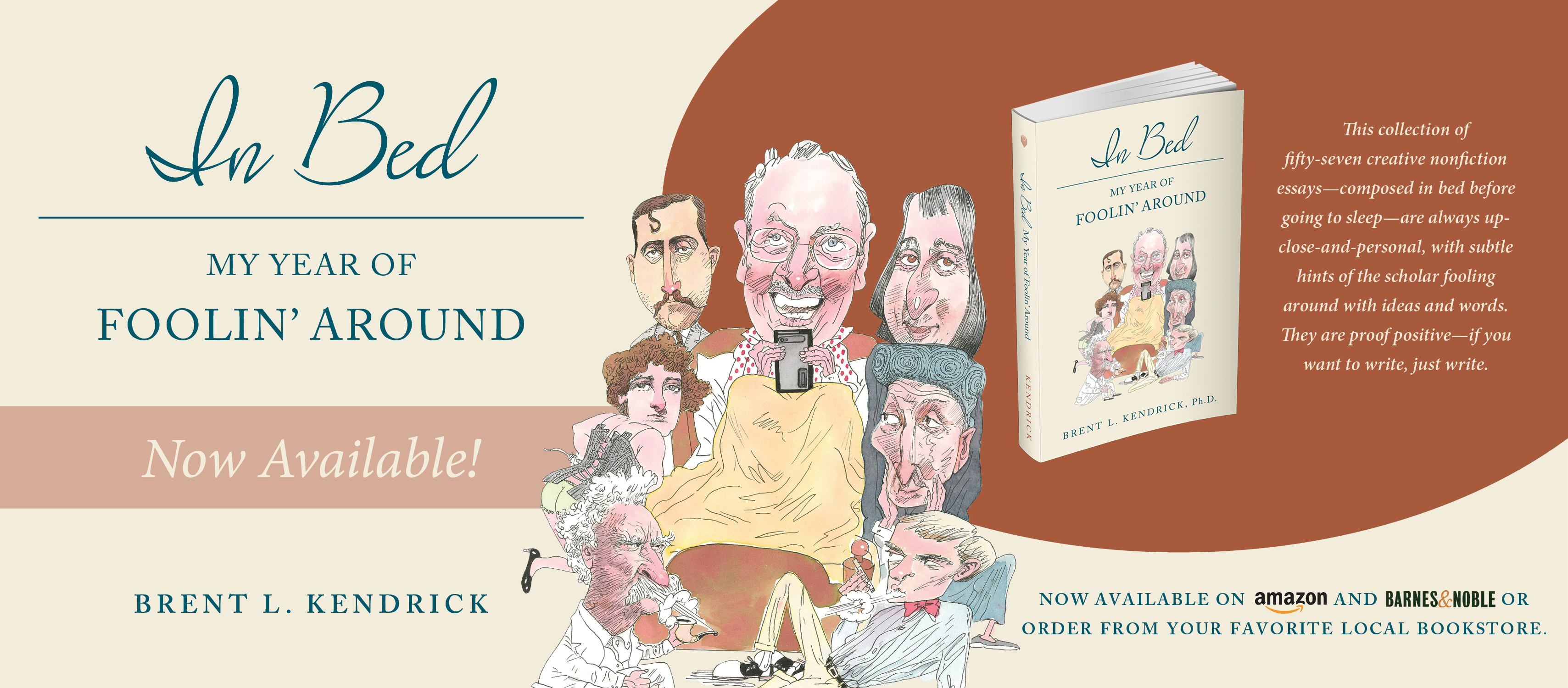


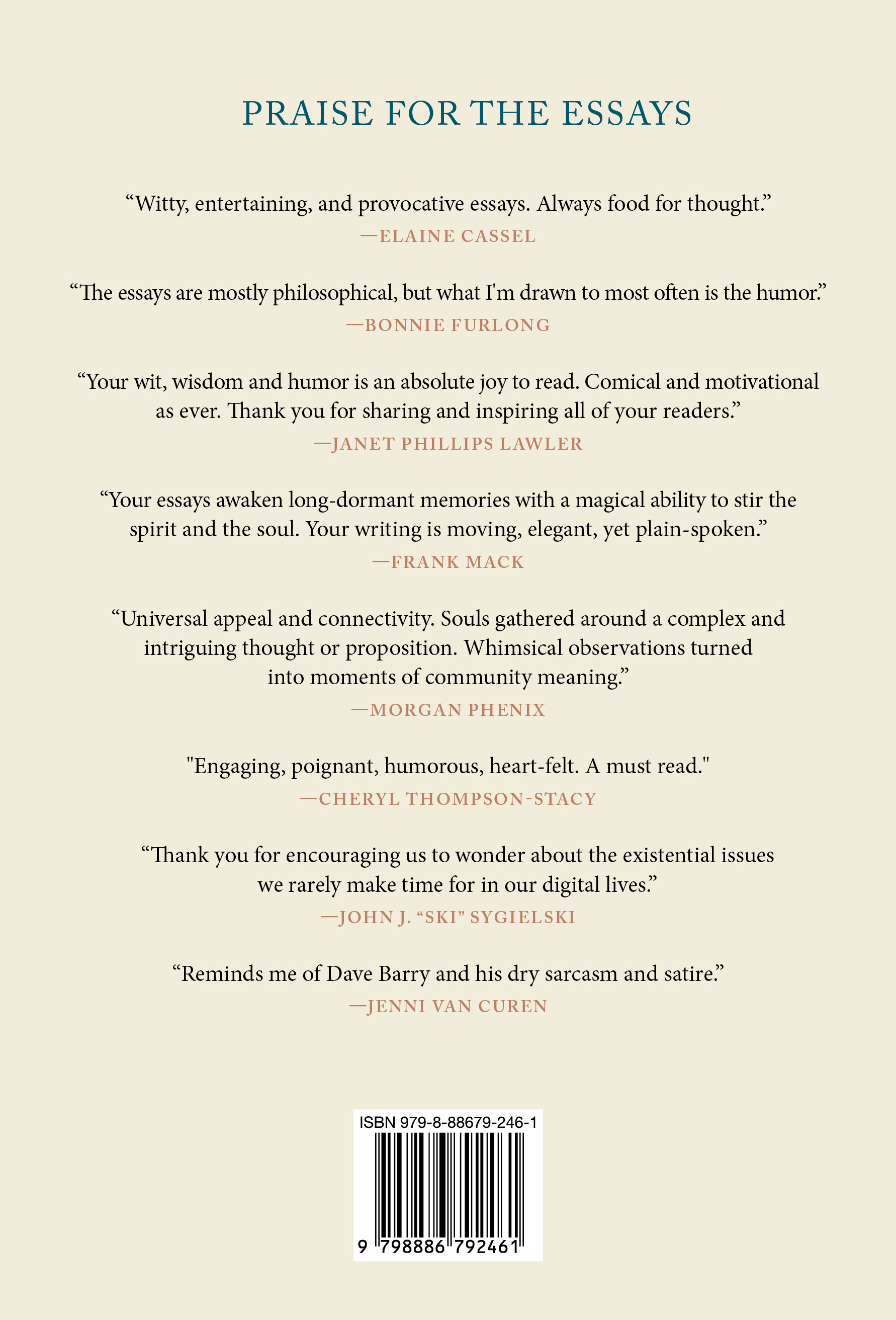
 The Wired Researcher