The Soul selects her own Society —
Then — shuts the Door —
To her divine Majority —
Present no more —
—Emily Dickinson.
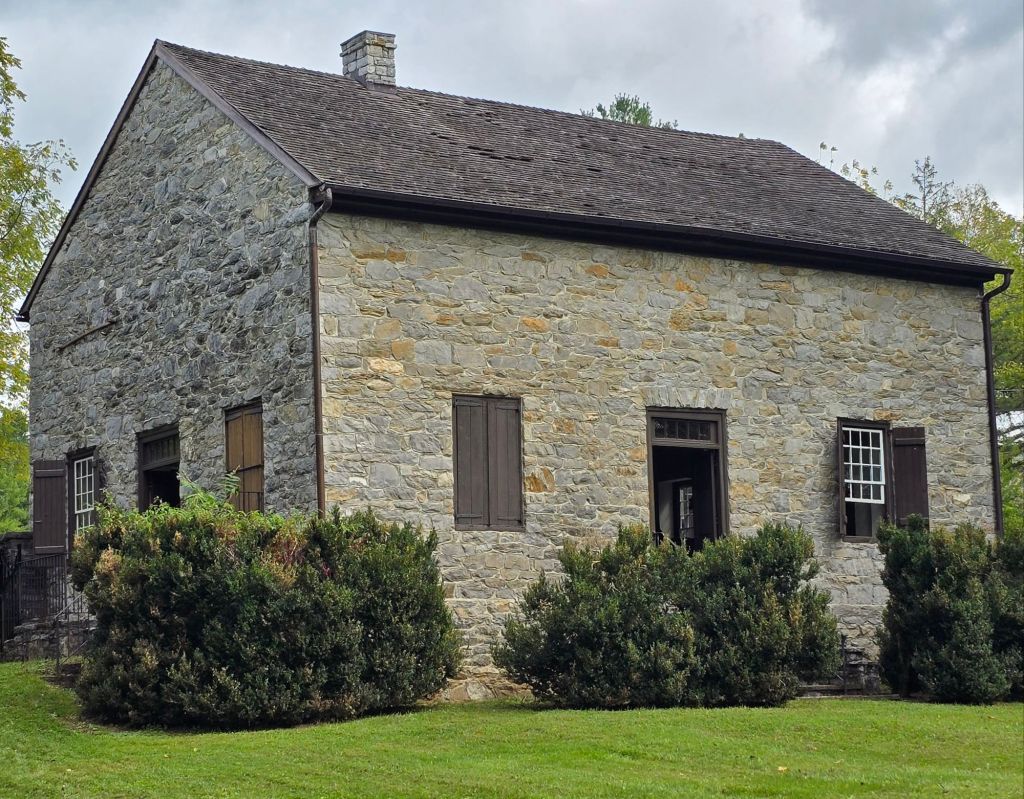
It started to fade. All I had to do was enter the building. I left behind the exterior facade—the rough, irregular fieldstones, gray and ochre, mortared into massive walls beneath a steep roof of weathered wooden shingles. Oneness.
It started to fade. All I had to do was decide where to sit. Dark wooden pews, all stark straightness—high backs, hard edges, rigid parallel lines running wall to wall. Oneness.
It started to fade. All I had to do was look upward. The towering dark-wood pulpit climbed nearly to the ceiling, its massive paneled back crowned by a broad sounding board suspended overhead. Oneness.
It started to fade. All I had to do was listen. The voices—mine, Gary’s beside me, the priest’s and choir’s in front, the congregation all around—rose higher and higher, louder and louder, fell lower and lower, softer and softer, in sweet, sweet harmony. Amazing Grace. We Are Not Alone. A Mighty Fortress. Oneness.
It all started to fade. All I had to do was breathe. The present. All the artifacts of worship surrounding me. It all faded into the moment. The present became the past and the past stood still in the present and ricocheted into the fullness of forever. Oneness.
Oneness ended. Abruptly.
A low mechanical rumble sounded somewhere beyond the open doors, distant at first, then nearer, swelling until the engine suddenly revved—an explosive, throaty roar that flooded through all three doors and filled the chapel.
A motorcycle.
Oneness. Broken.
Suddenly, all the component parts returned. Voices. Pulpit. Priest. Choir. Pews. Congregation. Me. Gary. Stones—the very eighteenth-century stones the farmers dragged to build Old Chapel. Preserved. Keen awareness erased the fade. Oneness shattered into parts.
In that instant, I realized my loss. Oneness was gone through no one’s fault. The motorcyclist was on their own journey. Old Chapel—faithful to its past with no electricity—could not have closed its doors this hot and humid Sunday morn. But I also realized my gain. The insight came without sermon. Whenever we hope to step into moments of cherished Oneness, we need to close fast the doors of our attention to all that might intrude and steal away the prize.
Close fast the door of our attention so that we are completely present with someone we love. Listen to the story we’ve heard before as though it’s being told for the first time. Or better still, as if it’s being told for the last time. Notice the face across the table, as if we’ve never seen it before. Or better still, as if we’ll never see it again. Sit beside someone without needing anything else to happen. Or better still, as if nothing will ever happen again.
Close fast the door of our attention so that we become fully aware that beauty is transient and ever changing. We’ve seen autumn for years immemorial, but we’ve never seen its September glory through today’s eyes. We’ve seen hibiscus blossom, but we’ve never seen its yellow petals flaring from a crimson heart through today’s eyes. We’ve seen sunlight all our lives, but we’ve never seen this shaft of afternoon light spilling across the polished wood of a grand piano through today’s eyes.
Close fast the door of our attention so that we can know ourselves. We’ve known ourselves for a lifetime, but what do we make of the gray in the mirror, the roads already walked? We’re with ourselves today, right now, but what do we make of these hands on the wheel, this breath in this chest? We’ll be with ourselves tomorrow and the day after and the day after that, but what will we make of the road unwalked? The hands unfolded? The breath unbreathed?
Close fast the doors of our attention and let the world within and the world without fade into Oneness.