Friends in All Places


“The arts are not a way to make a living. They are a very human way of making life more bearable.” — Kurt Vonnegut (1922–2007). Acclaimed American novelist and satirist whose works blended humor, humanity, and sharp social insight.


“Wouldn’t it be funny if you bumped into someone you know!”

I knew it was a longshot. Gary was born in Minnesota, moved on to Illinois, then to Tennessee, and then to Virginia where we live now.

“I doubt it,” he whispered. “But you might. You taught here”

He was right.

“But that was ages ago.

It had been many years, in fact, since I had taught at the Fauquier Campus of Laurel Ridge Community College. Besides, we were at St. James Episcopal Church in downtown Warrenton.

We softened our laughter.

Shortly thereafter I glanced at the row ahead and sitting there was someone I knew.

“You’ll never believe it, but right in front of us is Eileen Rexrode, the former administrative assistant to the Humanities division at the college. I’d recognize the back of her head anywhere.”

A shoulder tap brought a gasp of joyful recognition, introductions–Eileen and Gary–and the news that another colleague from years gone by–Mary Ellen Welch who ran our bookstore–was sitting at the end of the row.

After a short chat with her, I settled down and began to focus on the printed program. I was hoping to see a familiar name–maybe another friend–among the singers, but I didn’t. However, I recognized Kristina Sheppard, artistic director of The Valley Chorale, whose name I remembered from a holiday concert last year.

Around us, the sanctuary slowly filled with sound. A piano tested a chord. Someone behind us turned a program page. Voices drifted out from somewhere unseen—scales, fragments, breaths finding pitch. Instruments tuned in brief uncertain bursts before settling into harmony. The room seemed to hover in that familiar moment between arrival and beginning.

I looked down again at the printed program.

ACT ONE, PART ONE: AMERICAN DREAMERS

“Every great dream begins with a dreamer.” — Harriet Tubman

Even before the first note was sung, I found myself smiling at the program in my hands. There was Harriet Tubman leading off the evening, still showing people the way after all these years.

Then another familiar friend appeared. Langston Hughes with his “Hold Fast to Dreams.” I have carried him with me for much of my adult life. Long after classrooms ended and lectures faded, his voice remained—wise, lyrical, hopeful, wounded, observant. Some writers stay on the page. Others take up residence within us.

And then came “No Time,” that haunting old camp meeting spiritual whose echoes linger somewhere as deep in my memory as in the American memory. The title alone summoned distant revivals, worn hymnals, wooden benches, and voices rising together into the night air. Some music entertains. Some music remembers.

Later came “Will the Circle Be Unbroken.” By then the pattern had become unmistakable. Everywhere I looked, I was running into old friends.

ACT ONE, PART TWO: FROM SEA TO SHINING SEA

Where we love is home—home that our feet may leave, but not our hearts.” — Oliver Wendell Holmes Jr.

Another old friend was waiting for me at the opening of the second section: Oliver Wendell Holmes Jr.

For years, Holmes has occupied a distinguished corner of my mental world—not merely as one of the most cited Supreme Court justices in American history, but as a powerful voice for civil liberties and the free exchange of ideas. Even now, his words still carry the calm authority of someone who understood that democracy depends upon allowing differing voices to be heard.

And then, just below him, another name stirred immediate recognition: Harriet Monroe.

My heart lifted when I saw her “The Blue Ridge.” The title alone felt close to home here in Virginia. But it was Monroe herself who truly drew me in. Long before most readers recognized them, she had opened the doors of Poetry Magazine to emerging writers like Ezra Pound and Robert Frost, helping shape the course of modern American poetry almost single-handedly. More than a founder, she became a quiet midwife to literary possibility, offering countless poets their first gentle nudge toward recognition.

By now, the afternoon had become something more than a concert. Everywhere I looked, old voices were rising again.

ACT ONE, PART THREE: WE GATHER TOGETHER

“Not until I went into the churches of America and heard her pulpits flame with righteousness did I understand the secret of her genius and power.” — Alexis de Tocqueville

By the third section, another deeply familiar voice appeared: Alexis de Tocqueville.

Few outsiders have ever understood America—or Americans—more perceptively than Tocqueville. Nearly two centuries ago, he looked past our politics and possessions and saw something more enduring: our restless idealism, our fierce independence, our faith communities, our belief that ordinary people could gather together and shape the moral character of a nation. Even now, his observations feel less like history than diagnosis.

Then came “I’m Going Home,” and my heart responded immediately.

I have long loved the old Sacred Harp tradition with its rawness, gravity, and communal force. The music does not perform itself delicately for an audience. It rises. It calls. It remembers. Even the title alone seemed to carry generations within it—voices lifted in wooden churches, harmonies swelling without ornament, faith carried not by perfection but by conviction.

Another old companion appeared: the African American spiritual “I Know I’ve Been Changed.”

No matter how many times I encounter these spirituals, they still move through me with unusual force. They are sorrow and endurance braided together. Survival transformed into music. Hope refusing to disappear. Some melodies entertain the ear. These seem to travel straight to the soul.

I was no longer merely reading a concert program. I was moving through a lifetime of voices that had shaped the way I understood literature, history, faith, music, and America itself.

ACT TWO, PART FOUR: THAT’S ENTERTAINMENT!

“Music must reflect the thoughts and aspirations of the people and the time. My people are American. My time is today.” — George Gershwin

Another familiar presence greeted me as the second act began: George Gershwin.

Who among Americans does not know Gershwin? More than any other American composer, he resides not merely in our musical history, but deep within our collective emotional memory. His melodies drift through concert halls, films, jazz clubs, television commercials, elevators, and childhood piano lessons alike. Even people who think they do not know Gershwin often do.

And what a marvelous quote to introduce this section. Music, Gershwin insisted, must reflect “the thoughts and aspirations of the people and the time.” Sitting there in that church in Warrenton, Virginia, listening to a concert that moved from spirituals to Sacred Harp to Broadway to jazz, it struck me that the entire afternoon had been built around that very idea.

But the title that reached out and grabbed me most forcefully was “It Don’t Mean a Thing (If It Ain’t Got That Swing).”

Oddly enough, my mind traveled immediately back to 2011 and an Evening of Poetry at the White House hosted by Barack Obama. Introducing Rita Dove, Obama remarked:

“As Rita Dove says, ‘If poetry doesn’t affect you on some level that cannot be explained in words, then the poem has not done its thing.’ Also known as: it don’t mean a thing if it ain’t got that swing.”

I can still hear the unified laughter that followed his aside.

The section closed with “Somewhere” from West Side Story, perhaps Stephen Sondheim’s most enduring song, and perhaps more poignant now than ever. Its longing for a place “for us” has lost none of its ache or urgency in an America still struggling toward tolerance, understanding, and peace.

ACT TWO, PART FIVE: LAND OF THE FREE, HOME OF THE BRAVE

“This great nation will endure as it has endured, will revive and will prosper.” — Franklin D. Roosevelt

The final section of the concert opened with the steady, reassuring voice of Franklin D. Roosevelt.

No American president ever spoke to the fears and hopes of ordinary citizens more directly than Roosevelt. Through depression and war, he reminded Americans not only that democracy could survive hardship, but that courage, resilience, and shared sacrifice still mattered. Reading his words, I could not help thinking how deeply they still resonate in our own uncertain moment. “This great nation will endure,” he insisted. The sentence reached across time itself.

Then came “America the Beautiful.” And truly—whose heart does not swell upon hearing it? Katharine Lee Bates managed to capture something rare in American life: patriotism without boasting and affection without blindness. Her lyrics celebrate not conquest, but aspiration—grace, brotherhood, generosity, and the hope that America might continue becoming worthy of its own ideals. Even now, the song carries enormous emotional force, especially when sung by many voices gathered together.

The section closed with “Homeland,” its title alone quietly gathering together everything the afternoon had been exploring all along: memory, belonging, community, endurance, and love of place. The concert no longer felt merely performative. It felt communal—almost liturgical in its affirmation of what Americans, at their best, still share.


As the final applause faded inside St. James Episcopal Church, I found myself thinking again about the title of the program: Of Thee I Sing: A Choral Love Letter to America.

It seemed to me that Kristina Sheppard and The Valley Chorale had quietly created something larger than a concert. Through spirituals, Broadway, folk traditions, poetry, jazz, and the voices of dreamers, reformers, composers, and presidents, the afternoon became a reminder of the many voices that continue to shape American life.
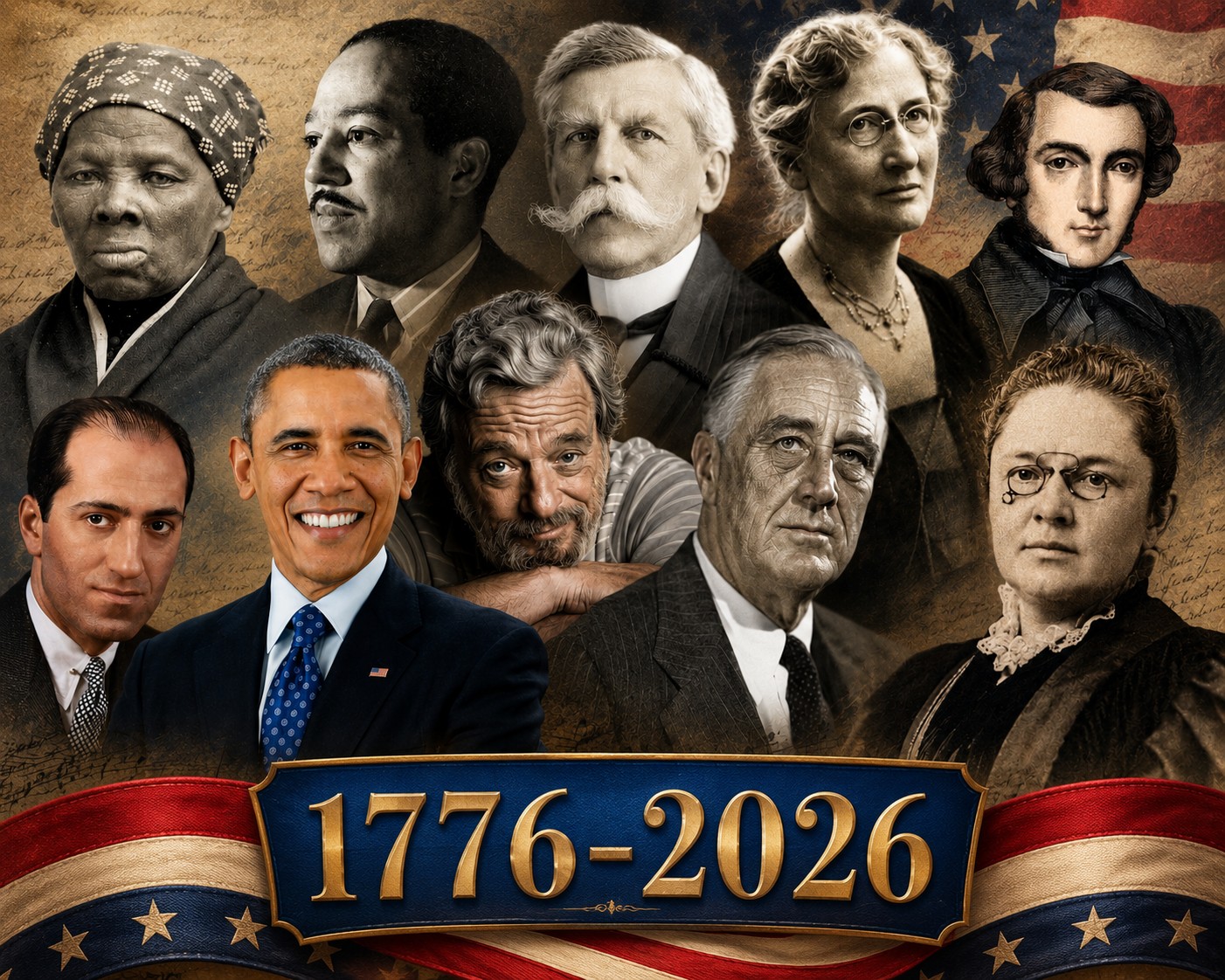
Not always in agreement. Not always in harmony. But still in conversation.

In these politically turbulent times, when democratic principles can sometimes feel fragile, the program struck me as a gentle and much-needed reminder of who we have been at our best for the 250 years of independence we’re celebrating this year as Americans—and who we still might become.

The afternoon reminded me that a lifetime spent reading, listening, teaching, and simply paying attention slowly fills the world with familiar voices. Some belong to the people we know personally. Others arrive through literature, music, history, faith, and art. Yet over time the distinction begins to blur. The writers, composers, poets, teachers, and dreamers who move us deeply enough eventually become part of our ongoing conversation with life itself.

At the beginning of the concert, Gary had whispered, “I doubt it. But you might.” As it turned out, he was right. I did bump into people I knew.

And I suspect nearly everyone there encountered an old friend somewhere along the way.

The Power of Volunteers: Changing History, One Act at a Time

“Never doubt that a small group of thoughtful, committed citizens can change the world; indeed, it’s the only thing that ever has.”

Margaret Mead (1901–1978; renowned American cultural anthropologist; strong advocate for social change and human rights, influencing discussions on gender, family, and education.)

Blue-tipped flames, shooting up from the oak logs burning in my kitchen fireplace, are chasing away a mid-September, early-morning chill. I’m sitting at the table, facing the flames, enjoying the warmth. I’m fresh shaven and freshly showered. I’m wearing my best casual shirt and my favorite Chinos–both from acclaimed clothier Charles Tyrwhitt of London–along with my Allen Edmonds loafers. I’ve even fragranced myself with a delicate spray of Sage & Citrus Oud, my favorite cologne by Habibi of New York.

Where am I going? No where. I’m hunkered down right here, sipping a decadent whip-creamed-topped hot chocolate in my favorite stoneware mug with a simple wooden handle that bespeaks rustic elegance.

But even though I’m staying right here, I’m working on a critically important task, and when something’s critical, I believe in getting myself in the right frame of mind.

Let me tell you about what I’m doing. I’m a volunteer, sending out postcards to voters in Swing States. I’m writing my message, a simple, straightforward reminder to vote on Tuesday, November 5. I’m taking my time. I’m making sure that every word is clear and legible, signaling the heavy duty that all eligible voters have to vote. I’m writing in a slower and more deliberate manner, mirroring our slow and deliberate choices when we vote.

I’m writing cards to people living in little towns I’ve never heard of. They’ll be getting cards from someone living in a little town they’ve never heard of. That doesn’t matter. What matters is getting people to vote on Tuesday, November 5.

As I address my 300 postcards—each one a small but powerful step toward change–I can’t help but reflect on the significance of volunteer work in the United States and how we have a long tradition of citizen-led efforts that have changed our nation for the better.

I’m thinking, for example, about the American Revolution. Who doesn’t remember Paul Revere’s midnight ride to warn the people of Concord that the British were coming? He was an ordinary citizen, just like the other 230,000 Minutemen who volunteered to fight for independence. Without the commitment of these volunteer soldiers, the struggle for freedom might have turned out very differently.

Fast forward to the Abolitionist Movement. I’m thinking of Harriet Tubman who was born into slavery, escaped to freedom in the North, and then risked her own life to lead other enslaved people to freedom through the Underground Railroad, a volunteer movement operating secretly across 14 northern states and parts of Canada. By some accounts, more than 100,000 enslaved people escape to freedom through the help of the Underground Railroad.

Without this vast network of volunteers, the escape routes and freedom efforts would have been far less successful, and many would have remained enslaved.

Or what about the Women’s Rights Movement? Volunteers like Susan B. Anthony and Elizabeth Cady Stanton come to mind. They and thousands of other activists worked tirelessly for decades to secure the right to vote for women. But one volunteer in particular looms large in my mind because she loomed large in life: Sojourner Truth, one of the most powerful advocates for women’s rights in the nineteenth century. At the 1851 Women’s Rights Convention held in Akron, Ohio, she delivered what is now recognized as one of the most famous abolitionist and women’s rights speeches in American history, “Ain’t I a Woman?” If you haven’t read it, this would be the perfect time, so that you’ll appreciate more fully subsequent volunteers whose steadfast work and determination led to the eventual passage of the 19th Amendment in 1920, giving over 26 million women the right to vote.

Sadly, that victory was only a partial win for women. Three years later, Alice Paul introduced the first version of the Equal Rights Amendment (ERA), aimed at ensuring that “men and women shall have equal rights throughout the United States and every place subject to its jurisdiction.” I have not the ability to explain the complicated chronology of the ERA Campaign since then, nor can I comprehend why the amendment has not been ratified. Most recently–on January 27, 2020–Virginia made history to become the 38th state to ratify the Equal Rights Amendment, thereby reaching the required number of states for ratification. Now, the attention is focused on the fight for Congress to remove its 1982 deadline. I am convinced that eventually, the amendment will ratify its way to the Constitution, and when it does, it will be largely because of grassroots volunteers from 1923 until now.

Without those volunteers, the fight for women’s voting rights and gender equality would not have achieved the critical progress it has, and the ongoing efforts to secure full legal equality might not exist at all.

Then we have Voter Registration Drives and the Civil Rights Movement. How well I remember both. I lived through them. I’m thinking especially of The Freedom Summer of 1964. It’s a perfect example of grassroots volunteerism. Over 1,000 volunteers, many of them college students, traveled to Mississippi and other Southern states to register African American voters. Despite the dangers, including arrests, beatings, and even the murders of three civil rights workers, these volunteers worked door to door, held freedom schools, and organized workshops to encourage African Americans to exercise their right to vote. And let’s not forget this fact: Black women domestic workers led community efforts to organize and advance voter registration drives as well as the Civil Rights Movement. Equally important, let’s not forget the grave danger that more than 60,000 African Americans in Mississippi risked by attending local meetings and choosing candidates. 17,000 African Americans attempted to register, though only 1,200 were allowed to do so because of the restrictive laws. However, these efforts were pivotal in raising awareness and helping to pass the Voting Rights Act of 1965, which banned discriminatory voting practices.

Even today, grassroots voter registration drives continue. I’m thinking about those led by Stacey Abrams’ Fair Fight Action aimed at empowering marginalized communities. Through her efforts, over 800,000 new voters were registered in Georgia between 2018 and 2020.

Without those volunteers, both today and in the 1960s, critical voting rights victories and the enfranchisement of marginalized communities might never have been achieved.

I’m also mindful of several other initiatives dear to me where volunteers have made a powerful difference.

How well I remember the start of the Earth Movement with the first Earth Day, on April 22, 1970. It was a massive grassroots effort with over 20 million Americans—about 10% of the U.S. population at the time—participating in events like cleanups, rallies, and educational forums, making it one of the largest civic demonstrations in our history. Organizers reached out to schools, universities, and local communities to mobilize people, and the idea spread rapidly through word of mouth, local environmental clubs, and volunteer-driven networks. How vividly I remember that Seventeen magazine took out an ad in the New York Times. I just looked it up so that I could provide the poignant text that appeared beneath a photo of a couple strolling, hand in hand, along a beach:

“Today—Earth Day—we salute millions of earnest young people who have accepted the challenge of seeking solutions for our environmental ills. Having reached the moon in the Sixties, perhaps in the Seventies we shall rediscover the earth!”

Volunteer participation helped generate the momentum that led to the creation of the Environmental Protection Agency (EPA) later that year and the passage of key environmental laws, including the Clean Air Act and the Clean Water Act. Today, who is not familiar with Greta Thunberg, who at 19 years of age became a Swedish environmental activist and rose to fame worldwide. She has become one of the world’s most famous figures and has been nominated for the Nobel Peace Prize.

Without Greta and the long line of volunteers just like her, the modern environmental movement, and critical regulatory bodies like the EPA, might never have gained the traction needed to protect our natural resources.

As a gay man, I am mindful of the role that volunteers have played going all the way back to Henry Gerber, who founded The Society for Human Rights in 1924—the first gay rights organization in the United States. That was long before I was born, but I well remember the Stonewall Uprising in the summer of 1969, when New York City police raided the Stonewall Inn, a gay club in Greenwich Village. Those riots served as a catalyst for the gay rights movement in the United States and around the world.

And look how far we’ve come. Thanks to tireless volunteers, in 2015, marriage equality became the law of the land. More recently, in 2020, Pete Buttigieg made history as the first openly gay candidate to make a serious run for president and later serve in a key role during the Democratic campaign. His rise is a testament to the hard work of volunteers who have pushed for visibility and inclusion at the highest levels of politics.

Without those volunteers, none of this progress would have been possible.

Or what about the AIDS Crisis? In the 1980s and 1990s, ACT UP (AIDS Coalition to Unleash Power) and GMHC (Gay Men’s Health Crisis) were grassroots organizations at their core. Thousands of ordinary citizens, many directly affected by the AIDS crisis, volunteered for roles in advocacy, caregiving, and public awareness. By 1986, ACT UP had grown to over 10,000 volunteers and by 1991 GMHC provided services to over 15,000 people living with AIDS by 1991, thanks to volunteers who offered emotional and practical support. One person, though, haunts my memory: David Kirby, a Gay Rights Activist who died prematurely from HIV/AIDS. As he drew his last breath, surrounded by his family, Therese Frare took a picture that was published in November 1990, LIFE Magazine. It was titled “the picture that changed the face of AIDS.” After its public display, the photograph became one of the most powerful photos identified with the HIV/AIDS pandemic.

Without those volunteers, the public response and the government’s response to the AIDS crisis would have been delayed, and countless lives might not have been saved by the advancements that followed.

Most recently, we’ve all grappled with the COVID-19 pandemic. Once again, volunteers played an essential role in responding to its challenges. From helping with vaccine distribution to supporting food banks and providing community care, volunteers were at the forefront of the response. In the U.S., over 80,000 volunteers with the Medical Reserve Corps (MRC) assisted at vaccination sites, helping to administer vaccines, manage logistics, and ensure smooth operations. At the same time, grassroots efforts like Mutual Aid Networks connected volunteers with elderly and vulnerable populations, delivering essentials like groceries and medications to those unable to leave their homes. Food banks, facing a 60% increase in demand, relied heavily on volunteers to distribute meals to millions of families affected by the economic fallout. Retired healthcare professionals and medical students also volunteered in hospitals and clinics, providing critical support to overwhelmed healthcare systems. Volunteers even staffed crisis hotlines, offering mental health support to individuals struggling with isolation and loss. But one small group of five volunteers stand out to me because they embody the true spirit of volunteerism. They were healthcare workers at New York-Presbyterian Morgan Stanley Children’s Hospital who made headlines for their bravery and dedication. They volunteered to clean the rooms of COVID-19 patients, a task that involved significant risk. Their willingness to step up and ensure the safety and cleanliness of the hospital environment was crucial in preventing the spread of the virus and in setting a model for others to follow.

Without thousands upon thousands of volunteers, the pandemic response would have been far less effective, and countless communities would have lacked the support they needed during one of the most challenging times in modern history.

I could continue my reveries and showcase more volunteers and their extraordinary power even more fully. If I were to do so, the same adjectives could be used to describe them.

● Courageous.
● Relentless.
● Trailblazing.
● Resilient.
● Visionary.
● Fearless.
● Compassionate.
● Selfless.
● Determined.

With such noble traits, it’s easy to see why so many are eager to contribute to meaningful causes. I’m fortunate to be involved in one right now, and that brings me back to where I began. I’m sending out postcards to voters in Swing States, an effort that feels critically important.

I’m just one volunteer, and I’m only writing 300 postcards. But get this. I’m working with more than 265,000 other volunteers, all part of the Progressive Turnout Project Initiative. Together, we’ll be sending out more than 40 million postcards. Vote by vote, we will make a difference.

And what about you? What can you do? If you’re an American voter, I urge you to exercise your right to vote on November 5. Together, we can change history once again.

Remember, too, that volunteerism is a powerful tool for change regardless of who you are and regardless of where you live. Look around your own corner of the world for a cause that you can champion. As you do, you will join hands with more than 1 billion volunteers worldwide. As you do, celebrate the realization that as a volunteer, you have the power to change history, one act at a time.