
“The arts are not a way to make a living. They are a very human way of making life more bearable.” — Kurt Vonnegut (1922–2007). Acclaimed American novelist and satirist whose works blended humor, humanity, and sharp social insight.
“Wouldn’t it be funny if you bumped into someone you know!”
I knew it was a longshot. Gary was born in Minnesota, moved on to Illinois, then to Tennessee, and then to Virginia where we live now.
“I doubt it,” he whispered. “But you might. You taught here”
He was right.
“But that was ages ago.“
It had been many years, in fact, since I had taught at the Fauquier Campus of Laurel Ridge Community College. Besides, we were at St. James Episcopal Church in downtown Warrenton.
We softened our laughter.
Shortly thereafter I glanced at the row ahead and sitting there was someone I knew.
“You’ll never believe it, but right in front of us is Eileen Rexrode, the former administrative assistant to the Humanities division at the college. I’d recognize the back of her head anywhere.”
A shoulder tap brought a gasp of joyful recognition, introductions–Eileen and Gary–and the news that another colleague from years gone by–Mary Ellen Welch who ran our bookstore–was sitting at the end of the row.
After a short chat with her, I settled down and began to focus on the printed program. I was hoping to see a familiar name–maybe another friend–among the singers, but I didn’t. However, I recognized Kristina Sheppard, artistic director of The Valley Chorale, whose name I remembered from a holiday concert last year.
Around us, the sanctuary slowly filled with sound. A piano tested a chord. Someone behind us turned a program page. Voices drifted out from somewhere unseen—scales, fragments, breaths finding pitch. Instruments tuned in brief uncertain bursts before settling into harmony. The room seemed to hover in that familiar moment between arrival and beginning.
I looked down again at the printed program.
ACT ONE, PART ONE: AMERICAN DREAMERS
“Every great dream begins with a dreamer.” — Harriet Tubman
Even before the first note was sung, I found myself smiling at the program in my hands. There was Harriet Tubman leading off the evening, still showing people the way after all these years.
Then another familiar friend appeared. Langston Hughes with his “Hold Fast to Dreams.” I have carried him with me for much of my adult life. Long after classrooms ended and lectures faded, his voice remained—wise, lyrical, hopeful, wounded, observant. Some writers stay on the page. Others take up residence within us.
And then came “No Time,” that haunting old camp meeting spiritual whose echoes linger somewhere as deep in my memory as in the American memory. The title alone summoned distant revivals, worn hymnals, wooden benches, and voices rising together into the night air. Some music entertains. Some music remembers.
Later came “Will the Circle Be Unbroken.” By then the pattern had become unmistakable. Everywhere I looked, I was running into old friends.
ACT ONE, PART TWO: FROM SEA TO SHINING SEA
Where we love is home—home that our feet may leave, but not our hearts.” — Oliver Wendell Holmes Jr.
Another old friend was waiting for me at the opening of the second section: Oliver Wendell Holmes Jr.
For years, Holmes has occupied a distinguished corner of my mental world—not merely as one of the most cited Supreme Court justices in American history, but as a powerful voice for civil liberties and the free exchange of ideas. Even now, his words still carry the calm authority of someone who understood that democracy depends upon allowing differing voices to be heard.
And then, just below him, another name stirred immediate recognition: Harriet Monroe.
My heart lifted when I saw her “The Blue Ridge.” The title alone felt close to home here in Virginia. But it was Monroe herself who truly drew me in. Long before most readers recognized them, she had opened the doors of Poetry Magazine to emerging writers like Ezra Pound and Robert Frost, helping shape the course of modern American poetry almost single-handedly. More than a founder, she became a quiet midwife to literary possibility, offering countless poets their first gentle nudge toward recognition.
By now, the afternoon had become something more than a concert. Everywhere I looked, old voices were rising again.
ACT ONE, PART THREE: WE GATHER TOGETHER
“Not until I went into the churches of America and heard her pulpits flame with righteousness did I understand the secret of her genius and power.” — Alexis de Tocqueville
By the third section, another deeply familiar voice appeared: Alexis de Tocqueville.
Few outsiders have ever understood America—or Americans—more perceptively than Tocqueville. Nearly two centuries ago, he looked past our politics and possessions and saw something more enduring: our restless idealism, our fierce independence, our faith communities, our belief that ordinary people could gather together and shape the moral character of a nation. Even now, his observations feel less like history than diagnosis.
Then came “I’m Going Home,” and my heart responded immediately.
I have long loved the old Sacred Harp tradition with its rawness, gravity, and communal force. The music does not perform itself delicately for an audience. It rises. It calls. It remembers. Even the title alone seemed to carry generations within it—voices lifted in wooden churches, harmonies swelling without ornament, faith carried not by perfection but by conviction.
Another old companion appeared: the African American spiritual “I Know I’ve Been Changed.”
No matter how many times I encounter these spirituals, they still move through me with unusual force. They are sorrow and endurance braided together. Survival transformed into music. Hope refusing to disappear. Some melodies entertain the ear. These seem to travel straight to the soul.
I was no longer merely reading a concert program. I was moving through a lifetime of voices that had shaped the way I understood literature, history, faith, music, and America itself.
ACT TWO, PART FOUR: THAT’S ENTERTAINMENT!
“Music must reflect the thoughts and aspirations of the people and the time. My people are American. My time is today.” — George Gershwin
Another familiar presence greeted me as the second act began: George Gershwin.
Who among Americans does not know Gershwin? More than any other American composer, he resides not merely in our musical history, but deep within our collective emotional memory. His melodies drift through concert halls, films, jazz clubs, television commercials, elevators, and childhood piano lessons alike. Even people who think they do not know Gershwin often do.
And what a marvelous quote to introduce this section. Music, Gershwin insisted, must reflect “the thoughts and aspirations of the people and the time.” Sitting there in that church in Warrenton, Virginia, listening to a concert that moved from spirituals to Sacred Harp to Broadway to jazz, it struck me that the entire afternoon had been built around that very idea.
But the title that reached out and grabbed me most forcefully was “It Don’t Mean a Thing (If It Ain’t Got That Swing).”
Oddly enough, my mind traveled immediately back to 2011 and an Evening of Poetry at the White House hosted by Barack Obama. Introducing Rita Dove, Obama remarked:
“As Rita Dove says, ‘If poetry doesn’t affect you on some level that cannot be explained in words, then the poem has not done its thing.’ Also known as: it don’t mean a thing if it ain’t got that swing.”
I can still hear the unified laughter that followed his aside.
The section closed with “Somewhere” from West Side Story, perhaps Stephen Sondheim’s most enduring song, and perhaps more poignant now than ever. Its longing for a place “for us” has lost none of its ache or urgency in an America still struggling toward tolerance, understanding, and peace.
ACT TWO, PART FIVE: LAND OF THE FREE, HOME OF THE BRAVE
“This great nation will endure as it has endured, will revive and will prosper.” — Franklin D. Roosevelt
The final section of the concert opened with the steady, reassuring voice of Franklin D. Roosevelt.
No American president ever spoke to the fears and hopes of ordinary citizens more directly than Roosevelt. Through depression and war, he reminded Americans not only that democracy could survive hardship, but that courage, resilience, and shared sacrifice still mattered. Reading his words, I could not help thinking how deeply they still resonate in our own uncertain moment. “This great nation will endure,” he insisted. The sentence reached across time itself.
Then came “America the Beautiful.” And truly—whose heart does not swell upon hearing it? Katharine Lee Bates managed to capture something rare in American life: patriotism without boasting and affection without blindness. Her lyrics celebrate not conquest, but aspiration—grace, brotherhood, generosity, and the hope that America might continue becoming worthy of its own ideals. Even now, the song carries enormous emotional force, especially when sung by many voices gathered together.
The section closed with “Homeland,” its title alone quietly gathering together everything the afternoon had been exploring all along: memory, belonging, community, endurance, and love of place. The concert no longer felt merely performative. It felt communal—almost liturgical in its affirmation of what Americans, at their best, still share.
As the final applause faded inside St. James Episcopal Church, I found myself thinking again about the title of the program: Of Thee I Sing: A Choral Love Letter to America.
It seemed to me that Kristina Sheppard and The Valley Chorale had quietly created something larger than a concert. Through spirituals, Broadway, folk traditions, poetry, jazz, and the voices of dreamers, reformers, composers, and presidents, the afternoon became a reminder of the many voices that continue to shape American life.
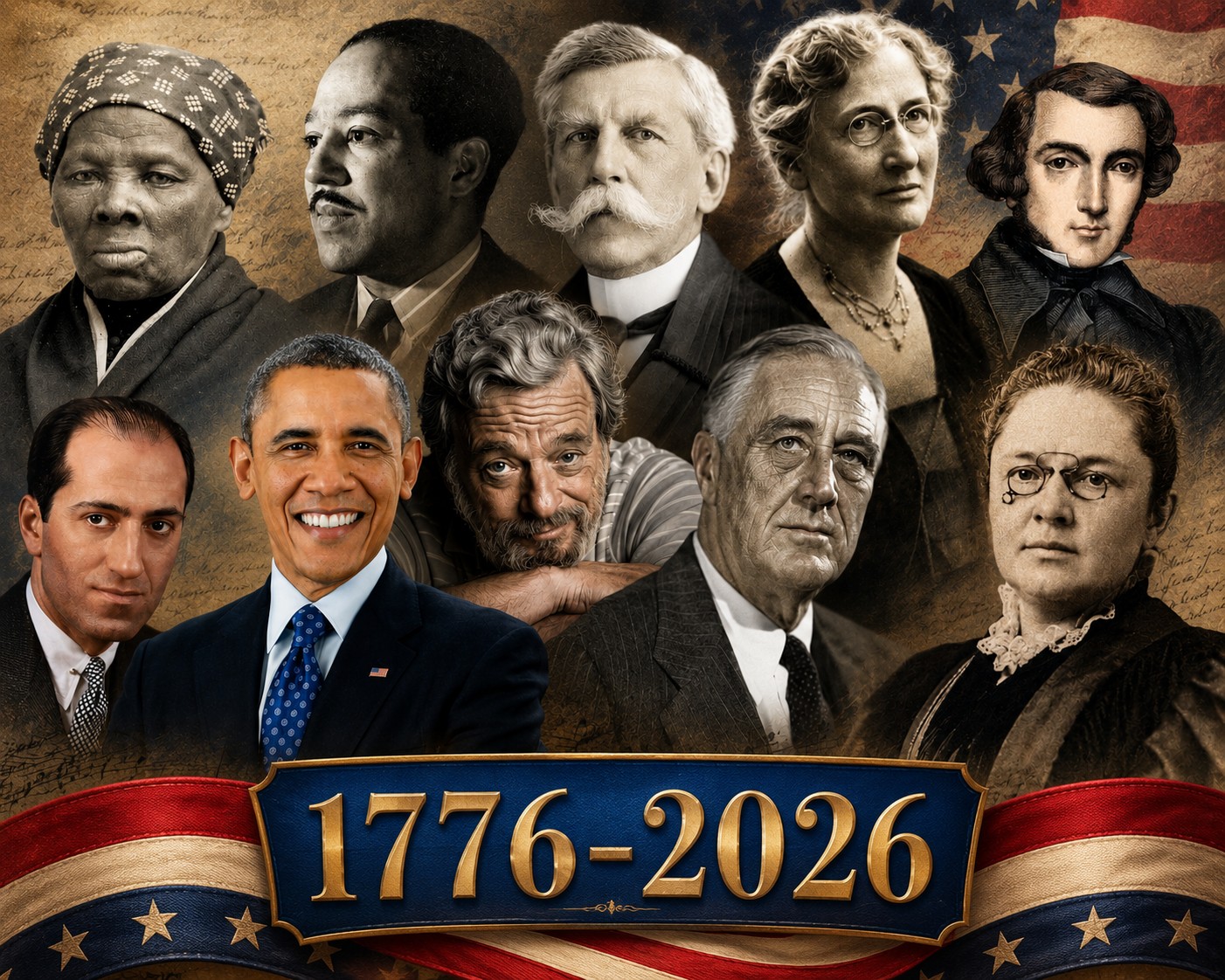
Not always in agreement. Not always in harmony. But still in conversation.
In these politically turbulent times, when democratic principles can sometimes feel fragile, the program struck me as a gentle and much-needed reminder of who we have been at our best for the 250 years of independence we’re celebrating this year as Americans—and who we still might become.
The afternoon reminded me that a lifetime spent reading, listening, teaching, and simply paying attention slowly fills the world with familiar voices. Some belong to the people we know personally. Others arrive through literature, music, history, faith, and art. Yet over time the distinction begins to blur. The writers, composers, poets, teachers, and dreamers who move us deeply enough eventually become part of our ongoing conversation with life itself.
At the beginning of the concert, Gary had whispered, “I doubt it. But you might.” As it turned out, he was right. I did bump into people I knew.
And I suspect nearly everyone there encountered an old friend somewhere along the way.

