“Backstories are the breadcrumbs that lead readers deeper into the forest of the narrative, revealing hidden truths along the way.”
Ursula K. Le Guin (1929-2018; influential American author whose writing often explored themes of anthropology, sociology, gender, and the human condition.)
Almost everything in life has a backstory, and sometimes its dimensions are too rich and multifaceted to be tossed aside as having a lesser value. Consider, for instance, the genesis of a scholarly book, the product of years of research, contemplation, and dedication. Behind the polished cover and meticulously cited pages lies a narrative of passion, struggle, and serendipity that often goes untold.
My own scholarly work The Infant Sphinx: Collected Letters of Mary E. Wilkins Freemanis a perfect example. It has an incredible backstory, and I am always ready to share snippets, especially as it relates to the book’s publication history. Snippets, mind you. Until now, I’ve never shared the entire backstory. Here goes!
When I finished the manuscript in 1984, I sent it to the University of Massachusetts Press. They accepted it but advised me that publication would be delayed by at least a year, perhaps two years or longer. I declined their offer because, as a young scholar eager to be published, I wanted the book on library shelves yesterday or the day before.
A few months later, I happened to be in Dallas for the American Library Association’s Annual Conference. ALA’S book exhibition hall always features lots of publishers from all across the country. I decided to spend a few hours there, not with an eye toward finding a publisher for my book but rather with an eye toward seeing what free books and book paraphernalia I could take back home with me. In the midst of my freebie rambles, I found myself looking at a Scarecrow Press book exhibit. I nearly walked right on past, but I looked more closely and saw its location: Metuchen, New Jersey.
“OMG!” I thought to myself. “My lady–Mary E. Wilkins Freeman–lived in Metuchen from her marriage in 1902 until her death in 1930.”
Without any hesitancy whatsoever, I smiled at the man standing by the exhibit and declared, in what I hoped would be a convincing voice:
“Today is your lucky day!”
“Oh, yeah? Why’s that?”
I proceeded to tell him about Freeman, her connection to Metuchen, and my hot manuscript. His eyes sparkled, his smile stretched from ear to ear, and his every movement exuded enthusiasm.
“I’d love the chance to consider your manuscript for publication. Send it to me when you get back home.”
We shook hands.
“I’m Esh,” he said casually.
I knew as I walked away that Esh and I had just entered into a gentleman’s agreement. I knew that Esh would accept the manuscript. I knew that Scarecrow Press would publish The Infant Sphinx. Ironically, I didn’t know until I got back to my hotel room and looked at the business card that Esh was none other than William Eshelman, the president of Scarecrow Press.
And so, it came to pass. Esh was impressed by my manuscript and accepted it. When the book was released in 1985, Scarecrow invited me to Metuchen for talks, receptions, and book signings. I will always remember that week as one of the most memorable chapters in my life, especially the book celebration with the ladies of the Quiet Hour Club, several of whom–Dolly Buchanan and Lois Lord–befriended me during my years of doing research in Metuchen. What made it even more special is the fact that Freeman herself was an honorary club member.
I share the preceding snippets of the backstory often, especially with students and aspiring writers, as an example of serendipity. When I went to the ALA conference in the summer of 1984, I never dreamt that I would find a publisher for TheInfantSphinx. Also, I share it as an example of how it pays to be bold. I was the epitome of boldness when I approached a rank stranger, standing beside his publishing-house exhibit, declaring that it was his lucky day. Little did I know that he was the company’s president. What nerve! Yet, what would have happened if I hadn’t been so bold?
The book’s backstory has other details, too, but until now, I haven’t shared those snippets. For example, I didn’t trust anyone to typeset my manuscript. I had spent a decade carefully deciphering and transcribing Freeman’s letters. I was worried that a typesetter would mess up the format, regularize the spellings, and introduce mistakes. Esh agreed that if I could provide Scarecrow with camera-ready copy, they would provide me with a higher royalty. I don’t remember how much. Also, I don’t remember the technical details of preparing camera-ready copy. I do remember, however, that it was before personal computers. I rented a fancy machine of some sort–a “Compu” something or other–and for months, I spent evenings and weekends working on a gargantuan task. No. I confess. It was a Herculean task. But guess what? I loved every eye-strained, wrist-pained moment of it.
I don’t usually share that part of the backstory, not because I’m embarrassed to let the world know that I find joy in scholarly drudgery but rather because I’m embarrassed to let the world know that I don’t recall more of the minor details.
Recently, however, serendipity brought to the surface a dusty folder that has lots and lots of details plus a major “find” that even I had forgotten. Just a week or so ago, when the idea for this post popped into my mind, I went looking for the Scarecrow Press folder that I knew I had surely kept. Indeed, I had kept it. Indeed, it was exactly where I knew it would be. Now, I have all the facts that I need not only to flesh out the entire backstory but also to reveal a teaser to lure you back next week.
The first detail is that Esh and I wasted no time. I sent him my manuscript on July 11. He gave me an acceptance phone call on July 16 and followed up the next day with a formal letter, returning the manuscript along with “model paper on which [I could] prepare camera-ready copy.”
The second detail is this. The “Compu thing” that I couldn’t remember turns out to have been a Compucorp 675, Diablo 630. My lease agreement with Word Rentals is in the folder. The rental was $600 monthly, commencing August 1. By November 6, I had finished my task.
The third detail–the royalty–turns out to have been 15%. Looking back, I should have asked for more considering the direct rental expense that I incurred for the Compucorp. However, I have used The Infant Sphinx over and over again for my own research, and I haven’t found any mistakes. I have no regrets about the price that I paid for the quality that Freeman’s letters deserved.
The last minor detail is this. The book was released officially on April 28, 1985, exactly 39 years ago. From this point forward, April 28 will be a red-letter date on my calendar!
Now, the big teaser reveal. In the Scarecrow folder, I found a review of TheInfantSphinx that I had written myself! How preposterous is that! Well, it sounds exactly like something that I would do. I’m always telling friends and colleagues that I know no shame. I guess I didn’t back then either. However, I cannot for the life of me remember whether I sent it out for publication. I must have, because what I discovered in my dusty folder is a photocopy, and it’s so faded that I struggled to read it.
Ultimately, however, I managed to read the text, fading away as fast as my memory. Next week, I will share my “Confessions of an Editor,” unabashedly raw and candid, just as I wrote the review 39 years ago.
In the meantime, whenever you pick up a scholarly book or any work of art, take a moment to consider its backstory. You might be surprised by the passion, perseverance, and sheer stubbornness that lie beneath the surface. Or you might stumble upon a review of the book written by the scholar himself, such as the review you will be able to read right here next week in Part II.
“The intersection of art and artificial intelligence is where imagination meets innovation, sparking a revolution in human potential.”
–Attributed to Ray Kurzweil (b. 1948; prominent American inventor, futurist, and author known for his groundbreaking work in artificial intelligence and technological forecasting.)
When I opened my kitchen door one morning last week, I knew that my lilacs had bloomed overnight. Their fragrance washed over my mountaintop world, signaling their presence long before I laid eyes on them. Amidst the whispers of spring’s arrival, my garden became a canvas painted in hues of lilac. Delicate clusters of lilac-colored blooms burst forth from slender branches, their petals unfurling like tiny, fragrant clouds against the blue sky. Each blossom carried a mesmerizing hue, ranging from soft lavender to rich violet, casting a gentle spell over the landscape. As the sunlight danced upon their petals, they seemed to shimmer with an otherworldly radiance, infusing my yard with tranquility and beauty. In their ephemeral splendor, my lilacs evoked a sense of wonder and awe, reminding me of the fleeting yet profound magic of nature’s creations.
At the same time, my lilacs transported me instantly to “When Lilacs Last in the Dooryard Bloom’d,” Walt Whitman’s poignant elegiac response to the 1865 assassination of President Abraham Lincoln.
It’s a long poem–16 free-verse stanzas, totaling 206 lines–that I remember from high school. I never made any attempt to memorize the entire poem, but I vowed to carry the first stanza around with me in my head forever so that I could forever celebrate Lincoln and Whitman whenever life gave me lilacs:
When lilacs last in the dooryard bloom’d, And the great star early droop’d in the western sky in the night, I mourn’d, and yet shall mourn with ever-returning spring. Ever-returning spring, trinity sure to me you bring, Lilac blooming perennial and drooping star in the west, And thought of him I love.
I have been faithful to my vow down through the years. These days, here on my mountaintop, whenever my lilacs bloom, I linger–sometimes standing, sometimes pacing, sometimes kneeling–and I recite Whitman’s lines, inhaling deeply as I anchor myself to the deep roots of then, of now, and of eternity.
This past week, when the heady fragrance heralded my lilacs blooming, I felt an urgency to share what I experienced on Facebook. I posted several photos of my lilacs along with a brief sentence or two leading to the full text of “When Lilacs Last in the Dooryard Bloom’d.” Even as I uploaded the poem, I thought to myself:
“Way too long. Not many followers will read the poem.”
As soon as I hit POST, my doubt weighed even heavier. By now, I know. FB folks like photos. FB folks like short. FB folks like clever. Of course, we do. I can relate. We need to move on so that we can LIKE whatever it is that we choose to like (or not) next.
I sat there nearly wishing that I had simply provided a summary of the poem for those who didn’t have time to read it all. I could have done so with ready ease, especially since I often taught the poem in my college-level American Literature courses. Even though it’s a long poem, it’s not hard to grasp. Through vivid imagery and lyrical language, Whitman mourns Lincoln’s death and explores themes of grief, nature, and the passage of time. The lilacs in the poem symbolize mourning and renewal, while the thrush’s song serves as a solemn requiem. Whitman’s elegy reflects on the impact of Lincoln’s death on the nation and contemplates the enduring cycle of life and death. The poem is considered one of Whitman’s greatest works and a masterpiece of American literature, capturing the profound emotions surrounding a pivotal moment in our nation’s history.
Of course, I had the option to edit my FB post and include a summary comparable to the preceding paragraph as a way perhaps of teasing my FB followers to read the entire poem. As I considered that option, an unthinkable thought strolled across my mindscape.
“See what kind of summary ChatGPT can write. Better still, ask ChatGPT to write a sonnet that captures the essence of Whitman’s poem.”
I know. I know. How dare I write about a famous elegy and pull AI into the same discussion? I confess that even for an ardent AI lover like me, bringing the two together felt almost like a sacrilege. Yet, there I was, grappling with the intersection of technology and poetry. I felt uneasy, yet the idea was already planted in my brain. I had to do something with it, and ignoring the idea was not an option.
It seemed to me in that moment–and it seems to me now–that I could let AI fool around with “When Lilac’s Last in the Dooryard Bloom’d” without in any way diminishing my reverence for the original poem, for Whitman, or for his morning of Lincoln’s death. It seemed to me that I had an obligation to explore the idea that had grabbed hold of me just as intensely as the heady fragrance of my lilacs had commanded my respectful attention.
It was from that perspective that I set out not only to see what AI might do but also to see what I might learn. I knew, at that point, that I didn’t want a summary of the poem. I wanted to see whether AI could write a sonnet that would capture the essence of the original poem.
I started with ChatGPT, asking them to rewrite Whitman’s poem as a sonnet, keeping its message and Whitman’s poetic style. Below is ChatGPT’s untitled sonnet:
When lilacs bloomed in dooryard’s sacred space, And starry heavens wept with evening’s dew, I mourned, embracing nature’s tender grace, For Lincoln, lost, in death’s embrace so true.
The thrush’s song, a solemn requiem, Through leafy boughs, did echo sorrow’s call. As cedars wept, o’er fields and stream, with them, I wandered, grief’s heavy cloak did befall.
Yet midst the mourning, there bloomed a light, A radiant orb, in darkness’ deep domain. A symbol of hope, amid the endless night, In death’s embrace, new life shall yet attain.
Though Lilacs fade, and time’s cruel hand may sever, In nature’s cycle, life renews forever.
As I reached the end of the sonnet, I wondered what ChatGPT would have to say about their own poetic flight:
“Does your sonnet capture the essence of Whitman’s original poem?”
While I aimed to capture the essence of Whitman’s original poem, it’s important to note that translating a work as rich and complex as “When Lilacs Last in the Dooryard Bloom’d” into a different poetic form inevitably entails some loss of nuance and depth. My sonnet attempts to convey Whitman’s themes of mourning, nature’s solace, and the cycle of life and death within the constraints of the sonnet form, but it necessarily condenses and simplifies the original work. Whitman’s poem is expansive and deeply personal, and my sonnet can only offer a glimpse of its profound beauty and significance.
So, there you have it. Well, actually, you don’t have it all, not yet. There’s another chatbot that Microsoft launched on February 7, 2023. Copilot is billed as “your everyday AI companion” that searches for specific information, generates text such as emails and summaries, and creates images based on text prompts.
If I had committed a sacrilege by asking ChatGPT to turn Whitman’s famous poem into a sonnet, then I had just as well enjoy my transgression more fully by putting Copilot through the same hoops. I had to do so. I had no other choice. Read Copilot’s sonnet below:
When Lilacs Bloomed
When lilacs graced the dooryard, skies aglow, And stars, like tears, descended in the west, I mourned, and shall, as seasons come and go, With spring’s return, my heart forever pressed.
Perennial lilacs, fragrant and profound, Their purple blooms a balm for grief and pain, While stars, once bright, now hidden in night’s shroud, Evoke memories of love that still remain.
O fallen star, your absence veils the land, Yet lilacs whisper solace to my soul, In heart-shaped leaves, a tender touch, a strand, A sprig of hope, where grief and memories toll.
So let this sonnet bloom, a lilac’s grace, A tribute to the lost, in time and space.
You may have guessed what’s coming next. Yep. I asked Copilot the same question that I asked ChatGPT: “Does your sonnet capture the essence of Whitman’s original poem?” Copilot responded as follows:
Indeed, my sonnet endeavors to echo the essence of Walt Whitman’s original poem, “When Lilacs Last in the Dooryard Bloom’d.” Like Whitman, I pay homage to loss, memory, and the natural world. The lilacs, stars, and grief remain central, albeit in a condensed form. While my sonnet may not encompass every nuance, it seeks to honor the spirit of Whitman’s elegy.
Done? Not quite! We’ve got a new kid on the block, and they deserve a chance, too: Meta AI. They’ve been rolled out across various social media platforms: WhatsApp, Instagram, Facebook, and Messenger. They can answer questions, create animations, and generate “high quality” images, according to Meta’s CEO, Mark Zuckerberg. Also, they’re built on the company’s latest large language model called Meta Llama 3.
Sounds impressive, no? Obviously, I had to see what kind of Whitmanesque sonnet they could create, using the same guidelines that I had been using. Here’s Meta AI’s poetic flight:
When lilacs last in the dooryard bloom’d and fell, A solemn requiem for the fallen chief, The nation’s sorrow echoed, a mournful knell, As death’s dark veil shrouded the presidential seat.
The fragrant blooms, like memories, did cling To Lincoln’s legacy, a bittersweet refrain, The thrush’s song, a dirge, did sorrowfully ring, As nature mourned with us, in sympathetic pain.
Yet, in the midst of grief, a glimmer shone, A hope that death may not forever reign, For just as lilacs bloom again, so may be known A resurrection, a new birth from pain.
And so we’ll hold the memory of him dear, And cherish every bloom that dooryards bring near.
Obviously, too, I asked Meta AI the same question that I had asked their counterparts: “Does your sonnet capture the essence of Whitman’s original poem?” Meta AI responded:
My sonnet attempts to distill the essence of Whitman’s original poem, but it’s a challenging task to condense the complexity and nuance of Whitman’s poetry into a shorter form like a sonnet. Whitman’s poem is known for its free verse style, which allows for a more fluid and expansive exploration of themes and emotions.
My sonnet aims to capture the core themes of mourning, memory, and the cyclical nature of life and death, but it necessarily leaves out some of the richness and detail of the original poem. Whitman’s poem is also deeply rooted in the context of Lincoln’s assassination and the American Civil War, which adds a layer of historical and cultural significance that my sonnet can only allude to.
That being said, I tried to stay true to the spirit of Whitman’s poem by using language and imagery that evokes a sense of reverence, sorrow, and hope. I hope that my sonnet can serve as a tribute to Whitman’s original work and inspire readers to explore the beauty and power of his poetry.
So, there you have it. For now. Yes? Actually, no. We never really have it. Not ever. We’re constantly growing and learning and changing. Isn’t that what makes life worth living?
But, for now, let’s pretend that you really do have it all, everything that you need to transport yourself magically to somewhere that only you can decide and that only you will know whether and when you reach your destination.
● You’ve got Whitman’s original masterpiece, “When Lilacs Last in the Dooryard Bloom’d.”I wonder: will you read it, the entire original version? I wonder: will you let one line linger longerwith you than all of the others? I wonder: what line?why?
● You’ve got three AI-generated sonnets, each one a 14-line version of Whitman’s original 206-line elegy. I wonder: will you revisit them and decide which one is best?
● You’ve got their own assessment of their sonnets. I wonder: which one do you think is most insightful?
● You’ve seen three AI generators in action, tackling the same task. I wonder: which one would you want as your “everyday AI companion”? ChatGPT? Copilot? MetaAI?
As for me, I’ve gone and fooled around for another week, and now, I’m leaning back on my pillow with a wider than wide smile on my face. This has been as much fun as being in class, giving my students exactly what I have given you, asking them to think about our conversation until we meet again.
Right now, though, I’m thinking about one thing, and I’m chuckling. When my lilacs bloomed last week, I never dreamt that their fragrance and their sight would take me on a journey into the intersection of Walt Whitman’s poetry and artificial intelligence. Yet it did, and I’m glad that the magic happened. It gave me a platform to champion once more the ever-growing role of AI in shaping our understanding of the world around us. AI is not a novelty or a passing trend. It is a powerful tool that is here to stay. We must embrace its capabilities, harness its potential, and use it to deepen our appreciation and gain new insights into even the most sacrosanct aspects of human experience, including poetry. By engaging with AI-generated content, we open ourselves to new perspectives and new opportunities for learning, challenging us to reevaluate our assumptions and to expand our horizons.
However, as we navigate this complex landscape, let’s remember that AI is not a replacement for human creativity. It is a complement to it, a tool that amplifies our capabilities and extends the boundaries of our imagination. By embracing AI as a partner in our inquiries, we can unlock new avenues of expression and deepen our appreciation for the beauty and complexity of the human experience. As we move forward, let us continue to embrace the possibilities of AI, recognizing its capacity to enrich our lives and enhance our understanding of the world we inhabit.
One more thing, Dear Reader. If you haven’t read Whitman’s “When Lilacs Last in the Dooryard Bloom’d,” please read it in its entirety. If you have read it before, please read it once again. In either case, I hope that you read the poem, appropriately, amidst lilacs, and, as you read, I hope their heady fragrance washes over your world and refreshes your soul.
I have some exciting news to share! After a fruitful conversation with my publisher, I’m thrilled to announce the birth of The Wired Researcher Series!
Starting with last year’s beloved In Bed: My Year of Foolin’ Around, this series promises to deliver a delightful blend of wit and wisdom through creative nonfiction essays. And in just a few weeks, get ready for my new collection of essays, More Wit and Wisdom: Another Year of Foolin’ Around in Bed. I’ll let you know when it’s available so that you can order your copy.
But this series is more than just a collection of books. It’s a community—a space where readers can find familiarity, camaraderie, and a sense of continuity. Join me on this journey of joy and enlightenment as we explore the intricacies of life, love, and laughter.
Spread the word! Let’s continue our journey together with The Wired Researcher Series!
“The past is a source of knowledge, and the future is a source of hope. Love of the past implies faith in the future.”
–Stephen Ambrose (1936-2002; American historian and biographer. The quote is from his Undaunted Courage: Meriwether Lewis, Thomas Jefferson, and the Opening of the American West, 1996).
No doubt you’ve heard me own up to the sad reality that I am a packrat. I keep everything. Letters and all other forms of personal correspondenceincludingholidaycards. (Scattered here and there; some loose, some bundled). Canceled checks. Remember ye olden days? (Scattered here and there; some loose, some bundled–the canceled checks, silly, not ye olden days, though they’re certainly scattered and shattered to smithereens, sometimes for the better.) Emails going back to forever. (Scattered on flash drives by and large; some printed; both courtesy of my good friend of longest standing with whom I have exchanged more than 23,000 emails since we first met. She’s hoping that if our virtual world disappears after our real world does, someone might be guilted into keeping the printed emails as proof that once upon a time we were.) Taxreturns. (Organized by year, as I recall, in two filing cabinets–one in my office; the other, in a teeny-tiny space, with slanting ceiling parallel to the slant of the descending stairs above.)
I have held on to all of these treasures in the full belief that by now I’d be unrich and unfamous and that the tax returns, emails, canceled checks, and letters/correspondence/cards would be helpful to the unbiographer who isn’t with me working on the unbiography that they’re not writing.
Now, however, I confess that more than once, I’ve been tempted to toss it all into the fire as of no worth, but I dare not do so until I review it all carefully. Since I keep everything, who knows what other valuables I might have tossed into a folder knowing that the best way to hide anything is in plain sight, but over time, I forgot what I put where.
However, with Federal Tax Day upon us, what better time than now to scrutinize all of my tax returns going all the way back to 1969. My God! I must be deranged to have kept all those tax records, especially since the IRS has no such requirement. I don’t think it does, at any rate. Let me check. BRB. Okay. Here’s what the IRS says:
“1. Keep records for 3 years if situations (4), (5), and (6) below do not apply to you. “2. Keep records for 3 years from the date you filed your original return or 2 years from the date you paid the tax, whichever is later, if you file a claim for credit or refund after you file your return. “3. Keep records for 7 years if you file a claim for a loss from worthless securities or bad debt deduction. “4. Keep records for 6 years if you do not report income that you should report, and it is more than 25% of the gross income shown on your return. “5. Keep records indefinitely if you do not file a return. “6. Keep records indefinitely if you file a fraudulent return.” [Emphasis supplied. Leave it to the IRS to take us from the ridiculous to the sublime. Let me make it perfectly clear right here, right now: I kept all of my returns and not one–no, not one–is fraudulent. Wouldn’t that be stupid. I mean to file a fraudulent return and keep a copy of it on file. “Excuse me, your honor. Right here in Exhibit A is proof that my tax return for 19– is fraudulent. I’m so glad that I kept a copy so that I could have my day in court and prove my point, your Honor. A fine plus five years? But, your Honor, I kept all of my records. Don’t they count for anything?] “7. Keep employment tax records for at least 4 years after the date that the tax becomes due or is paid, whichever is later.”
OMG! I have no idea what any of the preceding means. Maybe I never did. Maybe that’s why I kept all these damned documents all these years.All I know is this. Right now, I’m so dizzy that I’m about to faint. Excuse me for a sec while I chant. You’re dizzy, too? I understand. Let’s do it together:
● Let’s close our eyes. ● Now, let’s take a handful of deep, calming breaths. ● Let each exhalation be a “letting go” of any tension or worry. ● Let’s take a slow, deep breath. ● On the out-breath, let’s chant the single word: “Ohhhhhhhmmmmmmm.” ● Let’s repeat again and again and again until we can no longer say IRS.
Ahhhh. I’m feeling much better now, and I’m enjoying my desired Ohhhhhhhhhhmmmmm outcome. In fact, my tongue is tingling so much that I couldn’t say IRS if all of my unfraudulent tax returns depended on it.
Thank you so much for chanting with me. To reward you, I’m going to give you a rare treat, probably never heard of before in all the annals of blogging. I’m going to review all of my tax records and treat this post exactly as a producer would treat a reality TV show. You know, where ordinary people do extraordinary things, like argue over who forgot to buy the milk or dramatically flip a pancake for the camera. My words will be my mic and my camera, and what you read will be me, live, unscripted, minute by minute, as I open tax folders that have not been opened in decades, and it all unfolds right here on my Mountain top in Virginia’s Shenandoah Valley: ordinary me going through my ordinary, real-life tax files, hoping for your sake and mine that I find something extraordinarily extraordinary, but whatever I find you’re going to get it: the good, the bad, and the whatever. (But not all. Some things must be left to the imagination. Just sayin’.)
Hotdayumm! Is this exciting or what? Shall we start? Are you ready? Yes? Me, too! Let us go then. You and I. A lifetime of tax returns awaits us.
OMG! I can’t believe it! I opened the file cabinet drawer in the closet beneath the stairs, and the folders are arranged in perfect alphabetical order, just as I knew they would be. I see a folder with a typed label: INCOMETAXES. I am surprised, doubly. First, this folder is thick, about an inch or so. Second, unlike the other tax folders, the label on this one does not specify a year. I am intrigued. I have no idea–absolutely no idea–what’s inside this generic, non-date-specific folder.
Good God! I know that I’m a packrat, but I didn’t know that I’m apparently a moron, too. It’s no wonder this folder is so thick. I kept not only my tax returns but also the instruction booklets. But hold on here just a minute. Maybe I’m not a moron after all. I wonder, DearReader, whether you have an original IRS instructional booklet from the 1960s? Do you? Be honest! I bet you don’t. I’ll bet the IRS doesn’t. I’ll bet that even the Library of Congress doesn’t. I just did a quick review of all of my tax folders. It appears that I have the original instruction booklet for each year since I first filed taxes. I have an entire “run.” I’m betting that these booklets are worth a fortune. I see a golden future ahead of me. Soon and very soon, I’ll be featured on Antiques Road Show.
Now, I’m really wired, but I can’t continue. For now, I must cease and desist. I have some shopping to do. It’s clear to me that these moronic tax folders of mine deserve the White Glove treatment.
I’m back from shopping. But here’s the thing. In reality, sometimes we don’t get what we think we deserve, and sometimes, historically significant tax folders don’t get what I’d like to think that they deserve, either. I couldn’t find any white cotton gloves that would fit me, and I’m not about to slip on latex.
So here I am, perusing these tax folders with my bare hands. Actually, I love being able to feel the texture of the paper. Papers do differ, you know. The instructional booklet paper is thin, lightweight, and porous. The tax return paper, on the other hand, is a little thicker, heavier, and smoother, intended to be kept, perhaps indefinitely for anyone who might have filed a fraudulent tax return.
At this point, I’m so glad that you’re readingme rather than watchingme on reality TV. I don’t think crimson is quite my color, and yet my blush right now is even deeper. This is so embarrassing, but since I promised to reveal all, I shall. Bear with me.
Down through the years, and even at the start of this post, I’ve told anyone and everyone–even rank strangers–that I had kept all of my tax returns going back to 1969. Looking back, I wonder why I thought those files started then. Undoubtedly, it’s because 1969 was when I began my 25-year career at the Library of Congress. But what I discovered in the one-inch folder that I’m exploring now is that I actually filed my first return in 1967, two years earlier than I remembered.
Guess what else I discovered? Apparently, I didn’t keep a copy of my 1967 tax return. I have to confess the same for my 1968, 1969, and 1970 returns. Goodness. This is far more embarrassing than I ever dreamt that it would be!
Oh. Don’t worry. I have copies of those returns that I had forgotten about! Here’s why and how I got them. For tax year 1971, I used the Five-Year Income Average method. However, since I hadn’t kept the prior four years, I had to write the IRS and request copies! I have a copy of my original request. It’s a handwritten, carbon copy on onion skin paper. A few months later, I sent the IRS a follow-up request. It’s a typed carbon copy, again on onion skin. I guess I thought that a typed letter might result in the requested action that my handwritten request had not achieved. It did. My copies arrived, I filed my return, and here I am, looking at them nearly six decades later.
No doubt, you’re wondering about my taxable income for those years. I promised bare reality, so here goes:
I have to say that as I looked at my tax records, I wasn’t focusing at all on income. Instead, I was focusing on the memories that washed over me as I looked.
Take, for example, my 1967 return. By today’s standard, $1,604 isn’t much, but it was a small fortune for me as a sophomore at Alderson-Broaddus University. The income, though, is totally eclipsed by the work experience that gave me my earning opportunity. As an undergraduate, I was required to have two off-campus experiences. I could have opted for the university’s educational programs in Switzerland or Mexico. Instead, for my first one, I decided to orchestrate my own internship experience that would let me live for a few months in our Nation’s Capital. Looking back, I’m not certain how that notion found its way into my head. Further, I’m not certain how I ever came up with the idea of an internship with Senator Robert Byrd (D-WV).
But I did both, and of this, I am certain. With unwavering determination, once I had lined up my internship with Senator Byrd, I knew that I’d be moving to DC and that I had to have somewhere to live. Looking back, I am surprised by my ingenuity and my boldness. Equipped only with DC Yellow Pages and a rotary telephone and undaunted by the challenge, I found myself an apartment at McClean Gardens in northwest DC, right off of Wisconsin Avenue and just a few blocks from the Washington Cathedral, St. Albans School for Boys, Sidwell Friends School, and the Washington Ballet. In my mind, an apartment near those landmarks meant one thing: I’d be discovering city life while living in a safe neighborhood. Then, armed with courage, I further surprised myself when I packed up my bags, got a one-way Greyhound ticket from Philippi (WV) to DC. When I arrived late at night, I took a metro bus from downtown out to my McClean Gardens apartment. For three glorious spring months, amidst the bloom of new beginnings, I enjoyed living in the shadow of the Washington Cathedral and working in the hallowed halls of Senate Office Buildings, House Office Buildings, and the U.S. Capitol.
Or what about my 1969 return. Again, the taxable income of $2,932 is anything but impressive. But I will always remember that summer, that fall, and the opportunities that allowed me to earn that income.
The summer months found me immersed in my second internship in DC, at the former Department of Health, Education, and Welfare, Division of the Two-Year College. It was an extraordinary transformative opportunity that shaped my perspective on education and the world, but amidst the whirlwind of learning, one moment stands out above all others: the historic July 20 Moon Landing. I vividly recall the anticipation and excitement as my fraternity brother and I, sharing a modest apartment in Capitol Heights, MD–just across the DC line–resolved to witness this monumental event. Strapped for cash and lacking a television, Tim and I scrounged together enough change to afford a single beer each at a local bar on nearby Marlboro Pike, nursing it patiently through the evening until American astronauts Neil Armstrong and Edwin “Buzz” Aldrin made history by setting foot on the lunar surface. Armstrong’s immortal words, “That’s one small step for man, one giant leap for mankind,” reverberated through the air, etching themselves into the annals of human achievement and forever echoing in my mind.
The fall months, starting in September, found me beaming with pride when I was my appointed to a position at the Library of Congress as a MARC Editor. (Yes. I was appointed, not hired. Yes. It was a position, not a job.) I gave up my apartment in Capitol Heights, I sold my Chevrolet Bel Air, and I moved into an apartment at 200 C Street, SE–now Capitol Hill Hotel–a block away from the Library of Congress. Days found me as an Editor in the John Adams Building, at that time known as the Library Annex. Evenings found me as a Reader/Researcher in the Library’s Main Reading Room of the Thomas Jefferson Building, where the grandeur of its architecture served as a backdrop to my dreams. As I immersed myself in the serene ambiance of the Main Reading Room, I couldn’t help but be captivated by the intricate architectural details. The soaring ceiling, adorned with elaborate frescoes and intricate carvings, seemed to reach towards the heavens, instilling within me a sense of awe and wonder. As I wandered through the upper-level alcoves, tracing my fingers along the spines of ancient tomes, I found solace in timeless beauty.
I could continue looking at my 1971 Five-Year Income Average tax return, and I could share with you other memories from those early years. Then, I could keep right on going with all of the subsequent tax returns that I have held on to down through the years, along with their counterparts: the emails, the canceled checks, and the various forms of personal correspondence.
However, just by examining one small section of one thick tax folder, I’ve unearthed a treasure trove of significance. These tax files, meticulously kept over my lifetime, hold a value far beyond what I initially anticipated. They serve as far more than just financial records; they are windows into the chapters of my life. Each line item, each deduction, anchors me to specific moments and places, serving as poignant reminders of my journey—where I’ve been, who I’ve become, and the person I continue to evolve into.
As I reflect on the journey through my tax records, I realize that these seemingly mundane documents hold far more than financial data. Through the haze of numbers and figures, I glimpse moments of triumph, of uncertainty, and of growth. In these records, I unearth not just financial transactions but the very essence of my existence, woven into the fabric of time itself.
In preserving these records, I’ve safeguarded not just financial history, but personal narratives. They serve as markers of my evolution, from the eager college student navigating the halls of power in Washington, D.C., to the budding professional finding my footing in the corridors of the Library of Congress.
Each tax year returns a story, not just of income earned or taxes paid, but of experiences, challenges, and aspirations that shaped me. They are reminders of the resilience and resourcefulness that carried me through moments of courage, doubt, and uncertainty.
Taxing though we may be, let’s give a shoutout to the packrats, the keepers of memories, the custodians of personal history. May we never underestimate the value of our archives, for within them lies the essence of who we are, where we’ve been, and the dreams that propel us forward.
As I close these tax folders–Just for now, mind you; I will open them again moving forward–I do so with a newfound appreciation for the richness they contain. In the end, it’s not just about the numbers, but the stories they tell, and the legacy they leave behind. I’ve discovered treasures far beyond what I ever imagined. I am grateful for the journey they’ve allowed me to relive and the memories they’ve helped me preserve and hold tight.
DearReader–whoever you are and wherever you are–may your own archives be a source of inspiration and reflection to you, too, reminding you of the moments that define you and the dreams that fuel your journey. May your own journey through personal records echo the profound discovery and appreciation that mine has evoked, reminding you of the richness of your own narrative.
“To cherish what remains of the Earth and to foster its renewal is our only legitimate hope of survival.”
–Wendell Berry (b. 1934; American novelist, poet, environmental activist, cultural critic, and farmer.)
My oldest sister, Audrey, keeps everything, and, like her memories, everything is tucked away here and there and everywhere, ready to be brought out and shared with others in a heartbeat.
Not too long ago–Yesterday? The day before? Forever ago?–she sent me a package, securely wrapped and taped, as befits irreplaceable heirlooms sent out into the world, leaving nothing behind to hold on to save precious memories.
When the package arrived, I wondered what was inside. With great care, I managed to unloose family treasures that had been alive decades ago, now destined for a new life decades later.
One by one, I gave Audrey’s relics the loving release that she desired. As I held each, I witnessed the release of my own memories locked away since–Yesterday? The day before? Forever ago? I recognized and remembered everything immediately.
The stainless steel EKCO can opener from my teenage 1960s, perfect for opening cans and bottles with ease, even today. It must have been quite high tech in its day, based on the full directions stamped into the handle:
MIRACLE CAN OPENER. HOLD IN LEFT HAND – HOOK GEAR UNDER RIM OF CAN – SQUEEZE HANDLES – TURN KEY TO RIGHT.
I grin as I hold that vintage kitchen marvel. Squeezing the handles, I wonder why my sister held on to it.
The Belgian tapestry, measuring 18″ high x 56″ long, that once hung above the fireplace mantel in my parents’ bedroom. I recall its presence vividly when I was a toddler. It offers a captivating glimpse into a Venetian court ball beneath a moonlit sky, where graceful dancers swirl elegantly across an outdoor terrace, their movements bathed in the soft glow of the moon. Despite some fraying along the edges, the tapestry remains beautifully preserved, capturing the timeless allure of a bygone era. I wonder when my mother gave the tapestry to my sister.
The Ever-Ready #79 Sterilized Shaving Brush, with its bakelite handle adorned in a nostalgic red and cream hue, its bristles worn ragged by decades of use. As a child, I watched my father dance the brush upon the surface of the soap, coaxing forth creamy lather like an artist delicately crafting a masterpiece. As a teenager, I danced that brush on the surface of my own shaving soap as I journeyed into manhood. Now, as I hold the brush in my hand in a moment of memory and reflection, time stands still, and I wonder when my father held the brush in his hand for the last time.
The Red Velvet Pipe and Cigarette Tobacco tin, with a hinged lid, made by Pinkerton Tobacco Company, Owensboro, Kentucky. It’s still filled to the top. My father smoked cigarettes until he was seventy and had a heart attack. I wonder whether this was his last tin of tobacco when he came to the realization that he had to quit.
The robust pipe, the next item that I gave release. When my father stopped smoking cigarettes, he took up pipe smoking. I hoped that the pipe in my hand was the incredibly expensive Meerschaum that I gifted him. It wasn’t. Instead, what I held in my hand was a Whitehall Jumbos large rustic straight pot pipe. It shows slight signs of age, but the walls of its bowl remain thick with a large flat surface on the rim. The pipe has a robust feel in my hand. I wonder when my dad held it in his weathered hands for the last time, wisps of smoke dancing ’round his head, carrying the rich fragrance of aged tobacco that I so much enjoyed. I wonder what happened to the Meerschaum that I hoped to hold.
Or the infamous knife, the one that nearly cut off my right hand. When but a child—no more than four or five, so small that I had to stand on a kitchen chair to watch as my father butchered a fresh chicken—I reached out to ask, “What’s that?” just as his knife—raised high in air—came thrusting down to sever the chicken breast. The knife could not stop. With equal speed, my father’s hand grasped my nearly severed right hand and held it in place until the doctor arrived. Today, the scar that spans my hand authenticates the strength of his: holding on, not letting go. My mother threw the kitchen knife into the coal bucket, resolving to never use it again. My oldest brother, John, took the knife and hid it away in a brown paper bag. Now, as I hold the knife in my scarred right hand and the crumpled bag in my left, I wonder why he retrieved it. I wonder why he kept it. I wonder when he passed it on to Audrey.
Or what about the Prince Albert Tobacco can, the last heirloom in the box that arrived–Yesterday? The day before? Forever ago? It’s the one that fascinates me the most. It’s 3 inches wide, 4 inches tall, and 3/4 inch thick. It’s vivid red, adorned with elegant gold lettering. On the front is an oval portrait of Edward VII before he was king, when he was known as “Prince Albert.” Since the image appears on the front only, the tin would have been manufactured before 1960. After that year, it was printed on the front and the back.
As I run my fingers over its surface, I feel the nostalgic echo of my father’s smoking tradition. This pocket tin holds more than just the 1 5/8 ounces of tobacco that it once held. It holds treasured memories of a time that is no more.
Audrey taped a small handwritten note on the front:
“Look in can under paper. Try to see if they will grow.“
I wonder what’s inside. I take my thumbs and push up on the lid. I remove the paper. Beneath, bean seeds. Dark brown bean seeds.
“Kentucky Wonder!” I exclaim to myself. “Those are Kentucky Wonder seeds, my father’s favorite pole beans.”
I called Audrey to thank her for passing these keepsakes on to me. We shared memories, hers far richer than mine because she lived those treasures through the eyes of an older sibling.
She’s certain that the Prince Albert Tobacco tin is from the 1930s or 1940s, when my family lived in Cherokee (WV). She’s certain that my father collected those seeds from one of his gardens during those years.
Now, I’m not sure when that box of treasures arrived–Yesterday? The day before? Forever ago? But now that spring is here, I vow to do what Audrey bid me do:
“Try to see if they will grow.”
My mind is racing fast and faster with questions. I could ask Audrey who, no doubt, would know the answers.
But my mind is slant toward wonderment.
● I wonder whether those seeds really are from the 1930s and 1940s.
● I wonder when Audrey closeted away that tobacco tin filled with such potential.
● I wonder why she didn’t plant the seeds herself.
● I wonder why she sent the seeds to me, now, as she approaches 90 and as 80 chases me.
● I wonder whether those seeds will germinate and grow after all these years.
● I wonder whether those seeds really are Kentucky Wonder beans.
● I wonder what bean they might be if those seeds are not Kentucky Wonder.
I don’t wonder, however, about what I need to do. I will do exactly as my father and I did when I was but a child, and we started gardening together. As soon as the danger of frost is past and my fingers feel warm when I push them deep into the soil, I’ll put the seeds in a glass of water, and I’ll wait patiently for them to sprout.
Then, I’ll plant them, in threes, next to something tall that they can cling to and hold on to as they climb higher and higher. Then I’ll wait and watch with hope as summer unfolds and fulfills itself, wondering whether my father’s Kentucky Wonder beans, after seven decades or more of hiding away, have run back home to me.
§ § §
John Saunders Kendrick (April 8, 1902–September 21, 1983)
“The glory of gardening: hands in the dirt, head in the sun, heart with nature. To nurture a garden is to feed not just the body, but the soul.”
—Alfred Austin (1835–1913; English poet who served as Poet Laureate of the United Kingdom from 1896 until his death.)
The love of gardening runs deep in my veins, pulsing and pumping from my father and my mother.
As far back as I can remember, we always had a garden, even in the coal camp of Cherokee (WV) where I was born. Most folks wouldn’t have been impressed by those gardens. They weren’t much to look at, and they were scattered all over the place. A patch of lettuce here. A patch of scallions there. Potatoes over yonder. Tomatoes somewhere further beyond. Yet, in the midst of the coal dust, the slate dump behind our house, and the rugged landscape, those humble patches of green were our oasis, our source of sustenance, and a testament to the resilience of our family.
We moved away from McDowell County when I was seven, marking a shift in our endeavors. Our gardens transitioned from scattered patches to full-sized plots, big enough to be tractor tilled in early Spring, big enough to lay out rows with a push plow, and big enough to raise high hopes for a bountiful harvest.
While gardening was always a family affair, my father and mother took the lead in deciding what to plant, where. But we all shared in the labor. My dad always headed out to the field after dinner, even though he had worked in the mines all day. He was there on weekends, too. But my mom and all of us kids who were home worked the garden as well. I believe my love for gardening surpassed my siblings. If anyone happened to be looking for me, they knew they could always find me in the garden. Putting in the seeds. Pulling the weeds. Hoeing rows of corn and green beans. Hilling potatoes. Strawing watermelons and cantaloupe. Sitting in the cucumbers, saltshaker in hand, having an any-time snack or watching the night sky fill up with stars.
I cherished everything that we grew in our garden: fiery banana peppers, ribbed bell peppers, towering broccoli, robust cabbage, beige-netted cantaloupes, lacy-topped carrots, creamy cauliflower, towering cornstalks, prickly cucumbers, English peas, slender green beans, curly kale, leaf lettuce, peppery mustard greens, thick pole beans, Irish potatoes, globed radishes, sprightly scallions, juicy tomatoes, and striped watermelons.
Although every garden that we ever had was my most favorite, ever, the one that we had the summer before I turned ten was my favorite of them all. It’s the one that I remember most. To my childhood eyes, that garden was huge, and even now, it looms large. I would say that it was a whole two acres of rich loamy soil, open field, without too many rocks, large or small, woods remaining on one side, reminder of things past.
Besides its size, I recall the mathematical precision in how my father laid it out. After it had been tilled, the garden magically turned itself into a checkerboard of stakes and strings that my dad and I, working together, spaced equally apart, declaring what vegetables belonged where. Then, day by day, sections of stakes and strings came down except for the perimeters defining places that specific vegetables could call home. Each vegetable had its own plot, with the largest reserved for potatoes. Next came sweet yellow corn, all twined and tangled with Kentucky Wonder pole beans reaching for the tasseled tops. And so, it was. Every vegetable had its own place, based not only on our family needs but also on its soil and light requirements.
Adding to the garden’s charm were the meticulously planned paths, a good three feet wide, separating the interior vegetable plots and hugging the garden’s outer edge. My mother and I bordered all the paths with flowers. Most were annuals–zinnias, four clocks, nasturtium, cosmos, and marigolds. Two were perennials–dahlias and gladiolus–boastfully standing sentinel in square clumps on the four corners.
Occasionally, I’d steal away to the garden, finding solace amidst the rows of corn. Lying between them, I’d watch birds circling overhead, imagining how our garden appeared from their lofty perspective. To them, it must have resembled a patchwork quilt with neatly arranged squares against the backdrop of greenery. Paths crisscrossed the landscape, separating plots, while vibrant flowers added bursts of color along the way. The orderly rows of crops, interspersed with flowering plants, spoke of meticulous planning and dedication. In my youthful innocence, I believed the birds were admiring our garden—a harmonious blend of practicality and beauty, a testament to our family’s care and effort.
By mid-summer, when the crops were beginning to peak and the flowers were showing off their heads of brilliant colors, word spread, and people came from miles around to take in its beauty. That summer, our potato harvest was the best ever–thirty bushels or so–most shared with neighbors or admiring passersby. That summer, one potato weighed in at five pounds, caught the attention of a local reporter, and a photograph of my father, proudly holding the potato, found its way into our local Raleigh Register newspaper. That summer, my father put up shelves in our basement so that my mother could proudly display the 3,000 or so quarts of garden harvest she canned not only to meet our needs but also to share with others in need.
Apart from the care we lavished on our gardens, I’m uncertain why they yielded such abundant harvests. However, I thought then–and I think now–that it might have been because my parents always planted according to zodiac signs, moon phases, and long-standing traditions. Regardless of the signs, my father always planted potatoes on Good Friday, believing that it would ensure a bountiful harvest, and it did. But with other crops, I have fond recollections of him and my mother discussing at considerable length the best signs for planting. Cabbage, in the head. Corn, in the arms or thighs. Cucumbers, in the fingers and toes. On and on it went, always piquing my curiosity and making me wonder: Could there be something to this age-old practice that they followed almost religiously?
All of my family’s gardens linger in my mind as fertile fields, ever growing, ever growing. And the spirit of those gardens has followed me wherever I have lived. I have always had my own garden patch. It might have been as simple as a potted plant in my college dorm rooms. It might have been a larger patio patch in the city apartments and homes. Now, it’s my mountaintop, patchworked with specimen evergreens and iris and peonies and hardy banana trees and bamboo. Regardless of the garden’s size and location, the soil has always reached out to my soul just as lovingly as my ungloved hands have reached down into the soil.
Aside from my own love of gardening, I have harvested so much more from those fertile fields that sustained us so joyfully from one summer season to the next when I was growing up. Lessons learned in the fields have sustained and nourished me for my entire life.
I learned all about patience and perseverance as I waited for seeds to sprout, nurtured plants as they grew, and dealt with setbacks such as pests or weather. What an impact that lesson had on other areas of life, including my education and my career.
I learned all about responsibility and commitment. Watering, weeding, and caring for garden plants taught me the value of follow-through, dedication, and fulfilling obligations and commitments.
I learned about teamwork and collaboration as I worked with my family, planning, planting, and maintaining our gardens. Those communication skills and cooperation skills remain among my strongest assets.
Perhaps more important than those invaluable practical lessons, I learned about hope and optimism. Witnessing the cycle of growth and renewal in our gardens taught me that even in difficult times, there is potential for growth and transformation. It fostered my hopeful outlook on life and my perpetual belief in possibilities for positive change.
Above all, this. Gardening as a child and now as a man on the other side of childhood taught me to honor the Divine presence that’s all around us. Gardening connects me to the creative forces of the universe and gives me a sense of reverence for the sacredness of all life. Gardening is a form of prayer that deepens and enriches my spiritual connections and anchors me to a certainty of purpose.
For me, my childhood gardening transcended the mere act of planting seeds and tending crops. It served as a powerful crucible for forging my character and cultivating values that have endured well beyond the gardens that I once knew and still know. Embracing the earth beneath my feet, I learned patience, responsibility, and resilience, laying the groundwork for purpose and meaning. The tender shoots of my childhood gave me a profound appreciation for the interconnectedness of all life, a steadfast belief in the power of hope and renewal, and a deep-seated reverence for the sacredness of the natural world. The seeds sown in my childhood have illuminated my path all along the way, and I am confident they will continue to brighten the paths I have yet to trod.
—Bret Lott (b. 1958; American author and memoirist whose themes focus on family, faith, and the complexities of human relationships.)
Next week I’ll be circling back home to the Library of Congress (LOC) where I enjoyed a glorious career spanning twenty-five years. I won’t be going home alone. Joining me will be the woman I’ve had an affair with for the last fifty years or so. I’m speaking, of course, of none other than my lady, Mary E. Wilkins Freeman. As part of my ongoing work on my two-volume Dolly: Life and Letters of Mary E. Wilkins Freeman, I’m circling back to LOC’s Rare Book and Special Collections to revisit some important Freeman materials. The beautiful part, however, is that the Washington Area Group for Print Culture Studies (WAGPCS) has invited me to talk about my research. I am thrilled beyond thrilled to be circling back home and to have the opportunity to share my ongoing and exciting work on Freeman.
Below is the abstract of my talk followed by a WAGPCS promotional for the event!
ABSTRACT
On March 15, 1930, the acclaimed American short story writer, Mary E. Wilkins Freeman, passed away. Her legacy, however, continues to resonate. At the turn of the twentieth century, Freeman and Mark Twain stood as America’s most beloved writers. She blazed a trail for women in literature, becoming the first recipient of the William Dean Howells Gold Medal for Distinguished Work in Fiction (awarded by the American Academy of Arts and Letters in 1925). She achieved the distinction of being among the first women elected to membership in the National Institute of Arts and Letters in 1926. Additionally, the bronze doors at the American Academy of Arts and Letters in New York (West 155 Street Administration Building) bear the inscription, “Dedicated to the Memory of Mary E. Wilkins Freeman and the Women Writers of America.”
Enter Thomas Shuler Shaw, a librarian at the Library of Congress, who embarked on an ambitious project in December 1931: writing what would have been the first biography of Mary E. Wilkins Freeman. His goal was to illuminate the life and literary contributions of this remarkable author.
However, fate had other plans. Shaw’s biography, titled A Nineteenth Century Puritan, faced rejection from prominent publishers such as Harper & Brothers, Ladies’ Home Journal, and The Saturday Evening Post. Despite setbacks, Shaw persevered. His meticulously curated scrapbooks and the typescript of his unpublished biography found a home in the Rare Book & Special Collections Division. These artifacts, along with Freeman’s books donated by Shaw to the Library of Congress, provide a rich tapestry of insights into her life and work. Notably, some of these materials reside in the Rare Book/Special Collections, while others find their place in the General Collections.
Fast-forward to 1985. Dr. Brent L. Kendrick, then serving as the Training Coordinator for United States Copyright at the Library of Congress, unveiled a literary treasure: The Infant Sphinx: Collected Letters of Mary E. Wilkins Freeman. Kendrick’s work, enriched by Shaw’s scrapbooks and unpublished biography, delves into Freeman’s correspondence. Through these letters, we glimpse the inner world of a prolific writer who defied conventions and left an indelible mark on American literature.
Fast forward again to May 2023. Kendrick continues his scholarly immersion into Freeman’s world and edits a new edition of her first collection of short stories for adults. Originally published as A Humble Romance and Other Stories in 1887, the book was meant to bear the title Green Mountain Stories. Now, 136 years later, it finally emerges under its intended name: Green Mountain Stories. Kendrick’s edition includes extensive critical commentary, unraveling the intriguing backstory behind this literary transformation.
But Kendrick’s scholarly pursuits don’t end there. Armed with fresh discoveries—significant letters previously absent from his earlier work, The Infant Sphinx—he embarks on a new two-volume project: Dolly: Life and Letters of Mary E. Wilkins Freeman. Vol. I: The New England Years (1852-1901). Vol. II: The New Jersey Years (1902-1930).
With these ongoing scholarly endeavors in mind, Dr. Kendrick returns full circle to the Library of Congress, a place where both he and Shaw once contributed their efforts. Here, he plans to delve once more into Shaw’s meticulously curated scrapbooks and unpublished biography, reexamining their contents to discern fresh insights that could enrich his comprehensive exploration of Freeman’s life and correspondence. This return to the archives not only honors the legacy of Shaw’s dedication but also underscores the enduring significance of the Library of Congress as a nexus for scholarly inquiry into the lives and works of American literary figures.
“You know you’re in love when you can’t fall asleep because reality is finally better than your dreams.“
–Dr. Seuss (Theodor Seuss Geisel, 1904-1991; American author, political cartoonist, poet, animator, and filmmaker, best known for his beloved children’s books, especially The Cat in the Hat AND GREEN Eggs and Ham.
Can you feel it? I can. It’s in the air. It’s everywhere. As the gentle Spring breeze carries the scent of blooming flowers and the melodies of birdsong fill the air, I feel the stirring of something magical. Yep. It’s love. It brings a lump to my throat, and I have to spell it L-U-V.
I’m spellbound. The whispers of renewal make me want to embrace new beginnings and the promise of blossoming romance. I can’t help but think of love, from the budding of tender feelings to the full bloom of enduring connections.
You guessed it. I’m a hopeless romantic. I believe in love at first sight. I believe in falling head-over-heels in love. I believe in being swept off my feet. I believe in being thunderstruck by love. I believe in one true love, love of a lifetime, the perfect match, my other half, my kindred spirit, and my soulmate. If you know of other similar clichés, I probably believe in them, too.
The expression “Love at first sight” has been around for thousands of years, going all the way back to literature and poetry from ancient times. One of the earliest recorded instances is from the Greek philosopher, Plato, in his work “Symposium” (ca. 385-370 BCE). In this dialogue, characters discuss the concept of love, including the idea of “falling in love at first sight.”
Love at first sight–soulmates, if you will–is still very much with us today, so I’m not alone in my love notions. In the United States, for example, the belief in soulmates is fairly common. In fact, I read somewhere not long ago that anywhere from 50% to over 70% of Americans believe in the existence of soulmates or the idea that there is one perfect match for each person.
But what about the rest of Americans who don’t believe in love at first sight? What kind of love do they believe in?
I think I know. Apparently, some people believe in “GrowingintoLove.” Maybe you’re one of them. I had never heard tell of such a thing until recently when I was scrolling through Facebook. I stopped. I stared. Two men were kissing passionately. (Both were extraordinarily handsome lookers, I might add.) But what made me stop and stare was the caption beneath this super-hot Mr. & Mr. duo:
GROWING INTO LOVE GETS BETTER EVERY DAY
“Growing into love.” That’s pretty new to me. I mean, I had to Google it just to wrap my head around the concept. Apparently, it kicks off with basics like mutual respect, understanding, and emotional connection. Starts off all casual, you know. Like, it could stem from friendship, shared values, or just a good old-fashioned sense of compatibility.
But let me pause right there. Honestly, at first glance, this whole “growing into love” idea seems a bit, well, textbook-ish, if you ask me. Like something straight out of a clinical relationship guide or a self-help book.
But hey, let’s soldier on. So, diving into the nitty-gritty, we’re talking about that initial phase where you’re just getting started with this whole “growing into love” deal. It’s all about that spark, that fluttery feeling in your stomach. Yeah, those butterflies. They’re part of the package.
Then, as time goes on, you start building on that initial attraction. Shared experiences, heartfelt conversations, and quality time together deepen the connection. Trust starts to bloom too, thanks to reliability, honesty, and support.
Sure, there might be bumps along the road—disagreements, conflicts, life throwing curveballs your way. But hey, you’re facing those challenges together. Right? It’s like relationship boot camp, strengthening the bond and making it all the more resilient.
As things progress, you might decide to take things to the next level—getting exclusive, maybe moving in together, or even making long-term plans. But hey, let’s remember, it’s all about choice here. No pressure.
And here’s the kicker. Love? It’s not some static thing. It’s a living, breathing entity that needs constant care and attention. You’ve got to keep those lines of communication open, be ready to compromise, and adapt to each other’s ever-evolving needs and desires.
So yeah, call me clueless, but I’m trying to wrap my head around this whole “growing in love” concept. I mean, it’s pretty cool how it acknowledges that building a lasting relationship takes more than just initial attraction. It’s about putting in the work, day in and day out, to nurture something real and meaningful.
I get it. I understand. But I’m still stuck way back there in Spring with love in the air and with love at first sight–the sheer poetry of it all. There’s a romantic allure to the notion of love at first sight that simply can’t be matched by any other approach to love. It’s like stumbling upon a rare, exquisite flower in the midst of a sprawling garden, instantly captivating your senses and drawing you in with its beauty and mystery.
Imagine this: you’re going about your day, minding your own business, when suddenly, across a crowded room your eyes meet theirs, and in that moment, time seems to stand still. There’s a spark, an inexplicable connection that transcends rationality and sweeps you off your feet in an instant.
It’s as if the universe has conspired to bring two souls together, weaving a fate and destiny together and binding you together in an unbreakable bond. There’s no need for words or explanations; the language of the heart speaks volumes, echoing with the resonance of shared dreams and desires.
In that split second, you just know—know that this person is meant to be a part of your life, know that your paths were always destined to intersect, know that you’ve found a kindred spirit who complements your very being in ways you never thought possible.
That’s precisely what happened when my late partner and I met. Our eyes locked, time stood still, and the world faded into the background, leaving only the two of us in a moment of perfect clarity. In that instant, Allen and I both knew our lives were meant to be shared, and our twenty-year love story began with that electrifying connection.
Sure, it may sound like something out of a fairy tale, but isn’t that the magic of love at first sight? It defies logic and reason, transcends the boundaries of time and space, and unites two souls in a symphony of passion and longing.
As much as I appreciate the gradual unfolding of love, my heart will always be drawn back to that fleeting moment of enchantment, where love blossoms like a flower in the springtime, filling the air with its intoxicating fragrance and leaving an indelible mark on our souls.
And you, DearReader? What about you? What about your love? Whether it unfolds gradually like the unfurling of a delicate Spring blossom or strikes suddenly like a bolt of lightning in a stormy Spring sky, always remember this: love, in all its forms, is a testament to the resilience of the human spirit, the capacity for connection, and the enduring power of hope.
“In the midst of winter, I found there was, within me, an invincible summer. And that makes me happy. For it says that no matter how hard the world pushes against me, within me, there’s something stronger – something better, pushing right back.”
Albert Camus (1913-1960; French philosopher, author, and journalist known for his existentialist philosophy and literary contributions; winner of the 1957 Nobel Prize in Literature for his significant literary achievements, which continue to influence existentialist thought.)
One of my greatest joys is watching people succeed against all odds. I write a lot about those triumphs, most recently in my “Let Your Light Shine Bright.” It seemed fitting that I do so since it was December, a month chockfull of celebrations, each carrying a unique message of hope, transcending boundaries, and unifying us in a shared spirit of optimism and celebration.
Most of the people who populated that post–ranging from Susan Boyle to Barack Obama–are out there in the public eye as performers or politicians. Others are out there as motivational speakers. I’m thinking especially of Nick Vujicic, a charismatic and dynamic speaker who captivates audiences with his powerful presence and inspiring message. Born without arms and legs, Nick exudes confidence, warmth, and authenticity as he shares his personal journey of overcoming adversity and finding purpose and joy in life.
His message is one of resilience, faith, and the limitless potential of the human spirit. He encourages listeners to embrace their own uniqueness, overcome obstacles with courage and determination, and live a life of purpose and meaning. Through his words and example, Nick inspires others to believe in themselves, pursue their dreams, and make a positive impact on the world.
While Nick’s triumphs are anything but silent, witnessing his resilience and ability to overcome immense challenges prompted me to think about the unnoticed private triumphs that people experience.
As you might expect from an English professor, I started thinking about the people from my literary world. One by one, characters tiptoed past, whispering their silent triumphs.
Hester Prynne from Hawthorne’s The Scarlet Letter reminded me that her silent triumph came in her resilience and strength in the face of public shaming and ostracism. Branded with the scarlet letter “A” for adultery, she quietly bore her punishment and found redemption through her unwavering love for her daughter, Pearl.
And what about Janie Crawford in Zora Neale Hurston’s novel TheirEyesWereWatchingGod? She underwent a journey of self-discovery and empowerment, ultimately finding her own voice and identity despite societal expectations and pressures. Her silent triumph came from her ability to assert her independence and pursue happiness on her own terms, even in the face of adversity and criticism.
Next Nora Helmer marched dramatically onto the stage of Henrik Ibsen’s ADoll’sHouse. Her silent triumph prevailed at the end of the play when she chose to leave her husband and children in order to seek personal freedom and self-realization despite the societal expectations and conventions of the time.
A more ambiguous and bittersweet silent triumph can be seen in Tom Wingfield from Tennessee Williams’ play The Glass Menagerie. He ultimately chose to leave his overbearing mother and disabled sister in search of his own dreams and aspirations, despite the guilt and responsibility he felt towards them. While his departure may seem selfish, it represented his quest for personal fulfillment and freedom from the constraints of his family’s expectations.
People in short stories have their silent triumphs, too. Consider Sammy in John Updike’s “A&P” who experienced a silent triumph when he quit his job at the supermarket in defiance of his boss’s mistreatment of a group of girls who entered the store wearing bathing suits. The potential consequences of his actions did not keep him from asserting his independence and standing up for what he believed was right.
In James Thurber’s “The Secret Life of Walter Mitty,” the protagonist, Walter Mitty, experienced silent triumphs throughout the story as he escaped into vivid daydreams to cope with his mundane existence. He found solace and fulfillment in his imaginative fantasies, where he became a hero, a pilot, a surgeon, and more. These silent triumphs allowed him to momentarily transcend his ordinary life and find excitement and adventure within his own mind.
Obviously, silent triumphs can be poetic, too. “Home Burial” by Robert Frost is a perfect example of a silent triumph. In this poignant dialogue, a husband and wife mourn their child’s loss differently. While the wife openly expressed her anguish, the husband silently strove to bridge the emotional gap between them, offering solace despite their differing ways of grieving. This silent triumph highlights the power of emotional connection amidst grief.
In Langston Hughes’ “Mother to Son,” the speaker’s resilience in facing life’s challenges is portrayed through the metaphor of a staircase. Despite hardships, she persevered, quietly inspiring her son and readers with her determination to keep climbing. This silent triumph underscored the power of resilience in overcoming adversity.
And, yes, they can triumph on the big screen, too. In TheTriptoBountiful, the victory occurred when the main character, Carrie Watts, finally made her journey back to her childhood home of Bountiful. Despite her age and frailty, Carrie’s determination and resilience shone through as she persisted in her quest to revisit the memories and places of her youth.
In FriedGreenTomatoes, a silent triumph occurred when Evelyn Couch, one of the main characters, underwent a transformation and found her inner strength and confidence. Throughout the film, Evelyn struggled with feelings of invisibility and dissatisfaction with her life. However, her friendship with Ninny Threadgoode and the stories she heard about the lives of the women in Whistle Stop, particularly Idgie and Ruth, inspired her to take control of her own destiny.
But guess what? The journey of silent triumphs extends far, far beyond the pages of literature and the spotlight of public figures. While they serve as poignant examples of silent triumphs, the essence of their victories resonates deeply within each of us. They are not confined to the extraordinary narratives of books or the public eye but are intricately woven into the fabric of our daily lives, waiting to be acknowledged and celebrated.
Conquering fears, whether big or small, such as fear of public speaking, fear of PowerPoint, or fear of rusty observation towers, can be a significant silent triumph. It may involve facing challenges head-on, pushing past comfort zones, and gaining confidence in one’s abilities.
Adopting healthier habits, such as exercising regularly, eating nutritious foods, quitting smoking, or reducing alcohol consumption, can be silent triumphs that contribute to improved well-being and quality of life.
Finding healing and closure from past traumas, heartbreaks, or losses can be a silent triumph. It may involve seeking therapy, practicing self-care, forgiveness, and cultivating resilience in the face of adversity.
Accomplishing personal goals, whether professional, academic, or creative, can be silent triumphs that signify hard work, perseverance, and dedication. It may involve setting SMART (Specific, Measurable, Achievable, Realistic, Time-bound) goals and taking consistent steps towards achieving them.
Speaking out against injustice, discrimination, or oppression, even in small ways like blogs, can be a silent triumph that demonstrates courage, integrity, and moral conviction.
Successfully navigating major life transitions, such as starting a new job, moving to a new city, becoming a parent, or retiringinventing, can be silent triumphs that require adaptability, resilience, and resourcefulness.
Finding peace, contentment, and fulfillment within oneself, despite external circumstances, can be a silent triumph that signifies self-awareness, acceptance, and gratitude.
Performing acts of kindness, generosity, or compassion towards others, without expecting recognition or reward, can be silent triumphs that contribute to building connections, fostering empathy, and making a positive difference in the world.
Challenging and overcoming self-limiting beliefs, insecurities, and negative self-talk can be silent triumphs that lead to increased self-confidence, self-esteem, and self-empowerment.
Discovering passion, purpose, or sense of calling in life can be a silent triumph that brings clarity, direction, and fulfillment. It may involve introspection, exploration, and embracing opportunities for growth and self-discovery.
Many of these triumphs often go unnoticed, obscured by the hustle and bustle of our daily lives, concealed within the folds of routine tasks and responsibilities.
Today, I urge you to pay attention to the silent triumphs of those around you, whether it’s a friend, family member, coworker, or stranger. Offer words of encouragement, support, or recognition to acknowledge the quiet victories that may go unnoticed by others but are meaningful, nonetheless. Extend compassion and appreciation to those around you. Foster a culture of empathy and recognition for the silent triumphs that unite us all.
Today, I encourage you to pause and reflect on the silent triumphs that have shaped your life. Embrace them with gratitude and pride, knowing that they are the threads that weave the tapestry of your existence.
Today, let’s join hands as we celebrate these silent triumphs–mine, yours, and others, real and imagined–knowing that as we do, we honor the essence of our humanity and inspire others to do the same.
Today, let’s salute the quiet heroes among us, whose resilience, courage, and determination light the path for us all. May we continue to cherish and champion these moments of victory, weaving them with pride and gratitude into the collective story of our silent triumphs.
“The joy of publishing is in sharing your stories with the world and knowing that they’ll live on long after you’re gone.”
–Maya Angelou (1928-2014; a renowned American author, poet, and Civil Rights activist whose works explore themes of identity, race, and resilience.)
DearReaders, gather ’round!
The moment we’re all eagerly waiting for is just around the corner. That’s right—my new book, More Wit and Wisdom: Another Year of Foolin’ Around in Bed–is getting closer and closer to its grand debut in late April, and boy, oh boy, do I have some juicy updates to share with you!
I’m thrilled to announce that I’ve personally PDFed every single one of the 380 interior pages, ensuring that each word, each sentence, shines as bright as a star in my mountaintop night sky. Proofing? Poof! Completed!
Whoever you are and wherever you are, your unwavering support means the world to me. MoreWitandWisdom: AnotherYearofFoolin’ AroundinBed isn’t just ink on paper. It’s a journey shared across 88 countries with 7,320 readers from the Shenandoah Valley to Okinawa.
But wait, wait! Don’t go! There’s one more thing. Feast your eyes upon the cover art for this new upcoming literary escapade. Just imagine it gracing your bookshelf, waiting to be cracked open and devoured, page by page. It will be available in hardback and paperback from Amazon, Barnes and Noble, and, hopefully, your own hometown bookstore. (Drumming up anticipation yet?)
Grand Publication Debut of a Soon-to-Be American Classic Expected by the End of April 2024. (Coverartbyacclaimedillustrator, Mike Caplanis.)

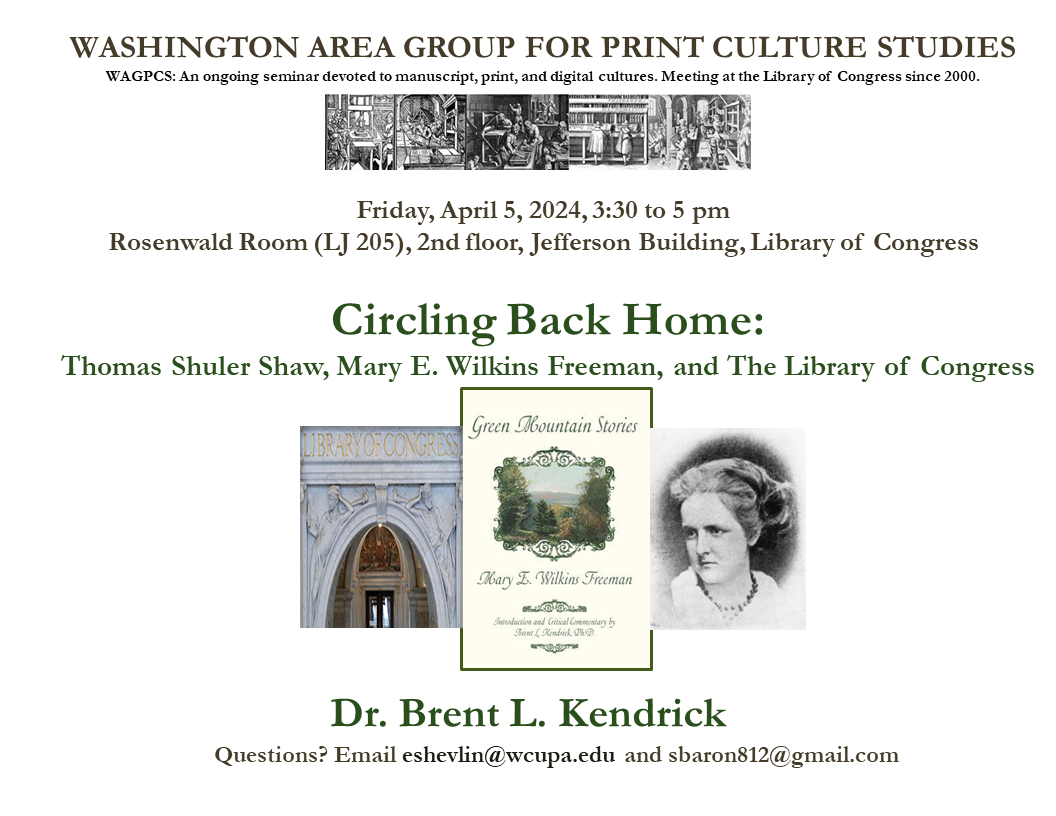
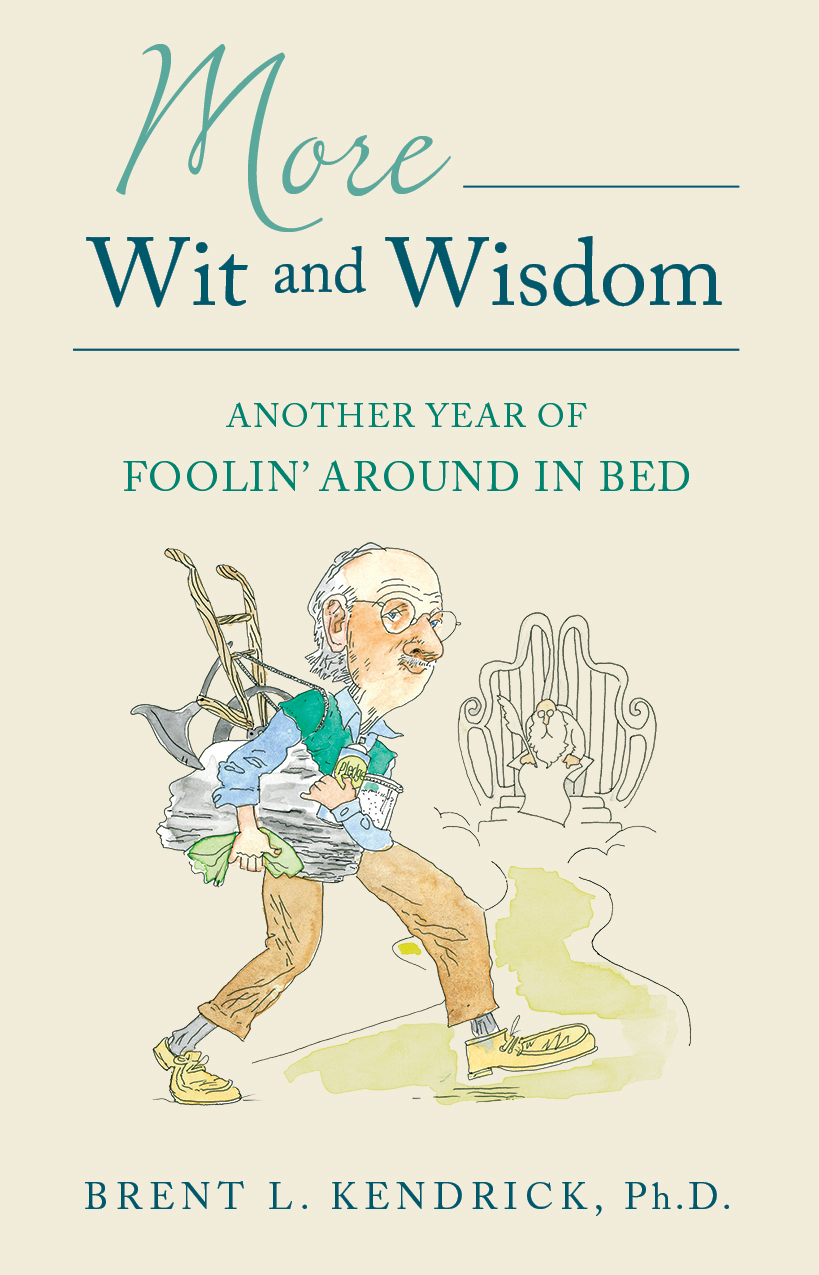
 The Wired Researcher