Stillness in Motion: How Ideas Find Me

“I think 99 times and find nothing. I stop thinking, swim in silence, and the truth comes to me.”

— Attributed to Albert Einstein (1879–1955; physicist whose theory of relativity revolutionized modern science, making him one of the most influential figures in physics.)

“Professor Kendrick, where do writers find their ideas?”

Without a doubt, that’s the question that students in my literature and creative writing classes ask most often. I suppose they think that if I can provide them with answers, they can somehow chart the mysterious path to their own ideas.

I’m always glad to answer the question. Why wouldn’t I? Aside from being an educator, I’m also a writer. I love talking about writers and writing. However, whenever I tackle this question, I do so playfully. I like to tease my students into thinking on their own, so I start out with whimsical suggestions:

● Ideas fall out of the sky.

● Ideas drift in on a breeze, like an uninvited but intriguing guest.

● Ideas pop up while you’re brushing your teeth, hiding among the bristles.

● Ideas sneak in on the back of a grocery list when you’re not paying attention.

● Ideas are delivered by the most unreliable carrier: a stray dog that follows a writer home one day, and voila! A bestseller.

● Ideas arrive like magic—or madness—depending on the deadline.

Of course, there is some truth in my exaggerations. To prove my point, I share with my students what writers themselves have to say. Ironically, writers rarely discuss the origins of their ideas in detail. They prefer leaving them behind a shroud of mystery. Or they discuss their sources in ways that reflect the unpredictability of inspiration.

Fortunately, I know a good number of writers who have been outspoken about how they get their ideas, and I talk about those writers with my students. More often than not, I’ll start with Mark Twain, who wrote about what he knew best: the world around him. Students seem to like that possibility–of working with what they know–and most of them have read The Adventures of Huckleberry Finn. Twain didn’t hesitate to let the world know that he based good ole Huck on a real-life person:

In Huckleberry Finn I have drawn Tom Blankenship exactly as he was. He was ignorant, unwashed, insufficiently fed; but he had as good a heart as ever any boy had. His liberties were totally unrestricted. He was the only really independent person–boy or man–in the community, and by consequence he was tranquilly and continuously happy and envied by the rest of us. And as his society was forbidden us by our parents the prohibition trebled and quadrupled its value, and therefore we sought and got more of his society than any other boy’s. (Twain, Autobiography, 1906)

Twain’s contemporary Mary E. Wilkins Freeman–who shared with him the distinction of being two of America’s most beloved writers at the start of the 20th century–used real life as the springboard for lots of her fiction, too. She focused on what she knew best, and she fictionalized it. She once wrote to Sarah Orne Jewett:

“I suppose it seems to you as it does to me that everything you have heard, seen, or done, since you opened your eyes on the world, is coming back to you sooner or later, to go into stories, and things.” (December 10, 1889, Letter 50, The Infant Sphinx: Collected Letters of Mary E. Wilkins Freeman, ed. Brent L. Kendrick, 1985)

Apparently, lots and lots came back to her, enough that she has more than 40 books to her credit.

As an example of her ability to take the mundane and elevate it to the universal, when I teach Freeman, I generally focus on one of her best short stories, “A New England Nun,” and I share what she wrote to her editor Mary Louise Booth:

“Monday afternoon, I went a-hunting material too: We went to an old lady’s birthday-party. But all I saw worth writing about there was a poor old dog, who had been chained thirteen years, because he bit a man once in his puppy-hood.” (April 28, 1886, Letter 13, The Infant Sphinx: Collected Letters of Mary E. Wilkins Freeman, ed. Brent L. Kendrick, 1985)

Freeman gave “the poor old dog” new life, a name, and heightened symbolism in “A New England Nun,” one of the most poignant explorations of sexual repression in nineteenth century American literature. Students–and readers in general–are fascinated to see how Freeman elevated a commonplace observation to a symbol upon which one of her most famous short stories depends.

More recent writers suggest similar sources for their ideas. Ray Bradbury, for example, once said:

“I don’t need an alarm clock. My ideas wake me.”

His ideas included overheard conversations, dreams, and life’s other magical moments.

Or what about Toni Morrison? She maintained that her ideas were rooted in memories and the people around her:

“The world you live in is always being rewritten; it’s your job to find the narrative.”

From her point of view, stories are all around us, waiting to be discovered through deep observation.

More playful than any of the other writers I’ve mentioned is Neil Gaiman:

“You get ideas from daydreaming. You get ideas from being bored. You get ideas all the time. The only difference between writers and other people is we notice when we’re doing it.”

I like his notion that the writer has to be aware of those fleeting moments of inspiration.

Those are just a few of the writers I call upon to help my students discover their own pathways to their own ideas.

If I were teaching today, I’d continue to explore those writers, but I’d include several more, notably Elizabeth Gilbert, best known for her Eat, Pray, Love. From her point of view, ideas in all aspects of life–not just writing–are all around us, looking for homes.

“I believe that our planet is inhabited not only by animals and plants and bacteria and viruses, but also by ideas. Ideas are a disembodied, energetic life-form. They are completely separate from us, but capable of interacting with us — albeit strangely. Ideas have no material body, but they do have consciousness, and they most certainly have will. Ideas are driven by a single impulse: to be made manifest. And the only way an idea can be made manifest in our world is through collaboration with a human partner. It is only through a human’s efforts that an idea can be escorted out of the ether and into the realm of the actual.” (Big Magic: Creative Living Beyond Fear, 2015)

I’m fascinated by Gilbert’s way of thinking. Her magical complexity attracts me, as does Robertson Davies’ straightforward simplicity about ideas:

“I do not ‘get’ ideas; ideas get me.”

And without a blush of shame, if I were teaching today, I’d talk more fully about sources for my own writing ideas. I did that in years past, but my focus was always on research ideas, unless I happened to be writing creative nonfiction essays with my students. In those instances, I’d workshop my essays with them, always sharing the backstories.

However, writing with my students was a luxury that I enjoyed on rare occasions only. I was too busy giving them feedback on their own creative flights. I suppose my professorial situation was comparable to the cobbler who has no shoes.

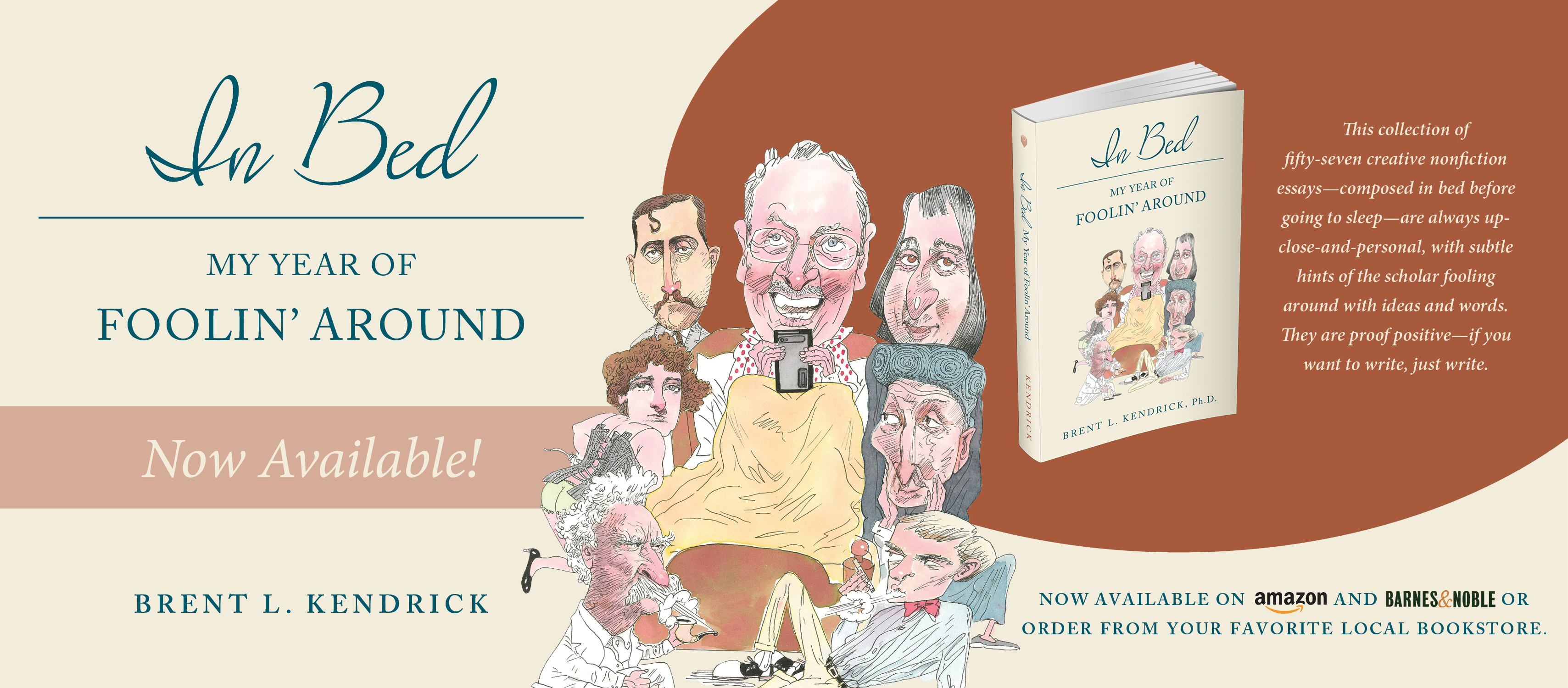
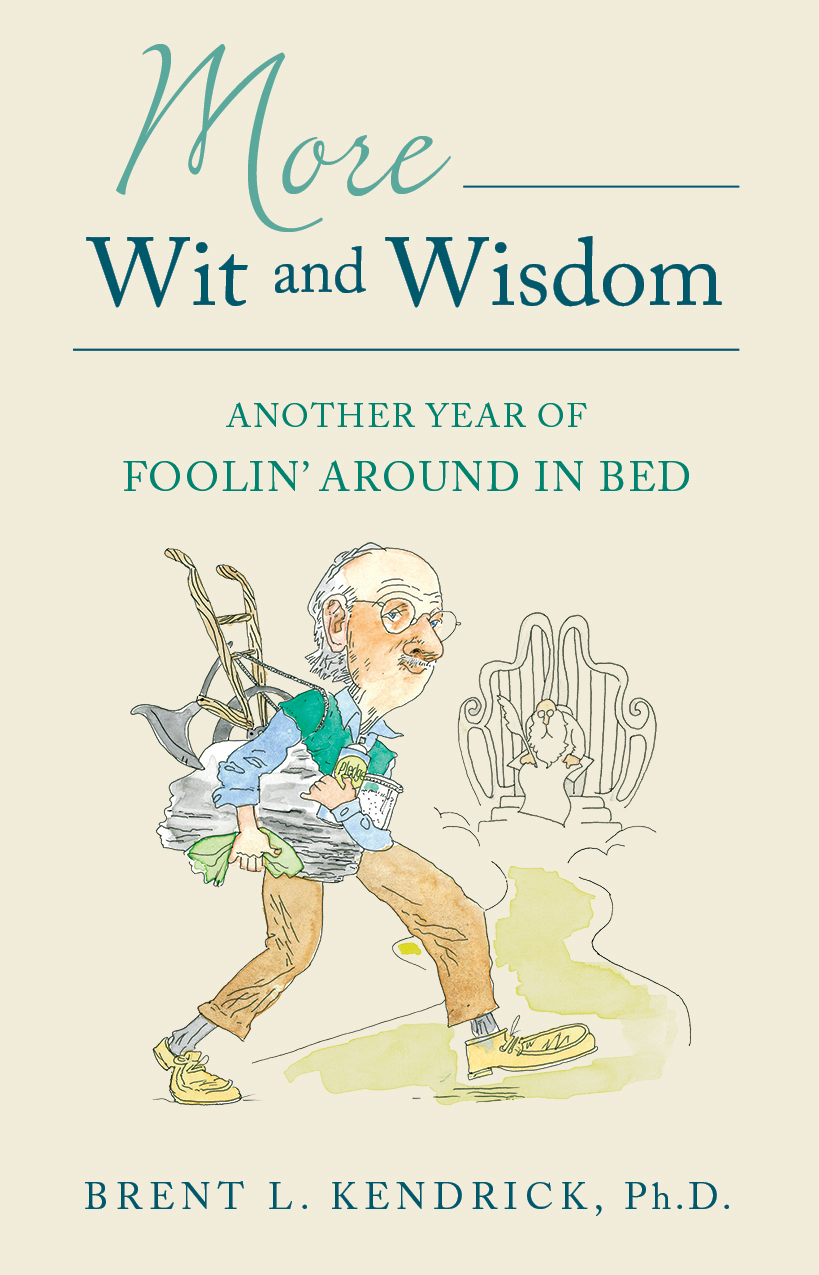
These days, though, as a master of reinvention, I’m able to focus on my own creative nonfiction essays, totally separate from my ongoing Mary E. Wilkins Freeman research. As a matter of fact, since starting my reinvention in January 2022, I have two collections of creative nonfiction essays to my credit. In Bed: My Year of Foolin’ Around (2023) was followed by More Wit and Wisdom: Another Year of Foolin’ Around in Bed (2024). And in case you’re picking up on a pattern, I’ll have another book coming out in 2025, tentatively titled The Third Time’s the Charm: More Foolin’ Around in Bed. All of those books–and others that will follow–are part of my The Wired Researcher Series.

I’ve written a lot already about writers and writing. I’m thinking about several posts in particular:

“The Albatross Effect: How Letting Go Set Me Free”: Sometimes, we need to let go, not necessarily abandoning our responsibilities or aspirations, but releasing the grip of our ego, our fears, or our need for control. By doing so, we create space for new ideas, new experiences, and new growth to emerge.

“In Praise of Break-Away Moments”: In a world that often pulls us in different directions, these break-away moments are the compass that steers us back to ourselves, to our shared humanity, and to the magical power that transports us to places unseen and emotions unfelt.

“It’s Not a Corset. Don’t Force It”: My greatest discovery about my own writing is my everlasting need to unlace the corset that constricts my thoughts. It’s my everlasting need to let my ideas breathe and expand freely, whenever and however they wish.

“Writers: Our Forever-Friends”: Maybe, just maybe, the need to have writers who are our forever-friends, boils down to nothing more than this. They come regardless of what we are facing. They reassure us that goodness and mercy shall prevail. They remind us to grapple with our soul, to grapple with our spirit.

“Directions to the Magical Land of Ideas”: For me, it seems that whenever I lose myself–whenever I’m doing something that takes me away from me–a door opens and an idea enters, hoping for home and for honor.

In all of those essays, I’m doing what a number of writers whom I’ve mentioned do: exploring my own world. Like them, I also do my best to find in my personal experiences truths that might touch the heart and soul of my readers, whoever and wherever they are.

But one day last week, while doing my indoor biking, listening to Gospel music rock the rafters, it occurred to me that I had never written extensively about the sources for my ideas. But here’s the thing. I didn’t go looking for that idea. I mean, I was just biking and listening to music. Nothing more. Nothing less. And lo! In that ritualistic moment of pedaling and listening, the idea for this post took up residency in my mind.

The idea found its way to me. The idea chose me to be its human partner, just as Gilbert and Davies maintain their ideas find them.

I, too, believe that ideas find their way to me. I’m fascinated by that belief, not so much because that’s how my ideas arrive, but more so because of what’s going on with me when those ideas choose me for their partnership.

I’ve given the “what’s going on with me” a lot of thought, and I’m coming up with some common denominators.

Almost always, I’m engaged in an activity. Biking. Lifting weights. Listening to music. Cooking. Gardening. Hiking.

More often than not, when I’m engaged in those and similar activities, my world stands still. Time stops. Nothing exists except whatever it is that I’m doing. If I had to pick one word to describe what I’m experiencing in those times, I suppose it would be stillness.

Maybe the ideas “out there” looking for human partnerships sense my stillness. Maybe they sense my lostness. Maybe they sense my emptiness. And maybe–just maybe–they believe that I can escort them “out of the ether and into the realm of the actual.”

For now, especially in the absence of any other explanation that I can provide, I’ll hold fast to that belief since it has proven itself true time and time again in my magical world of words. For now, I’ll also hold fast to a smidgen of satisfaction in knowing that what I told my students really is true, especially for a writer like me:

“Ideas drift in on a breeze, like an uninvited but intriguing guest.”
The Albatross Effect: How Letting Go Set Me Free

“Letting go gives us freedom, and freedom is the only condition for happiness.”

— Thich Nhat Hanh (1926-2022; a Vietnamese Buddhist monk and peace activist known for his teachings on mindfulness and compassion.)

It all started a week or so ago. I remember with great clarity that it was on a Monday. I woke up feeling a weight around my neck, something I hadn’t noticed before. It was subtle but persistent, almost like wearing a heavy choker. At first, I tried to dismiss it, thinking it was just a minor inconvenience. But as the hours passed, the weight grew more noticeable. I felt uneasy, as if something was slightly off, casting a shadow over my thoughts.

The next day, the weight was unmistakable. It was heavier than I expected, plus it seemed to be tightening. Simple tasks became more cumbersome, and I became acutely aware of something that I could not escape. The burden started to affect my mood, causing frustration to build.

By the third day, the albatross felt like an anchor dragging me down. I was tired and irritable, and my patience was wearing thin. It seemed to point me toward a deeper problem or unresolved issue that I knew I shouldn’t ignore. Despair started to set in as I tried to identify the problem and figure out how to escape the torment.

Finally, on the fourth day, while relaxing on my deck in the early sunrise, the albatross looked at me, and in that fleeting glance, I saw the source of the nearly unbearable weight. Brace yourself. You might not believe what I’m about to reveal. Here goes. The weight was coming from the blog post that I was working on for the next Monday.

The realization stunned me. Actually, it mortified me. Here’s why. I knew exactly where I was going with the post, and I had drafted more than half of it. But get this. I didn’t like the opening paragraphs. I hadn’t liked them from the start, I kept telling myself day after day that those paragraphs would fall into place as I got closer to the post’s ending.

I was wrong. They didn’t fall into place, and I wasn’t willing to let that albatross hang around my neck any longer. I found myself saying out loud to myself as I sat there, sipping coffee:

“Give it up, Kendrick. Just give it up.”

I didn’t mean that I should delete the draft. I just meant that I should put it on the back burner until its time had come. As soon as I gave it up, the albatross that had become unbearable let go of me and flew away. I felt an immediate sense of lightness and relief. The burden that once felt insurmountable was gone, and I was overwhelmed by a wave of elation. I felt a profound sense of freedom. The contrast between the heaviness of the past few days and the newfound lightness made the relief even more exhilarating. I was finally free.

With the albatross gone, my mind was free to soar, and a brand-new idea for a post came to me immediately, filling me with renewed energy. As I continued sipping my coffee, I cobbled together a really rough draft of what I wanted the new post to become. All day long, I kept the post on my mental backburner. That night, in bed with my Smartphone in hand, I completed the post rather effortlessly and published it the following Monday: When the Heat Is On, Cue the Vacay!

Letting go of the writer’s albatross that had been weighing me down for days allowed me to cue my own metaphorical vacay. Now, here I am sharing my specific challenge and my specific solution, hoping that it will speak to other writers out there. Sometimes, you simply have to let go of an idea that has possessed you if it becomes a deadly weight instead of wings that give flight. Letting go does not mean abandoning. It means putting the idea aside until it calls you back and begs you to give it the attention that you need to give it. The two of you–your idea and you as the writer–are the only ones who will know when the time is right.

For me, it took about two weeks. After When the Heat Is On, Cue the Vacay!, I moved on to “Listening to the Unsaid.” The next week, I returned to my albatross post, and I knew immediately what I needed to do with the first few paragraphs. Whitman and Emerson reached out to my spirit, and as soon as I gave them a home in my post, everything else fell into place for “Digging Deeper: A Gardening Lesson Applied to Life.”

In the end, letting go of the albatross allowed me to discover some new creative wings. By acknowledging the weight and releasing my grip, I freed myself to explore new ideas and approaches.

If you’re a writer, hold on to the truth that I have shared. Sometimes, the best way to make progress is to let go and cue your own vacay–embracing the freedom to create and enjoy the journey.

If you’re not a writer, reflect on this nugget of truth as well. It might help you, too. Just as a writer’s stubbornness can turn a blog post into an albatross, so too can our refusal to release emotional baggage turn relationships into anchors, holding us back from sailing into calmer waters. Or our insistence on controlling every detail turns projects into burdensome backpacks, weighing us down on the journey to success. And what about those stubborn habits we cling to, even when they no longer serve us? Don’t they become the equivalent of a ball and chain, hindering our progress toward a healthier, happier life? In each case, the albatross effect whispers a haunting question: What weight am I shouldering that’s keeping me from soaring? Sometimes, letting go of our personal albatrosses is the only way to find freedom.

Sometimes, we need to let go, not necessarily abandoning our responsibilities or aspirations, but releasing the grip of our ego, our fears, or our need for control. By doing so, we create space for new ideas, new experiences, and new growth to emerge. May we all find the courage to release our albatrosses and let them fly away so that we might discover the liberating power of letting go.

When the Heat Is On: Cue the Vacay!

“You don’t have to be rich to travel well.”

–Eugene Fodor (1905–1991; notable American travel writer and editor best known for founding Fodor’s Travel Publications).

All right, everyone, indulge me for a moment and imagine something a bit out of the ordinary.

Close your eyes and conjure up an image the likes of which I’ll guarantee you’ve never seen before. Picture a man in his 70s, proudly sporting a ponytail that flutters like a whimsical flag in the breeze, perched precariously atop his chimney. Clad in well-worn flip flops and cut-off blue-jean shorts that reveal a pair of weathered but surprisingly spry and some-say-sexy legs, he stands with the kind of balance that suggests he’s either a seasoned acrobat or a silly fool blissfully unaware of danger.

From this lofty perch, he’s gazing out over the Shenandoah Valley below, his eyes twinkling like a mischievous elf’s, while the mountains in the distance seem to be returning their own salubrious salutation. With all the gusto of a wired researcher on a caffeine overdose, he belts out the Hallelujah Chorus at full volume, his voice soaring like a defiant eagle. His performance is a grand spectacle of unbridled joy and unequaled eccentricity, turning the chimney into his personal stage and the sky into his private audience.

In case you’re wondering who this daring rooftop performer is and why he’s carrying on such shenanigans, lean in close, and I’ll tell you. It’s me! I’m celebrating what appears to be the temporary end of an exhausting heat wave and drought by having my own imaginary rooftop concert that would make any diva proud. After enduring what felt like a never-ending barrage of scorching temperatures and parched landscapes, I figured it was high time for a little over-the-top jubilation. And if there’s anything that I love, it’s everything over-the-top.

Cooler temps and rain seem to be headed our way, and I’m embracing the arrival of this much-needed relief with the kind of exuberance that only a seasoned professor of hot weather clichés could cobble together. It’s been so blisteringly hot that I nearly froze to death, but I didn’t. Instead, I’ve become a connoisseur of every sun-scorched saying you can imagine. I’ve spent weeks sweating buckets, trying not to fry like an egg on the hood of my Gladiator, and lamenting the fact that my car seats are doubling as personal saunas. I’ve become a pro at grumbling about the weather, wondering whether my walkway pavers were actually sizzling, and dreaming of anything that wasn’t a mirage.

Guess what else I did during the sweltering days that are temporarily behind us? I put off more tasks than Carter’s got liver pills! Yep. The heat and drought have been an excuse, whether I was avoiding the garden beds that have turned into dust bowls or ignoring other projects that seemed like too much effort in a heatwave. I’ve postponed weedwhacking, repairing the leaky faucet that’s been dripping like a leaky faucet (because, let’s face it, who wants to fix a sink when it feels like you’re living inside an oven?), and even organizing the loft, which has somehow become a haphazard shrine to summer’s oppressive heat.

Guess what else I did? I decided that I needed to take a vacation! Yep. You heard me right. I decided that I needed some good old-fashioned downtime. But dayum! Before I could even plan to take it, I found myself all curled up and relaxed with the Oxford English Dictionary (OED) so that I could find out all about the vacation that the dreaded heat and drought convinced me that I needed to take.

As might be expected, our kith and kin Across the Pond used the word vacation as a noun long before we did, all the way back in 1405:

“Whan he hadde leyser and vacacion ffrom oother worldly ocupacion” (Chaucer, Wife of Bath’s Tale Prologue l. 683).

Isn’t that fascinating? Of course it is. More fascinating, though, is the fact that we Americans used it first as a verb in 1866:

“Whether Winter or summer, … threading the filthy lands of the Ghetto or vacationing among the islands, Mr. Howells found Venice … a theme for constant studies” (Round Table 8 September 90/2).

Now that I’m all squared away on the word vacation, I think I’ll spend just another second or two finding out when the phrase take a vacation was first used. You might have known it. The OED has the scoop:

“Smoke Jordan tried hard to get him to … maybe take a vacation, Florida’s nice. ‘Get yourself wheeled up and down like an icky banker?’” (D. Baker, Young Man with Horn, 1938)

What the OED does not disclose is fascinating as well, and I wouldn’t know it if I had not wanted to find out who “D. Baker” is. As it turns out, Dorothy Baker was an American novelist who loved jazz. In fact, her Young Man with Horn was based on real-life jazz cornet player Bix Beiderbecke. Even better is this hot tidbit: the novel was made into a 1950 movie featuring such hotties as Kirk Douglas, Doris Day, Lauren Bacall, Juano Hernández, and Beiderbecke’s friend and collaborator Hoagy Carmichael.

Well, these word trips are turning out to be as much fun as a vacay! OMG! Did I just use that word? Well, I did, and since my OED is still open (virtually), I just have to see when vacay was first used. I’m betting that it was coined by an American. Those Brits have no problem when they need to stoop to conquer, but they would never think about stooping low enough to truncate a word. Well, I was right. Vacay was first used in 1992:

“He said he was going on vacay and would give me something after he gets back” (Re: More on getting Gigs in rec. music. makers 14 January, Usenet newsgroup., accessed 13 Sept. 2013).

Just a sec, though. I might be wrong to claim the first usage as American. The OED‘s citation is rather shabby, in my opinion, and I can’t determine the authorship with any certainty. Lector: Cave a fidem non probatis.

I shall not, then, trust my initial claim, but I shall trust my subsequent claim that the next usage of the word vacay was American. It appeared in 1995 in the Pittsburg-Post Gazette:

“The convertible … was my Mom’s, we were on vacay” (16 July g8/2).

As for va-cay, vakay, and va-kay–those variant spellings of vacay–the OED has not seen fit to include them at all. I find that rather strange, however, since I am certain that I have seen them in use somewhere or other, perhaps right here in my blog. Ab ridiculo ad sublimem transire.

Hooey phooey is all that I have to say. Leave it to me to turn a vacation into a bunch of malarkey!

However, in case you’re thinking that you might need a vacation, let me help you. If you find yourself nodding along to any of the subsequent scenarios, it’s time to cue the vacay:

Work: Your boss thinks “work-life balance” means balancing more work on your plate. Your to-do list looks like a never-ending scroll of doom. You start dreaming about spreadsheets. You feel like a juggler on a unicycle, minus the thrill. Yep. Cue the vacay!

Social Media: You’ve scrolled so much that you start liking your own posts. You find yourself in a deep rabbit hole, liking posts from three years ago, and you’re contemplating the philosophical implications of cat memes. Yep. Cue the vacay!

Family Gatherings: Your aunt asks (for the 15th time) why you’re still single. You’re dodging advice and daydreaming about automated responses. Yep. Cue the vacay!

Dieting: You’re on a diet of kale smoothies and quinoa bowls, and you start dreaming about burgers and ice cream like they’re forbidden treasures from a lost civilization. Yep. Cue the vacay!

Home Improvement Projects: Your “quick” weekend project turns into a month-long renovation of ginormous proportions, complete with a gazillion trips to the hardware store and questionable structural changes. Yep. Cue the vacay!

News: You’re considering a bunker in the backyard. Dystopian novels of doom and gloom look cheerful compared to your news feed. Yep. Cue the vacay!

Dating Apps: You’re swiping so much that it feels like a full-time job. Your thumb is sore, your eyes are glazed over, and every profile starts to blend into one amor(ph)ous blob. Yep. Cue the vacay!

Exercise Regimens: Your workout routine feels more like a medieval torture session. You’re dreading your workouts more than a trip to the dentist. Yep. Cue the vacay!

Parenting: “Me time” means locking yourself in the bathroom with a chocolate bar. Your rare escape feels like a luxury retreat. Yep. Cue the vacay!

Blogging: Your efforts to craft engaging content week after week during a record-breaking heat wave and drought feel like an endless marathon. You’re standing on the chimney singing the Hallelujah Chorus. Yep. Cue the vacay!

Dayum! Dayum!! Dayum!!! Here I’ve done gone and paved the way for me to have a perfectly legit blogging vacay this week, and wouldn’t you just know it! I’ve done gone and cranked out today’s blog anyway! Phooey!

Clearly, my brain has been baking in the sun too long. Tuff. I’ll keep right on gazing from my imaginary chimney perch, realizing that, sometimes, the best way for me to break free from the grind and the heat is to let my imagination run wild and embrace the breeze of a little bit of whimsical madness.

I hope that you, Dear Reader, find your own rooftop, whether real or metaphorical, and that you sing your heart out when the world gets a little too hot to handle. Whether it’s a break from work, social media, family, or even blogging, taking a vacay isn’t just about escaping the heat—it’s about rediscovering the joy in life’s little quirks and celebrating them with gusto.

Cheers to your vacay! Wherever it leads you, may it be as epic and freeing as my rooftop concert over the Shenandoah Valley.

A Special Shout-Out to 6,164 Amazing Readers Around the World!

“A writer only begins a book. A reader finishes it.”

Samuel Johnson (1709-1784; English writer, poet, essayist, moralist, literary critic, biographer, editor, and lexicographer; best known for his A Dictionary of the English Language, 1755.)

I just checked my blog’s mid-year statistics, and I am thrilled beyond measure. Together, we did it! 6,164 of you have been reading my blog posts this year.

For me, that’s incredibly awesome.

I couldn’t have done it without you, my loyal readers. You have fueled my passion for writing, and it’s your engagement that motivates me to share not only stories but also moments of laughter, reflection, and sometimes even tears.

Reflecting on the Journey

When I shifted the focus of my blog from research to memoir, I had no idea that it would grow into what it is now. Each week, I pour my heart into writing, hoping to connect with you through my words. This journey has been one of personal growth and deep connection, overcoming initial uncertainties to find a community of readers who connect with what I write.

Highlights of the Year So Far

Let me share with you the posts that have been the most popular during the last six months:

Glimpses of My Mother’s Hands

Confessions of an Editor: The Infant Sphinx Reviewed

When Lilacs Meet Algorithms: The Unlikely Union of Walt Whitman and Artificial Intelligence (AI)

From Dusty Folder to Digital Ink

From Stars to Soil: Embracing My Family’s Garden Tradition

My Taxing Review: A Reality Post

Vermont’s Literary Daughter: Brent L. Kendrick on Mary E. Wilkins Freeman

Abandon Hope? Not a Chance!

My Kentucky Wonder

What My Father Saw

Not Alone

Looking Ahead

In case you’re wondering about future posts, let me share with you the tentative titles of drafts that I’m working on:

● The AI Times They Are A-Changin’

● The Sweet Taste of Defeat

● Literary Crosswalks at 76

● What I Would Say to My 18-Year-Old Self

● Fanning the Flame

● Turning Out the Lights: Reflections on Endurance and Hope

● Bigger than Ourselves

● Age of No Credit

● In Praise of Gratitude

● I Don’t Have Much to Give but What I Have I Give

● I Made It All Up

Looking at the Countries You Represent

And you, my 6,164 readers? What about you? You represent 145 countries from all around the world, showcasing an incredible diversity of cultures and perspectives. From Afghanistan to Zambia, including Bahrain, Cambodia, Denmark, Ecuador, Gabon, Hong Kong SAR China, Iceland, Japan, Kazakhstan, Latvia, Macao SAR China, Namibia, Oman, Pakistan, Qatar, Romania, Saudi Arabia, Taiwan, U.S. Virgin Islands, United States, United Kingdom, and Venezuela.

A Special Thank You

I want to give a special shoutout to each and every one of you, whoever you are, and wherever you are.

● You are my joy.

● You are my inspiration.

● You are my world.

Let Me Be Frank

“The real problem is not whether machines think but whether men do.”

–B. F. Skinner (American psychologist, behaviorist, author, and social philosopher, best known for his work in exploring how behavior is influenced by rewards and punishments.)

No doubt, you’re still laughing about my June 10 post, “The AI Novelist: Or, How I Was Duped at Starbucks.”

Say whaaaat? You’re not still laughing?

Of course not. You weren’t duped the way that I was. Well, let me remind you of what happened to me. As I was enjoying my Cappuccino in Starbucks, a former student walked in, and I invited them to join me. Hot damn! I had somebody who might be interested in talking about recent AI advances. The student feigned ignorance because work had kept them too busy to fool around much online. I decided to turn the encounter into a learning moment, so I opened up ChatGPT and handed my Smartphone to them:

“Here. In the dialogue box, just type in what you want to know.”

Talk about flying thumbs! The next thing I knew, my student had given ChatGPT extensive guidelines for an essay to appear in The New Yorker. What a hoot! Then, they held on to my Smartphone and proceeded to read the essay aloud to me, just as I often did when they were in my classes. I realized that I had been cornered and tricked, just like the narrator in Mark Twain’s “The Celebrated Jumping Frog of Calaveras County.”

After being so surprisingly duped, I managed to chuckle a little on my way back up my mountain. At the same time, I was tempted to just forget all about the Starbucks encounter, and I suppose I would have done just that if not for comments from several of my faithful followers.

One of them, in a rare stroke of six-word brilliance, elevated me to the level of “The Jumping Frog of Calaveras County” by dubbing me “The Celebrated Professor of Shenandoah County.” (Thank you, Jenni. Move over, Mark Twain. There’s a new kid on the riverboat.)

Another follower pumped me up even more, and I quote verbatim: “Your storytelling is second to none.” (Thank you, Dave. Like I said, move over Mark.)

Both of those comments actually made me grateful that I had been duped in Starbucks.

The third comment spurred me on even more because my good friend and faithful follower Frank thought that he would have the last laugh by duping me once more. Can you imagine a friend doing that? Let me tell you what he did. He asked ChatGPT to write a response to my post, and then what did he do? What did Frank do? He posted it, all innocent-like as a comment under his own name! His own name! He’s got some nerve, if I must say so, but I’ve known Frank and his pranks for decades, so his spoof did not take me by surprise, nor did I fall for his pluck!

After all, I am a master at foolin’ around with words–in and out of bed–and as soon as I read his comments, I knew immediately that he was not the author.

Someone just screeched:

How did you know?

Here’s the short answer. I’m familiar with Frank’s writing style. The comment that he posted was not in the same style as comments that he’s made down through the years about my blog posts. It had nuances that just didn’t sound like Frank.

With Frank’s permission, I’m giving his entire comment below in bold. I’ll intersperse my observations in italics.

§   §   §

“Dear Brent,

No way! There’s just no way that Frank would start his comments about my blog with a salutation. Nope. No way. Imposter.

“I thoroughly enjoyed reading your latest blog post, ‘The AI Novelist: or, How I Was Duped at Starbucks.’ Your narrative was both engaging and thought-provoking, capturing the essence of an academic’s ever-evolving relationship with technology. The way you seamlessly blended your personal experience with insightful commentary on AI’s role in creative writing was masterful.”

This paragraph shows a lack of understanding, and I know fully well that Frank understood my post. However, when he uploaded it to ChatGPT, ChatGPT made the mistake of identifying me with the fictional professor in the essay that my student had AI generate. Frank is too savvy to make such a mistake. Nope. No way. Imposter.

“Your encounter at Starbucks not only highlighted the cleverness of your former student but also underscored a significant theme: the intersection of traditional craftsmanship and modern technology. As someone who has been exploring the potentials of AI in various domains, I found your skepticism and eventual amusement towards AI-generated content particularly relatable. It’s fascinating to witness how AI, like ChatGPT, can generate coherent and even humorous narratives, yet still lack the human touch that makes storytelling deeply personal and impactful.”

Frank knows fully well that I have never been skeptical of AI. I have embraced it from the get-go. Once again, ChatGPT made the mistake of identifying me with the fictional professor in the essay that my student had AI generate. Nope. No way. Imposter.

“Your reflections on the creative process were poignant. While AI can certainly aid in generating content, the true art of writing lies in the human ability to weave emotions, experiences, and unique perspectives into a narrative. This reminded me of a quote by Isaac Asimov: “I do not fear computers. I fear the lack of them.” Your post beautifully illustrates that while AI can enhance our capabilities, it is our human creativity and critical thinking that ultimately define our work.”

Frank often includes quotes in his comments, but they’re usually song lyrics. Asimov? Not hardly. Nope. No way. Imposter.

“Thank you for sharing this delightful and insightful story. It left me pondering the future of writing and the balance between embracing technological advancements and preserving the essence of human creativity. I look forward to reading more of your posts and perhaps even discussing these topics over a cup of coffee someday.”

Frank and I meet regularly for lunch, and we usually have oysters on the halfshell and a Gin and Tonic. Coffee? Never! Nope. No way. Imposter.

“Warm regards,”

Geez! Frank has never, ever used “Warm regards” as a closing for any of his comments. Never. Nope. No way. Imposter.

§   §   §

Aside from the above observations, one more thing made me aware that Frank was not the author: the length. Frank is a man of few words. He simply would not write such lengthy comments. Nope. No way. Imposter.

I was on to what Frank had done as soon as I read his comments. In my response, I added something that I thought would let him know that I knew:

“Coffee? You bet! Gin and Tonic with Oysters on the halfshell would be great, too! 😃”

One more thing, just for the record. I asked ChatGPT to take Frank’s AI comments and to rewrite them in a way more consistent with the Frank I know.

Here’s what ChatGPT provided:

Hey Brent,

I got a kick out of your latest blog post, “The AI Novelist: or, How I Was Duped at Starbucks.” Your storytelling was as sharp and engaging as always, blending your personal experience with a clever commentary on AI’s role in creative writing. You really captured the essence of an academic’s evolving relationship with technology.

The Starbucks encounter was a hoot, highlighting your student’s cleverness and the broader theme of blending traditional craftsmanship with modern tech. I’ve been delving into AI myself, and it was fun to see your take on how these tools can generate content that’s coherent and even amusing, though they still miss that personal touch that makes storytelling special.

Thanks for sharing such a delightful and thought-provoking story. It got me thinking about the future of writing and how we can balance embracing tech advancements while keeping the heart of human creativity. Looking forward to more of your posts, and maybe we can chat about this over lunch soon.

Catch you later,

Frank

Yep. That’s a lot closer to the Frank I know, but it’s still far too long. Unlike me, Frank knows that he’s not being paid by the word!

But, hey! Listen up! Guilt got the better of Frank. He called me one evening to confess! So, there you have it, and you heard it first right here.

Frankly, here’s the beautiful part of this long, drawn-out Twainesque post: humanity triumphed twice. First, Frank’s writing style has nuances that AI can’t mirror. Yet. Second, Frank’s conscience wouldn’t let him rest until the truth surfaced. AI can’t rise to that level. Yet.

Hopefully, this playful saga will remind us of the authenticity and complexity that define our interactions, whether through pranks or profound reflections. It’s in these moments that we find the essence of human connection and the enduring joy of shared stories and shared learning experiences..

Unveiling the Cover: Get Ready for More Wit and Wisdom!

“The joy of publishing is in sharing your stories with the world and knowing that they’ll live on long after you’re gone.”

–Maya Angelou (1928-2014; a renowned American author, poet, and Civil Rights activist whose works explore themes of identity, race, and resilience.)

Dear Readers, gather ’round!

The moment we’re all eagerly waiting for is just around the corner. That’s right—my new book, More Wit and Wisdom: Another Year of Foolin’ Around in Bed–is getting closer and closer to its grand debut in late April, and boy, oh boy, do I have some juicy updates to share with you!

I’m thrilled to announce that I’ve personally PDFed every single one of the 380 interior pages, ensuring that each word, each sentence, shines as bright as a star in my mountaintop night sky. Proofing? Poof! Completed!

Whoever you are and wherever you are, your unwavering support means the world to me. More Wit and Wisdom: Another Year of FoolinAround in Bed isn’t just ink on paper. It’s a journey shared across 88 countries with 7,320 readers from the Shenandoah Valley to Okinawa.

But wait, wait! Don’t go! There’s one more thing. Feast your eyes upon the cover art for this new upcoming literary escapade. Just imagine it gracing your bookshelf, waiting to be cracked open and devoured, page by page. It will be available in hardback and paperback from Amazon, Barnes and Noble, and, hopefully, your own hometown bookstore. (Drumming up anticipation yet?)

Grand Publication Debut of a Soon-to-Be American Classic Expected by the End of April 2024. (Cover art by acclaimed illustrator, Mike Caplanis.)

Circling Back (Again, Again, and Again)

“I write entirely to find out what I’m thinking, what I’m looking at, what I see and what it means.”

–Joan Didion (1934-2021; renowned American Essayist and novelist whose distinctive writing style and introspective approach earned her a lasting place in contemporary literature).

Maintaining friendships can be a delicate dance, and I’ve learned that silence is golden when it comes to my own writing. My friends–especially those who are writers–know that I abide by Robert Frost’s sage counsel:

“Talking is a hydrant in the yard and writing is a faucet upstairs in the house. Opening the first takes the pressure off the second ” (Letter to Sydney Cox, 3January 1937; quoted in Robert Frost and Sidney Cox: Forty Years of Friendship. By William Richard Evans. 1981).

Rarely, then, do I talk with friends about what I’m writing in my weekly blog posts. Talking about it diminishes my focus and my belief. Oh, to be certain, I may tease by divulging a topic or a working title. I love teasing. I’ve done it before, and I’ll do it again right now by telling you the working titles of some future posts:

● “What My Father Saw.”

● “Packin’ Up. Gettin’ Ready to Go.”

● “My Right to Know.”

● “Somewhere Called Home.”

● “What If Artificial Intelligence (AI) Makes Us Even Better than We Are?”

● “Grappling with Unknowns.”

● “The Cake Stops Here.”

● “When Did Tomorrow Begin?”

See there. I didn’t mind sharing those titles at all. Like I said, I’m a tease.

Truth be told, though, that’s all that I can share in advance because I’m clueless as to how those tentative titles will play out. I never know the end of a post until it leads me to its ending.

Clearly, I am not one of those writers–of whom there are many–who align themselves with Edgar Allan Poe. I’m thinking now about his focus on “unity of effect” and that a writer must know the intended effect from the beginning:

[…] in almost all classes of composition, the unity of effect or impression is a point of the greatest importance. […] If his very initial sentence tend not to the outbringing of this effect, then he has failed in his first step. In the whole composition there should be no word written, of which the tendency, direct or indirect, is not to the one pre-established design (Poe’s review of Hawthorne’s Twice-Told Tales, Graham’s Magazine, May 1842).

A few years later, he reiterated that point:

Nothing is more clear than that every plot, worth the name, must be elaborated to its dénouement before anything be attempted with the pen. It is only with the dénouement constantly in view that we can give a plot its indispensable air of consequence, or causation, by making the incidents, and especially the tone at all points, tend to the development of the intention (“The Philosophy of Composition,” Graham’s American Monthly Magazine, April 1846).

Poe’s way of writing is not my way of writing.  Mine is just the opposite. Mine is the Frostian way:

Like a piece of ice on a hot stove the poem must ride on its own melting. A poem may be worked over once it is in being, but may not be worried into being. Its most precious quality will remain its having run itself and carried away the poet with it (“The Figure a Poem Makes,” Atlantic Monthly, June 1939).

I am not trying to compare my writing to Frost or to Poe. Yet, as a writer, I have every right to align my methods with someone. I choose Frost for alignment, and I choose Frost for ally.

Like Frost, I am unwilling to talk about the content of what I am writing: opening the hydrant [talking] lessens the pressure on the upstairs faucet [writing]. At the same time, I am more than willing to talk about my writing methods: melting like a piece of ice on a hot stove, carrying me away with it.

Actually, I have talked about my writing process extensively in several blog posts. I’m tempted to suggest that you browse my posts and find them for yourself. But that would be mean spirited. So let me recap the main points here.

1. I write my posts in bed–every day, seven days a week–starting at 8:00 pm and continuing until I decide to stop, usually around 9:30 pm or so. Sometimes, I ignore my body’s call for rest, and I write until 11:00 pm. I don’t think that I’ve ever written past 11:30 pm. (However, I do recall writing until 12:30 am once, just to prove to a friend that I could stay up that late.)

2. I write my blog posts exclusively on my smartphone. Yes. On my smartphone. I hold it in my left hand (as I am doing now), and I touch type my text, letter by letter, with the index finger of my right hand (as I am doing now). I know: it’s slow. I know: it’s tedious. But guess what? It works.

3. I write my blog posts while sipping on a Bunnahabhain Scotch, neat.

4. I have a large number of drafts in progress at any given time: everything that I experience is copy. Right now, for example, I have 29 drafts in various stages of development.

5. Whenever I have an idea and start a draft, I develop it enough so that I can leap back into the idea whenever I return to it, even if it’s weeks or months after the idea leapt into my head.

6. Usually, one draft among all the others calls to me and demands my attention. I listen. I focus on it for seven nights, hanging on tight and never letting go.

7. On Sunday of each week–the day before publishing a post–I read it out loud by telephone to my oldest sister, Audrey. Reading it aloud gives me the opportunity to find any remaining mistakes. (Inevitably, I still miss a few.) More importantly, however, it gives me the opportunity to hear the rhythm, and if I have an off-key passage, my ear speaks to me. Sometimes, I pick up on a rhythm, and I decide to play it more fully in one final revision before going to bed. But here’s the important thing: it’s the hearing aloud–what Frost would call the “sound of sense–that allows me to know my degree of accomplishment.

Those are the main steps that I follow in writing my posts.

Recently, however, I noticed a recurring practice that I’ve been unintentionally following. Let me share it with you.

As I open a draft, I revisit the beginning instead of scrolling down to where I left off the night before. This practice offers a fresh perspective on my words and ideas.

I circle back to the beginning, I start from there, and the Frostian melt starts anew.

As I circle back, I take my time. I savor every word. I savor every nuance. I savor all the possibilities, including the white space between words where so many meanings live–and hide. And, as I circle back, I change whatever it is that calls to be changed.

To be sure, circling back flies in the face of the process that I and other English professors are hell-bent on teaching our students. Generally, we teach a straightforward, linear process without much room for deviation, except for an occasional reminder that writing can be recursive, especially when we need to do additional research to strengthen content. The process that we teach goes something like this:

First. Prewriting (Topic, Audience, Brainstorming, Research, Thesis, and Outlining).

Second. Drafting (Creating an initial version).

Third. Revising (Reconsidering content and context).

Fourth. Editing (Looking at grammar and mechanics).

Fifth. Proofreading (Taking a final look to discover mistakes, including formatting).

Undoubtedly, the 5-step method works, especially for beginning writers who often have no method.

It works for seasoned writers, too, but as we gain more and more writing experience, we follow that method subconsciously. For example, even though I write my posts in bed, I’m well aware that whatever I’m working on is simmering on my writer’s back burner throughout the day and throughout the night as I sleep. My ideas and insights come unexpectedly and without invitation.

For me, then, as a writer–especially a writer of Creative Nonfiction Essays like my blog posts–I’m tapping into the tried and tested steps of the writing process, but I’m really unaware that I’m doing so.

Yet, I am exceedingly aware of my circling back, and I find that keen awareness fascinating. It’s a conscious choice that I make every night when I open my WordPress draft to pick up where I left off. The starting point is always same: I circle back to the beginning. Most nights, I spend half of my writing time revisiting, rethinking, and modifying what I’ve written already.

I’m not suggesting that the “circling back” part of my writing strategy is revolutionary or unique. Perhaps lots of writers circle back in like manner.

What I am suggesting, however, is this: Circling back becomes a dance of words, a waltz with sentences that have already found their footing. It’s a writer’s serenade to their own creation, a harmonious echo of ideas that resonates and refines. Circling back is an invitation to linger in the labyrinth of language, to savor the richness of thinking, and to let the journey unfold in its own enchanting way. In the quiet act of returning to the starting point, I find my path illuminated by the wisdom of Frost and by the freedom of my narrative.

Just Published. IN BED: MY YEAR OF FOOLIN’ AROUND

Take my word for it. I never—absolutely never–intended to fool around in bed, certainly not every day, seven days a week, for an entire year.

from “An Invitation to Join the Author
In Bed” (5-12).

QUICK QUESTION: 

What does it take to write a book?

QUICK ANSWER:

● 6,625 readers.

● 59 countries.

● 1 year.

● 1 bed.

● 1 writer.

EXPANDED ANSWER:

That’s how many readers I’ve had since my blog went weekly on December 28, 2021. That’s how many countries my readers represent. That’s how long I spent writing the blog posts. That’s the bed where I wrote them. And I’m the writer. No foolin’.

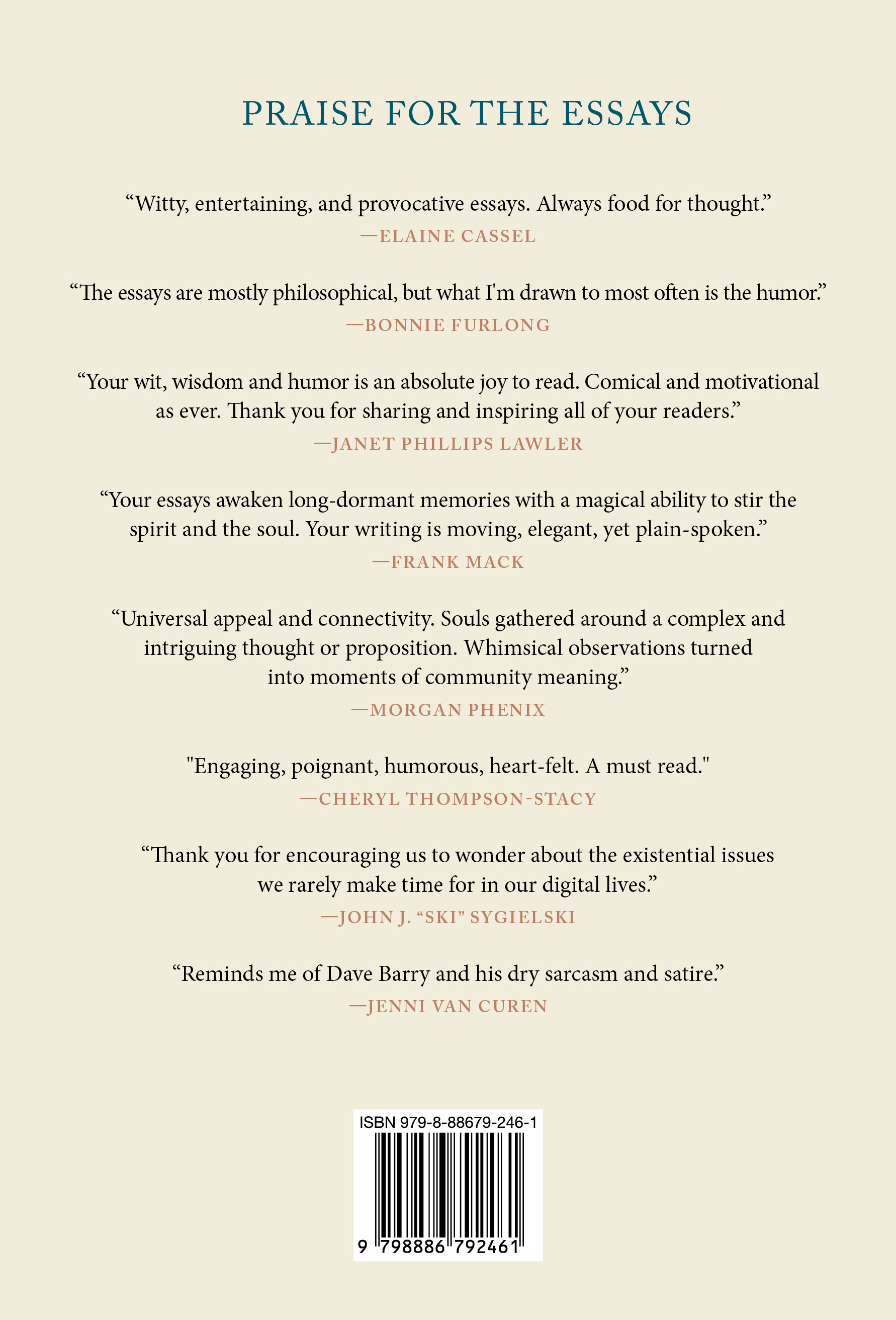
NOW, 57 of those essays, reflecting the best of the best, have been published in a book that is exquisite from cover to cover and every page of the 346 pages in between. It’s available on Amazon or Barnes & Noble, or you can order it from your favorite local bookstore!

TAKE A LOOK AT THE BRILLIANT COVER!

Surely you recognize ME! I’m smackdab in the middle of my bed writing a blog post about foolin’ around with some well-known writers. Mark Twain and Truman Capote are on the floor at the foot of the bed, blowing smoke rings at one another. Imagine! They’ve got some nerve! Acclaimed artist/illustrator Mike Caplanis gets credit for the caricature based on one of the book’s essays, “Foolin’ Around in Bed with Famous (and Not-So-Famous) Writers” (249-53).

WHAT’S THE BOOK ALL ABOUT? See for yourself.

“Fresh and refreshing through and through.” I love it! Other ADVANCE PRAISES grace the dust jacket of the hardcover book.

“A MUST READ” impresses me so much that I just repeated it and made it all caps and all bold! Dayumn! I like it so much that I want to shout it again: “A MUST READ.” (Thank you, Cheryl Thompson-Stacy!)

IN BED: MY YEAR OF FOOLIN’ AROUND is available in hardcover, paperback, and Kindle. I recommend the hardcover. It costs a little more, but it feels so much better than the paperback. What can I say other than there’s something extraordinarily extraordinary about a book that has its own dust jacket!

The publication of this book is an historic and timely solution for every gift-giving occasion that might be coming your way for the rest of the year, if not for the rest of your life. And let me add: may your life be long, healthy, and prosperous and may you keep right on buying copy after copy of IN BED. It’s the perfect gift. Right here. Right now. You do not need to look any further. And while you’re buying multiple copies for gift-giving, remember that IN BED is also the perfect gift for all of your friends … and enemies.

Thank you, DEAR READERS, for all of your support. I have no idea how you found your way into my life, but knowing that you are out there reading my posts strengthens me and uplifts me whenever I need to be strengthened and uplifted.

Time’s a wastin’. ORDER YOUR COPY TODAY on Amazon or Barnes & Noble. Or you can or order it from your favorite local bookstore!

Looking Back on 2022 with Heartfelt Thanks!

“You live life looking forward, you understand life looking backward.”

Søren Kierkegaard (1813-1855; Danish Philosopher, theologican, and cultural critic who had a major impact on existentialism.)

DEAR READERS,

As we enter the last day of 2022, I can’t let the year slip away without seizing the opportunity to thank you from the bottom of my heart!

Writing my weekly posts has anchored me during a year when I needed to be anchored. Knowing that you were out there reading my posts has strengthened me and uplifted me during a year when I needed to be strengthened and uplifted.

Looking back, I am surprised by the results! You might be, too. Let me share.

POSTS: 58

WORDS: 80,921

VIEWS: 6,625

COMMENTS: 422

MOST-VIEWED POSTS:

Oh, No! Sourdough!

What a Way to Live

Spaces and Habits of Famous (and Not-So-Famous) Writers

I’m a Spring Teaser

Two Ways of Looking at the World

LIKES: 269

MOST-LIKED POSTS:

Ten Guaranteed Tips to Increase Blog Traffic | Top-Rated and 100% Unproven!

Fit as a Fiddle: The Inefficient Way

It’s Not a Corset. Don’t Force It.

Take Two | Fit as a Fiddle: The Intentional Way

The Joy of Weeding

The Other Side

Two, Together

The Story of Angel Falls

You, MY DEAR READERS, come from 59 COUNTRIES all around the world. I am in awe.

  • Australia
  • Austria
  • Bangladesh
  • Belize
  • Bhutan
  • Bosnia & Herzegovina
  • Brazil
  • Bulgaria
  • Canada
  • China
  • Czech Republic
  • Denmark
  • Ecuador
  • Egypt
  • France
  • Germany
  • Greece
  • Guatemala
  • Hong Kong SAR China
  • Hungary
  • India
  • Indonesia
  • Ireland
  • Italy
  • Japan
  • Kenya
  • Lithuania
  • Luxembourg
  • Malaysia
  • Mexico
  • Morocco
  • Nepal
  • Netherlands
  • Nigeria
  • Norway
  • Pakistan
  • Philippines
  • Poland
  • Portugal
  • Qatar
  • Romania
  • Russia
  • Saudi Arabia
  • Serbia
  • Singapore
  • Slovenia
  • South Africa
  • South Korea
  • Spain
  • Sri Lanka
  • Swaziland
  • Sweden
  • Switzerland
  • Turkey
  • Turkmenistan
  • Ukraine
  • United Kingdom
  • United States
  • Vietnam

Wouldn’t it be grand if we could reach out, join hands, and celebrate worldwide unity and inclusion, advocated so powerfully in Bob Marley’s “One Love”:

One love, one heart

Let’s get together and feel all right.

Maybe—just maybe—that’s exactly what we’re doing together in our own small way–week by week; post by post–right here in this blog.

I have no idea how you found your way into my life in 2022, but as we welcome 2023, I hope that you will continue to stand by me as we read our way together throughout the New Year!

It’s Not a Corset. Don’t Force It.

Is it a corset
or primal wave?
Don’t try to force it.

–from Elaine Mitchell’s “Form”

Lately, I’ve been thinking a lot about writing. I have no doubt that it’s because I’ve been writing these posts faithfully every week for nearly an entire year. And I have no doubt that it’s also because I’m teaching Creative Writing this semester. Naturally, I spend lots of my time talking with aspiring writers about writing.

In fact, when I met with my students last week, we did two, one-minute reflections.

For the first, we reflected on the joy of writing. Let me share some of their responses:

● Creating my own world.

● Finding words that describe my own feelings.

● Gaining an understanding of my own life.

● Discovering something about my own identity.

● Daydreaming.

● Letting my thoughts spew out.

● Getting it done–the rhythm, the music, the wish, the dream, and the fear.

For the second reflection, we tackled the challenges of writing. Again, let me share:

● Getting started.

● Finding an interesting topic.

● Putting myself into my writing.

● Encouraging my paragraphs to talk to one another.

● Choosing which idea to explore.

● Connecting the beginning, the middle, and the end.

● Accepting my writing as it is.

I had planned a third reflection, but we ran out of time. Here’s what it would have been: discoveries about writing.

For this one, I’ll take the lead, sharing my own ideas, based largely on what I’ve discovered about writing as I wrote my weekly blog posts this year.

By and large, what I’ve discovered has been by way of reminders. To start, writing isn’t easy. It isn’t spontaneous. And it isn’t magical.

Here’s something else that I have rediscovered. Writing is work. It’s hard work. It’s lots of hard work.

Work. Hard work. Lots of hard work. That’s my mantra these days when I’m working with other aspiring writers. I front-load the conversation: get ready for rich, robust, and heavy mental lifting.

At the same time, over the last year I’ve reminded myself–and others–that even though the hard art of writing isn’t magical, it is filled with magical moments.

Let me share some of mine.

Magical Moment. Getting hooked on an idea that makes my world fade away.

Magical Moment.  Letting an idea explode in my mind as magically as Pop Rocks explode in my mouth.

Magical Moment. Focusing on old-soul insights that have come back to me from far, far away and from long, long ago.

Magical Moment. Fooling around with organizing what I’m writing until I get comfy with one structure that pulls me in close and whispers, “Yes. Let’s do it.”

Don’t get too excited by these moments. They are magical. But let me remind you: they are not magic.

And trust me. The next part–the actual writing–has no magic at all. Sometimes, it might not even have magical moments. The actual writing can be grueling, if not downright defeating, especially since first drafts never hit the mark. Never. Mine don’t, at any rate. Sometimes, even my 13th draft doesn’t seem quite right. How’s this for a confession? Sometimes, I’ve gone as high as 22 drafts. Admittedly, the differences between any two drafts are sometimes majorly minor, and the changes will be unknown forever to all except me. Nonetheless, the work of writing–of revising–goes on and on and on.

And writers keep at it. I keep at it, knowing that what I write will never be perfect, but knowing, too, that at some point it’s as good as it’s going to get.

What I have discovered as well is the simple fact that my scholarly writing is in many ways far easier than writing my personal essays like today’s post. My own scholarly work on The Humourist as well as on Mary E. Wilkins Freeman, for example, has singleness of purpose and focus. Easy-peasy, lemon-squeezy.

On the other hand, writing my weekly blog is more challenging, mainly because I don’t focus on the same topic every week. My topics change. As reluctant as I am to admit it, I’ll admit it anyway: I’m never sure from one week to the next exactly what topic will bubble up.

That’s not to say that I don’t have lots of ideas for my posts. I do. I have plenty. In fact, whenever I have an idea for a post, I immediately start a WordPress draft. I give it a working title, and I include as many notes as possible so that when I return, I can glide back into my thinking and writing groove.

Right now, for example, I have 25 drafts in various stages of completion, ranging from “The Power of Showing Up” to “Dating after Twenty-Two” to “Mishaps Make Memories.” I suppose I could also mention “Working Out a Plan” or “A Horrorscopic Week” or “What My Father Saw.” Or I could mention that I might have “My Gardening Attire” finished by next week. I might. But, on the other hand, I might not.

I’m not trying to generate future blog traffic by teasing you with alluring and inviting titles that may or may not morph into posts. Simply put, I have come to the realization that my ideas must germinate in the dark caverns of mindfulness and mindlessness. They must sprout and pop up whenever they are ready for the light of day. No sooner. No later.

All of my tentative topics and all of their accompanying draft notes are simply placeholders. Nothing more.

Yet it occurs to me that maybe they are far more than mere placeholders.

They are talismans. Not to bring me power. Not to bring me luck. But rather to bring me back to the illuminated intensity of the split second when an idea sought refuge within me and pleaded for a some-day home.

What I have discovered, then, is that I need lots and lots of talismans. They are my antidote to the numbness and paralysis that I know fully well will set in if I have no writing options. I don’t write well when my storehouse of options is empty. When that happens, I feel that I have forced myself into the all-too-tight corset of being compelled to write on one topic and one topic only.

On the other hand, when I have many, many topics, one of them might be precisely the one that captures my fancy precisely when my fancy needs to be captured.

It won’t have anything to do with talismanic luck. And it won’t have anything to do with magic.

It will have everything to do with my willingness to let my ideas take their own shape, whatever those shapes might be, without being corseted, without being laced up, and without being forced.

I want my ideas:

● to leave themselves ample space to move around in.

● to do what they want to do.

● to be what they want to be.

It’s really straightforward. My greatest discovery about my own writing is my everlasting need to unlace the corset that constricts my thoughts. It’s my everlasting need to let my ideas breathe and expand freely, whenever and however they wish.