“The first porch is where you find your voice. The second porch is where your voice finds others.” —Poor Brentford Lee (b. 1947. Keeper of two porches, one mountain, one dog, and an inexhaustible supply of things worth saying—none of which he has to say alone anymore, thanks to his partner, Gary.)
Dear Faithful Readers,
You’ve been here with me on the porch since—well, some of you since the very beginning, back when I built it as nothing more than a place where you could pull up a chair and talk with me about the joys, challenges, and discoveries of research. We kept right on doing that from 2012 to 2021 when I decided to make the porch a little more fun by bringing you weekly creative nonfiction essays.
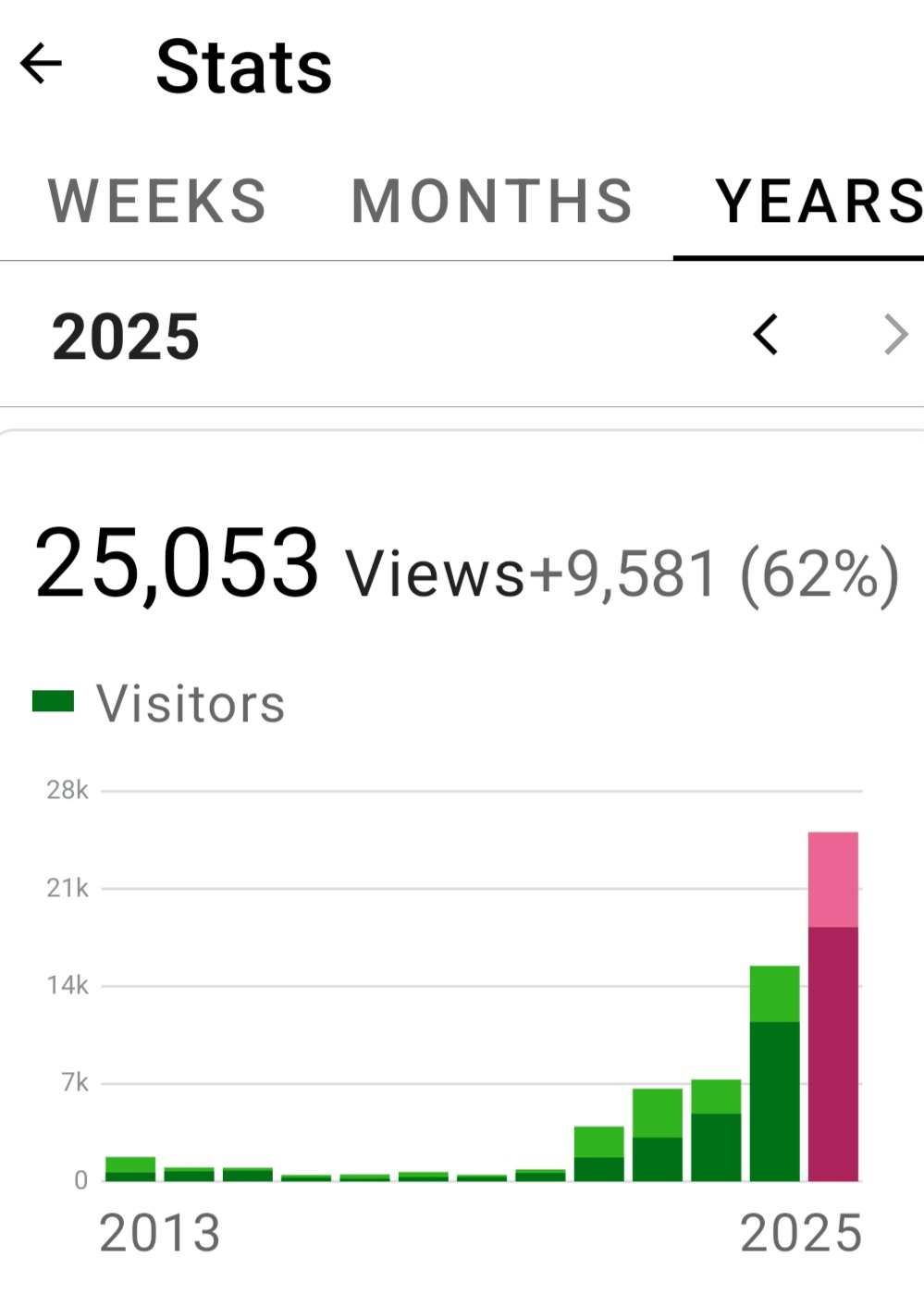
I’m still at it. Nearly 750,000 words later. Yes, you read it right. Foolin’ around in bed every night with ideas and words adds up. I’m spurred on by you, my Dear Readers, whose numbers keep increasing annually! Last year, we shared more than 35,000 views right here on the porch.
But I’ve built a brand-new porch, and I want you to be the first to know about it.
Don’t worry, though. I’m not leaving The Wired Researcher porch. It will remain open virtually forever. Same Monday mornings. Same voice–mine, with Poor Brentford’s voice chiming in from time to time. We’ll both be there, waiting for you.
I just heard someone shout out:
“So, why are you building a new porch? What’s that all about?”
Well, for starters, it has better lighting, and it might just bring in more neighbors for all of us to visit and exchange ideas.
I’m counting on you to check it out. I’ve named the second porch The Kendrick Chronicles.
“Where on earth is this new porch of yours?”
Gracious me! You know that I like to take my time–slow and easy like. In a sec, I’ll give you the link so that you can check it out for yourself. And when you do, go ahead and Subscribe! From that point forward, my essays–ever goldern new one that hits the world, every Monday morning like a neighbor who always brings something worth reading and never overstays his welcome–will find their way directly to your Inbox.
You can find this new porch of mine in Substack. Here’s the link:
“What will I find when I get to this new porch of yours?”
Why, gracious me! You’ll find a comfy chair with your name on it and a handful of your favorite essays with my name on ’em:
● Redbuds of Remembrance
● Learning to Love in New Ways
● I Am Afraid
● Poor Brentford Cleans the Wax Out of His Ears
● Two, Together
● Glimpses of My Mother’s Hands
● The Ghost of Palmyra Church Road
● Truths Half-Told. Letters Half-Burned. A Legacy Waiting to Be Fully Heard.
● Carrying the Bags of Colonial America’s Humourist
And get this. If you subscribe, next week you’ll get an essay about a kitchen disaster beyond belief: “Oh, No! No Sourdough!” And the week after that, “What We Know. What We Believe.” It may be the most complete thing I’ve ever written about who I am and what I believe about what comes next.
So go on now. Pull up a chair. Same voice. Wider porch.
You took me by surprise again this morning. As always, when I awakened, I checked my Fitbit to see how my heart did overnight. Then I checked WordPress to see how my readers were doing.
And there you were. Another thousand views. A quiet jolt to the chart. Numbers climbing when I wasn’t looking.
You’ve been dancing higher and higher since October, when I passed 15,000 and figured I’d reached my high-water mark. I even wrote a piece of thanks back then, thinking I’d said all there was to say. But now here we are—December 11th—and this little corner of the internet has gathered 25,053 views.
I’ve done nothing different. I have no flashy headlines. I have no trending hashtags. I just keep following the same rhythm: writing essays born from memory in a home filled with love. I just keep foolin’ around with words and ideas.
So why now, after all these years?
That question hangs gently in the room with me. It’s not demanding an answer. It’s simply inviting a reflection. Maybe something shifted in the writing. Maybe it’s more expansive. Maybe it’s more lived-in. Maybe it’s a voice carrying a steadier warmth now. Maybe it’s grief that’s softened into grace. Maybe it’s love that arrived not with fanfare, but with a quiet hand stretched out in invitation. Maybe it’s all of those things. Maybe. And add to all those maybes one more. Maybe it’s readers sharing with readers.
Gary, of course, doesn’t ask to be written about. But his presence is here, between the lines, in the patience of a paragraph, the steadiness of tone, the way I’ve learned to let silence do some of the talking.
Ruby, on the other hand, insists on being written about, whether she’s nosing me away from my smartphone or curling up in solidarity as I revise for the twenty-fifth time. She is, as always, the keeper of the tempo, the mistress of the move.
So this isn’t an open letter to public stats. It’s a letter to something deeper. It’s a letter to what it means to keep writing when no one’s watching, and then to wake up and find that someone was.
My essays aren’t meant to dazzle. And I know: they don’t. They’re just small acts of holding up the light, one weekly reflection at a time. The fact that they’re being read, now more than ever, tells me something I didn’t expect: quiet honesty still finds its way.
Thank you, Sudden Surge, for reminding me that patience has its own reward, that consistency is a kind of faith, and that somewhere out there, readers are still pausing to linger with a slow essay from the mountain.
I don’t know what this upturn means, or where it leads. But I do know I’ll keep showing up with my smartphone in hand and love at my side.
“Somewhere, an editor is waiting to fall in love with what I’ve written. That’s not ego. That’s faith.”
—Brent L. Kendrick (b. 1947). Blogger, literary scholar, creative nonfiction writer (who loves to fool around in bed), and once-upon-a-time professor who splits his reinvention time between restoring lost voices of American literature and discovering new ways to live, love, laugh, and write with meaning. He’s been sighted in the mountains of Virginia. (Authorial aside to all editors: Sit up and take notice—because if you snooze, you lose. This dude’s relatively cheap, cleans up well, once got compared to Garrison Keillor by someone in Tennessee, and yes—he’ll bake sourdough and seduce the annotations, headnotes, footnotes, and endnotes into (mis)behaving.)
Stats?
Oh. Sorry. I don’t mean my vitals. Though I do check them daily. Why not? My Fitbit provides it all, right on my wrist. Heart rate. Breathing rate. Temp. Heart rate variability. Blood oxygenation. Stress. So, yeah. I check those first thing every morning when I wake up.
I meant another set of stats that matter to me.
My WordPress stats.
I like to know how many people are checking out my blog on any given day.
I like to know what countries they’re from.
I especially like to know what posts they’re reading. That info lets me know what’shot and what’snot. Every now and then, I lean in and almost let myself believe that what’shot mightjustbeme. I do. Really. I do. Especially when I see hits on my AboutMe or AboutMyBlog or ContactMe pages. Like the time one lone reader from Lithuania clicked through twelve posts in an hour—and paused on “About Me.” I remember thinking:
“This is it. This is my moment.”
I guess I figure that if someone is going to all the trouble of background snooping, they’re probably on the verge of being the genius who goes down in history as the one who discovered me, thus ensuring that I go down neither unfootnoted nor unnoted.
Me? Discovered?
Don’t scoff! Stranger things have happened, you know. I mean, I wouldn’t be the first writer catapulted into history and literary fame by an editor with deep belief and keen vision.
One writer who has just been catapulted into history comes to mind immediately.
Alexander Gordon (c. 1692-1754).
Did I just hear you gasp:
“Who’s that?”
Surely, I did not, for if you don’t know who he is, then you must not be the faithful follower I know you to be.
If you’re following me–my blog, I should add for your clarity and my protection–then you know that I recently finished a book about Alexander Gordon, the long-forgotten colonial satirist who published his literary works pseudonymously in The South-Carolina Gazette in 1753-54 under the name The Humourist, and then—like so many voices history forgets—he vanished. No one knew who he was. One scholar asked. But he didn’t bother to find out. No one else did, either. Then I came along. I had a lot of curiosity. I had a tolerance for long hours in dusty archives. Eventually, I had a hunch, and I discovered a clue.
So don’t tell me that a writer getting discovered is a myth. I just did that very thing with Alexander Gordon. Guess what else? It occurs to me that he now stands as the first American writer to be thrust by an editor into fame.
Yes. That’s true and, I’ll make that claim. Right here. Right now.
Someone just upbraided me:
“Excuse me. You’re wrong. Anne Bradstreet was the first.”
Being upbraided is something up with which I will not put.
“So ekscuuuuuuuuuuse meeeeee! You’re wrong.”
Here’s why.
I know. I know. You’re probably thinking about her one and only book The Tenth Muse Lately Sprung Up in America. In case you don’t know the story surrounding its 1650 publication, it goes like this. Her brother-in-law John Woodbridge spirited her manuscript off to England and published it behind her back, unbeknownst to her.
Bradstreet herself seems to back up that claim, especially in her “The Author to Her Book” offering up her well-known and oft-quoted lament:
Thou ill-form’d offspring of my feeble brain, Who after birth didst by my side remain, Till snatched from thence by friends, less wise than true, Who thee abroad, expos’d to publick view, Made thee in raggs, halting to th’ press to trudge, Where errors were not lessened (all may judg).
How convenient for Bradstreet. Her posturing created a persona of Puritan modesty and aversion to recognition as compelling as the narrative of her “stolen” book of poetry—the very tale that helped catapult her into public view.
But here’s the thing. Actually, two things. First, Woodbridge was not her editor. Second, despite the storybook notion that Bradstreet considered her womanly role subordinate to the role of Puritan men, scholars maintain that it was “a propaganda campaign” launched by Bradstreet and her family. I’m thinking particularly of Charlotte Gordon’s “Humble Assertions: The True Story of Anne Bradstreet’s Publication of The Tenth Muse,” maintaining that Bradstreet was not surprised by the publication of her book and that, in fact, she was actively involved in its publication.
So there! Bradstreet does not beat Alexander Gordon when it comes to the first American writer thrust into fame by an editor.
But let me not digress from the claim that I am making. Think as long and as hard as you will about American writers between the publication of The Tenth Muse and the publication of the Humourist essays, and if you can come up with someone else who can seize the claim, reach out to me, and I’ll blog it. Better still, reach out to me, and we’ll co-blog it.
But I won’t hold my breath. The Humourist remained pseudonymous from his first November 26, 1753, essay through his final notice on April 9, 1754, known but to God. That is until I came along and solved the greatest literary mystery in perhaps all of American literature. I unmasked The Humourist and revealed him to be none other than Alexander Gordon, clerk of His Majesty’s Council in South Carolina.
Now, through my dogged determination, my literary sleuthing, and my scholarly editing, Gordon will be known forever more and throughout the world as the acclaimed author of the Humourist essays, among the liveliest and most original voices in Colonial American Literature, right up there and on par with Ben Franklin’s Silence Dogood essays.
Needless to say, there have been other American writers who were brought into public view by editors–all boasting just a smidgen of modesty, of course, comparable to mine–who knew talent when they saw it.
I’m thinking of my lady Mary E. Wilkins Freeman and my book The Infant Sphinx: Collected Letters of Mary E. Wilkins Freeman. Although I edited the letters, provided thorough annotations, and wrote biographical introductions to the book itself and each of its five sections, I’m not the editor who discovered her on her way to literary stardom.
Credit for that goes to someone else. Here’s the brief backstory. Freeman started her career as a children’s writer but then extended her literary efforts into the realm of adult short stories. Lippincott’s, Century, and the Atlantic rejected her “Two Old Lovers.” Then she sent it to Mary Louise Booth, editor of Harper’s Bazar, who read the story three different times during three different moods, as was her custom, and accepted it for publication in the March 31, 1883, issue. From that point forward, Freeman wrote regularly for the Harper’s Bazar and Harper’s Monthly, and, in fact, Harper & Brothers became her regular publisher.
In a way, then, it was Mary Louise Booth’s editorial acumen that escorted Freeman into the international literary acclaim she continues to enjoy even today, though in fairness to Freeman, her talent was such that it would have found its way into the spotlight in one way or another. Talent will always out.
I could go on and on with this litany of writers who were discovered by editors, sometimes against the odds. I’m tempted to say that I won’t, but on second thought, I think that I will share with you snippets of some paired writers and editors who come to mind.
I’ll start with Flannery O’Connor, so well known for her bold and unconventional Southern Gothic voice. It was Robert Giroux, an editor at Harcourt who believed in her debut novel, Wise Blood, and guided it into print—despite its eccentric style and religious overtones.
Or what about Jack Kerouac? His On the Road was originally a 120-foot scroll—raw, unfiltered, and “unpublishable.” But Viking Press editor Malcolm Cowley saw gold and helped shape it into the beat-generation classic it became.
Then we’ve got a postal worker with a cult following in underground poetry circles: Charles Bukowski. He caught the attention of John Martin at Black Sparrow Press. Martin offered him a year’s salary to quit his job and write full time. It was the start of a prolific and gritty career.
No doubt you know the minimalist voice of Raymond Carver. His works might have stayed buried had it not been for Gordon Lish at Esquire. Lish gave Carver his break, though not without some brutal edits.
Closer to me and my situation in many ways is Frank McCourt, who, as a retired teacher in his 60s, wrote Angela’s Ashes. Nan Graham at Scribner wept when she read it and championed it into publication. Oh. My. It won the Pulitzer. It sold millions. My kingdom for a Nan.
And if McCourt was close to me occupationally—educator turned writer; I, of course, am still living according to most recent news reports—then I have to mention Jeanette Walls, whose roots are close to mine since we’re both West Virginians. Her memoir The Glass Castle was going nowhere fast until editor Deb Futter read it and saw its power. Her support turned it into a bestseller and reshaped what memoir could be.
And last but perhaps most important to the hope that I carry (like a well-worn talisman) that an editor will discover me and, in a poof, turn me into star dust is Andy Weir. He self-published his The Martian chapter by chapter online. Julian Pavia at Crown Publishing read it, loved it, and bought it. The novel became a bestseller and hit film.
Oh. My. God. I’m doing exactly what Weir did. I’m publishing all of my Foolin’ Around in Bedessays right here, week by week. Once again, my kingdom for a Pavia unless a Nan has already catapulted my bed into fame.
I could share other snippets, but I confess. Right now, I’m in a pickle. But don’t worry. I have a way out. It will work for me, and, as you are about to see, it will work for you too.
I’m going to do what Margaret Atwood did in her story “Happy Endings.” I’m going to give you options.
A. What happens next? Don’t be so impatient. History is based on facts and evidence. Come back for the ending when the ending is written.
B. What happens next? DearReader, you know exactly what comes next. Yours truly–Brent(ford) L(ee) Kendrick–aka TheWiredResearcher—keeps right on doing what he’s been doing with his writing and his research. And he keeps right on hoping that an editor–a believer—is out there, poised and ready to do for him what he’s just done for Alexander Gordon.
Not just this blog. Not just my Foolin’ Around in Bed essays. But Gordon. Freeman. Years of words, research, story, and sweat. A whole body of work—waiting for the right editor/reader to say: “This one. This voice.”
“Which ending do you like?” someone queried.
I much prefer B. After all, keepin’ on keepin’ on is the road I’m traveling. Even if it is the one less traveled by, it makes all the difference. Especially when it leads past the stats and toward the stars. (Whew! What a relief. I figured out a way to bring Robert Frost into this post. It’s been too long–far too long.)
Besides, putting aside my own preference for an ending, I have no doubt in the world that right now, an editor is out there who believes in me, who might be scrolling through my “About Me,” pausing over a sentence, clicking “Contact Me,” and thinking:
“Thisone. Thisvoice.”
OMG. I just felt the earth shift.
I did. I really did.
Did you?
No? You didn’t?
Don’t worry. Be happy.Somewhere, right now, someone’s opening a drawer, clicking a link, or flipping a page—and everything’s about to begin.
The knock at the door was as gentle as any I had ever heard before, yet it frightened me with its persistence. After all, it was the middle of the night, and I rarely have visitors here on my mountain, and when I do, I anticipate their arrival and meet them in the walkway.
After a while, my curiosity overcame my fear. I went to the kitchen door and opened it. There, not on all fours, but standing as upright and erect as any human I had ever seen was my dog Hazel.
Lit by the spill of the floodlights—like some mythic creature caught mid-transformation—Hazel looked less like a pet and more like a story I hadn’t yet written: fifty-nine pounds of sinewy poise, all confidence and oversized paws planted with purpose. Her coat shimmered with its reddish golden shades of ember and mischief—Husky in spirit, Shepherd in legacy, and wholly herself.
Her tail curled tight; her head slightly tilted—alert, noble, a whisper of the wild. Her ears twitched once as if tuning in to something I would never hear. And her eyes? They saw, as if piercing through the darkness that found me standing there.
She wasn’t waiting. She was watching. And in that moment, so was I—awed by her stillness, her strength, and a quiet reminder of something I had yet to remember.
And, as naturally as anything you would never expect a dog to say, she looked at me:
“I’m just a monkey. I’m a howler.”
Then I awakened. Amused. Grinning. Lying there in bed. Musing. Hazel. Fifteen years of fierce love, muddy pawprints, and conversations that needed no translation, except in dreams.
As I lay there, I realized the dream’s significance. In a way, it was the oldest kind of magic: a name spoken often comes true.
For years and years and years, Hazel’s bark reminded me of a monkey. Not just any monkey—a howler. One of those wild-voiced beings that belt their souls into the sky from treetop pulpits at dawn. Her bark had that same deep, echoing wildness—less a request than a proclamation.
Some dogs bark. Hazel declared.
And so it came to be. I would say to her over and over again:
“You’re just a monkey! You’re a howler.”
She didn’t seem offended. If anything, I think she took it as a compliment. Obviously, Hazel was not a monkey, nor could she become one. Except in my dream.
But here’s the thing:
She became what I had named her.
And that truth deserves repeating:
She became what I had named her.
That dream set me to thinking long and hard about what it means to name.
To Name.
I started wondering when the phrase was first used and in what context. And if you know me as I know you do, you know that I headed off to the Oxford English Dictionary (OED) where I discovered that it was first used in Old English:
“[Hælend] gefregn hine huætd ðe tonoma is? & cuæð to him here tonoma me is, forðon monig we sindon” (Lindisfarne Gospels Mark v. 9).
Right! That doesn’t look like English to you either, does it? Let’s look at the translation.
“[The Savior] asked him, ‘What is your name?’ And he said to him, ‘My name is Legion, for we are many.'”
It’s a well-known moment in the Gospels—Jesus (the Hælend) encountering a man possessed by demons. The phrase “My name is Legion, for we are many” comes from Mark 5:9 (and Luke 8:30), rendered above in Old English.
This is an incredible example of what happens when we name something. The name Legion does far more than identify. It reveals nature, condition, and moral alignment. When Jesus asks for a name, he isn’t just asking for a label—he’s uncloaking the essence of what possesses the man.
Did you catch that? A name reveals essence.
And I ask you–right here, right now, as I am about to do–to start thinking about names swirling around in your head. Maybe the names associated with you: the names that others call you.
As you reflect, let me share with you the significance of the names swirling around in my head.
The Names that Others Called Me.
The first that I remember was not my given name—Brentford Lee. Rather, it was LittleMisterSunshine. My mother gave me that name because—as she loved to tell others, including me–I was born smiling and radiating happiness. Now, 77 years later? Others say that I’m still smiling. Still radiating happiness.
Clearly, my mother saw the essence of who I am and named it.
Or how’s this? My siblings, for as far back as I can remember, had another way of naming me. They always called me different.
“You don’t look like us.
“You don’t talk like us.
“You don’t walk like us.
“You’re different.“
Truth be told, I was different, and I knew it. Ironically and for my own well-being, when they called me different, I leaned into it as compliment rather than condemnation.
It didn’t take me long, however, until I came to feel and understand the word they weren’t naming, the word that others, later, named. Queer. Either way–and even though I continued to see myself as special, a way of looking at myself that would stay with me for a lifetime, even now–it was a label of notquite, a soft-spokenexile and an unspokenache.
Clearly, my siblings and others saw my essence—and named it.
And I ask you—right here, right now, as I am about to do—to think about the names you’ve claimed for yourself. Not the ones others gave you. The ones you whispered into being. The ones that changed how you stood in the world.
As you reflect, let me share with you the significance of the names swirling around in my head.
The Names that I Called Myself.
The first that I remember was when I was in the third grade. Professor. Can you imagine anything more outlandish than that coming from a coal-camp kid in a town with not one professor? I have no idea where I had heard the word or came to know it. But I knew that in order to be a professor–in order to teach in a college or university—I would have to earn the highest degree conferred in my field. I picked English because I believed—no, I knew—that words mattered. Yes, words could wound. I had learned firsthand how they could cut to the soul. But I also knew something else. Words could heal. Words could save. Words could give wings.
I earned my Ph.D. in literature. I became a college professor—”full” no less. And when students called me Dr. Kendrick at the institutions where I taught–the University of South Carolina, the Library of Congress, and Laurel Ridge Community College–in deference to my degree, I always suggested Professor in deference to the earliest name I called myself–the name that captured my essence.
More recently, I call myself Reinventor. I came up with that name at the start of 2023–after my 23-year career at Laurel Ridge. Most folks retire. Not me. I’ve never liked the word—because right there in the middle of retired is tired. Trust me. I ain’t no ways tired. I have more books to write–far more than the five I’ve already published since 2023. I have more life to live than the one I’ve lived. I have more love to give than the love I’ve given. My colleagues and friends may call themselves retired—and that’s fine. But me? I’ll keep saying I’m a reinventor. It’s not just who I am now. It’s who I’m still becoming.
These days, I call myself Writer. I’ve always been one—researching, digging, unraveling stories. But since reinventing myself, being a writer has taken on a new, truer shape. I write in bed every night, publish my blog posts every Monday morning, and every year, I bring forth a new book of creative nonfiction essays, stories that bear my name and my soul.
I’ve branched out, too—seeing through to publication my Unmasking The Humourist: Alexander Gordon’s Lost Essays of Colonial Charleston, South Carolina and immersing myself a two-volume biography of Mary E. Wilkins Freeman, a labor of love and legacy.
Yes, right now, the name I call myself is Writer. It captures the essence of who I am— what I do, what I am becoming, and who I cannot stop being.
As we continue reflecting on the power of names, I ask you—right here, right now, as I am about to do—to think about names that wound others, perhaps forever or perhaps giving them a transformative moment to heal.
The Names that Wound or Heal.
The first that comes to mind is a word in Countee Cullen’s “Incident.” It’s painful—inflicted on an innocent child, standing at the edge of razzle-dazzle wonder.
Once riding in old Baltimore, Heart-filled, head-filled with glee, I saw a Baltimorean Keep looking straight at me.
Now I was eight and very small, And he was no whit bigger, And so I smiled, but he poked out His tongue and called me, “Nigger.”
I saw the whole of Baltimore From May until December: Of all the things that happened there That’s all that I remember.
What the speaker in the poem remembers being called Nigger. One word. It shattered an eight-year-old’s heart—and likely left a lifetime crack.
It’s haunting—how a single word, spoken with cruelty, can eclipse everything else.
I’ve known that kind of eclipse, too. Different.Queer.Faggot.Fag. Words I never asked for—words that crawled in and clung, no matter how often I repeated what my mother had taught me:
“Sticks and stones may break my bones, but words can never hurt me.”
Of course, they hurt, but I rose above the pain, smoothing over my soul like a balm the names that lifted me—Little Mister Sunshine, and the one I whispered in those early, tender years—Professor. But here’s the strange and saving truth: I didn’t start to heal until I explicitly named the sexual dimension of myself. Ironically, I had to declare it publicly before I could begin to claim the healing I didn’t yet realize I needed. I had to say gay—not in a whisper, not in code, but openly. Aloud. Loud. In front of the world.
Gay.
Only then could I begin to gather all the pieces I’d hidden away. The softness. The brilliance. The full shape of who I was—who I had always been. One word. My word. Spoken not with shame, but with quiet certainty. And for the first time, I didn’t flinch. I stood. Proud. With that naming, I finally gave myself permission to shine—fully and fiercely, without apology.
I have one more request–one more “ask” of you–as we grapple with what might just be the most powerful part of naming. I ask you—right here, right now, as I am about to do—what are the names we whisper when we reach for meaning? The names we murmur in awe, in need, in love? The names we give the force that calls us?
The Names We Call the Force that Calls.
Whenever I think that thought–and the older I get, the more often I think it–I recall Bill Gaither’s interview with acclaimed Gospel singer Jessy Dixon–one of my favorites. Gaither was bold and direct as the interview neared its end:
“When your time comes—as it will surely come for each of us—what do you want people to remember about you?”
After a soft pause, the answer came with quiet certainty:
“Tell them I am redeemed.”
In those five words, Jessy Dixon named–and claimed–the essence of his destiny.
Redeemed.
I can’t help but wonder: what name rises up in you when you reach for meaning? God? Creator? Oversoul? Spirit? Light? Love? Source? Mystery?
And in my wonder, I’m mindful that names like those are what we call the ungraspable—the presence that nudges us forward, the light that finds us when we didn’t even know we were lost. We reach for names when we reach for meaning. And whatever we call it—it calls us, too.
Whatever name you use, My Dear Reader— whoever you are, wherever you are:
Say it loud and clear.
Speak it like it matters— because it does.
Speak it like it carries the full weight of your becoming— because it does.
Let the world see the essence of who you are.
Name it— knowing that names have power.
Remember: you are enough— not despite all the names you carry, but because of them.
You are every name you’ve claimed and every name you have yet to whisper into being.
And when the time comes— I hope you’ll speak your name as boldly as I speak mine.
Let others know: their names can never hurt you.
But your name? It roots you deep in everything that matters— your truth, your becoming, your essence.
“Nature does not hurry, yet everything is accomplished.”
—Lao Tzu (6th century BCE. Founder of Taoism. His teachings focus on harmony with nature, patience in becoming, and the quiet power of letting life unfold in its own time.)
Every time I walked to my Jeep and looked toward the forest’s edge, I chuckled. Smack dab in front of me was a contraption the likes of which I had never seen in my life. Actually, I made it and even gave it a name. The Rust Spa.
“Say whaaaaat?” someone just rasped.
Yes. The Rust Spa. It didn’t take me long to come up with the idea. It works so well that I may apply for a patent and sell it to US Steel, the company that owns the trademark for Corten. You may know it as COR-TEN.
Either way–and rather ironically as you will discover–the COR stands for COrrosion Resistance and the TEN stands for TENsile strength. Corten is well-known for aging gracefully and creating a deep, natural tone as “the thickened oxide forms.” For me, that translates to aging gracefully as plain ole rust appears, and I actually love the deep rich natural brownish-red tone that metal takes on over time.
That’s exactly why I bought myself a Corten planter–for its trademark rusty patina. Of course, I realized when I bought it, that rusting would take time.
I knew it would take a long, long time when the planter arrived, and I opened the box. Behold! Sleek. Clean. Almost smug in its shine. Smooth bare metal, cool to the touch, untouched by time. No rust, no streaks, no signs of surrender. Just raw, industrial silver. It was so pristine it practically glinted in the morning sun, as if daring me to try to change it.
Change it, however, I would, and I knew my resolve from the start. In a bottle, I mixed equal parts of white vinegar and hydrogen peroxide with one tablespoon of salt per cup of liquid. Then I positioned the Corten planter on a stump near the forest’s edge, and every three hours or so, I sprayed it evenly like a soft mist of time.
After just a few applications, the raw steel started to shift—deep ochre streaks rippled down the surface, gathering in drips and blooms that caught the light like burnished velvet. The edges darkened, the face mottled, and the rust arrived quietly.
But I was eager for a little more fanfare. In that moment–and let history take note–I came up with the idea that will ensure my infamy: The Rust Spa. I wanted to speed up the alchemy. Easy peasy. I misted the planter with my magic spray of time. I put it inside a black yard bag to trap heat and moisture, both ideal for rust formation. Then, to keep it all in place, I inverted the delivery box and placed it on top. Voila! The Rust Spa.
The Rust Spa worked its quiet magic. When I disrobed the planter, it sat proudly on its stump throne, no longer silver and self-conscious, but cloaked in a deep, burnished rust. Its warm, mottled patina caught the light in uneven streaks, each drip and blush a quiet testament to time, to weather, to letting go. It no longer shouted; it hummed. And in that stillness, it held a beauty—neither flashy nor fresh but seasoned and settled. With a coat of boiled linseed oil, I sealed the patina in place, locking in that rich, rusty finish like a photograph of time itself.
Now, locked in time, it graces my deck in the middle of a rustic, wrought-iron table with stone top.
It’s there in all my comings and goings, and every time I cast admiring glances in its direction, I cast backward glances to my own life, to all the times when I wished to be older so that I could experience sooner all the things that I would experience later on at the appointed time.
When I was eleven and twelve, I was eager to be a teenager, so I could do the “cool stuff.” Looking back, I’m not certain what the “cool stuff” was. We didn’t have a car. We didn’t have a telephone. We had a TV, but why would I stay up late? For what? As for choices, I was known for making my own and for making them my way. Still, I wanted to fast forward my life. I wanted my own Rust Spa.
After I reached my teenage years, I was eager to be sixteen. Even though we didn’t have a family car, my sister and her husband lived next door. Judy taught me how to drive, and I thought that I had arrived when I got my driver’s license. I’m not sure why. I suppose I dreamt of driving off into the sunset with the gay date that I didn’t have in the Chevy that I didn’t own. Still, I wanted to fast forward my life. I wanted my own Rust Spa.
Then, of course, I was so eager to be eighteen, so I could get away from all the limitations of my home, my town, and my place. I did. I went to college in fast pursuit of me, myself, more authentic than the one I wasn’t really able to be in my home, my town, and my place. How ironic that I always went back on holidays and breaks. Still, I wanted to fast forward my life. I wanted my own Rust Spa.
With my degree in hand, I was eager to start climbing the rungs of my career ladder. That’s just what I did, and it ended up being a twofer. I landed a position at The Library of Congress, at home in the place with all of the books. And I found myself living on Capitol Hill, at home with me as a gay guy, realizing that I wasn’t alone. Still, I wanted to fast forward my life to a place where I could learn more. I wanted my own Rust Spa.
The place turned out to be the University of South Carolina in Columbia, where I earned my doctor’s degree in philosophy and became an expert in American Literature, British Literature, Handpress Bibliography, and, more important, where I learned that an education softens character and keeps it from being cruel. Still, I wanted to fast forward my life to a place where I had been before: home. I wanted my own Rust Spa.
I circled back home to DC and the Library of Congress. A place of emotional grounding where I felt whole, safe, and—authentic. A place where I sensed spiritual and intellectual belonging. A place where I could elevate self-acceptance from fleeting to permanent. A place where I could wrap my arms around all with all that my mother taught me as a child about diversity, equity, and inclusion and, at the same time, widen my embrace to include gender identity and sexual orientation. A place where, through the power of my pen, I soared to heights higher than I ever dreamt that words could fly. Still, I was eager to be what I had dreamt of being since the third grade: a college English professor. I wanted my own Rust Spa.
Laurel Ridge Community College opened the door, and the dream was fulfilled. Imagine! Me–a professor. A desire to stretch my students helped me stand on tiptoe looking at the bright futures of more than 7,000 students for twenty-three years. And beyond fulfilling the professional dream was realizing another one. Falling in love and exchanging wedding rings. Two men living their lives openly. Proud. Explanations? None. The happiness of our twenty-year love outlives Allen’s unexpected death. Still, I was eager to write my final chapters. I wanted my own Rust Spa.
I’m writing them now as one more part of Reinvention. Ask all who know me. I did not reTIRE because I ain’t no ways tired. In fact, I’ve been reinventing myself forever, with every twist and turn of my journey. This most recent started in 2023, and it’s turning out to be one of the most creative and productive times of my life. Five published books with others in progress. Speaking engagements several times a year, including a few that showcase not only my hopes for AI to save us from ourselves but also my hopes for online dating to spirit another Mr. Right my way so that we can co-author the closing chapters together–his, mine, ours.
And here’s where I start to chuckle again. My Corten planter had absolutely nothing to do with achieving its exquisite and inexplicable patina. I did it by speeding up the process in my Rust Spa. I kept applying my mist of time until it achieved the look that I wanted. Then, I sealed it for all eternity.
And so it is with me. Despite all the times down through the years when I wished to be older so that I could experience sooner all the things that I would experience later on at the appointed time, I could do little more than wish and dream.
In reality, I had no more control over achieving my aged patina than my planter had. It’s been a journey filled with yearnings. To arrive. To become.
In reality, every time I was eager to be “somewhere next,” I had to wait on time to take me there.
In reality, I can no more see my finish than my planter can see its.
Yet I know that it’s seasoned.
Yet I know that it’s settled.
Yet I know that it’s not finished.
Still, of this much I am certain. When the appointed time comes, soft and magical mists will seal in place patinaed perfection.
“Holding a book in your hands is like holding another human being.“
—Leah Price (b. 1970. Literary scholar and historian of the book, known for her work on how and why we read across time and format.)
Well, this was unexpected—in the best possible way.
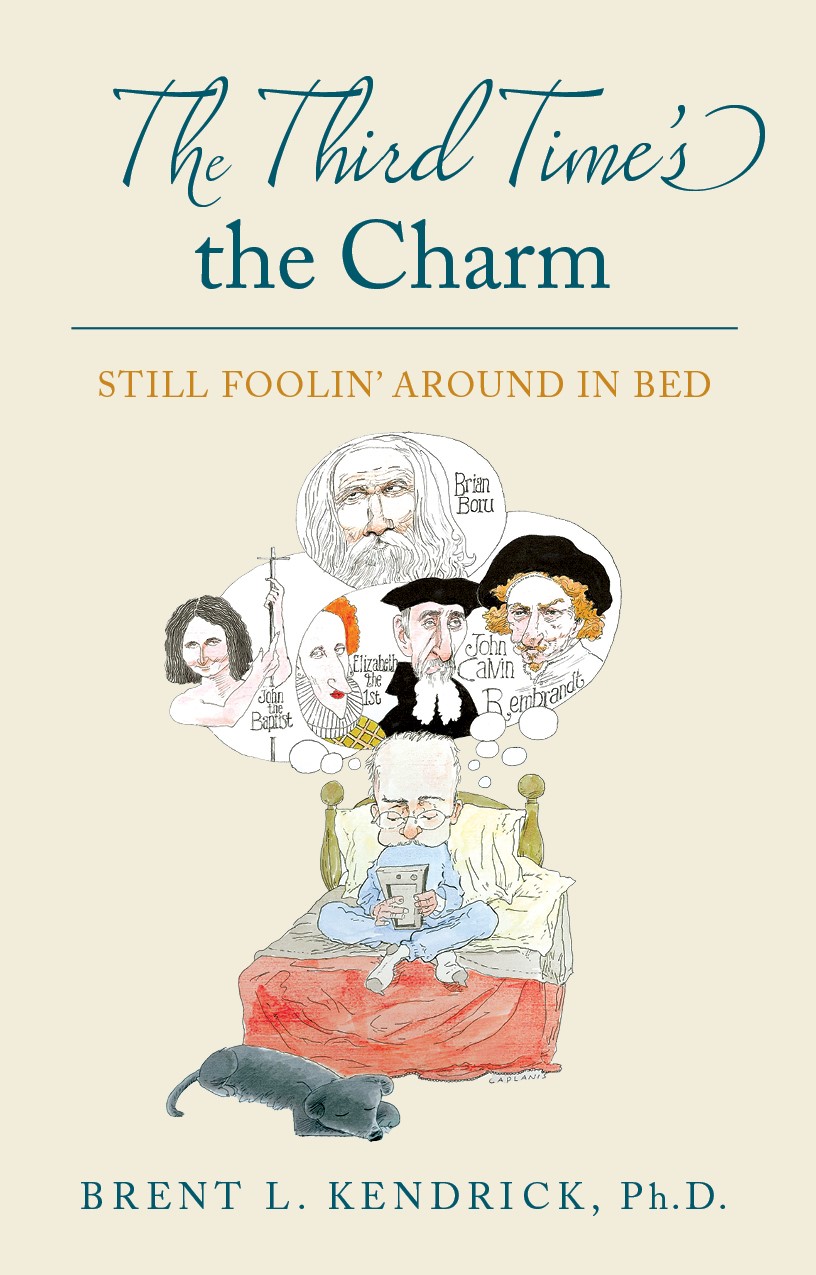
The paperback edition of The Third Time’s the Charm: Still Foolin’ Around in Bed just became available—much earlier than planned! I was already celebrating the Kindle release today, and now, here comes the paperback joining the party.
So whether you’re a digital reader who likes to swipe beneath the covers, or someone who prefers the feel of a real book in hand, you now have options. The hardcover (with its fabulous dust jacket) is still on the way—but today, I’m just enjoying this double dose of charm.
This collection gathers 440 pages of essays written, as always, In Bed—thoughtful, humorous, grounded, and a little mischievous. If you decide to dive in, I hope it keeps you company, makes you smile, and maybe even nudges a memory or two of your own.
P.S. If you enjoy it, I’d be grateful if you’d leave a review. A few kind words go a long way in helping others discover this little book of big heart.
–Elizabeth Gilbert (b. 1969. American author best known for her memoir Eat, Pray, Love, which became a global bestseller and cultural phenomenon. Her work blends introspection, humor, and an embrace of life’s messiness—much like the spirit behind my modest The Third Time’s the Charm.)
Guess what arrived in the mail today?
(Hint: it isn’t another gardening catalog—though those are always welcome at my house.)
It’s the printed proof of my next book, The Third Time’s the Charm. At 440 pages, it’s a whopper! This brand-new collection of personal essays is drawn from my The Wired Researcher Series. Today, I’m delighted to share the cover art with you. Once again, the art is by acclaimed caricaturist Mike Caplanis. Although he was inspired by the essay “What If I’m Not Who You Think I Am?”, the book’s cover captures the spirit of this collection perfectly—thoughtful, mischievous, and comfortably tucked between the sheets.
This book is close to my heart. It’s a gathering of essays written—yes, literally, as you know already—in bed, where I do my most creative thinking and, often, my most honest writing. I hope these pieces reflect a voice that’s warm, a little witty, deeply rooted in everyday life, and shaped by the rhythms of memory, nature, and reflection.
William Faulkner once referred to his childhood landscape as “a postage stamp of native soil,” and in this collection, I’ve claimed one of my own. These essays rise from the soil that grounds me—Appalachian roots, coal camp memories, gardening, grief, and joy—and reach toward readers everywhere. I hope these pieces help you discover something true in your own story, too.
The book will be available very soon—just a few weeks away. For now, consider this a soft unveiling and a warm invitation. I’ll share more details soon, including where and how to get your copy. Until then, feel free to admire the cover, fluff your pillows, and prepare to join me—in spirit and in story—In Bed.
P.S. If you’d like to be among the first to know when the book is available, keep an eye here—or better yet, follow me if you’re not doing so already.
“The universal does not attract us until housed in an individual.”
—Ralph Waldo Emerson (1803–1882; American essayist, lecturer, philosopher, and poet who led the Transcendentalist movement of the mid-19th century. Known for his influential essays including Self-Reliance and The Over-Soul.)
Memoirists writers are shamelessly self-centered, and I ought to know. I’m one of ’em. And of course, I know that you really want to know why I used ’em instead of them.
You do want to know, don’t you? You don’t?
Well, this is where things start to get dicey, because I’m going to tell you anyway.
I chose ’em instead of them because the former seemed more casual and playful and, in my mind, it makes me feel comfortable bashing the hell out of ’em since I’m bashing the hell out of myself at the same time. Now you know.
Aren’t you glad that I told you? You’re not?
No problem. Like I said. We’re shamelessly self-centered.
Now that I’ve cleared the air about that one teensy-weensy word choice–it was a choice, of course, though I’m not sure ’em should count as a word–let me tell you how the title of today’s post bullied its way to the top.
You do want to know, don’t you? You don’t?
Well, I’m betting that you know exactly what’s coming next. You’re right. I’m going to tell you anyway. Like I said. We’re shamelessly self-centered.
Originally, today’s post was titled “An Apologia for Memoirists.” Clever, no? I thought so, too, despite the way the word apologia looks. It may look like an apology, but it is not an apology at all. Aucontraire. It is a staunch defense of something.
Let me give you an example of an old and famous apologia. I’m thinking of Plato’s Apologia Socratis, the legal self-defense that Socrates spoke at his own trial for impiety and corruption. He was defending himself against the charges of corrupting the youth and of not believing in acknowledged and accepted gods.
After thinking about that example, I decided that apologia was a poor word choice for inclusion in the title of today’s post. As I have just demonstrated, its meaning is easily misconstrued. Beyond that, its pronunciation is not easy either.
Is it “a–puh-low-jee–uh?”
or
Is it “a–puh–low-jee-uh?”
Damned if I know. And if I don’t know how to pronounce a word, I’ll be damned if I’m going to use it.
So, in a touch or two on my Smartphone, I struck right through AnApologia and replaced it with two words that are easily pronounced and readily understood: InDefense.
There. I’ve straightened out Apologia. Now, let me explain why I scrapped Memoirists. I suppose any reader who knows what a memoir is would know–or quickly deduce– that a memoirist is “a person who writes memoirs.” Don’t you detest circular definitions like that? I do. But you can’t blame me for it! Blame dictionary.com. That’s where the definition came from, and that’s why I put it in quotes. I may go ’round in circles, but I would never give you a circular definition. I’d spit it out exactly as it is. A memoirist is someone like me who takes the raw material of their life—its triumphs, trials, quirks, and quiet moments—and shapes it into a narrative that not only reflects their truth but connects with the truths of others.
That definition is mine, and I like it. However, I scrapped Memoirists for an entirely different reason. If you think pronouncing Memoir is an exercise in tongue-mouth calisthenics, try pronouncing Memoirists:
● mem-wahr-ists
or
● mem-wawr-ists
Well, maybe it rolls off your tongue just fine, but it gets stuck to the roof of my mouth. And, I don’t know about you, but when something sticks to the roof of my mouth, I get rid of it as quickly as possible.
That’s just what I did with Memoirists. I got rid of it. Quickly. In just a touch or two on my Smartphone, I struck right through part of Memoiristsand replaced it with Memoir Writers. I know. Two words instead of one. Fine. What I lost in word count, I gained in mouth feel.
It took a while, but now you know–even if you had no desire in knowing–everything you never wanted to know about the origin of the title In Defense of Memoir Writers. Like I said. We’re shamelessly self-centered.
Now, I’m certain that you want to know why I feel the need to defend myself and other memoir writers. You do want to know, don’t you? You don’t?
Well, I’m betting that you know exactly what’s coming …
Like I said. We’re shamelessly self-centered. Right? I mean, after all, we share all of the intimate details of our lives with the entire world as if they give a rat’s ass about our world. But we do it anyway. Is that self-centered or what?
Take me, for example. I may have one-upped Anne Sexton who commented, “I tell so much truth in my poetry that I’m a fool if I say more.” I don’t know how many words are in her canon–she does have a canon, you know, though I shudder at the thought–but since 2021 when my blog shifted focus from research to memoir, I’ve spewed out nearly 300,000 words. My God. I’m taken aback. How is it possible that I have shared so much about me, especially when I tell writers that there’s no me in memoir. If they looked closely, they would see for themselves that there is a me in the word, and, like I’ve said all along, memoir writers like me are shamelessly self-centered. This post proves it. After all that I’ve written who would think that I could write more, but here I am, dragging you along to somewhere I think you might want to be for a few minutes–perhaps leading you to somewhere you might even want to stay a while to rest, perhaps to heal.
I shudder at the things that I have shared with you. I do. You know as much about me as I know about myself, and if you don’t know it off the top of your head–and that’s how certain I am that I matter to you–you can find it by foolin’ around in my blog. Let me zing you with a few things, and as I do, I wonder–I just wonder–whether you would put yourself out there for all the world to know.
You know that I’m so full of myself that I fully believe that I helped my Mother give me birth so that I could start charting new territories in my brand-new world.
You know that as my mother preached I wiped away the tears that fell from women’s eyes, some of them slain in the Spirit and hopping from the back of one pew to the next, all the way up to the front of the church and then all the way back again, never missing a jump and never suffering a fall.
You know that when I hold out my right hand to you, you’re grasping the hand that my Father held tight after he nearly cut it off accidentally while butchering a chicken.
You know the challenges that I faced as a gay guy born in the Bible-Belt in the late 1940s, growing up there in the 1950s and 1960s, trying my best to stay true to my authentic self.
You know that I chase dreams and never let go, even if it takes me 50 years as it took me to become an English professor.
You know that the praying hands my Mother and I witnessed in the lid of my Father’s coffin took us both by surprise with the words, “May God hold you in the palm of His hand until we meet again,” holding for me, and me alone, a lasting message.
You know that after my Mother’s burial, I took my hands–strong from the strength of hers–and released from their cage three white doves, flying upward, perhaps at that same mysterious moment when my mother found her way back home and celebrated her arrival with outstretched hands.
You know that when I wrote my late partner’s obituary, it was as if angel wings brushed across the page, just as magically as Allen brushed across and touched our life together.
Equally important, you know that I sometimes ignore dust bunnies and cobwebs; that I get ideas for writing everywhere, even when biking or weeding; that I notice smells like dill and black snakes; and that when I’m not having real guests, I’m conjuring up imaginary ones.
You know all these things and so much more about me because of one thing that I keep on doing right here in my blog post. Week after week after week, I take my bony index finger, hook the side of my metaphorical homespun curtains, and pull them back gently so that you can see through the fragile glass pane and catch glimpses of my world–past, present, and future. Creation. Faith. Survival. Authenticity. Perseverance. Grace. Transcendence. Love. Imagination.
From that perspective, it occurs to me that maybe memoir writers like me aren’t shamelessly selfish after all. Maybe we take our triumphs, trials, quirks, and quiet moments and try to shape them into a narrative that not only reflects our truths as we know them but also connects with your own truths as you glimpse into your world–past, present, and future.
Maybe memoir writers like me aren’t shamelessly selfish at all. Instead, maybe, just maybe, we’re shamelessly selfless—willing to sacrifice our private selves so that something universal can emerge from the personal. Even if the greater good is one solitary soul, needing an oar to stay afloat, it’s in the act of revealing our individual stories that we reflect something far larger than ourselves.
Maybe that’s our truest calling—not selfishness, but selflessness. And perhaps that’s the best defense I can offer for memoir writers like me.
“Somewhere, something incredible is waiting to be known.”
–Carl Sagan (1934–1996; astronomer and science communicator who inspired millions through his work on Cosmos and popular science writing.)
Tell me to do something, and I probably won’t do it. It smacks too much of being ordered around. No, thank you. Most of the time–though not always–I prefer to do the bossing.
On the other hand, suggest that I do something–maybe even challenge me to do something–and I’ll probably do it. Yes, thank you. I thrive on encouragement.
That’s exactly how today’s post began. One of my followers–my Linden Correspondent (LC)–suggested that the world at large might be revved and ready to know how my wired blog began! I thought LC’s suggestion was splendid, especially since my blog just celebrated its 12th anniversary. What better time than now to share the electrifying backstory.
With a growing readership of 13,782 (and counting!), I like to think my blog has found its niche. My readers value my blog for what it is today: a succession of riveting and captivating creative nonfiction essays that appear magically every Monday morning just in time for that first cup of coffee–that is for early risers who get their brew going early. That’s why I make a point of posting before 7am. While I sip on my coffee and savor what I wrote, I like to think that the entire world is doing the same thing.
Every Monday morning, you’ll find me in my reading chair with Ruby—my 60-pound lapdog—perusing my post while she peruses me. Sometimes, I smile and say aloud for her amusement:
“Wow, Kendrick! That’s a remarkable sentence. If you keep cranking out little gems like that, maybe one day you’ll end up somewhere as someone’s endnote.”
Yep. An endnote. Ironically, I guess that’s where we all end up: Someone’s endnote.
That’s not such a bad thing, you know. An endnote here. An endnote there. It seems to me that achieving a memorable, perhaps quotable phrase here and there is probably far wiser than having the entire canon of my work ricocheting around the world.
Stop and think about it for a minute or three. Look, for example, at what Benjamin Franklin achieved as a writer. Let’s focus on his Poor Richard’s Almanack, published annually from 1732 to 1758—nearly a quarter of a century of wit and wisdom.
Most people today can recall only a handful of Franklin’s most famous sayings, like:
● “Early to bed and early to rise makes a man healthy, wealthy, and wise.” ● “A penny saved is a penny earned.” ● “No gains without pains.”
Please tell me, Dear Reader, that you know those sayings, for if you don’t, you surely won’t know these:
● “Well done is better than well said.” ● “Three may keep a secret, if two of them are dead.” ● “If you would not be forgotten, as soon as you are dead and rotten, either write things worth reading, or do things worth writing.”
Indeed, Franklin managed to do both: he wrote things worth reading and did things worth writing. And, as I like to say:
“Endnoted.”
But let me take you back to where I began: the beginning of this blog.
I am so sorely tempted to say:
“It was a dark and stormy night …”
And that’s exactly what I would say, but if I said that I would have to note that Edward Bulwer-Lytton opened his 1830 novel, Paul Clifford with those words. As much as I hate to say it, because I am a stickler on documentation, I have grown weary of all the endnoting that I keep noting. Let us then move on to something that requires no noting.
Whew! I don’t know about you, but I feel notably relieved already.
LC must be relieved, too, to see that, at last, I’m getting around to sharing with the world the story behind the birth of my blog. But, as they say, every blog has its story, and mine is no exception.
Here’s what’s fascinating. Today, I am known around the world for my weekly memoir blog posts talking about anything from Aging to Zippers and about everything in between.
But when the idea for my blog came to me in 2012, I had a sharp, narrow, scholarly focus. I was working on my application for the VCCS Chancellor’s Commonwealth Professorship Program. At the heart of my application was the scholarly research that I wanted to do with a remarkable collection of Colonial American essays, songs, poems, and advertisements published pseudonymously under the name of “The Humourist” in the South Carolina Gazette during 1753-1754. The unique essays had never been reprinted, so they remained “hidden” and “undiscovered,” so to speak, in that newspaper. Further, no one knew who wrote the essays. Well, I was 99% certain that I knew, but I needed to do additional research and analysis to confirm my suspicions. In that sense, my project was a literary “whodunit” involving three things.
First, I planned to prepare a critical, annotated edition of the essays.
Second, I planned to develop a convincing case for authorial attribution based on a preponderance of internal evidence as well as on stylometrics.
Third, throughout the process of preparing the critical, annotated edition and developing a case for authorial attribution, I planned to give the essays a “close reading.” I was reminded of a quote by Robert Frost:
“We go to college to be given one more chance to learn to read in case we haven’t learned in high school. Once we have learned to read, the rest can be trusted to add itself unto us.”
I always shared that wisdom with my students. Learning to read—really read—gets to the heart of what we want our students to do, not just in English classes but across the board. When students slow down and give a text a close reading, critical thinking and intellectual discovery follow.
As Frost knew so well, that is what “learning to read” is all about. Further, when students learn how to really read, they can construct their own intellectual inquiries: “the rest can be trusted to add itself unto us.”
I always shared that belief—and approach—with my students without fail. I showed them how to learn to read, class after class, reading assignment after reading assignment, as I gave whatever literary selection we were reading my own close reading and as I made my own discoveries about a text. They were intrigued not only by my process but also by the discoveries that I made simply because of my dogged determination to give a text—any text—a close reading.
In my application, that’s precisely what I proposed to do with “The Humourist” essays. I wanted the opportunity to give the essays such a close reading that I would be able not only to establish a scholarly, annotated edition but also to identify the author.
I was really happy with that part of my application, but I knew that I needed something more. I needed a way to share my scholarly work on a regular basis with my colleagues and my students so that they could benefit, too.
I needed an idea. As I sat there on that January 8th evening, well into the third or fourth or maybe even fifth revision of my application, I started thinking about Daniel Boorstin (1975-1987), twelfth Librarian of Congress. A champion of accessibility, he worked to open the library to the public in symbolic and practical ways. He placed picnic tables and benches on Neptune Plaza, transforming it into a space for community gatherings. He initiated mid-day concerts and famously removed the chains from the majestic bronze doors at the first-floor west entrance leading to the Great Hall of the Jefferson Building. When told it would create a draft, he replied, “Great—that’s just what we need.” In a bold move, he even stopped the practice of searching visitors.
At that time, I worked at the Library of Congress as an editor of the National Union Catalog, Pre-1956 Imprints, and I well remember the occasion when the bronze doors were opened. If I am not mistaken, it was on this occasion that I heard Dr. Boorstin say:
“You never know when an idea is about to be born.“
His comment lingered, and since hearing it, I made a point to keep track of when my own ideas were born.
So it came to be. While thinking about Boorstin, ideas, and my project, I exclaimed to myself:
“Blog it!”
I knew that a blog would allow me to share with the entire world my challenges, discoveries, and joys of research.
I knew that a blog would allow me to share with others this remarkable collection of Colonial American essays, songs, poems, and advertisements. The Encyclopedia of the Essay (ed. Tracy Chevalier, 1997) placed “The Humourist” essays in the tradition of Samuel Johnson’s Rambler essays and observed that they are the only “full-fledged literary” works to have appeared in the South Carolina Gazette. Years earlier, J. A. Leo Lemay (du Pont Winterthur Professor of English at the University of Delaware) had noted in A Bibliographical Guide to the Study of Southern Literature (1969) that the essays should be edited, published, and the author identified.
This was hot! I knew that I could make “stuffy” literary research come alive in a blog. Colleagues and students and scholars and the world at large would love it. I knew they would because who wouldn’t love essays on par with Benjamin Franklin’s “Silence Dogood Letters”? Get this, too. Franklin had direct ties to the South Carolina Gazette and possibly to the author of “The Humourist” essays.
I knew, too, that aside from being in the essay tradition itself, a blog would allow me to share my project with faculty and students throughout the Virginia Community College System (VCCS), from the beginning of my work and every step of the way through completion. I realized that a blog would allow me to capture my personal experiences on a regular and ongoing basis: my work, my methods, my discoveries, my challenges and frustrations, and my joys.
I knew that a blog would allow me to do in the virtual world—using a heretofore unstudied literary work—exactly what I did in my classroom with literary works that appear in our textbooks: turn my blog followers on to the beauty of giving a text a close reading and turn them my on to “learning how to read,” showing them that once they learned how to read all else would be given to them.
That same evening, I came up with a working title: TheWiredResearcher. I Googled it and was delighted to discoverthatnosuchblog existed.
As I often do, I emailed a former student—a lover of language and words and ideas—to get her take on my blog idea.
She responded immediately:
The word “wired” will catch the attention of …The Young. They’ll think you are “hip.”
You’ll need a logo. You’ll need T-shirts with the logo on them. You need pens that say, “The Wired Researcher.” “Sold in libraries everywhere.” “Guaranteed to make study more exciting.” Oh, boy, I see tie-ins!
Clearly my former student was as wired as I was—perhaps that’s why I valued her opinions as highly as I did—but her email response gave affirmation to the title of the blog that had been born.
Here’s where the birth of the blog starts to get really sweet. I was awarded the Chancellor’s Commonwealth Professorship (2012-2014).
My first announcement appeared on October 19, 2012. It was short!
“Welcome to The Wired Researcher! Blog posts will begin on November 26, 2012.”
True to my promise, on November 26, I published “Opportunity Knocks Twice in the Virginia Community College System.” That post included the first of the historical essays that served as the nucleus for my project: “The Humourist” (November 26, 1753). Yep. Choosing to launch my blog on November 26, the same day that the Humourist launched his essays, was deliberate, and if I must say so myself, I think it was a stroke of genius!
And so, The Wired Researcher was born—not just as a blog, but as a way for me to share my love of research with a world eager to learn about my discoveries.
Now you have the inside scoop. If you want to know more, simply go back to the beginning and read all the posts from the start. But whatever you do, please make certain that you read “Colonial Charleston’s Biggest Literary Mystery Is Solved!” Yep. I solved the literary whodunit that captured me in the first place. Then you have to read “Three Special Shout-Outs!” because behind every success story are lots of people who deserve praise and thanks!
Wait! Wait! Don’t go yet. I have one or two more things to share.
When my blog started, I had around 1,750 views a year, representing 33 countries. So far this year, it has soared to an impressive 13,782 views from 152 countries! I must be writing something right!
To each and every one of you, My Dear Readers–then, now, and all along the way–a special shout-out!
To my Linden Correspondent (LC), who tossed out the idea that I share the story behind the blog, I extend asupercalifragilisticexpialidociousthank-you! (As Mary Poppins would say, nothing else captures the exuberance quite right!)
I look forward to a future of Mondays, inspired by the joy of discovery and by the connections that I’m making with all of you.
Lessis more has been around since 1855 when Robert Browning coined the phrase in his “Andrea del Sarto,” a dramatic monologue inspired by the Renaissance artist having the same name as the poem’s title. Nearly one hundred years later, architect Ludwig Mies van der Rohe made the phrase really popular when he adopted it as a mantra for architecture, art and design. Today,less is more is more popular than ever because minimalism is gaining more and more traction.
I get it. I guess. Well, actually, I guess that I don’t get it. To prove that I don’t get it, I had to Google some examples of less is moreso that I could include them here at the start of this post. I can’t believe that I couldn’t come up with any examples on my own, but I couldn’t.
Fortunately, I found a lot of examples on the Internet. However, only one or two of them found me nodding in agreement.
I really do understand that putting less focus on material things–consumerism–allows us to focus more on things that really matter and that bring us lasting happiness. Got it. Endorse it.
And I really do understand that minimalism can help the environment by reducing our carbon footprint. Got it. Got it. Endorse it twice over.
Those two concessions are about as far as I can go. Some of the other less-is-moreexamples leave me shaking my head.
Sleek, smaller design, often in a black and white scheme. Nope.
Decluttering. Nope. Nope.
Digital decluttering. Nope. Nope. Nope.
(If you desire a full understanding of why I dissed sleek design, decluttering, and digital decluttering, see “OHIO on My Mind.”)
Having scoffed at those examples of less is more, you can rest assured that I would never consider less is more when it comes to gardening. That’s when I draw the line in my compost heap and step across it to join sides with Robert Venturi, one of the major American architects of the twentieth century, who proclaimed that less is a bore.
As for me, I want my garden right now. No. I want it yesterday or the day before, and I want it to look as if I have been enjoying its lushness for years, if not forever.
Hear me and hear me well. Less is not more when it comes to the way that I garden. I garden, I garden my way.
I want nothing–absolutely nothing–to do with seeds. They take days to sprout, more days to grow, still more days to selectively thin, and even more days to bloom.
I want blooms, blooms, blooms. Glorious blooms. And I want them instanter.
“Those 4-inch pots are gorgeous! Look at all those blooms.”
“You must like them a lot to be buying fifteen each of three different annuals.”
“Oh, my. Yes. I love mass plantings.”
That’s a typical conversation as I make early spring pilgrimages to local garden centers, always to be reminded right after I have made my purchases:
“Keep ’em indoors until the danger of frost has passed.”
No big deal. I’ve never minded dragging a gazillion potted plants day after day–from mid-April to mid-May–in and out of my home, kitchen to deck and back again. Hey. Like I said. I want my garden yesterday or the day before. And either way I want it looking like it’s been there forever.
If you think that I have a bad attitude when it comes to seeds, I have an even worse attitude when it comes to saplings. (Think of me as a modern-day-Mae-West gardener: “When I’m good, I’m good. When I’m bad, I’m better.”)
If I’m going to plant a tree, I certainly do not expect to sit under it from the get-go and be shaded–Hmmm, that is something for me to think about–but, at least, I want it to be big enough and bold enough to cast a shadow.
When it comes to how many plants and trees I consider to be enough, it’s really simple.
For specimen plants and trees, I’m fine with one of each.
For all others, if one is good, then three, five, seven, or nine have to be better, especially since I garden in odd numbers when it comes to layout and design.
In fact, my odd-number planting rule struck me as perfect when I decided to plant bamboo. Nine clumps. Not to worry. Non-running.
That rule seemed equally perfect for my hardy bananas. Three groves. They were so small when I first planted them, that I hoped my neighbors would not notice. Trust me. They didn’t. Bigger is better even when it comes to bananas. But these days my neighbors get whiplash as they drive past, and it’s not because of our well-rutted road. Groves of big banana plants on a Virginia mountaintop make heads turn and make cars turn around.
Let’s see whether I have anything else to prove that less is not more when it comes to my gardening. Goodness! How on earth could I forget English ivy. Well, I nearly forgot it, no doubt because for once I broke my cardinal rule of planting in odd numbers. I planted the ivy in twosies. I needed ivy to hide not only a humongous and hideous stump just below my driveway but also to hide the rock wall that I built to hide the stump.
It worked so well there that I decided some ivy would soften the stone wall surrounding three sides of my Koi Pond. The fourth side, lest you think that I slighted it, is a dramatic waterfall, cascading from a height of five or seven or nine feet or so.
I wouldn’t want the world at large to know this–and I know that I can trust you, Dear Reader, to keep what I am about to say to yourself–but in my insistence on having my gardens look as if they have been around forever from day one, I confess that I may have made a mistake or five.
Mistake #1. Planting things too close together. Let’s face it. Too close is too close.
Mistake #2. See Mistake #3. My mistakes come in odd numbers only.
Mistake #3. Not paying close enough attention to how big things will grow. Double disaster. Too close and too large.
Mistake #4. See Mistake #5. My mistakes come in odd numbers only.
Mistake #5. Not fully understanding that gardeners like me who nurture and care for their gardens end up with plants and trees that are much larger than expected. Miracle Grow grows miracles.
In case you’re wondering how my less-is-not-more approach to gardening played out over time, let me share with you.
Year One. Oh, joy. This is gorgeous. This is proof. My garden looks as if it’s been here for a while. It almost has that old-garden look. So there! I knew from the get-go that less is not more.
Year Two. See Year Three. I garden in odd numbers only.
Year Three. Oh, joy of joys. Everything is so lush. The garden really does look elegant and established.
Year Four. See Year Five. I garden in odd numbers only.
Year Five. Joy to the fifth. Cheers! This is an English garden at its best. Blooms, blooms, blooms. Glorious blooms everywhere. Everything in the garden is touching. I can’t even see weeds between the plants. Maybe there are no weeds. Better still, even if the deer have been in the gardens, I can’t tell what they’ve eaten.
Year Six. See Year Seven. I garden in odd numbers only.
Year Seven. Well, if I must say so myself, the stone walls really do look mysterious hidden beneath the English ivy. Here and there the sunlight bounces off a stone. For all that I know, what I’m walking past might be the foundations of ancient Roman ruins awaiting an archaeological dig. And I am rather glad that the manicured borders around the garden beds have disappeared. Too formal was a tad too much for a mountain man like me.
Year Eight. See Year Nine. I garden in odd numbers only.
Year Nine. The season of the slow awakening finally came. I looked out my windows one day, and I realized that it was gone. All gone. To be certain, it’s all there, but now it’s all so overgrown and all so close together that it looks like an Impressionistic study in shades of emerald green.
From afar, it’s rather dramatic. But let’s face it. Gardening cannot be done from afar. Gardening requires down and dirty.
Recovery from my initial Impressionistic shock was slow, and I confess to having been in denial for a year or three. It was a downer. I felt overwhelmed by the “muchness” of it all, just as Frost’s farmer felt in “After Apple-Picking”: “For I have had too much / Of apple picking: I am overtired / Of the great harvest I myself desired.”
But I started to take heart when I started ripping out enough English ivy to fill five, seven, or maybe nine forty-five-gallon yard bags.
I got really hyped when I discovered the stone wall surrounding the red-leaf Japanese maple. Now, though, the maple has overgrown its stone wall boundaries. Joy!
“Mr. Gardener, tear down that wall.”
I did, and I rebuilt it sufficiently far away from the mature maple–exactly where I should have built it to begin with.
Then I repeated the ivy demolition on the three sides of the Koi Pond. Wow! What rocks I have! I can’t believe that I dug those stones out of the ground using just my pick and then managed to position them so expertly. They are stunning. Simply stunning. And with all that ivy gone, the pond is every bit as big as I recall it.
In case you’re wondering about the bamboo, let me just say this. Those nine clumps have an impressive diameter of six feet. Each. Non-running? Right. This bamboo is leaping! I have renamed it Bamboozle Leptomorph! (Patent pending.) I’m still trying to remove as much of it as I can from my gardens, while leaving the original clumps intact. They are gorgeous. Nonetheless, Dear Reader, if you would like to gift your best enemies with some of my bamboo, please leap out to me. You can assure them, if they ask: Clumping. Non-running. Caveat inter vivos.
No doubt you’re wondering about my bananas. Of all my less-is-not-more gardening ventures, the bananas might be my greatest success. A recent visitor commented that they reminded him of Peru! Imagine that! My own piece of Peru right here in the Shenandoah Valley. Rest assured: I’ll keep the bananas. Even though they are hardy, I have to work hard at wintering them over. When they start to outgrove their allotted space, I simply overwinter smaller sections of the groves. Or I dig up perimeter pups and give them to friends. (Enemies get the Bamboozle Leptomorph, sine caveat.)
The annuals? Never a problem because at the end of the season, Voila! They’re gone. If I want more, I’ll plant them again next year.
No doubt you know exactly where I am. That’s right. I am ripping out lots of my gardens that have exceeded by far my wildest dreams nightmares.
This fall, just as an example, I’ll be lifting and replanting 55 or so peonies that have been anchored in their spots since 1998 when I planted them with fierce determination to make them look as if they had been there forever. Trust me. These days they look as if they have been there forever and a day.
The same can be said for all of my gardens.
As I move forward with these gardening challenges opportunities, I will be gardener enough to own up to the fact that “Less is not more until it is.”
What worked great for me for so many years is now simply too much. And too much is just too much.
But, as I own up to the shortfalls, I am seeing wide open expanses opportunities that I have not seen in decades. At the same time, I am seeing metaphorical steel and copper plant markers nudging their way up through the soil here and there and everywhere: “Gardening Opportunity.” “Plant Tomorrow, Today.” “Just Plant It.”
Yep. I will savor the landscape’s openness through fall’s brilliant blaze and through winter’s snowy silence.
Come spring thaw, however, my unrepentant self and I will be right back at all the local garden centers. In all likelihood, I will do it all over again unless I somehow discover that sweet spot, somewhere between less is a bore and less is more.

 The Wired Researcher