When the Book Review Becomes Real


“The pieces of the puzzle come together seamlessly; better still, Kendrick’s investigation informs and enriches the Humourist essays, illuminating their historical and literary contexts.” —Publishers Weekly


Publisher’s Weekly Cover, December 15-22, 2025

I knew the review was scheduled to appear. I’d marked the date. I’d even ordered copies in advance.

Still, nothing quite prepares you for the moment when the work arrives by weight.

Nineteen pounds, to be exact.

The box from Fry Communications sat innocently enough at the door, but when I lifted it, I laughed—an unguarded, surprised laugh. This wasn’t an email notification or a discreet PDF link. This was paper. Ink. Volume. Evidence that something quiet and patient had crossed a threshold into the world of objects.

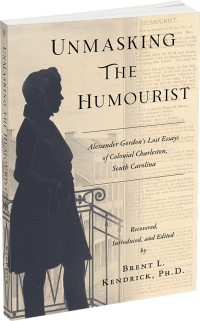
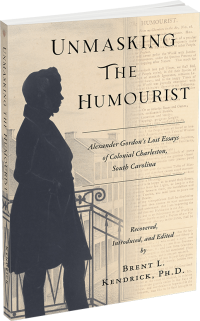
Inside were stacks of Publishers Weekly—the December 15-22 issue, fresh from the press. And there it was: the review of Unmasking The Humourist, resting calmly among other books, other arguments, other claims on a reader’s attention. No fanfare. No special lighting. Just…there. As if it had always belonged.

The review in context.

That may sound small. It isn’t.

For writers—especially those of us who work in literary recovery, archival research, and historical attribution—most of the labor happens far from spectacle. It happens in libraries and databases, in footnotes and marginalia, in moments when you are unsure whether the trail you’re following will narrow into clarity or vanish altogether. There are no crowds for this kind of work. No applause when you discover one more corroborating detail, one more pattern that holds.

Unmasking The Humourist grew out of precisely that kind of sustained attention. The essays at its center—satirical, incisive, mischievous pieces published pseudonymously in the South-Carolina Gazette in the early 1750s—had long been admired but never convincingly attributed. Their author hid in plain sight. The work demanded patience: weighing tone against context, tracing bureaucratic fingerprints, listening carefully to what language reveals when you stop rushing it.

And patience is not fashionable. We live in a moment that rewards speed, certainty, and hot takes. Literary recovery is none of those things. It is slow, provisional, and often lonely. You work without knowing whether recognition will ever arrive—or whether it even should. You work because the work matters.

That’s why seeing the review in Publishers Weekly mattered to me—not as a trophy, but as confirmation that the argument held. That it made sense beyond my own desk. That it earned its place in the broader conversation about early American literature and satire.

What struck me most wasn’t pride. It was scale.

The full review.

Here was my book, not elevated or isolated, but contextualized—surrounded by other studies, other voices, other claims. This is where scholarship belongs: not shouted, but situated. Not proclaimed, but tested.

There’s something grounding about that.

I spread the pages out on the table. I read the review again, this time with the odd sensation of distance—as though I were encountering the project for the first time. The reviewer understood what I had tried to do. Better still, they understood why it mattered. That’s the quiet victory every researcher hopes for.

And then there was the sheer physicality of it all. The stacks. The heft. The knowledge that these copies would travel—to libraries, to colleagues, to readers I’ll never meet. Work that had lived for years in notes and drafts now had mass. It could be lifted. Shared. Passed hand to hand.

Research takes time. Recovery takes patience.

But sometimes—blessedly, unexpectedly—the work becomes something you can actually lift.

And when it does, you pause.
You hold it.
You let it be real.

Lifted Higher and Higher

“Stories are the communal currency of humanity.”

—Terry Tempest Williams (b. 1955. American writer and environmental activist whose lyrical essays explore the intersections of personal narrative, place, and ecological stewardship.)

Something snuck up on me yesterday.

I was talking on the phone with my 90-year-old sister when I glanced down at my smartphone, saw my WordPress dashboard—and nearly did a spit take.

Over 15,188 views this year already!

That’s already more than all of 2024, and we still have October, November, and December to go. Apparently, my little mountain corner has gone global again—and I couldn’t be more grateful.

To every one of you, My Dear Readers, who reads, comments, shares, or quietly lingers over a sentence or two: thank you. You’ve turned this space into a community of curiosity, compassion, and laughter. Every click, every view, every thoughtful message reminds me that words still matter—and that connection runs deeper than algorithms.

Your Top 10 Favorites of 2025 (So Far)

Every year tells its own story through what readers choose. This year’s list made me smile. It’s a mix of reflection, resilience, and rediscovery—with a dash of irreverence (because, well, it’s me or Poor Brentford Lee or maybe both).

“I Am Afraid” — A wake-up call for our country—and a reminder of who we still can be.

“The Place: Charleston” — The launch of my Unmasking The Humourist: Alexander Gordon’s Lost Essays of Colonial Charleston, South Carolina.

“Redbuds of Remembrance” — Even loss can bloom in the right season.

“FramilySaid™: For When Family Isn’t Enough” — A reminder that your worth doesn’t need a witness. Show up for yourself.

“Rise Up with Words. A Declaration for Our Troubled Times” — In these politically charged times — when so many people feel hopeless, unheard, and unseen — words matter more than ever.

“My Altar Ego” — “‘I be fabulous. You be fabulous, too.”

“The Rust Whisperer” — Aging is a journey filled with yearnings. To arrive. To become.

“What Could $40 Million Do—Besides Fund a Parade? A Love Letter to Priorities (with a Side-Eye to A Spectacle)” — History is watching. Are you?

“A Week Back to the Future” — How my sister’s Remington Rand typewriter changed my life.

“Finding Love Later in Life—Baggage and All” — Proof that love comes to those who believe.

Looking Ahead

There’s still more to come before year’s end—new essays, reflections, maybe even a few surprises that have been sitting in my drafts waiting for the right moment. Perhaps even one or two guest posts by our famed and acclaimed Poor Brentford Lee.

I can’t promise I’ll always be profound, but I can promise I’ll keep showing up with authenticity, honesty, humor, and heart.

Thank you, My Dear Readers, for being here, for reading, and for reminding me—every day—that a single voice can still find an echo.

The Place: Charleston, SC. The Venue: Charleston Library Society. The Moment: October 1.

This week’s post is arriving early, because in just a few days I will step into a room filled with history and voices that refuse to fade. On October 1, the Charleston Library Society—the oldest cultural institution in the South and the second-oldest circulating library in the nation—will host the launch of my Unmasking The Humourist: Alexander Gordon’s Lost Essays of Colonial Charleston, South Carolina.

Why Charleston? Because the city itself is part of the story. It was here, in November 1753, that Alexander Gordon began publishing his Humourist essays in The South-Carolina Gazette. Through wit and irony, Gordon held up a mirror to colonial society, skewering hypocrisy, praising learning, and questioning authority. His essays pulsed with the contradictions of a city that was both refined and raw, elegant and quarrelsome. Charleston was his stage, and for nearly three centuries his voice remained hidden in the fragile pages of a newspaper few had cause to revisit.

That is, until now.

The Charleston Library Society is not just the venue for this launch—it is the very repository that safeguarded the Gazette itself, preserving the faint ink on brittle pages that carried Gordon’s words into the future. Founded in 1748, just five years before The Humourist first appeared, the Library has weathered fires, wars, earthquakes, and centuries of change. Its shelves and archives testify to the endurance of ideas—and to the truth that words matter. To stand in this place and reintroduce Gordon’s voice is both an author’s honor and a literary historian’s homecoming.

This launch also falls on a milestone: 272 years since the first Humourist essay appeared in Charleston. That span of time is almost unimaginable. Empires have risen and fallen, nations have been born, wars have been fought, and yet these essays—sharp, funny, insightful—still breathe. They remind us that human folly, ambition, vanity, and hope are constants. Gordon was not writing only for 1753. He was writing for us.

For me, this book represents years of research and a kind of detective work: following a trail of clues, comparing voices, weighing evidence, and finally piecing together the case for Gordon’s authorship. It is scholarship, yes—but it is also a story of recovery. Of bringing back a writer who deserved to be remembered, who deserves a place in our understanding of American letters.

And so, on October 1, Unmasking The Humourist will take its first public bow in the very city that first gave it life.

If you are in or near Charleston, I would be delighted to see you at the Charleston Library Society. If you are far away, I hope you will celebrate with me from wherever you are.

Because this launch is not just mine—it belongs to every reader who believes in the power of words to survive, to provoke, to amuse, and to endure.

About the Book

This edition definitively establishes Alexander Gordon (c. 1692–1754)—antiquarian, Egyptologist, scholar, singer, and later Clerk of His Majesty’s Council of South Carolina—as the author of The Humourist essays, restoring his rightful place in literary history.

The Introduction confirms Gordon’s authorship and provides the necessary historical context surrounding the essays and their publication in The South-Carolina Gazette.

The Humourist Essays section presents the complete authoritative text. Each essay is introduced with a detailed headnote offering historical context, exploring key themes, and situating the essay within broader literary and cultural traditions. These headnotes also clarify references, highlight rhetorical and satirical techniques, and connect The Humourist to its periodical essay tradition. Following each essay, explanatory notes supply annotations that illuminate historical allusions, linguistic nuances, and biographical details, making the essays more accessible to modern readers while preserving their original wit and bite.

The Afterword suggests areas for future scholarship—richer literary analysis of Gordon’s techniques, his engagement with Charleston’s intellectual and political life, his later years in South Carolina, and his place in transatlantic literary traditions. This volume thus serves both as a definitive authorship study and as a definitive text, laying a foundation for future research.

Finally, the Appendix corrects a 277-year-old historical error that mistakenly attributed to Gordon a natural history of South Carolina. This archival correction not only restores the record but also underscores the importance of rigorous scholarship—whether in reclaiming a forgotten author’s voice or in ensuring that legacy is preserved with accuracy.

Unmasking The Humourist: Alexander Gordon’s Lost Essays of Colonial Charleston, South Carolina is available now:

Amazon and Barnes & Noble

All proceeds from the sale of this book will be donated to The Virginia Foundation for Community College Education

I Hear Educators Singing: Paying It Forward

“Teachers are those who use themselves as bridges, over which they invite their students to cross; then, having facilitated their crossing, joyfully collapse, encouraging them to create bridges of their own.”

Nikos Kazantzakis (1883–1957), Greek novelist and philosopher, best known for Zorba the Greek.

Whenever I think of Labor Day—not just today, the official day of celebration, but at any time of the year—I hear Walt Whitman’s poem, “I Hear America Singing.”

In spirit, it remains one of the most comprehensive and inclusive celebrations of labor I know. Whitman exalts the varied carols of America: mechanics, carpenters, boatmen, masons, shoemakers, wood-cutters, mothers, wives, girls, fellows—

“Each singing what belongs to him or her and to none else.”

Even though Whitman’s intent was to celebrate all labor, I’ve often wished he had stretched his litany further: to nurses and caregivers, to social workers and librarians, to the quiet hands who stock shelves at dawn or clean buildings long after everyone else has gone home. So many vital songs go unsung. And yet, by inference, perhaps he did include them—since he was singing America itself, and since his deepest wish was to be the poet of Democracy, the poet of the people, all people.

I especially wish–maybe with a touch of occupational selfishness–that he had included educators—those whose labor shapes every other voice in the chorus. Educators labor not with saw or chisel, but with patience, persistence, and vision—tools just as demanding as Whitman’s mechanics and masons. Their labor is not confined to the classroom or the clock. For many—certainly for me—it was twenty-four hours a day, seven days a week. I went to bed thinking about my students and woke up thinking about them again. Lessons, endless papers, worries, hopes—and encouragement, too—followed me everywhere. Teaching was never a job; it was a calling that claimed my whole self. Like countless other educators, I gave my students my all—and then more.

Educators also give second chances, ignite new beginnings, and shape futures that might otherwise have been lost.

A day never passes that I don’t think about one or more of the bridge builders who taught me—my third-grade teacher who handed me Robert Frost’s poems and lit a lifelong love of language, or my high school biology teacher who welcomed us to his desk day after day, giving us not just knowledge but his time, his presence, himself. My college and university professors, too, showed me that education was not a finish line but a lifelong pursuit. Their labor was quiet, personal, and lasting.

I know this firsthand. I walked the bridge that educators built for me, and in time I became a builder myself—pouring my own labor into students, carrying them forward just as others once carried me.

And when I needed a bridge of my own, the Virginia Community College System gave me not just one opportunity, but two. In 1998 after I left the Library of Congress, it opened the door for me to finally live my childhood dream of teaching English. And years later, through the Chancellor’s Commonwealth Professorship Program, it offered me something even rarer—a second chance to complete research I had set aside nearly forty years earlier. That truth has reshaped how I see education itself. It’s not only about beginnings. It’s also about returnings. Sometimes, opportunity does knock twice. The Virginia Community College System gave me mine.

It gave me that second chance with Unmasking The Humourist: Alexander Gordon’s Lost Essays of Colonial Charleston, South Carolina. What began as a graduate paper in 1973—sparked by the encouragement of mentors like Calhoun Winton and J. A. Leo Lemay—has at last found its full voice. The forgotten essays of colonial Charleston have their rightful place in American literary tradition, and I have had the rare privilege of finishing the work I once left behind.

That’s why I dedicated Unmasking The Humourist to the Virginia Community College System and its educators:

―For the Virginia Community College System―
───────────────
Dedicated to transforming lives and expanding possibilities throughout its 23 colleges, proving that education is not just about learning, but about unlocking potential, shaping futures, and ensuring that no great idea goes unfinished.

And because words alone weren’t enough, I decided to act on that dedication. I have never forgotten the benefactors—sometimes unseen, sometimes unknown—who helped carry me across my own bridge: from a coal camp childhood to a college classroom, to a professor’s life I once only dreamed of. Their quiet generosity made my journey possible.

All proceeds from the sale of this book
will be donated to
The Virginia Foundation for Community College Education

On this Labor Day, I hear Whitman’s chorus again. It grows stronger, more complete, when we hear the steady song of educators—singing what belongs to them, and to none else. Their song is the bridge that carries not just students, but all of us, forward.

Unmasking The Humourist: From Lost Essays to Top New Release

“Nothing is more powerful than an idea whose time has come.”

—Victor Hugo (1802–1885). French novelist, poet, and statesman (adapted from his Histoire d’un crime, 1877.)

Victor Hugo’s insight feels especially fitting today. After nearly three centuries in obscurity, Alexander Gordon’s essays have finally found their moment—and their audience.

My book, Unmasking The Humourist: Alexander Gordon’s Lost Essays of Colonial Charleston, South Carolina, has just been named a Top New Release in U.S. Literary Criticism on Amazon.

From colonial Charleston to Amazon’s Top New Release banner —
Alexander Gordon finally takes his bow.

That bright orange banner may be a digital flourish, but for me, it symbolizes something much deeper: the recovery of a voice that nearly slipped into oblivion.

A Journey Nearly Three Centuries in the Making

Alexander Gordon’s satirical essays, published pseudonymously in colonial Charleston in 1753-54, were witty, sharp, and—until now—lost to time. For nearly three centuries, they lay hidden in crumbling newspapers, unnoticed by scholars, unread by modern audiences.

When I started my work on the Humourist essays, I could not have imagined how far the search would take me—through archives, biographies, and dusty trails. It became a mystery worth solving, a conversation across centuries.

Why It Matters

Bringing Gordon back into the light isn’t just about literary recovery—it’s about restoring a missing piece of cultural history and literary history—America’s and Charleston’s. His voice adds texture to our understanding of early America: its humor, its politics, its people.

Seeing readers discover him today—on a platform as modern and massive as Amazon—is a reminder that scholarship doesn’t live only in libraries. It can leap across time and space, reshaping how we see the past and present alike.

A Note of Gratitude

This milestone belongs not just to me, but to everyone who has encouraged me, asked the hard questions, and believed in the value of preserving what was almost lost.

Here’s to Alexander Gordon, finally taking his bow on the 21st-century stage. And here’s to the readers who will now join him there.

If you know someone who loves history, literature, or Charleston’s rich past, I invite you to share this book with them. The Humourist has waited nearly three hundred years for his audience—perhaps now is the moment he finds it.

Now available for readers everywhere:

Unmasking The Humourist:
Alexander Gordon’s Lost Essays of Colonial Charleston, South Carolina

Unmasking The Humourist. From Colonial Shadows into Modern Light

“The pursuit of historical truth requires rigorous attention to evidence, but also imagination—an ability to see beyond the silences.”

Eric Foner (b. 1943), Columbia University historian and Pulitzer Prize–winning author of The Fiery Trial.

It began with a clue. A slip of language. A name tucked too neatly into silence.

For years, The Humourist was one of colonial America’s most compelling mysteries: a sharp, satirical voice that burst onto the front page of The South-Carolina Gazette in 1753 and 1754—then disappeared without a trace.

No signature. No farewell. Just a trail of dazzling essays and a question no one could quite answer: Who was he?

What followed, for me, was part scholarship, part sleuthing. I tracked language patterns, pored over wills, newspapers, shipping records, and marginalia. I followed leads from Charleston to Edinburgh and back again. And finally, I solved the puzzle, and the answer emerged:

Alexander Gordon—a Scottish-born antiquarian and early Egyptologist, who would eventually serve as Clerk of His Majesty’s Council in South Carolina. A man educated in Enlightenment thought, fluent in satire, and bold enough to take aim at power in a bustling port city where reputation was currency.

The mystery is solved. But Unmasking The Humourist doesn’t just name the man—it restores his voice.

This authoritative and definitive edition brings Gordon’s essays back into circulation for the first time in nearly 270 years, fully annotated and critically framed, with a scholarly introduction that explores Gordon’s identity, influences, and the forces that led to his disappearance from literary memory.


Why These Essays Matter

The Humourist columns are more than colonial curiosities. They are early American satire at its finest—witty, incisive, and rich with transatlantic influence. Gordon’s essays place Charleston on the literary map, not as a provincial outpost, but as a vibrant participant in the Enlightenment-era conversation about politics, identity, and the press.

This book marks a breakthrough in how we understand the American essay tradition. It challenges the idea that colonial literature was all sermons and pamphlets. Here, we meet a writer who was sharp, worldly, and unafraid to poke fun at hypocrisy—whose pen was as powerful as any pulpit or platform of his day.


A Milestone Moment

Today, I submitted the final corrections to the publisher, along with keywords, pricing, and metadata. The next step is the printed proof—then, in due time, the book itself.

It’s a strange and beautiful feeling. Emily Dickinson said it best:

“After great pain, a formal feeling comes.”

This project has spanned decades. It has taken me deep into archival records, across centuries of silence, and finally into the steady light of historical clarity.

And Now?

I’m proud to share the cover—front and back. Because The Humourist, like all great stories, deserves both.

Launch Details?

Not quite yet. But soon. The typeset is locked. The voice is ready.

This fall, a long-lost satirist steps out of the colonial shadows—and into the modern light.

The Humourist Nears the Light

“To publish is to make knowledge public, to assert its value, and to offer it up to the judgment of the world.”

–—Robert Darnton (b. 1939), American cultural historian of the Enlightenment and former Director of the Harvard University Library; renowned for his work on the history of the book and 18th-century France, including The Literary Underground of the Old Regime and The Case for Books.

Surely, you’ll remember the groundbreaking work I finished earlier this year on one of the greatest literary mysteries in early American history.

The Humourist—a sharp-witted, enigmatic essayist whose satirical columns lit up the front page of The South-Carolina Gazette in 1753 and 1754—had been lost to time, his identity buried beneath centuries of silence.

Through meticulous research—poring over newspapers, historical records, forgotten manuscripts, and overlooked clues—I solved the mystery, unmasking the man behind the essays: Alexander Gordon. His identity, his world, and the forces that led to his disappearance are now fully revealed.

I shared that discovery through this blog, but solving the mystery was only the beginning. The real work—the restoration—was still to come.

Now, after years of refining that research, the book I’ve long envisioned is finally becoming a reality.

Yesterday, I received the first proof of the book’s interior pages. Looking at them is more than a thrill—it is validation. These pages mark the first step toward publication and the return of a long-silenced voice.

Unmasking The Humourist: Alexander Gordon’s Lost Essays of Colonial Charleston, South Carolina is not just a rediscovery. It is a scholarly edition that restores one of the most significant—but overlooked—literary voices of colonial America. The essays appear in full, meticulously annotated and contextualized, accompanied by a critical introduction that explores Gordon’s identity, influences, and legacy.

Why This Book Matters

This is more than the story of a forgotten writer. It’s about:

● The literary landscape of colonial America and its deep connections to the English essay tradition.
● The power of satire to shape public discourse—even in a bustling port city like Charleston.
● The intimate intersection of literature, politics, and history, as seen through the eyes of a writer who was both observer and insider.

For the first time, The Humourist’s essays will step out of the yellowed pages of The South-Carolina Gazette and into the full light of historical and literary analysis.

The Book Will Arrive This Fall

This carefully curated edition will include:

● All of The Humourist’s essays, fully annotated.
● A critical introduction grounded in original scholarship.
● Historical and literary commentary that situates Gordon in both local and transatlantic traditions.
● A call for further scholarly attention to this long-overlooked voice.

Stay Tuned

In the coming months, I’ll be sharing exclusive glimpses into the publication journey, from typesetting to launch. The return of The Humourist is well underway.

The mystery was solved long ago. But this fall, the voice that once stirred Charleston will speak again—with clarity, context, and a proper name.

The Art of Eating Crow

“A man should never be ashamed to own he has been in the wrong, which is but saying, in other words, that he is wiser today than he was yesterday.”

–Alexander Pope (1688–1744; English poet and satirist, one of the most influential poets of the 18th century, whose wit and keen moral reflections in works like “The Rape of the Lock” and “An Essay on Man” secured his literary legacy.)

Eating crow is never easy. In fact, it’s downright tough, so much so that it takes a lot of willpower and gumption.

Oh, I’m not talking about eating crow as in the genus Corvus, those glossy black birds found in most parts of the world. I’ve never eaten one of them.

I’m talking about eating the kind of crow that we sometimes have to eat when we discover that we’re wrong. That’s a hard discovery to make. Let’s face it: it’s hard to fess up when we’re wrong. But let’s own up to it—sometimes the best thing to do is just eat crow and be done with it.

Take the stubborn husband who swore up and down he could fix the plumbing himself, despite his wife’s warnings. A few YouTube tutorials, a flooded bathroom, and an emergency call to the plumber later, he’s standing there, soaking wet, eating a big plate of crow.

Or the manager who brushed off an employee’s suggestion, only to watch the competition roll out the same idea—successfully. There’s no easy way to walk that one back, but let’s hope the manager at least had the sense to admit, “I should’ve listened.”

Then there’s the friend who mocked TikTok, Wordle, or Air Fryers, scoffing at the hype—until they tried it. And now? They’re sending out their Wordle scores every morning, scrolling TikTok before bed, and raving about how crispy their Brussels sprouts get. Yep. Crow. Served hot and fresh.

People have been “eating crow” since the dawn of human interaction so the list could go on and on, ranging from professional to personal and from funny to frustrating, but I don’t need to continue. Every item in the list captures the same universal realization: Oops … I was wrong. I didn’t understand.

Even though we’ve been eating crow for a long, long time, the phrase itself is surprisingly modern. It first appeared in 1885 in the Magazine of American History:

“‘To eat crow’ means to recant, or to humiliate oneself.”

By 1930, the phrase had taken on a more serious tone:

“I should merely be making an ass of myself if I accused someone and then had to eat crow” (E. Queen, French Powder Mystery).

By 1970, “eating crow” was used in a way that is close to what we all hope for when we use the phrase today:

“I was going to apologize, eat crow, offer to kiss and make up” (New Yorker)

Yep! Sometimes, eating crow comes with extra benefits.

These days, eating crow is firmly on the menu for anyone caught in the wrong. Actually, it was on my menu last week. Two servings of crow. That’s right. Two servings. Mind you, I haven’t been caught in the wrong because I haven’t done anything wrong other than having had some lingering thoughts down through the years about two Mary E. Wilkins Freeman scholars. I’ve now come to realize that I was wrong, or, more accurately, I’ve come to realize that I didn’t understand.

And since I’ve always believed that eating crow is most beneficial if done in public, let me lift the cloche and reveal my double portion.

My first portion is because of thoughts that I’ve had about Thomas Shuler Shaw, a librarian at the Library of Congress, who embarked on an ambitious project to write what would have been the first biography of Mary E. Wilkins Freeman. His goal was to illuminate the life and literary contributions of this remarkable author who had died in 1930.

However, fate had other plans. Shaw’s 1931 biography, A Nineteenth Century Puritan, faced rejection from prominent publishers such as Harper & Brothers, Ladies’ Home Journal, and The Saturday Evening Post. I’ve always credited Shaw for persevering, at least enough to find a home for his meticulously curated scrapbooks and the typescript of his unpublished biography in the Rare Book & Special Collections Division at the Library of Congress. Those artifacts provide a rich tapestry of insights into Freeman’s life and work, and they certainly helped me with my edition of The Infant Sphinx: Collected Letters of Mary E. Wilkins Freeman (Scarecrow, 1985).

Nonetheless, I wondered then as I do now: why didn’t Shaw continue his efforts to find a publisher? His book would have distinguished itself as the first Freeman biography. What impact might it have had on her literary reputation if the details of her life had been accessible to readers of the 1930s and 1940s?

My second portion of crow relates to another scholar working on a Freeman biography around the same time. Edward Foster wrote his Mary E. Wilkins Freeman: A Biographical and Critical Study in 1934 as his thesis when he was a candidate for the Doctor of Philosophy degree at Harvard University. The university accepted his thesis, but Foster didn’t complete his Harvard degree. He put aside his Freeman work until 1956 when he revised and published it as Mary E. Wilkins Freeman (Hendricks House).

Foster was direct when he explained the delay:

My thesis was accepted […] also for subsidized publication by Harvard Press. Lacking funds for subsidy and failing to get trade publication, I forgot the thing for nearly twenty years. MWF is only a small part of my career. (Foster to Brent L. Kendrick, ALS, October 24, 1973)

Nonetheless, I wondered then as I do now: why didn’t Foster try to find a publisher sooner than he did? What impact might it have had on her literary reputation if Foster’s details of her life had been accessible to readers of the 1930s and 1940s.

There. I’ve done it. I’ve eaten my two portions of crow. However, I have to do one more thing to help you understand the art of eating crow. To turn eating crow into an art requires divulging what prompted, in my case, not just one portion of crow but two in a single serving. That’s the source of the catharsis. That’s the confession, without which eating crow can never be an art.

Here’s mine.

Yesterday, I uploaded the manuscript of my forthcoming book Unmasking The Humourist: Alexander Gordon’s Lost Essays of Colonial Charleston, South Carolina. My book definitively establishes Gordon (c. 1692–1754)—antiquarian, Egyptologist, scholar, singer, and later Clerk of His Majesty’s Council of South Carolina—as the author of The Humourist essays, restoring his rightful place in literary history.

I hesitate to say this, but the book is a significant scholarly work. It’s meticulously researched, not only unearthing a forgotten literary voice but also redefining our understanding of colonial American literature. While it’s structured with rigor, it remains highly engaging, making complex historical and literary analysis accessible without oversimplification. It’s not just a literary recovery; it’s a reframing of Charleston’s intellectual life, the role of satire in the colonies, and the transatlantic literary tradition. That’s no small feat.

To say that I am ecstatic is an understatement. I am.

But get this. I’ve been working on this book since 1973, when Professor Calhoun Winton of the University of South Carolina suggested that I try to solve this literary mystery. Published in the South-Carolina Gazette, the essays had been largely forgotten, and the identity of their author remained unknown.

At the time, I recognized their brilliance and used them as the foundation for a graduate paper. Then I put the project aside where it remained in my mental storehouse of “one-day, some-day” ideas, waiting for the right time.

Decades later, the Virginia Community College System (VCCS) gave me an extraordinary opportunity to return to that project, to bring these essays into the light, and to finally answer the question that had remained unanswered for centuries: Who wrote them?

As a VCCS Chancellor’s Professor (2012-2014), I answered that question and shared the essays and my ongoing findings with my blog readers right here. Actually, that’s when TheWiredResearcher had its beginning.

Ironically, I delayed publishing my watershed Unmasking The Humourist until now.

You may be wondering about my delays, just as I wondered about Foster’s delays and Shaw’s delays.

I’ve been wondering about my delays, too, and that’s why I’m eating crow.

I could toss out many reasons:

The Humourist essays seemed too short for a book and too long for a scholarly article.

● I wanted to make certain that my evidence for claiming Alexander Gordon as the author was as compelling as my discussion.

● I wanted to do further research so that my headnotes and endnotes for the essays were comprehensive.

All of those reasons are true.

I won’t toss into that mix other scholarly pursuits that came my way.

I won’t toss into that mix my early career advances as a federal employee or my second career advances as an educator.

I won’t toss into that mix caring for aging parents.

Actually, I won’t toss into that mix anything else because what became obvious to me when I uploaded Unmasking The Humourist: Alexander Gordon’s Lost Essays of Colonial Charleston, South Carolina was something seriously simple. We all lead complex, complicated, and convoluted lives.

● I know that truth firsthand.

● You likely do as well.

● So, too, did Edward Foster.

● So, too, did Thomas Shuler Shaw.

Wondering about their delays caused no harm, but I now see there was no need to wonder at all. I might simply have acknowledged what I’ve come to recognize in my own self-talk about The Humourist:

Life is rich, robust, and mysterious, and it rarely marches forward on a straight path.

As I move forward on my path, I’ll keep that truth in mind as I interact with others—and with myself. And with that heightened awareness, perhaps I really will have mastered the art of eating crow.

Three Special Shout-Outs!

 “True friends are the ones who never leave your heart, even if they leave your life for a while. Even after years apart, you pick up with them right where you left off.”

It occurs to me, on this last day of 2014, that blogs are like true friends:  you can pick right up with them where you left off. Thus, I have absolutely no doubt at all in my mind that you—dear Reader—will recall my last post on June 30: “A Correction to Alexander Gordon’s Canon, 256 Years after a Mistake Was Made.”  How could you not recall the juicy research conundrum that I faced?  It is not often that a scholar has the opportunity to set the record straight so many years after the fact!  But with my own dogged persistence and with the gracious help of Fiona Keates (Archivist, Modern Records, The Royal Society), I did just that.  So what if the document I had considered “the ace up my sleeve” in my present research turned out to have been written not by MY Alexander Gordon but rather by Dr. Alexander Garden, a well-known Scottish physician, botanist, and zoologist who came to South Carolina in 1752 where he collected flora and fauna and sent them to Carolus Linnaeus—the father of modern taxonomy. I was joyed to be able to set the record straight.  Doing so makes research all the more fun and all the more memorable!

In fact, I was so excited by my discovery—so excited by my opportunity to set the record straight—that even though the post was dated June 30, 2014, I totally forgot that the date marked the official end of my 2012-2014 Virginia Community College System’s Chancellor’s Commonwealth Professorship!  (The professorship appointment ran from the start of fiscal 2012 to the end of fiscal 2014.)

I remembered, of course, the very next day, but I decided that even though the “official” professorship was over, nothing at all could keep me from being a “Virtual Chancellor’s Commonwealth Professor,” virtually forever—and so I shall continue to be—just as nothing at all could keep my blog from continuing, virtually forever—and, so, it, too, shall continue to be!

Wait—just wait—until you read my next few posts.  I have in my possession copies of critical Alexander Gordon manuscripts obtained from libraries in Scotland and England.  Although I have had the packages for several months, I have not opened them yet because I know that the contents will take my Humourist research to new heights, and I have had neither time nor nerve to make the journey.

However, January 2015 will place me exactly where I need to be in terms of time and nerve to open the packages, review the manuscripts, and share my findings with you, right here in this blog.

But I digress. If I had realized that June 30 marked the official end of my 2012-2014 Virginia Community College System’s Chancellor’s Commonwealth Professorship, I would have given three special shout-outs!   And so I will seize today, this last day of 2014, as the perfect opportunity to do so. Continue reading

Alexander Gordon: Sheltered in High Places

“When Persons of high Dignity patronize Learning, it demonstrates a Greatness of Soul, no less advantageous to their own Characters, than beneficial to the Sciences which are blest with their enlivening and extensive Influence:  For Knowledge and Virtue are so inseparable, that whatever promotes the one, must necessarily produce the other.” —Alexander Gordon.

I noted in my last post that when Itinerarium Septentrionale was published in 1726, Alexander Gordon received Royal attention:

Edinburgh, August 22.  Several persons of Distinction, etc. are gone hence to meet their Graces the Duke and Dutchess of Athol, who are expected in Town this Night.

We hear that Mr. Alexander Gordon, Author of the Book entitul’d Itinerarium Septentrionale, had the Honour to present their Royal Highnesses with his Book, and was very graciously received; and for his future Encouragement, were please to subscribe to his Proposals for the Maps he designs to publish of the Roman Walls in Britain.  That Gentleman is shortly expected in Scotland, to illustrate a Project which will greatly redound to the Advantage of Trade and Navigation in Britain (Caledonian Mercury, August 22, 1726).

I noted, too, that three years later when Gordon published his History of Pope Alexander VI and Caesar Borgia, he received even greater Royal attention:

Monday last Mr. Alexander Gordon, Author of the Itinerarium Septentrionale, presented his new History of Pope Alexander VI and Caesar Borgia, to the King and Queen, was very graciously received, and had the Honour to kiss their Majesties Hands; and on Tuesday he presented the said book to the Prince, and had the Honour to kiss his R. Highness’s Hands also (Caledonian Mercury, March 27, 1729).

I shared those ephemera because they were among the early notices that I found of Alexander Gordon as I made my way through the “musty,” digitized versions of newspapers published in Scotland and England in an effort to chronicle Gordon’s journey from the Old World to the New World where he would serve as Clerk of His Majesty’s Council and where he would write “The Humourist” essays that appeared in the South Carolina Gazette.

How truly wonderful that Gordon’s early—and, let me hasten to add, important—scholarly works were of such high caliber and of such historical significance that Royalty took notice and favoured him.  Even so, I never intended for him to dawdle—even Royally—for so many months before I continued my account of his journey.

But it has not been for naught.  It has given me the opportunity to explore Gordon’s  writings more fully.  In doing so, I became impressed by the dedications that he included in his publications.  They explain, in part, why Royalty favoured him—and why, apparently, he was favoured in other high places— and, they make for generally “good” reading since they far outdistance superficial and formulaic dedications, thereby providing more glimpses of Alexander Gordon than can be found in “The Humourist” essays alone.

I have gathered all the dedications, and they shall serve as the basis of today’s post!  (We shall finish Gordon’s journey to South Carolina another day!)

Let’s start with his 1726 Itinerarium Septentrionale, dedicated to Charles Douglas, 3rd Duke of Queensberry, 2nd Duke of Dover, and Vice Admiral of Scotland (1698-1778):

To His Grace

Charles,

Duke of

Queensberry and Dover, etc.

My Lord,

As the Monuments of Antiquity, exhibited in the following Sheets, are chiefly intended to illustrate the Roman Actions in Scotland, and, of consequence the Achievements of its Ancient Inhabitants, Your Grace will here perceive, from uncontested Authorities, how great the Struggle has been, in the One for Conquest, the Other, for Liberty to their Country.

This being the general Scope of the present Essay, there is none to whom I can so naturally have recourse for Protection, and Countenance, as Your Grace, whose illustrious Ancestors have, for Ages, been so eminent in defending and establishing their Nation’s Honor and Liberty, and certain it is, the Name of Douglas, is too highly exalted in the Annals of Europe, to bring this in Doubt. What pleasure must I then receive, in finding Patronage from one who Possesses, as by Hereditary Right, the many shining Qualities of his renowned Forefathers: All which, joyn’d with a condescending Goodness, Humanity, Knowledge, and Sweetness of Temper, finish the Character of one truly Noble.

Long have I wish’d for an Opportunity to evidence my Gratitude, to your Grace, for many Favours, already received, both at Home and Abroad and, indeed, the small Tribute, I now offer, has its greatest Merit in proceeding from a grateful Heart.  I can never sufficiently express the Sense I have of your generous Encouragement, shewn me at my first Entrance on this Work, for when many were multiplying Difficulties, and starting discouraging Objections against me, You, my Lord, was far from crushing me in the Attempt, not thinking it just to condemn my Work, till it was seen and examin’d.  If, then, any Shadow of Merit be found therein, I shall most willingly acknowledge, that its Success is, in a great measure, owing to Your Grace, and some other learned and generous Patrons.  With Pleasure, therefore, I lay it at Your Feet, and reckon all the Pains and Trouble I have taken therein, well rewarded, in having, hereby, an Opportunity of declaring to the World, That, with most profound Deference, I am,

May it please Your Grace,

Your Grace’s most Obedient,

and most Obliged, humble Servant

Alexander Gordon.

Three years later (1729) he published his The Lives of Pope Alexander VI and His Son Caesar Borgia, and it was dedicated to James Graham, 4th Marquis and 1st Duke of Montrose (1682-1742):

To His Grace

James

Duke of Montrose

My Lord,

As an Acknowledgment for the many Instances of Favour, with which Your Grace has been pleased to honour me, I beg Leave in all Humility to shelter the following History under Your Grace’s Protection.

But if I had no peculiar Motives of Gratitude, a Work of this Kind should naturally be Addressed to One who is accurately acquainted with the great and active Scenes of Human Life:  And as it is Mine, that just Penetration should be accompanied with all the Indulgence of Candor and Humanity, In Your Grace these shining Qualities go Hand in Hand; they naturally support and adorn each other.

If what I have written deserves any Degree of Favour from the Publick, it will not give me so much Satisfaction from any View of Interest or Reputation, as for having an Opportunity of declaring to the World that am, with sincerest Veneration,

My Lord,

Your Grace’s most Obliged, and

Most Faithful Servant,

Alexander Gordon

In 1730, Gordon’s translation was published:  The Compleat History of the Ancient Amphitheatres. More Peculiarly Regarding The Architecture of those Buildings, and in Particular that of Verona. By the Marquis Scipio Maffei. Made English from the Italian Original by Alexander Gordon, A.M., Adorned with Sculptures. (It is interesting to note, here, that Francesco Scipione, marquis di Maffei [1675-1755] was a well-known Italian Dramatist, archaeologist, and scholar.)  Gordon dedicated his translation to Sir George Bowes (1701-1760), a member of the English Parliament and the founder of the Grand Alliance of coal owners, established to control the London coal trade:

To

George Bows

Of Streatleham-Castle, Esq;

If a Descent from an Illustrious Race of Patriots, such as Camden is Witness that your Predecessors have been; if the Possession of a Plentiful Fortune, of a Numerous and Powerful Friendship, and of a General Esteem, were sufficient to render a Man happy; there are very few that would have a greater Share of Felicity than your self: But you are sensible, Sir, that the best Judges of Human Nature would not esteem you such, notwithstanding these Advantages, did you not possess the Nobler Endowments of the Mind.  These are the Qualities that improve the Gentleman, a mere amiable Character, into that of the highest Utility, the Patriot: ‘Tis by these alone that Honours, Riches, and Interest become useful, and conduce not only to the Happiness of the Possessor, but to that of Mankind in general; ’tis by these, that a Man not only dispenses Good in his own Time, but entails a lasting and improveable Felicity on After-Ages.

The Advantage of your Patronage to this Piece, might here be a sufficient Reason for a Dedication, had I not been affected with a much stronger Motive, the Desire I have of declaring to the World how much I am indebted to your Bounty.  I am sensible that this Performance is a very small Return for the Favours I’ve received; and yet I should think my Labour very well bestowed, could I deserve the least Part of that Approbation you will give the Learned Author of the Original.  I have this at least in my favour, that ’tis much more difficult to translate than to compose.

That you may long live, and continue to be the Patron of Learning and Virtue, and the Happiness of such as are honoured with your Friendship, is the sincere Wish of,

Sir,

Your most Humble and

most Obliged Servant,

Alexander Gordon.

When Gordon’s one and only comedy Lupone: or, the Inquisitor was published in 1732, he dedicated it to Cosmo George Gordon, 3rd Duke of Gordon (ca. 1720-1752) who was eleven years old at the time.  (Yes, like you, I am intrigued by the shared surname, but, at this point, I cannot connect our Alexander Gordon with the illustrious House of Gordon.)  Lupone is a Dominican Friar and chief Inquisitor, and the play takes place in Naples.

To His Grace

Cosmus,

Duke of Gordon.

My Lord,

The Sincere Regard for Truth, of which your Grace has given the World such early Examples, renders you the proper Patron of every Attempt that tends to the Exposing those whose Employment is to promote the most pernicious Error that ever deluded Mankind.

The wicked Priest, supported by an ignorant and superstitious Multitude, is a Character of such terrible Importance to Publick Happiness and Liberty, that its horrid Consequences can never be too often represented to the People.

This, being the subject of the present Piece, has made me presume to implore your Grace’s Patronage, believing that the Design, rather than the Performance, may be my Excuse.  I am, with the utmost Respect,

My Lord,

Your Grace’s most obedient

humble Servant,

Alex. Gordon.

Also in 1732, he published his Additions and Corrections, by Way of Supplement, to the Itinerarium Septentrionale, dedicating it to James Macrae (1677-1744), Scottish seaman, administrator, and Governor of Fort St. George from 1725-1730).  (Fort St. George was the first English fortress in India.)

To the Honourable

James Makrae, Esq.

Late Governor of Fort St. George.

Sir,

The many Favours I have received from you, when I was honour’d with your Acquaintance Abroad, and the Continuance of them at Home, oblige me to take the first Opportunity of declaring to the World, how much I am indebted to your Friendship.

The Remains of Antiquity I am describing, are such as illustrate the History of the noblest and most successful Resistance of any to the Violence of the Usurping Romans, their Description may therefore be worthy of your Acceptance, more, indeed, from the Dignity of the Subject treated, than the Manner of describing them.  The Bravery of our Heroic Ancestors against those whom Tacitus calls Raptores Orbis, The Plunderers of the World, has too near a Remembrance to your own, not to affect you, since the same Man who defended the Cassandra with so much Resolution, against Pyrates of a still worse Nature, must with equal Courage have defended his Country, had he lived in those Days.

Accept therefore these Papers, not as any Retribution for the many Favours received, but as a sincere Acknowledgment of a grateful Heart.  I am,

Sir,

Your most humble, and

most obliged Servant, 

Alex. Gordon.

Gordon returned to his Italian interests in 1733 with a publication that fascinates and perplexes me because it is a revised and corrected translation of The Book of Common Prayer from English to Italian!  It is titled Il libro Delle Preghiere Publiche ed Administrazione de’ Sacramenti, ed Altri Riti e Cerimonie delIa Chiesa, Secondo ruso della Chiesa Anglicana; Insieme col Saltero over i Salmi Di David, Come hanno da esser recitati nelle Chiese.  E la forma e modo di fare, ordinare e consacrare Vescovi, Presbiteri e Diaconi: Questa nuova Impressione revista e corretta per Alessandro Gordon, A.M. 

The story behind the Italian version of The Book of Common Prayer is intriguing.  According to The Book of Common Prayer Among the Nations of the World, Chapter XII, Italian Translations, the first translation was begun by William Bedell (Bishop of Kilmore and Armagh) who had an “expressed desire to win over the people of Venice to Protestanism.”  The Bishop died in 1642, but it was not until 1685 that Edward Browne (Clare Hall, Cambridge) edited the translation for publication.

How Alexander Gordon became involved in the revised 1733 edition shows his entrepreneurial spirit:  he saw the translation as an educational tool for teaching Italian!  Stefano Villani’s “Italian Translations of the Book of Common Prayer enlightens and is worthy of extensive quotation:

A new edition of Brown’s text was then published in 1733 by the Scot Alexander Gordon. … Gordon in his ‘Letter to the readers’ of the Libro delle Preghiere Publiche, after having retold the story of the first edition of 1685 (basing himself on Brown’s old introduction), explains the reasons that led him to publish ‘this new edition’. First of all it was impossible to find copies of the edition of 1685. …secondly it presented several spelling errors and some lexical inaccuracy; and thirdly several prayers and other things relevant to the rites and ceremonies of 1685 were no longer in use. At the end of his letter to the reader, Gordon gives another reason that convinced him of the necessity for this translation. Gordon writes that ‘the Italian language being greatly estimated by the English nobility and by other persons of value and knowledge’ (‘essendo la lingua italiana grandemente stimata appresso lanobilità inglese ed altre persone di merito e sapere’), there were ‘many’ who required a translation of the Anglican liturgy ‘in that sweetest language’ (‘inquella dolcissima lingua’) so that ‘reading it often’ they ‘could improve their knowledge of that language’ (‘leggendola spesso, potessero avanzar nellaconoscenza della detta lingua’).

Since the liturgy was known by heart by every member of the Church of England, everyone who wanted to study Italian could read the translation in that language of the Book of Common Prayer, with the great advantage of being able to grasp the meaning of phrases without a dictionary.  At a time when the practice of completing the intellectual formation of young British nobles and writers with the Grand Tour in Italy was already common, to propose an edition of the Libro delle Preghiere Publiche as a sort of educational aid for teaching the Italian language, could open a very large market, and demonstrates, once again, the ingenuity of this whimsical scholar [emphasis supplied].

 Gordon’s translation contained not only his “Letter to the Readers” but also, as we have come to expect, a dedication.  It is in Italian, and begins, “Al Reverendissimo ed Illustrissimo Padre in Dio, Edwardo Chandler.”  Edward Chandler (1668?-1750) was Bishop of Litchfield from 1717 to 1730 and, then, Bishop of Durham from 1730 on.

In 1737, he dedicated his An Essay towards Explaining the Hieroglyphical Figures on the Coffin of the Ancient Mummy belonging to Capt. William Lethieullier to Sir Arthur Onslow, Speaker of the House of Commons of Great Britain from 1728 until 1761.   The National Trust observes that “he held the post for 33 years in five successive parliaments and was known as the Great Speaker.”

To the

Right Honourable

Arthur Onslow, Esq;

Speaker of the Hon House of Commons, etc.

Sir,

When Persons of high Dignity patronize Learning, it demonstrates a Greatness of Soul, no less advantageous to their own Characters, than beneficial to the Sciences which are blest with their enlivening and extensive Influence:  For Knowledge and Virtue are so inseparable, that whatever promotes the one, must necessarily produce the other.  Yet such is the unhappy Effect of a too indulgent Education, that many Persons who by their high Rank and native Genius might have been useful Ornaments to Mankind, suffer themselves to be wholly captivated by the lost Delusions of Sense, which generally make too successful a Court to Persons of ample Fortunes and distinguish’d Birth, and know nothing of the genuine Pleasure that follows the delightful and self-rewarding Pursuits of an intelligent Mind.

‘Tis not therefore surprising, That Literature and the Sciences, should apply themselves to Personages who stand forth as illustrious Exceptions to this too general a Depravity.  Nor is it to be wonder’d at, that among the most Eminent of the Learned, even Persons of meaner Abilities, (attracted by the Sunshine which diffuses it self over the whole World of Science, from the Countenance of the Truly Great) should be ambitious to mingle their humbler Offerings.

Hence, Sir, arises the Liberty I take of presuming to shelter the following Essay under YOUR Name, not induced by the Worth of the Performance, but the Nature of the Subject.

That You May long live the Mecænas of this Age, and continue to do Honour to the exalted Station to which Your own Merit has raised You, is the sincere Wish, of,

Sir,

Your most Humble, and

Most Obedient Servant

AlexR Gordon.

Also in 1737, he dedicated his An Essay towards Explaining the Ancient Hieroglyphical Figures, on the Egyptian Mummy, in the Museum of Doctor Mead, Physician in Ordinary to His Majesty to Richard Mead.  As the Encyclopedia Britannica notes, Mead was “a leading 18th-century British physician who contributed to the study of preventive medicine. A graduate of the University of Padua (M.D., 1695) and of Oxford (M.D., 1707) and a staff member of St. Thomas’ Hospital and Medical School, London (1703–15), Mead attended some of the foremost personalities of the day, including King George I, Queen Anne, King George II, the British prime minister Sir Robert Walpole, Sir Isaac Newton, and the poet Alexander Pope.”

To

Doctor Mead.

Sir,

The many Obligations you have conferr’d upon me, make me lay hold of the least Opportunity to render you the humble Acknowledgments of a grateful Heart: And indeed, besides this superior Inducement, I could not, with equal Propriety, have recourse to any other Patronage for the following Essay, that owes its Being to your noble Museum; which, among many other invaluable Treasures of Antiquity and Erudition, contains the curious Monument of the antient Egyptians, that is the Subject thereof.

The easy Access to this inestimable Repository, which you so generously afford to every one who is inquisitive after Knowledge, and the chearful Assistance you are so ready to lend to whatever tends to the Promotion of Learning, and the polite Arts, have justly intitul’d you to the Esteem of Mankind.  Which that you may continue long to enjoy, is the Wish of all those who have the Honour to be known to you, among whom no one can join with greater Fervour than,

Sir,

Your most humble and

most obliged Servant,

Alexander Gordon.

And so it was that for this eleven-year chapter of his life (1726-1737), our Alexander Gordon—our illustrious antiquarian and true Renaissance man—found himself favoured again and again as he repeatedly paid tribute to and solicited “shelter” from friends in high places.