Dead as a Doornail


“The unexamined word is not worth using.”
—Brent L. Kendrick (b. 1947). Essayist, educator, and literary scholar, whose work explores the unexpected weight of ordinary life.


“Have you ever heard that expression before?”

I thought it might be a Southern idiom, and since Gary grew up in the Midwest, I wasn’t sure he knew it.

“What expression?”

“The one I just used. Dead as a doornail.”

“I have.”

Fine. It was settled. We both knew what it meant. Finished. Used up. Worthless.

“Well, it strikes me as one of the silliest things I’ve ever heard of. What on earth is a dead doornail?”

“No idea.”

I didn’t either.

How’s them apples? There we sat, two men who appreciate language and use it with careful precision, agreeing that we knew an expression while at the same time confessing that we didn’t understand the phrase that was central to its meaning.

I don’t like feeling as dumb as a stick, so after morning coffee, I made my way to the Oxford English Dictionary (OED) like a bat out of hell so that I could learn about dead doornails.

Oh, boy. I was right. I knew in a flash that I was going to have a Red Letter Day. Lands sake alive. Dead as a doornail goes all the way back to 1350:

“For but ich haue bote of mi bale … I am ded as dore-nail.” (William of Palerne, l. 628)

Don’t worry. I’ll dress it up in some modern rags so that it makes sense:

“For unless I have remedy for my sorrow, I am dead as a doornail.”

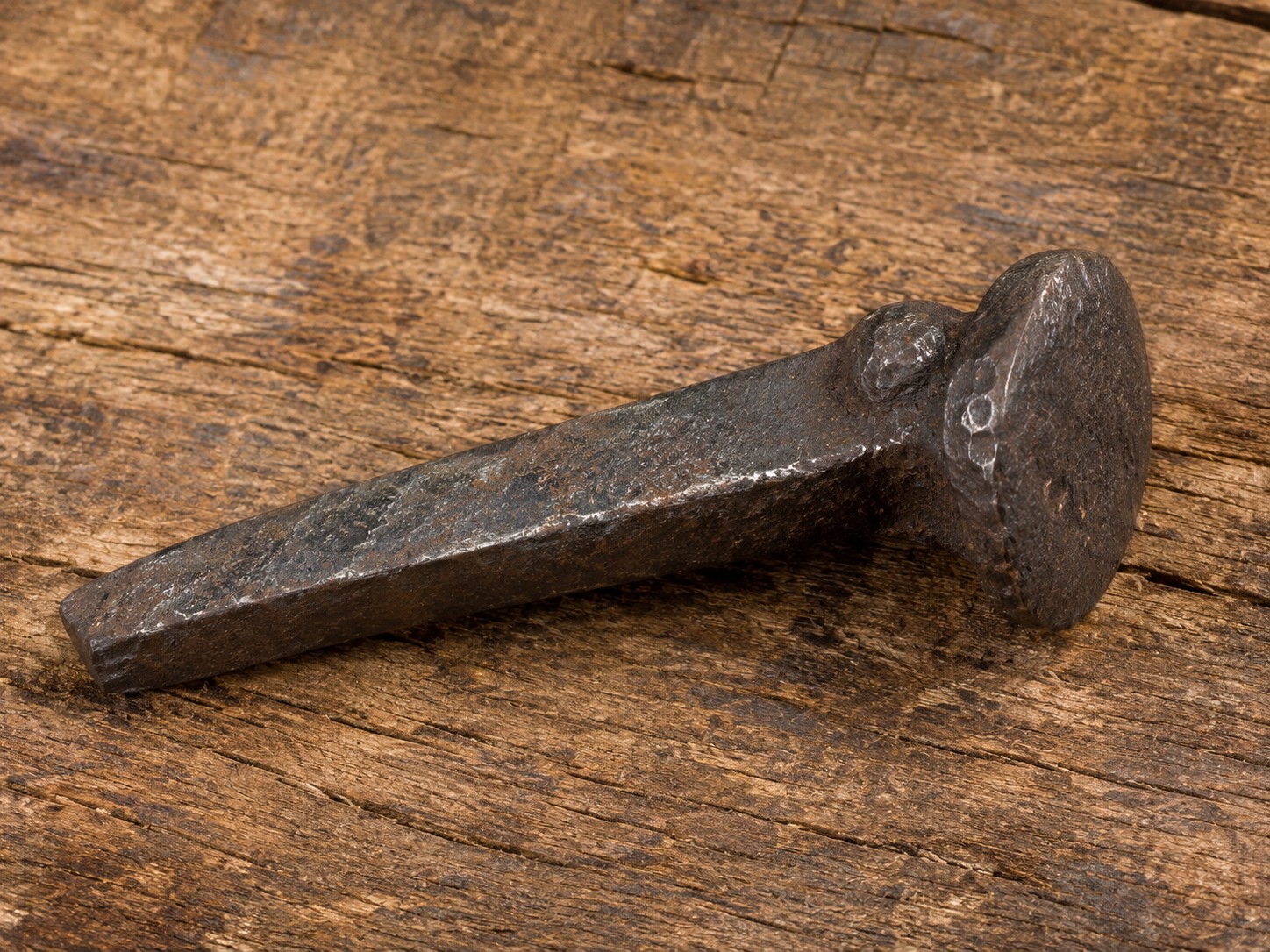
Well, that was fine and dandy, but I still didn’t know what a dead doornail was. I had to dig more. And more, I found. Did you know that in ye olden days doornails were hand-forged, heavy-duty nails, driven through wood and then clenched—the protruding end hammered flat—making them impossible to remove or reuse. Permanently fixed, permanently purposeless, they were, in every practical sense, dead.
And right after unearthing the meaning of dead doornail, I hit paydirt. I came across an entire navigation of other things I could strut around saying. If a doornail can be dead, apparently so can a lot of other things I’d never thought about:

Dead as a stone

Dead as clay

Dead as a herring

Dead as a hammer

English, it seems, has never lacked for dead things.

And then, there’s my favorite one of all. It’s music to my untrained ear:

Dead as the diplodocus

It’s hard to laugh when you’ve got one hand stuck fast to a dead doornail and the other hand being pulled even further back in time by a giant herbivorous sauropod.

I had to laugh. One dead doornail had opened the door to dozens of expressions I use every day without ever stopping to examine what they really ask of me.

The first expression that popped into my head? “Let me know if I can do anything.” I’ve said it more times than I can count.

But what exactly are we saying? At first glance, the meaning seems obvious. Yet the more I think about it, the more I realize that the phrase carries a greater obligation than we usually acknowledge.

After all, those aren’t words of sympathy. They’re words of commitment.

The moment I tell someone to let me know if I can do anything, I’ve volunteered to do something. Maybe it’s as simple as a phone call. Maybe it’s a card. Maybe it’s a casserole. Maybe it’s sitting quietly beside a friend who has just buried a spouse and doesn’t particularly want to talk.

The point is that I’ve offered. Whether the request is large or small, I’ve just volunteered a piece of myself. My words have placed me on the hook.

How often we say those words because they sound appropriate without stopping to consider what we’ve actually promised, without fully examining the obligation hidden inside the offer?

The words are easy enough to say. The casserole takes a little more effort.

Next up was the expression, “I’m so sorry.”

At first glance, it seems simple enough. We say it when someone loses a spouse, receives a frightening diagnosis, buries a parent, or watches a cherished dream collapse.

But what exactly are we saying?

Most of the time, we aren’t apologizing. We didn’t cause the death, the disease, or the disappointment.

Yet the expression carries an obligation all the same.

When I tell someone I’m sorry, I’m not merely acknowledging a fact. I’m entering, however briefly, into another person’s sorrow. I’m saying that your loss matters enough for me to stop, notice, and share a small measure of the burden.

In other words, I’m not simply expressing sympathy.

I’m promising compassion.

That’s a weightier promise than I suspect many of us realize when the words tumble so easily from our lips.

Then came two expressions that sit at opposite ends of the emotional spectrum.

“I hate you.”

Three words.

“I love you.”

Three words.

Yet each carries enough power to alter the course of a relationship, a family, perhaps even a life.

We often treat them as expressions of feeling. But they are more than that. They are declarations. Commitments. Judgments.

To tell someone “I hate you” is not merely to report an emotion. It is to wound, to distance, to diminish, to push another person away.

To tell someone “I love you” is not merely to report an emotion either. It is to assume an obligation—to care, to sacrifice, to forgive, to remain present when remaining present is difficult.

Perhaps that is why both expressions deserve more examination than they usually receive.

They are among the easiest words in the English language to say. And among the hardest to live.

Finally, I came to a phrase that millions of people have spoken for centuries:

“Forgive us our trespasses, as we forgive those who trespass against us.”

I’ve heard it all my life. I’ve spoken it hundreds, perhaps thousands, of times.

But have I examined it? Have I truly considered what I’m asking?

The first part is easy enough. Most of us welcome forgiveness for our failures, shortcomings, and mistakes.

It’s the second part that gives me pause. As we forgive. Not as we intend to forgive. Not as we hope to forgive. Not as we might someday forgive.

As we forgive.

Those words transform a prayer into a promise, a request into an obligation.

And they leave me wondering how many other expressions I use with confidence, familiarity, and conviction without fully considering what they mean—or what they ask of me.

As I reflected on all of these expressions—seemingly light yet laden with responsibility and commitment—I came to a simple conclusion. Going forward, I intend to pay a little more attention to my Ps and Qs.

Not because I suddenly care more about manners. But because I have been reminded that words matter.

They always have.

Whether I am offering help, expressing sorrow, seeking forgiveness, declaring love, or reciting a prayer, I owe those words more than familiarity. I owe them thought.

After all, the unexamined life is not worth living.

Perhaps the same can be said of the unexamined word.

Listening to the Unsaid

“Not to speak is to speak, not to act is to act.”

Dietrich Bonhoeffer (1906-1945; German theologian, pastor, and anti-Nazi activist; Symbol of moral courage and a powerful voice for justice and human rights.

Years ago, a colleague and close friend told me something that I would never forget:

“Always pay attention to what people say …”

And as he continued his advice, his voice became more measured and emphatic:

“but pay more attention to what they don’t say.”

I knew immediately what he meant. When interacting with others, it’s crucial to notice not only their words but also their silences, whether in face-to-face conversations, emails, or text messages. For example, a friend who shares their day enthusiastically but glosses over a specific event might be experiencing discomfort or distress. At work, a colleague who avoids discussing a particular project might be facing hidden challenges or dissatisfaction. In emails, if someone consistently skips over certain questions or topics, it might be a cue that they’re uncomfortable or unwilling to address those issues. Similarly, in text messages, when someone constantly shifts the subject away from certain topics, it might suggest they’re shielding their true feelings. A total failure to mention something significant, like a major life change or a recent accomplishment, might be just as telling. This omission might reveal underlying issues, such as feelings of inadequacy or a desire to avoid judgment. Equally important is when someone fails to respond to something that you’ve shared. It might indicate disinterest or a reluctance to engage with the topic.

These unspoken cues–what I call the unsaid–often reveal more than words ever could, offering deeper insights into the thoughts and emotions that people might not openly express. For example, I’m thinking of President Biden’s July 21 announcement that he was withdrawing from the 2024 presidential race and his subsequent address to the Nation. My siblings have said nothing to me about it, and most of my friends have said little more. It’s as if the President never made the announcement. It’s as if the President never delivered the address. It’s as if those news items were overshadowed by other national and international news.

Right now, you might be thinking:

“Well, I don’t talk politics either.”

I hear you. I get it. You’re probably doing the wise thing. As a rule, I don’t talk politics either with my family and many of my friends because I know that they don’t want to listen to my views. But not even mentioning the President’s decision is different. Although I would not expect to have a discussion, I would expect to hear a brief mention.

The silence that has surrounded me, by and large, since the President’s announcement has caused me to spend more than a little time reflecting on the power of silence and what the unsaid can reveal.

Why People Remain Silent.

Reflecting on why people choose silence reveals a complex mix of motivations. Fear of conflict and judgment often play significant roles, as many worry that speaking up will lead to disagreements or criticism. A lack of confidence in their communication skills or the validity of their thoughts can also hold people back.

Additionally, some prefer to protect others’ feelings, avoiding potentially hurtful conversations. Cultural and social norms can discourage sharing certain thoughts or emotions. Uncertainty about timing or approach further contributes to silence, as does the desire to avoid confronting uncomfortable truths or difficult situations. Others might simply consider their concerns too trivial to mention.

Aside from exploring possible reasons why people choose silence, what about the consequences of this silence. By understanding the dangers of silence, we can better appreciate the importance of speaking up and listening to the unsaid.

The Dangers of Silence.

As I reflected on the whys and wherefores, the dangers of inherent silences popped up in my mind as well. Those dangers can infiltrate our lives and sneak up on us unawares. We need to be aware of them, lest we fall prey to the unintended consequences of our silence. Acknowledging these risks allows us to create a more open, honest, and empathetic environment in our personal and collective lives.

I’m thinking of a number of areas, and I’ve already mentioned two of them. Political Silence. Not discussing President Biden’s decision, for example, can lead to misinformation, apathy, and a lack of preparedness for future developments. Family and Friend Dynamics. Not exploring political issues within families and amongst friends can lead to misunderstandings, resentment, and long-term damage to relationships, potentially causing irreparable harm and estrangement.

Or what about Social Issues? Remaining silent on social justice issues at home and abroad can perpetuate inequality and hinder progress. Silence on systemic racism, gender inequality, and human rights abuses can allow discriminatory practices to continue unchecked, disproportionately affecting marginalized communities and amplifying their suffering.

Environmental Issues loom large, too. Silence on climate change, pollution, and conservation can accelerate ecological damage and irreparable harm, leading to catastrophic climate events and irreversible ecosystem damage. By not speaking out, we’re creating a planet in peril.

Let’s not forget about Workplace Environment. Silence can enable toxic behavior, low morale, and decreased productivity. It can also stifle innovation, perpetuate systemic issues, and harm employee mental health. By speaking up, we can foster a culture of psychological safety, promote positive change, and create a more inclusive work environment.

In the area of Mental Health, silence can exacerbate mental health struggles, allowing stigma, shame, and suffering to persist. By not speaking out, we prevent others from seeking help and hinder our own healing, but by sharing our experiences, we can reduce stigma and increase support.

Spirituality is another area that we need to consider. Silence can disconnect us from our deepest beliefs and values, leaving us feeling unfulfilled and without purpose. By exploring our spirituality, we can discover new sources of comfort, meaning, and resilience.

Obviously, too, we need to be mindful of Aging and Dying. Silence often surrounds the end of life, leaving us unprepared and unsupported. By not discussing our mortality, we miss chances for closure, healing, and cherished moments with loved ones and fail to make informed decisions about end-of-life care and legacy.

These are just a few examples that illustrate the far-reaching impact of silence across different spheres of our lives. Silence affects other areas of our lives, too, such as Education, Media and Journalism, Personal Relationships, and Community and Social Movements. By acknowledging the impact of silence in these spheres, we can work towards creating a more open, honest, and empathetic society, where our voices are heard and valued.

Transforming the Silence.

It seems to me that, at a minimum, we need to have these conversations–even the hard ones–with ourselves so that we know where we stand and what we stand for. Ideally, we need to have those conversations–even the hard ones–with our families, our friends, our neighbors, our colleagues, and our world at large. If we choose silence, we need to remember its inherent dangers. Equally important, if others choose silence, we need to remember to listen to the unsaid. The silences we hear can offer powerful and empowering insights.

As we navigate the complexities of silence, may we find the courage to speak up, listen deeply, and create a world where every voice is valued and feels safe being heard. Not to speak is to speak, and by finding the courage to speak up, we can break free from the constraints of silence and foster a culture of openness, empathy, and understanding. Breaking the silence is crucial not only for our personal growth and relationships but also for our collective well-being.

Let’s resolve to raise our voices and transform the silence.