
“The unexamined word is not worth using.”
—Brent L. Kendrick (b. 1947). Essayist, educator, and literary scholar, whose work explores the unexpected weight of ordinary life.
“Have you ever heard that expression before?”
I thought it might be a Southern idiom, and since Gary grew up in the Midwest, I wasn’t sure he knew it.
“What expression?”
“The one I just used. Dead as a doornail.”
“I have.”
Fine. It was settled. We both knew what it meant. Finished. Used up. Worthless.
“Well, it strikes me as one of the silliest things I’ve ever heard of. What on earth is a dead doornail?”
“No idea.”
I didn’t either.
How’s them apples? There we sat, two men who appreciate language and use it with careful precision, agreeing that we knew an expression while at the same time confessing that we didn’t understand the phrase that was central to its meaning.
I don’t like feeling as dumb as a stick, so after morning coffee, I made my way to the Oxford English Dictionary (OED) like a bat out of hell so that I could learn about dead doornails.
Oh, boy. I was right. I knew in a flash that I was going to have a Red Letter Day. Lands sake alive. Dead as a doornail goes all the way back to 1350:
“For but ich haue bote of mi bale … I am ded as dore-nail.” (William of Palerne, l. 628)
Don’t worry. I’ll dress it up in some modern rags so that it makes sense:
“For unless I have remedy for my sorrow, I am dead as a doornail.”
Well, that was fine and dandy, but I still didn’t know what a dead doornail was. I had to dig more. And more, I found. Did you know that in ye olden days doornails were hand-forged, heavy-duty nails, driven through wood and then clenched—the protruding end hammered flat—making them impossible to remove or reuse. Permanently fixed, permanently purposeless, they were, in every practical sense, dead.
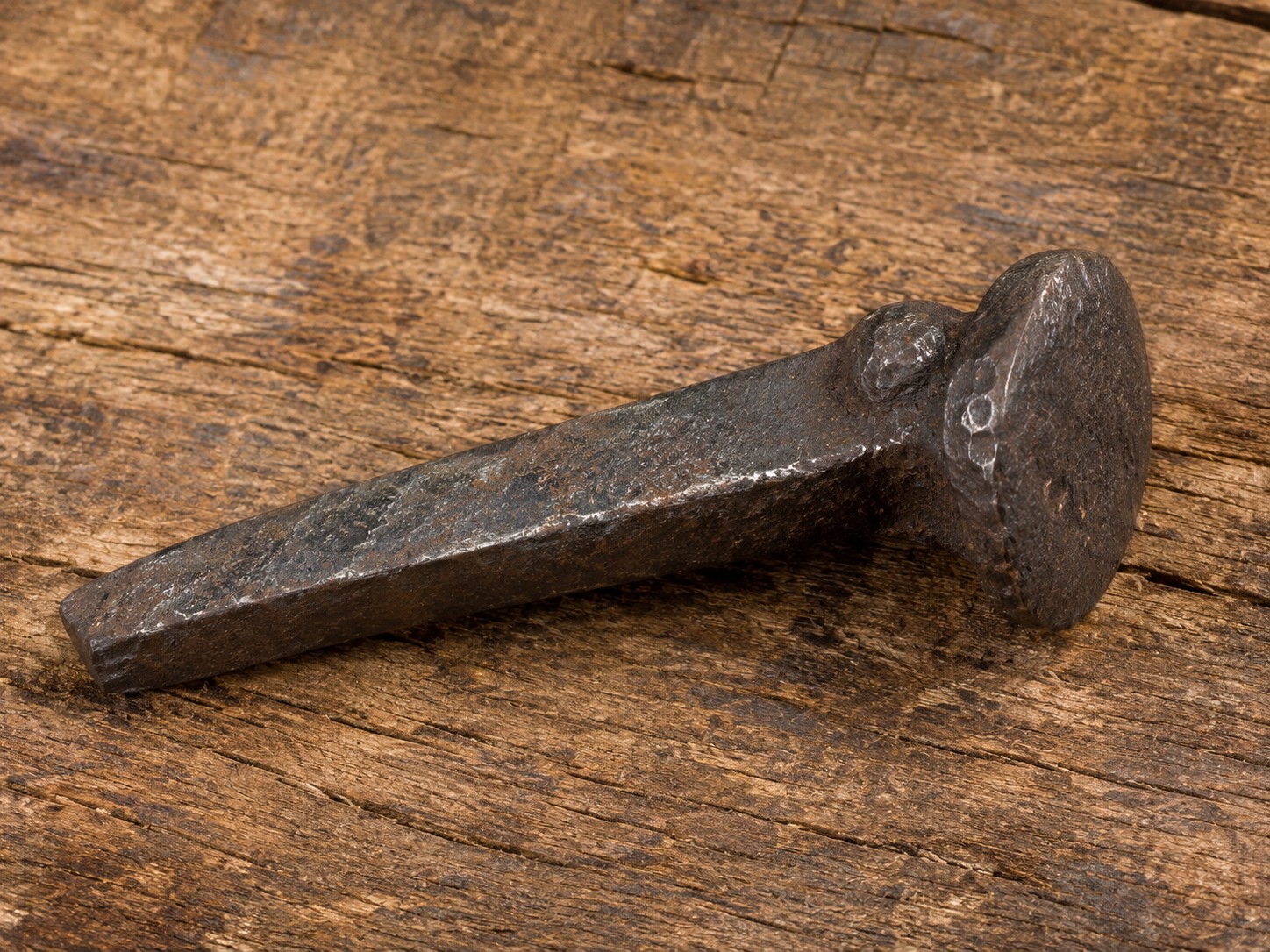
And right after unearthing the meaning of dead doornail, I hit paydirt. I came across an entire navigation of other things I could strut around saying. If a doornail can be dead, apparently so can a lot of other things I’d never thought about:
Dead as a stone
Dead as clay
Dead as a herring
Dead as a hammer
English, it seems, has never lacked for dead things.
And then, there’s my favorite one of all. It’s music to my untrained ear:
Dead as the diplodocus
It’s hard to laugh when you’ve got one hand stuck fast to a dead doornail and the other hand being pulled even further back in time by a giant herbivorous sauropod.
I had to laugh. One dead doornail had opened the door to dozens of expressions I use every day without ever stopping to examine what they really ask of me.
The first expression that popped into my head? “Let me know if I can do anything.” I’ve said it more times than I can count.
But what exactly are we saying? At first glance, the meaning seems obvious. Yet the more I think about it, the more I realize that the phrase carries a greater obligation than we usually acknowledge.
After all, those aren’t words of sympathy. They’re words of commitment.
The moment I tell someone to let me know if I can do anything, I’ve volunteered to do something. Maybe it’s as simple as a phone call. Maybe it’s a card. Maybe it’s a casserole. Maybe it’s sitting quietly beside a friend who has just buried a spouse and doesn’t particularly want to talk.
The point is that I’ve offered. Whether the request is large or small, I’ve just volunteered a piece of myself. My words have placed me on the hook.
How often we say those words because they sound appropriate without stopping to consider what we’ve actually promised, without fully examining the obligation hidden inside the offer?
The words are easy enough to say. The casserole takes a little more effort.
Next up was the expression, “I’m so sorry.”
At first glance, it seems simple enough. We say it when someone loses a spouse, receives a frightening diagnosis, buries a parent, or watches a cherished dream collapse.
But what exactly are we saying?
Most of the time, we aren’t apologizing. We didn’t cause the death, the disease, or the disappointment.
Yet the expression carries an obligation all the same.
When I tell someone I’m sorry, I’m not merely acknowledging a fact. I’m entering, however briefly, into another person’s sorrow. I’m saying that your loss matters enough for me to stop, notice, and share a small measure of the burden.
In other words, I’m not simply expressing sympathy.
I’m promising compassion.
That’s a weightier promise than I suspect many of us realize when the words tumble so easily from our lips.
Then came two expressions that sit at opposite ends of the emotional spectrum.
“I hate you.”
Three words.
“I love you.”
Three words.
Yet each carries enough power to alter the course of a relationship, a family, perhaps even a life.
We often treat them as expressions of feeling. But they are more than that. They are declarations. Commitments. Judgments.
To tell someone “I hate you” is not merely to report an emotion. It is to wound, to distance, to diminish, to push another person away.
To tell someone “I love you” is not merely to report an emotion either. It is to assume an obligation—to care, to sacrifice, to forgive, to remain present when remaining present is difficult.
Perhaps that is why both expressions deserve more examination than they usually receive.
They are among the easiest words in the English language to say. And among the hardest to live.
Finally, I came to a phrase that millions of people have spoken for centuries:
“Forgive us our trespasses, as we forgive those who trespass against us.”
I’ve heard it all my life. I’ve spoken it hundreds, perhaps thousands, of times.
But have I examined it? Have I truly considered what I’m asking?
The first part is easy enough. Most of us welcome forgiveness for our failures, shortcomings, and mistakes.
It’s the second part that gives me pause. As we forgive. Not as we intend to forgive. Not as we hope to forgive. Not as we might someday forgive.
As we forgive.
Those words transform a prayer into a promise, a request into an obligation.
And they leave me wondering how many other expressions I use with confidence, familiarity, and conviction without fully considering what they mean—or what they ask of me.
As I reflected on all of these expressions—seemingly light yet laden with responsibility and commitment—I came to a simple conclusion. Going forward, I intend to pay a little more attention to my Ps and Qs.
Not because I suddenly care more about manners. But because I have been reminded that words matter.
They always have.
Whether I am offering help, expressing sorrow, seeking forgiveness, declaring love, or reciting a prayer, I owe those words more than familiarity. I owe them thought.
After all, the unexamined life is not worth living.
Perhaps the same can be said of the unexamined word.

