Once More: Glimpses of My Mother’s Hands

On this Mother’s Day weekend, I’m thinking not only of mothers, but of everyone who has nurtured, steadied, comforted, protected, and loved—often quietly, often without recognition.

For those celebrating mothers, missing mothers, remembering mothers, or mothering others in their own ways, I wanted to share this post again.


“Mothers hold their children’s hands for a short while, but their hearts forever.”
–Unknown


On top of my bedroom chest of drawers is a pair of studio portraits of my father and my mother. They’re hand-colored originals, each measuring 3 inches by 4 inches, taken a year or so after my parents’ 1932 marriage. The portraits are in hinged gold frames. My father is on the left. My mother is on the right. A lamp behind illuminates both.

Right now, as I lie in bed, I’m focusing on my mother. Even though her portrait is five feet or so away, she is as clear to my sight as if she were right beside my bed. I’m glimpsing into a distant past, where memories of her linger like whispers.

She’s seated on a bench, wooden, perhaps. The artistic backdrop transports me outdoors. Trees frame the scene, a tall one behind her, their branches reaching skyward, and shorter ones in the background, on the bank of a calm body of water, perhaps a serene river.

She’s wearing a dark dress with short sleeves and a deep-cut neckline, accentuated by a glistening leaf-shaped brooch.

Her finger-waved hair, parted in the middle, falls softly just below her ears. Her eyes are dark and intense, with a gaze that seems to pierce through the image. They are surrounded by her soft, light skin tone, which provides a striking contrast. Their depth and intensity draw me in and make me wonder. What secrets lie hidden behind them? What stories and dreams do they hold? Are they looking into the depths of the world, seeking answers and understanding? Are they inviting me to join in their quest for knowledge?

Her features captivate and mesmerize me, regardless of how often I look at her portrait. Somehow, though, I seem to see my mother’s hands the most. Their contours are soft and graceful, and the fingers curve delicately, one hand gently clasping the other hand.

I see my mother’s hands the most because I know her hands the best.

My mother’s hands are engaging handsHer hands held mine when I was but a child, and we scurried down the path behind our home where two boulders stood sentinel on either side as colored snow fell down in green and pink and blue flakes, making me believe in magic. Her hands held mine when I was a few years older, and she led me outdoors when our world was covered in snow and showed me how to lie down in stillness, moving arms and legs left and right to create angel wings, making me believe in flight. Her hands held mine a few years later when our world was green with summer and led me to lie down in warm grass, eyes skyward, discovering cloud figures, pointing out the details to one another so vividly that each could see brand new worlds of our own imaginings, making me believe in sharing visions so that others might see.

My mother’s hands are cooking hands. Her hands could transform pinto beans, onions, cornbread, buttermilk, and sweet potato cobbler into a feast, making me want it weekly. Her hands could turn a 25-pound turkey into a bronzed Thanksgiving dinner that rivaled Norman Rockwell’s iconic oil painting Freedom from Want, making art come alive in our own coal camp kitchen. Her hands could measure out with perfection all the ingredients for any dish from any cuisine that she had tasted with no need for recipe and with no need for measurements, teaching me to trust my senses.

My mother’s hands are versatile hands. Her hands could make our clothing without pattern, simply by taking our measure with her hands, making me aware that some things are more felt than seen. Her hands could cut my hair using scissors, comb, and the soft stretch of her fingers, reinforcing in my mind the marriage of expertise and craftsmanship. Her hands could take a pastry brush and turn a greased baking sheet or cake pan into a perfect likeness of Christ, making me see Holiness in the everyday.

My mother’s hands are industrious hands. Her hands could transform a grassy field into a kaleidoscope of gladiolas or dahlias, bursting with vibrant hues, teaching me to see potential in the ordinary. Her hands could hold her side of a wooden pole stretched through handles of a galvanized tub, carrying water to the garden, making me realize that many hands can carry heavy loads. Her hands could hang wallpaper with finesse, demonstrating how effort can elevate even the smallest task to art.

My mother’s hands are inclusive hands. Her hands always opened wide the door, welcoming everyone as guests into our home, making me value open-heartedness and acceptance of others, regardless of differences. Her hands always set a place for them at our modest table, making me understand that meager becomes abundance when shared with others. Her hands always held theirs in loving celebration and thanksgiving, making me a witness to the genuine communion of mankind.

My mother’s hands are nurturing hands. Her hands cared for her father and her mother in times when they could not take care of themselves, impressing on me the importance of helping others. Her hands cared for my dad and me and all my siblings, even when our hands might well have lessened the weight that she carried in hers, showing me that strength comes with sacrifice. Her hands took pine rosin to hold tight and heal the gash in my foot, the scar on my sole still a reminder of what she had learned from her mother’s hands, helping me appreciate generational know-how and wisdom.

My mother’s hands are writing hands. Her hands penned sermons when she pastored a church, making me realize that the intellect can lead the heart to be slain by the Holy Spirit. Her hands sent letters out into the world to those she knew well and to those she hardly knew at all, making me see that the power of words reaches beyond the pulpit. Her hands discovered typewriter keys late in life, determined that hand tremors would not tame her self-expression, making me realize the strength of determination.

My mother’s hands are spiritual hands. Her hands joined the hands of other warriors, praying over me as a child with polio, making me–one of the lucky, uncrippled survivors–a believer in the power of prayer. Her hands walked their way through her Bible and her commentary books–from cover to cover–more than thirty times in her lifetime, making me know the richness to be gained through close readings and research. Her hands clapped, sending thunderous applause into the Heavens to show her thankfulness and gratitude, making me know the joy of praise.

My mother’s hands are clasped hands. As she lay in her casket after her funeral, I removed her rings, took her hands and clasped one gently on top of the other, leaned in for a farewell kiss, and, then, closed the lid.

After her burial, my hands–strong from the strength of hers–released from their cage three white doves, flying upward toward the celestial realm, perhaps at that same mysterious moment when my mother found her way back home and celebrated her arrival with outstretched hands.

§ § §

Bertha Pearl Witt Kendrick (May 16, 1912–May 30, 2010)

Ounce of Prevention. Pound of Cure.


“Never mistake the season for the signal.”

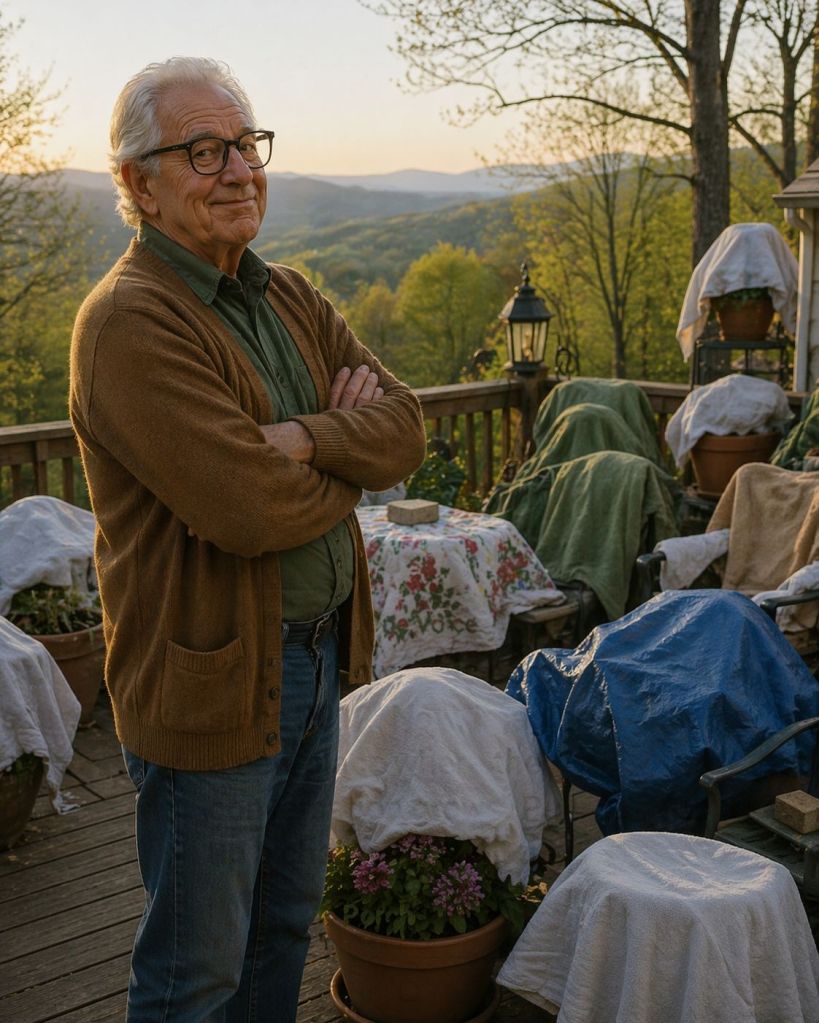
—Poor Brentford Lee (b. 1947.) He reads the signs, trusts the seasons, studies the soil—and is not above reminding others when they’ve mistaken one for the other.


“Absolutely not!”

“You must! Please, help.”

“This time, young man, you’ve gotten yourself in so deep that I can’t help.”

“Yes, you can. I know you can. You know everything.”

I was certain my pitiful entreaties would soften Poor Brentford’s heart and move him to help.

But no. He would not be moved.

“You got yourself into this mess all by yourself.”

“And just how did I do that? Come on, Brentford Lee. Help me.”

“I can’t. Why on earth did you think you could read Mother Nature—in April, no less? Don’t you know that’s the cruelest month of all, especially in the Shenandoah Valley?”

I knew that, of course. It’s the time of year when the world seems to be coming alive again—only to have Mother Nature step in and kill that vibrant new growth with a harsh, chilling frost.

That’s why Valley folks rarely plant tender crops until mid-May, after the danger of frost has passed.

So. There. I do know those precautions.

But last year, we found ourselves in a new gardening zone. Our old Zone 6 became Zone 7, with the danger of frost ending around mid-April.

I was cautiously thrilled—but I still waited until early May, when the ground was warm and the forest fully leafed.

This year, though, my mountaintop felt different. The soil warmed sooner. The forest leafed sooner. Sooner, it turned out, was early April.

“Wait and see,” I kept telling Gary. “When the mountaintop turns green, we’re past the danger of frost.”

“Are you sure?”

“Of course, I am. Mother Nature knows what she’s doing. She’s telling us Spring has overtaken Winter.”

And so it was. I had convinced myself. I managed to convince Gary. Together, we planted—and rejoiced in the head start.

Just as we beamed our widest smiles, we checked the weather.

Mother Nature was pulling a switcheroo.

Frost. April 22. 2:00 a.m. to 10:00 a.m.

27°? 30°?

The forecasts varied, but we knew: our plants were doomed unless we intervened—and maybe even then.

Poor Brentford was no help whatsoever. He had the nerve to smirk:

“An ounce of prevention is worth a pound of cure.”

I know. I know. We should not have planted.

But we did.

And there we were, scrambling to invent a pound of cure for our poor, tender, pitiful plants—deck, patio, yard—everywhere. Pots filled with blooms that had no business showing off this early.

What followed was less a plan than an emergency deployment.

Tarps emerged from the basement. Towels defected from bathrooms. A festive tablecloth—clearly never intended for agricultural duty—was reassigned to frost prevention. Gary moved with operational urgency.

Clay pots became heat traps. Chairs became scaffolding. We hurried bewildered begonias to safer quarters. We draped. We pinned. We tucked. We hoped.

By dusk, the deck resembled an archaeological dig disguised as a linen sale. Shapes rose under fabric—domes, humps, improbable ridgelines of cotton and optimism. Each tender plant huddled beneath its improvised shelter, awaiting judgment from a sky that had seemed so kind only hours before.

Poor Brentford Surveys the Scene.

Judgment came in the early morning hours.

Harsher than expected.
Colder than predicted.
Twenty-four degrees.

Poor Brentford surveyed the scene.

“Your pound of cure was heroic,” he observed. “But was it enough?”

I looked out at the mountains and smiled. The trees, in all their green fullness, had been spared.

We began uncovering our plants.

One by one.

Here a bloom lifted.
There a stem held.
Elsewhere, leaves—cold, but alive.

We kept going.

More life.
More holding on.
More quiet insistence.

In the end, we lost only one.

And that one? To be honest, I had not been covered it very well at all.

I stood there a moment longer than necessary.

I had been prepared to blame the frost.

This time, I didn’t.

And I let that be enough.