“The first porch is where you find your voice. The second porch is where your voice finds others.” —Poor Brentford Lee (b. 1947. Keeper of two porches, one mountain, one dog, and an inexhaustible supply of things worth saying—none of which he has to say alone anymore, thanks to his partner, Gary.)
Dear Faithful Readers,
You’ve been here with me on the porch since—well, some of you since the very beginning, back when I built it as nothing more than a place where you could pull up a chair and talk with me about the joys, challenges, and discoveries of research. We kept right on doing that from 2012 to 2021 when I decided to make the porch a little more fun by bringing you weekly creative nonfiction essays.
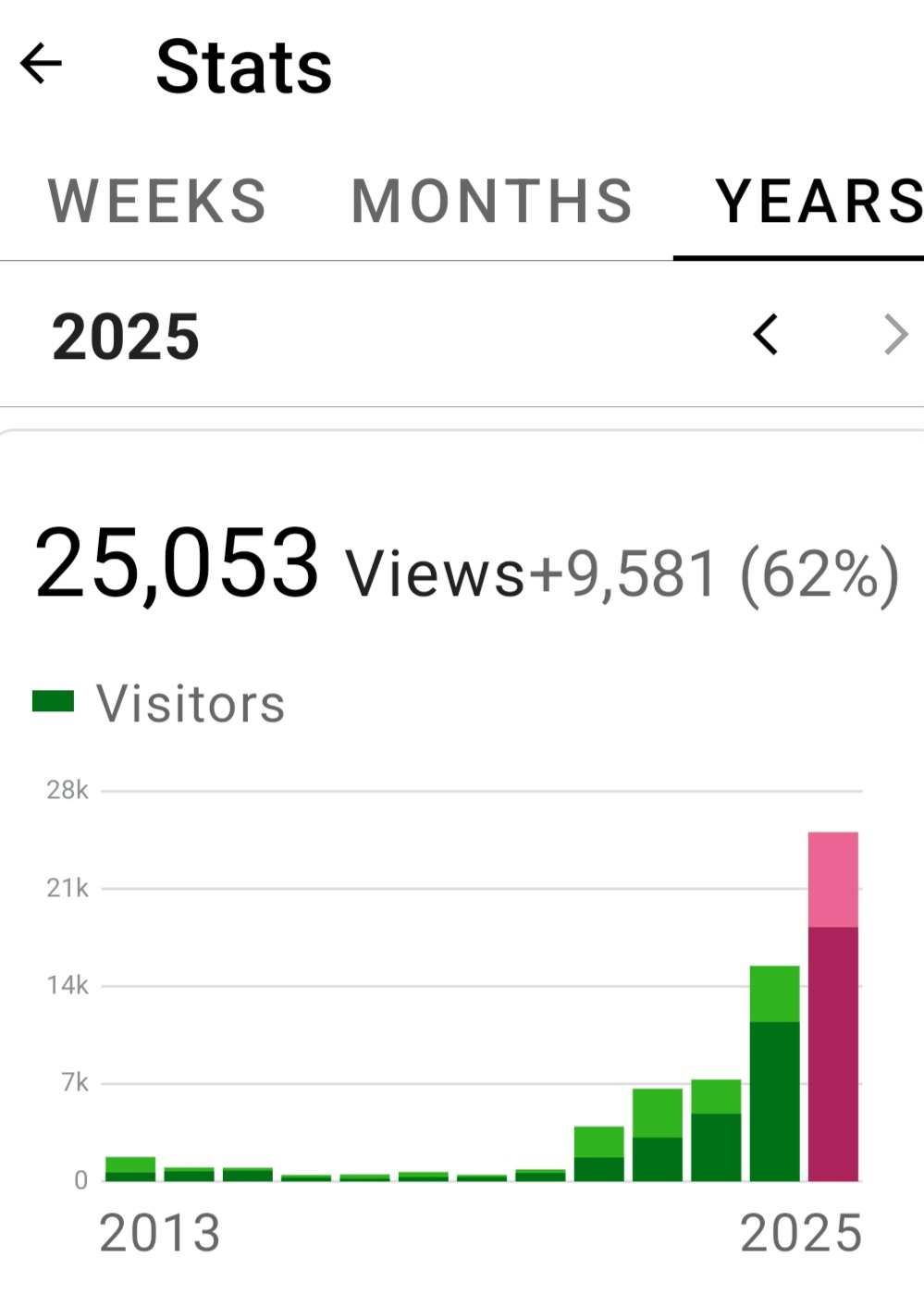
I’m still at it. Nearly 750,000 words later. Yes, you read it right. Foolin’ around in bed every night with ideas and words adds up. I’m spurred on by you, my Dear Readers, whose numbers keep increasing annually! Last year, we shared more than 35,000 views right here on the porch.
But I’ve built a brand-new porch, and I want you to be the first to know about it.
Don’t worry, though. I’m not leaving The Wired Researcher porch. It will remain open virtually forever. Same Monday mornings. Same voice–mine, with Poor Brentford’s voice chiming in from time to time. We’ll both be there, waiting for you.
I just heard someone shout out:
“So, why are you building a new porch? What’s that all about?”
Well, for starters, it has better lighting, and it might just bring in more neighbors for all of us to visit and exchange ideas.
I’m counting on you to check it out. I’ve named the second porch The Kendrick Chronicles.
“Where on earth is this new porch of yours?”
Gracious me! You know that I like to take my time–slow and easy like. In a sec, I’ll give you the link so that you can check it out for yourself. And when you do, go ahead and Subscribe! From that point forward, my essays–ever goldern new one that hits the world, every Monday morning like a neighbor who always brings something worth reading and never overstays his welcome–will find their way directly to your Inbox.
You can find this new porch of mine in Substack. Here’s the link:
“What will I find when I get to this new porch of yours?”
Why, gracious me! You’ll find a comfy chair with your name on it and a handful of your favorite essays with my name on ’em:
● Redbuds of Remembrance
● Learning to Love in New Ways
● I Am Afraid
● Poor Brentford Cleans the Wax Out of His Ears
● Two, Together
● Glimpses of My Mother’s Hands
● The Ghost of Palmyra Church Road
● Truths Half-Told. Letters Half-Burned. A Legacy Waiting to Be Fully Heard.
● Carrying the Bags of Colonial America’s Humourist
And get this. If you subscribe, next week you’ll get an essay about a kitchen disaster beyond belief: “Oh, No! No Sourdough!” And the week after that, “What We Know. What We Believe.” It may be the most complete thing I’ve ever written about who I am and what I believe about what comes next.
So go on now. Pull up a chair. Same voice. Wider porch.
“The pieces of the puzzle come together seamlessly; better still, Kendrick’s investigation informs and enriches the Humourist essays, illuminating their historical and literary contexts.” —Publishers Weekly
Publisher’s Weekly Cover, December 15-22, 2025
I knew the review was scheduled to appear. I’d marked the date. I’d even ordered copies in advance.
Still, nothing quite prepares you for the moment when the work arrives by weight.
Nineteen pounds, to be exact.
The box from Fry Communications sat innocently enough at the door, but when I lifted it, I laughed—an unguarded, surprised laugh. This wasn’t an email notification or a discreet PDF link. This was paper. Ink. Volume. Evidence that something quiet and patient had crossed a threshold into the world of objects.
Inside were stacks of Publishers Weekly—the December 15-22 issue, fresh from the press. And there it was: the review of Unmasking The Humourist, resting calmly among other books, other arguments, other claims on a reader’s attention. No fanfare. No special lighting. Just…there. As if it had always belonged.
The review in context.
That may sound small. It isn’t.
For writers—especially those of us who work in literary recovery, archival research, and historical attribution—most of the labor happens far from spectacle. It happens in libraries and databases, in footnotes and marginalia, in moments when you are unsure whether the trail you’re following will narrow into clarity or vanish altogether. There are no crowds for this kind of work. No applause when you discover one more corroborating detail, one more pattern that holds.
Unmasking The Humourist grew out of precisely that kind of sustained attention. The essays at its center—satirical, incisive, mischievous pieces published pseudonymously in the South-Carolina Gazette in the early 1750s—had long been admired but never convincingly attributed. Their author hid in plain sight. The work demanded patience: weighing tone against context, tracing bureaucratic fingerprints, listening carefully to what language reveals when you stop rushing it.
And patience is not fashionable. We live in a moment that rewards speed, certainty, and hot takes. Literary recovery is none of those things. It is slow, provisional, and often lonely. You work without knowing whether recognition will ever arrive—or whether it even should. You work because the work matters.
That’s why seeing the review in Publishers Weekly mattered to me—not as a trophy, but as confirmation that the argument held. That it made sense beyond my own desk. That it earned its place in the broader conversation about early American literature and satire.
What struck me most wasn’t pride. It was scale.
The full review.
Here was my book, not elevated or isolated, but contextualized—surrounded by other studies, other voices, other claims. This is where scholarship belongs: not shouted, but situated. Not proclaimed, but tested.
There’s something grounding about that.
I spread the pages out on the table. I read the review again, this time with the odd sensation of distance—as though I were encountering the project for the first time. The reviewer understood what I had tried to do. Better still, they understood why it mattered. That’s the quiet victory every researcher hopes for.
And then there was the sheer physicality of it all. The stacks. The heft. The knowledge that these copies would travel—to libraries, to colleagues, to readers I’ll never meet. Work that had lived for years in notes and drafts now had mass. It could be lifted. Shared. Passed hand to hand.
Research takes time. Recovery takes patience.
But sometimes—blessedly, unexpectedly—the work becomes something you can actually lift.
And when it does, you pause. You hold it. You let it be real.
You took me by surprise again this morning. As always, when I awakened, I checked my Fitbit to see how my heart did overnight. Then I checked WordPress to see how my readers were doing.
And there you were. Another thousand views. A quiet jolt to the chart. Numbers climbing when I wasn’t looking.
You’ve been dancing higher and higher since October, when I passed 15,000 and figured I’d reached my high-water mark. I even wrote a piece of thanks back then, thinking I’d said all there was to say. But now here we are—December 11th—and this little corner of the internet has gathered 25,053 views.
I’ve done nothing different. I have no flashy headlines. I have no trending hashtags. I just keep following the same rhythm: writing essays born from memory in a home filled with love. I just keep foolin’ around with words and ideas.
So why now, after all these years?
That question hangs gently in the room with me. It’s not demanding an answer. It’s simply inviting a reflection. Maybe something shifted in the writing. Maybe it’s more expansive. Maybe it’s more lived-in. Maybe it’s a voice carrying a steadier warmth now. Maybe it’s grief that’s softened into grace. Maybe it’s love that arrived not with fanfare, but with a quiet hand stretched out in invitation. Maybe it’s all of those things. Maybe. And add to all those maybes one more. Maybe it’s readers sharing with readers.
Gary, of course, doesn’t ask to be written about. But his presence is here, between the lines, in the patience of a paragraph, the steadiness of tone, the way I’ve learned to let silence do some of the talking.
Ruby, on the other hand, insists on being written about, whether she’s nosing me away from my smartphone or curling up in solidarity as I revise for the twenty-fifth time. She is, as always, the keeper of the tempo, the mistress of the move.
So this isn’t an open letter to public stats. It’s a letter to something deeper. It’s a letter to what it means to keep writing when no one’s watching, and then to wake up and find that someone was.
My essays aren’t meant to dazzle. And I know: they don’t. They’re just small acts of holding up the light, one weekly reflection at a time. The fact that they’re being read, now more than ever, tells me something I didn’t expect: quiet honesty still finds its way.
Thank you, Sudden Surge, for reminding me that patience has its own reward, that consistency is a kind of faith, and that somewhere out there, readers are still pausing to linger with a slow essay from the mountain.
I don’t know what this upturn means, or where it leads. But I do know I’ll keep showing up with my smartphone in hand and love at my side.
“The real voyage of discovery consists not in seeking new landscapes, but in having new eyes.”
—Marcel Proust (1871–1922). from his The Captive (1923), the fifth volume of his seven-part masterpiece In Search of Lost Time. Proust’s exploration of memory and perception reshaped modern literature.
Somewhere I saw it. Everywhere, maybe. Nowhere? Wherever—it grabbed hold of me and wouldn’t let go.
It was the gripping question:
“What would you tell your 18-year-old self?”
It lingered—since forever. Or yesterday? Either way, one morning not long ago, I tried to get rid of it by tossing it out to others—as if the orphaned question might leave me alone once it found a new home.
The replies were as varied as I expected, and as humorous and matter-of-fact, too:
“Buy stock in Apple and Amazon.”
“Be good at life; cultivate a well-rounded lifestyle.”
“Be patient; trust in God.”
“Serve God better.”
“Stay young; don’t age.”
“Be friends with your mom. Spend more time with family. Don’t let important things slide.”
“Don’t worry about impressing anyone other than yourself.”
Almost always, their offerings included a request to hear what I would have told my 18-year-old self. As a result, the question dug itself more deeply into my being, as I stalled by answering:
“I’m still thinking.”
It was true. But I knew I had to answer the question, too, not for them, but for me.
Several possibilities surfaced.
The first was rather light-hearted:
“You don’t have to have it all figured out. Just stay curious, kind, and honest. Don’t waste your energy chasing approval. Learn to cook, listen more than you talk, and remember: dogs and good people can tell when your heart’s true. Oh, and wear sunscreen.”
I dissed it immediately (though it carried some truths). Then I came up with:
“Don’t rush. The world will still be there when you’re ready to meet it. Pay attention to seemingingly insignificant things. They’re where meaning hides. Keep your humor close and your integrity closer. Fall in love, but don’t lose yourself in the process. And when life hands you a fork in the road, check which one smells like supper.”
I didn’t like that any better, though it, too, spoke truth. I was certain I could nail it with a third attempt:
“You think you know who you are right now, but you’re only meeting the opening act. Be kind. Be curious. And don’t confuse noise for meaning. The world rewards loudness, but grace whispers. Listen to that whisper. It’s you, becoming.”
Then six words sauntered past, not so much tinged with regret as with remembrance. Six words. Six.
“Be a citizen of the world.”
Those words had crossed my path before. In fact, I remember exactly when—not the actual date but instead the general timeframe and the location.
It would have been in the early 1980s, when I was working at the Library of Congress. I was standing in the Main Reading Room of the Jefferson Building, as captivated by its grandeur as I had been when I first started working there in 1969.
Above me, light spilled through the dome like revelation. Gold, marble, and fresco conspired to make the air itself feel sacred, as if thought had taken on architecture. Beyond those arches, knowledge waited in silence, breathing through pages and time.
Even now, I can close my eyes and see it: the way the dome seemed to rise into forever—an invitation, a reminder—that the world was larger than any one life, and I was already standing in the heart of it.
As an editor of the National Union Catalog, Pre-1956 Imprints—the “bibliographic wonder of the world”—I knew every alcove, every corridor, every one of its 532 miles of bookshelves, holding more than 110 million items in nearly every language and format. I had walked those miles over and over again doing my editorial research. I had come to learn that knowledge knows no barrier. I had come to learn that it transcends time and place.
At the same time, I decided that I could transcend place, too. With my experience and credentials, I began to imagine working in the world’s great libraries—first the Library of Congress, then The British Library, then the Bibliothèque Nationale de France, then the Biblioteca Nazionale Centrale di Roma.
I didn’t know where the journey would end, but it gave me a dream, a dream of being a citizen of the world of learning.
More than that, it was a dream untainted by pretense—never by the notion of being uppity. Instead, it was a simple dream. I figured that if I had made it from the coal camps of West Virginia to the hallowed halls of our nation’s library, I could pack up whatever it was that had brought me that far and go throughout the world, savoring knowledge and learning—and perhaps, over time, gaining a smidgen of wisdom.
But here’s the catch. If transcending geography is the measure of my dream’s fulfillment—the wanderlust, the scholar’s yearning for marble floors, old paper, and the hum of languages not my own—then, at first glance, I failed. I never made it to any of the world’s great libraries except the Library of Congress.
However, as I look back through my life-lens of 78 years come November 20, I realize that maybe I went beyond the geographic destinations that I set for myself.
I went from the mountains of West Virginia to the monuments of D.C., from there to the marshlands of South Carolina where I earned my Ph.D., from there back home to the monuments, and, from there, at last, to the Shenandoah Valley and college teaching that took me internationally via Zoom and tapped into Open Educational Resources that did away with the restrictive border of printed books.
In a sense, then, although I didn’t cross country borders, I crossed the borders of ideas, with my voice carrying me farther than my feet ever needed to.
I’ve managed to live generously, teach across generations, write with empathy, research with joy, garden with gratitude, cook with curiosity, and love with intentionality. In all of that, I have been that citizen of the world—not by passport stamps, but by curiosity. By compassion. By connection.
Maybe that’s the truth I’d offer my 18-year-old self:
“You don’t have to travel the world to belong to it. You only have to live with your eyes open.”
—Terry Tempest Williams (b. 1955. American writer and environmental activist whose lyrical essays explore the intersections of personal narrative, place, and ecological stewardship.)
Something snuck up on me yesterday.
I was talking on the phone with my 90-year-old sister when I glanced down at my smartphone, saw my WordPress dashboard—and nearly did a spit take.
Over 15,188 views this year already!
That’s already more than all of 2024, and we still have October, November, and December to go. Apparently, my little mountain corner has gone global again—and I couldn’t be more grateful.
To every one of you, My Dear Readers, who reads, comments, shares, or quietly lingers over a sentence or two: thank you. You’ve turned this space into a community of curiosity, compassion, and laughter. Every click, every view, every thoughtful message reminds me that words still matter—and that connection runs deeper than algorithms.
Your Top 10 Favorites of 2025 (So Far)
Every year tells its own story through what readers choose. This year’s list made me smile. It’s a mix of reflection, resilience, and rediscovery—with a dash of irreverence (because, well, it’s me or Poor Brentford Lee or maybe both).
● “I Am Afraid” — A wake-up call for our country—and a reminder of who we still can be.
●“The Place: Charleston” — The launch of my Unmasking The Humourist: Alexander Gordon’s Lost Essays of Colonial Charleston, South Carolina.
There’s still more to come before year’s end—new essays, reflections, maybe even a few surprises that have been sitting in my drafts waiting for the right moment. Perhaps even one or two guest posts by our famed and acclaimed Poor Brentford Lee.
I can’t promise I’ll always be profound, but I can promise I’ll keep showing up with authenticity, honesty, humor, and heart.
Thank you, My Dear Readers, for being here, for reading, and for reminding me—every day—that a single voice can still find an echo.
Benjamin Franklin had Poor Richard. TheWiredResearcher now welcomes a guest contributor: Poor Brentford Lee, who has agreed to sanctify our troubled times with a bold mix of satire and sass.
Approved by ole Ben Franklin. Improved by Poor Brentford Lee
“Forgiveness is divine—but FramilySaid™ is faster and comes in gummable gummies.”
-— Poor Brentford Lee (b. 1947). Unlicensed. Unfiltered. Unapologetically adopted. Known for saying the quiet part loud, he’s back by popular demand (and at least one cease-and-desist letter). Seasoned expert in nothing but experience. Sourdough connoisseur. Self-declared inventor of emotional supplements. Hangs out somewhere between a heavenly blessing and A HOMEMADE biscuit (preferably sourdough).
Years and years ago, in one of my brilliant moments—you know, the kind that arrive somewhere between misplacing your glasses and finding your purpose—I concocted a miracle elixir. An emotional balm. A psychological salve. A chewable sacrament.
And I’m convinced—when it’s finally patented, mass-produced, and widely distributed—it will relieve the world of all its wounds and arrows of outrageous fortune.
Or, at the very least, it will help you forget them for a little while. And really, isn’t that what the world needs most right now? Not advice. Not enlightenment. Not deep therapy.
All you need is Forgetfulness.
Chances are good that if you’re reading this—and have not forgotten—you’re an Oldie-Goldie who still remembers when love was all you needed, and your hips didn’t pop when you bent over.
But friend, times have changed. Now what the world needs isn’t just love—it’s a little bit of blessed, blissful forgetfulness.
So in the spirit of rock legends and gospel truths, I offer you an updated version of the Beatles’ classic. Hum along. Or gum along. Or just pretend you know the tune and clap on the offbeat:
All You Need Is Forgetfulness (Redux) (with apologies to Lennon & McCartney—and gratitude, too)
There’s nothing they can say that can’t be un-heard No shame so deep it can’t be deterred No burn so old it can’t be un-spurred You can let it go
All you need is forgetfulness (Da-da-da-da-da) All you need is forgetfulness (Sing it like you mean it) All you need is forgetfulness, forgetfulness Forgetfulness is all you need
(Slide whistle optional. Biscuit in hand, sourdough preferred.)
Yep. That’s it. All you need is forgetfulness. Not the kind that sneaks up on you in your golden years, when you can’t remember who you bit when you meant to kiss or where you were going with your pants unzipped or where you’ve been with a bowl of popcorn when you went to get strawberries. No—I’m talking about on-demand forgetfulness. Reliable, immediate, with controlled-release options for holidays, family reunions, and any Sunday when your phone rings before you’ve had time to check your Fitbit to make sure you made it through the night.
That, My Dear Readers, is where FramilySaid™ comes in.
They mean well. They always do—those “bless your heart” people. But sometimes, what your framily says can lodge itself right in the soft tissue of your soul, like a splinter from the communion table.
That’s why I made FramilySaid™—not FDA-approved (yet), but clinically proven (by yours truly) to dull the sting of being emotionally ignored by people who should know better. In gummable form, naturally.
A Quick Word about the Name.
FramilySaid™ is exactly what it sounds like. It’s a mountain prof’s fusion of friends, family, and the things they’ve said—bless ’em.
Because sometimes, it’s the people closest to you (by blood—or, in my case, by adoption—history, or shared casserole) whose words linger just a little too long. Who don’t mean to hurt you but somehow do. Who support you privately … but not publicly. Who say “I love you” but never with the clincher: “justtheway you are.”
When they speak and zing you with their petty little barbs? FramilySaid™ can help you. Un-hear it. Un-feel it. Un-bother yourself entirely.
A New Kind of Relief.
I developed this product in a dimly lit, emotionally unstable lab located precisely between my kitchen and a moment of near-epiphany. FramilySaid™ is the first over-the-counter solution specifically designed to help you temporarily forget your people. Not all of them, bless ’em. Just the ones whose “support” lost all its elasticity because you’re doing all the emotional heavy lifting.
Get this. FramilySaid™ is so hip that it comes in gummy form. Flavors include Denial-Drop Cherry and Emotional Support Butterscotch. Easy to chew. Easy to swallow. No dentures? No problem. Just gum it and go.
I just heard a panicked soul (bless their heart) blurt out:
“How can I get me some?”
Well, bless your little heart. It’s so simple. Go online–or use your phone app–and in just a few clicks you’ll be consulting with a doctor named “Jeff” who is definitely certified but not necessarily licensed. Within days or maybe even as soon as yesterday—Poof! A discreet brown package arrives at your door—just like your sex toys arrive, but with more dignity—and fewer batteries.
Anyway, from that point forward, you’ve got protection from friends and family. Take FramilySaid™ when the text message lands wrong. Take it when the smile feels fake. Take it when someone who “loves you no matter what” leaves your partner off the guest list.
Take it. Just take it. Now, that wasn’t so bad, was it.
Now go ahead. Swallow your truth with a buttery sourdough biscuit, included free, one for every FramilySaid™ gummy included in your order. Remember: Cheaper by the Baker’s Dozen.
Now breathe. Breathe again. You’ve got this.
Situations When You Might Need a Gummy.
Situation #1. You call with good news—any kind of news, really—and they respond with:
“Oh, that’s… nice.”
You smile politely. Take a FramilySaid™ gummy. Let the world blur at the edges.
And what would Poor Brentford Lee do? Why, he’d just sigh and say:
“Law me, child…”
And then he’d smile sweetly, fold his napkin with precision, and add demurely:
“Well, bless your little pea-pickin’ heart. Would you pass the sourdough biscuits?”
Situation #2. You share something meaningful—a photo, a milestone, a moment—and get nothing but a thumbs-up emoji.
You chew slowly. Cinnamon apathy floods your tongue.
And what would Poor Brentford Lee do? He’d lean back, fan himself once, and say:
“Why, don’t you worry that pretty little head of yours nary one bit.”
Then, with that same cool smile, he’d add:
“Well, bless your little heart. Would you pass the sourdough biscuits? I need me ‘nuther one”
Situation #3. You confide in someone you thought might be a safe space. Instead, they tilt their head like a golden retriever hearing static and say:
“Well, as long as you’re happy.”
You double your dosage and erase five awkward conversations from memory.
And what would Poor Brentford Lee do? Why, he’d just sigh and say:
“Law me, child… we are officially rationing warmth now.”
And then he’d smile sweetly, fold his napkin precisely, and add demurely:
“Well, bless your little heart. Them sourdough biscuits sure are good. Can I have just one more? Not the whole basket. Thank you kindly.”
Situation #4. Someone finally asks:
“How did you two old geysers meet anyway?”
But get this. Their tone sounds more like a customs agent than a curious soul.
You suddenly feel like a suspect in your own joy. FramilySaid™ softens the interrogation.
And what would Poor Brentford Lee do? He’d lift one eyebrow, cross his silverware, and murmur:
“Law me, child. Love ain’t no interview.”
Then he’d smile–all teeth, all grace–and whisper at his loudest:
“Well, bless your little heart. I think I’ll have another sourdough biscuit—maybe two if you’re feeling generous.”
Situation #5. On one of your hardest days ever in your entire ancient life, you look up at the sky—not metaphorically, but really look—and ask:
“God? Really? After all I’ve done to live with grace, to love deeply, to forgive… and this is still where I land?”
That’s when you reach for the God-level dose. FramilySaid™ won’t answer the prayer. But it will quiet the ache long enough for you to refill your hope.
And what would Poor Brentford Lee do? He’d blink once, breathe deep, and say,
“Law me, child. Even Heaven can ghost you sometimes.”
Then with a reverent nod upward:
“Well, bless your eternal heart. Hand me a biscuit. The everlastin’ kind.”
™ … ™ … ™
Final Notes from the Founder.
Every time you take FramilySaid™, you’ll forget for a spell. You’ll feel better for a spell. Might smile, hum a tune, maybe even whistle while folding your fitted sheets.
But eventually—inevitably—you’ll sit real still. And your heart will tap you on the shoulder and say:
“This ache? It don’t need numbing. It needs naming.”
And you’ll remember:
“It wasn’t the forgetting that healed you. It was remembering the friendship and kinship you truly deserve.“
So go ahead. Declare what you need. Claim your joy. Refill your prescriptions for love, laughter, and a little holy audacity.
And if someone still doesn’t get it?
“Well, bless their little hearts. Just hand ’em one of those perpetual sourdough biscuits and smile like you mean it.”
Coming Soon from the Maker of FramilySaid™.
Because sometimes one generic gummy just isn’t enough, the Maker offers you some specific options:
● SisterStrength™ – For passive-aggression that’s been simmering since the day before forever.
● CousinClear™ – When you can’t remember which cousin sells snake-oils and which one married his ex’s sister brother’s husband.
● UncleMute™ – One dose silences three stories about the Civil Wah he and his kin are still fightin’.
● MatriarchMax™ – For that layered guilt, always served hot, always with a side of pie—and a smile.
● HolidayProlonged Release™ – Kicks in during grace and peaks after the second round of green bean casserole.
A Final, Final Word from the Maker—Yours and Mine—The Big One Who Always Gets the Last Word.
Forgetting isn’t what you need, child. Remembering what you’re worth? Dagnabbit. That’s exactly what you need. That’s the real prescription. (Signed, sealed, and delivered by Poor Brentford Lee, totally unlicensed but highly seasoned.)
While you’re remembering, just reach up and hand me a sourdough biscuit, swallow your pride, go ahead and make up with your low-down, no-good Framily. And then? Move it. Move it. Move it—as fast as a tumbleweed in a windstorm.
And don’t forget Poor Brentford Lee, sitting here, there, and everywhere–all smiles–saying to himself for no one else to hear:
“Law me. Won’t you lay one on me? No, no. Not a biscuit—though they are mighty fine. Just a blessing, child. That’s all I everneeded.”
Poor Brentford Says
“Your worth doesn’t need a witness. Show up for yourself. That’s the real feast.”
“The act of writing is the act of discovering what you believe.”
— David Hare (b. 1947.) British playwright and screenwriter, whose works probe truth, belief, and the human condition.
Sometimes in the hush of evening, when the lamp spills its amber light and the world grows gentle, I watch. His head tilts slightly, caught by the glow, and suddenly, the years loosen their grip. The lines that life has written across his face soften; the jaw loosens, light as breath; the mouth, so often set in quiet thought, curves with the ease of youth. His eyes, clear and steady, seem to brighten from within, carrying a spark that belonged first to a boy and then to a young man. Slowly, the present thins. I see him slipping into his past. Fifty. Thirty. Twenty. And then, for the briefest moment, the man beside me becomes the eighteen-year-old he once was—time erasing each layer, revealing what was always there: the young man, quietly returning.
As I glance elsewhere in the room, I see an artifact from his past—one that has crossed time and threshold to find its place in ours: the grand piano. Massive and unyielding, it took four men to wrestle it off the truck and ease it through the doorway. Yet here it rests, polished wood catching the lamplight, waiting.
At this moment, I still hear the sound as his hands moved across the piano earlier in the day—measured, assured, easy. And I heard “For All We Know” rise into the room, each note carrying a hush that reached backward in time. The melody was not just music; it was memory, and it wrapped itself around him, around me, around the room itself. Ruby retreated to the bed, but not fully at rest. She leaned forward, her body stretched long, her head angled as far as she dared—as though even she knew the swell of sound carried us into places layered and deep. She held herself at the edge, cautious not to tumble into the wandering past, into the chasms of memory, beckoning us toward knowing and truth.
Elsewhere in the room, near the piano, another layer from the past peels back. Hanging on the wall is a sepia-toned etching—Salena Gazebo, number 8 of only 200, signed by the artist Carl Johnson. The lines are delicate, deliberate: the curving path, the quiet trees, the pavilion standing open like an invitation. It feels less like a structure than a memory, as if the paper itself breathed it into being. When I look at it, I sense not just the gazebo, but the moments once lived beneath it—the warmth of gatherings, the hush of twilight, the whispered vows of past lovers who lingered there. Dream and truth blur, as though the etching had captured not a place at all but a pulse of longing and a flicker of knowledge, carrying us softly toward knowing and truth.
In another room, on top of the chest of drawers, rest family photographs. Portraits, a chorus of faces gathered through years, smiling, standing, caught in stillness. They look out across the room with a quiet weight, less about who they are than the collective feel they give: belonging, continuity, the insistence that life moves forward even as it circles back. They do not need names to speak; their presence alone is enough.
Nearby, on a table, sits something smaller, more ordinary yet no less enduring: an iron toast holder. His grandmother’s. On his mother’s side? Or, maybe, his father’s? The lineage matters less than the fact that he kept it, carried it through moves and years, never discarding, never forgetting. The metal holds more than memories of bread he may never have seen toasted. It holds a thread of persistence, a reason to keep even the smallest objects close.
In the dining room, on a side table, another artifact gleams in silver relief: The Last Supper, framed, gifted to his maternal grandparents on their fiftieth wedding anniversary. Sacred and commemorative at once, it shimmers with devotion, not only to faith but also to family. The silver has traveled down through generations, carried into his keeping, held as though letting go would diminish more than memory. It is a marker of continuity, of reverence, of love that lasted long enough to be honored.
And then there is the little boy riding a dog—a keepsake that belonged first to his father when his father was a child, before his life was cut tragically short. A small porcelain figure, a child astride a loyal companion, frozen in time. Yet in that figure is more than innocence; it is a bridge across absence, a way of knowing a father he never met. It survived when the man did not, passed on to him as both wound and inheritance, loss and gift. That little boy on the dog rides still through the years, carrying ache and legacy.
Through these artifacts, I glimpse the man I already know and love, his story unfolding in fragments that matter. In the little boy riding the dog, I see both wound and inheritance, a bridge across absence. In the Last Supper, I see reverence, devotion, love honored and passed along. In the iron toast holder, I see endurance, the instinct to keep and carry even what is small. In the family photographs, I see continuity, lives pressed together across generations. In the drawing of the gazebo, I see invitation and hush—the twilight blur where dreams fade into memory and truth. And in the grand piano, I hear the melody that threads them all together—still rising, still echoing, ever playing in the quiet of his soul.
These artifacts matter to him and, now, to me. I could point to others. But I won’t. Yet one more remains, quiet and insistent, the truest of them all—not carved in silver or pressed into porcelain, but carried in ink and idea. His 1965 high-school graduation essay. He was co-valedictorian. He was eighteen.
It rests inside his high-school yearbook, the Bluejay, its cover deep blue and gilt, its pages a mosaic of faces, cheers, and world events already turning into history. And there, slipped carefully between those pages, lies his speech—typed, carried through six decades of moves and seasons. The paper holds its shape, and the words stand sure, preserved as though waiting for their moment to be read again. In its keeping, I see more than memory; I see devotion—the instinct to preserve not only what he did but who he was becoming. It is an artifact, yes, but it is also a testament, held safe in the place that marked his youth and carried forward into the man he is now.
I smiled and whispered:
“Show me what you wrote.”
He lifted the page, holding it in his hands, just as he held it onstage sixty years ago. Soft at first, his voice grew firmer as he returned to the beliefs that had steadied him even then: that learning gives life its shape, that responsibility gives it weight, that hope gives it breath, and that perseverance gives it endurance. Sixty years have passed, yet as he read, I heard not only the boy addressing his classmates but the man beside me—the same convictions intact, the same spirit enduring.
In those moments, as his voice stretched back and returned to me across the decades, I realized that of all his artifacts, this was the richest. My partner, Gary T. Knutson, wrote those words in youth. They carried him into a future he could not yet imagine. And they anchor him still—steadying him in the present, guiding him toward tomorrow. The piano may sing, the photographs may remember, the silver may gleam, the porcelain boy may still ride—but they can only point, only hint. His own words, fragile on paper yet alive in spirit, opened the door wider. They revealed not just what he kept but who he was becoming, and who he still is.
That is the power of words—not just Gary’s words, but all our words. They outlast objects, outshine heirlooms, outlive even memory. In them can be found who we are when all else has been stripped away—values, beliefs, longings, the essence of self, laid bare. And more than that, words do not simply keep; they move. They persuade and console, ignite and endure. They reveal who we were, and they shape who we might yet become. That is their gift, and their power—becoming, in a way, stronger than stone.
Show me what you wrote, and I’ll see who you are—then, now, and still becoming. For words outlast memory and outshine the heirlooms we keep. They carry the essence. They carry the longing. And they proclaim the truths we’ve always held.
“The reader is the final arbiter of a text. Without the reader, the words are silent.”
—Margaret Atwood (b. 1939). Canadian poet, novelist, essayist, and critic, one of the most influential literary voices of our time.
My Dear Readers, I blinked yesterday, and suddenly my little corner of the internet tallied 12,000 views for 2025—with three months still to go!
That’s not just a number. It’s 12,000 moments of connection. 12,000 times someone out there paused long enough to read my words, nod, chuckle, roll an eye, or maybe even find a flicker of themselves in my essays.
And here’s the part that stuns me: with this pace, we’re on track to sail past last year’s phenomenal 15,000 peak—a record I once thought unrepeatable. But here we are, repeating (and then some).
The 10 You Loved the Loudest
Every essay I publish is a seed tossed into the world. Some sprout quietly. Some bloom bold and bright. Here are the ten that you watered most generously this year:
Whether you’ve been here since my first blog post nearly 13 years ago or you just stumbled across my latest musings, you’ve made this milestone possible. I don’t take your presence lightly.
So, here’s to you—my companions in this ongoing experiment of storytelling, memory-making, and meaning-finding. Let’s see how far we can climb before 2025 closes the books.
After all, the numbers matter—but the connections matter more.
“Some of us think holding on makes us strong, but sometimes it is letting go.”
—Hermann Hesse (1877–1962), German-Swiss novelist and Nobel Prize laureate, best known for Siddhartha, Steppenwolf, and The Glass Bead Game.
Believe it or not, a week or so ago, the past rose up and slapped me across the face. No, it didn’t leave a bruise, but it left behind something I’m still thinking about.
The slap started when I walked into my office. At first glance, it looks impressive. The lamp casts a golden pool across my glass-top computer desk, giving the whole space a glow that almost convinces me I’ve got things under control. The Oriental rug circles wide and bold underfoot, all rich blues and reds that make the room feel grounded, important, and maybe even a little too proud of itself. Books and papers rise in uneven towers, but in that first glance, they seem less like clutter and more like credentials—proof that I’ve been busy living, working, collecting. Even the cows in the painting on the wall keep a calm eye on the scene, as if to say,
“Carry on, Mtn Prof. You’ve got this.”
But as I walk through the door, the illusion collapses. What looked like a tidy study becomes a landscape of leaning towers and stubborn archives. Books crowd tables in uneven stacks, some open, some shut tight, all demanding to be dealt with. Boxes huddle together on the floor, their labels promising order—but their bulging edges betray the lie. Folders spill their contents, paper curling like leaves that refuse to fall from the tree. A shirt slouches over the back of a chair, a plaid witness to resolve slipping into resignation.
Everywhere I turn, something insists on being noticed. Woven baskets perch on top of files, as if even the containers need containers. The desk is less a surface than a staging ground for half-made decisions. Another painting on the back wall gazes out of its pasture, unblinking, as though it’s been watching me circle this mess for years. It has. It’s not chaos exactly—it’s accumulation. Layer upon layer, a sediment of living, each piece waiting for me to finally decide whether it still belongs.
It isn’t permanent chaos. The boxes say as much, their sharp edges and taped seams hinting at better days ahead—days when decisions will be made, order restored, and space reclaimed. For now, it’s not just an office; it’s a staging area where the past collides with the present, where choices will shape the future. Every pile, every stack, every half-forgotten guidebook, and every dog-eared folder is here because I pulled it out of hiding and chose to face it. In that sense, the clutter is not failure but progress. It’s the visible proof that I’m reckoning with the past, one piece at a time.
I’ll continue to reckon, and I’ll keep on making progress. I know I will. But I know, too, that I can’t rid myself of a lifetime of artifacts in one day. Take the CDs, for instance. Three rows deep. Wedged into the lowest shelf of the floor-to-ceiling bookcase at the far end of the office. They’ve been squirreled away there for years. Waiting. Ralph Stanley leans against Sting, Nina Simone keeps company with Mahalia Jackson, and Susan Boyle dreams her dream right next to the Chuck Wagon Gang. It’s less a collection than a timeline—decades of moods, memories, and seasons pressed into plastic cases. But here’s the thing. I don’t have the heart to get rid of them in one fell swoop. And besides, maybe I don’t want to get rid of them all. Maybe I don’t need to get rid of them all. But I can’t hang on just to hang on. Each one becomes a decision. Which will serenade me today? Into the future? Which has already sung its last song?
Other choices are easier. Travel guides, for instance. Like Fodor’s Greece and Frommer’s Greece on $35 a Day. Both hopelessly outdated, their covers promising adventures I never took. They carry missed possibilities but not regret. Into the discard pile they go. Or the box of Library of Congress business cards, embossed with the proud gold seal of my past career. They once carried weight, proof of my role in the world’s premier library. Now? Nothing more than relics of a past identity. They go into the discard pile, too. The work, the years, the meaning, and the memories? They stay.
Other choices are so easy they’re no brainers. My Frost shelf, for instance: concordances, centennial essays, letters, the familiar black-and-green spines that have followed me across decades. They stay. The same goes for my Mary E. Wilkins Freeman books, lined up in their muted blues and browns. They’re not just books; they’re part of my scholarly DNA. No question, no hesitation. They stay.
Then there are some things whose fate I know as soon as my touch awakens forgottenness. My college copy of Hemingway’s The Old Man and the Sea, margins crammed with the notes of an eighteen-year-old who thought he already knew something about struggle. It stays. My copy of Gibran’s The Prophet, inscribed by a fraternity brother—a book I’ve carried long past the days of Greek letters and youthful certainties. It stays.
A three-by-five oil painting of the covered bridge in Philippi, West Virginia? It’s no masterpiece, but it hardly needs to be. I crossed those boards more times than I remember during my years at Alderson-Broaddus College, each passage a kind of bridge between my coal camp past and the life I was building in the present. The brushstrokes may be clumsy, the colors a bit too bright, but none of that matters. It stays.
A small stack of cassettes holds my mother’s voice on magnetic ribbon. One, dated 11/12/81, is labeled I Take a Stroll and Cause Worry among the Worry Warts. The cassettes may be obsolete, but her voice? Never. Alongside them rests the Bible she gave me when I left for college, her handwriting in the front marking it as mine, though I’ve always known it was hers first.
And the kettle bottom resting heavy on my desk—a flat, round stone that once fell from mine roofs where my father worked fifty years. In those seams, a kettle bottom was a miner’s dread, dropping without warning, too often killing the man beneath it. This one didn’t. My father walked away again and again, spared by chance or grace. These pieces stay—not for their weight, but for his, for hers, and for mine.
Tucked nearly into oblivion is a small 4-H patch from fourth grade, meant to be sewn onto a jacket I didn’t have. But I never needed the jacket to know the four H’s—head, heart, hands, health embroidered in me long before I understood mottos or mission statements. They shaped how I worked, how I cared, and how I learned to give myself to something larger. That patch will never leave me. Some things you don’t outgrow; they simply grow with you.
The things in my office are only the visible part of the past. The rest doesn’t sit on shelves—it lives in memory, in relationships, in faith, in regret, in longing. Those pieces weigh just as much, sometimes more. They, too, must be faced, not in sweeping generalizations, but one by one, moment by moment, decision by decision.
Because that’s how the past works. Even though we can’t erase it, we can’t carry all of it forward either. We have to make hard choices, keeping only what steadies us and letting go of the rest. That’s the only way we’ll have room for life to keep unfolding. Room for the present to breathe. Room for the future to arrive. Room to move forward without being smothered by what came before.
I’m glad the past slapped me across the face. It taught me what we all eventually learn: the only way to live fully in the present, and prepare for the future, is to reckon with the past—seen and unseen, tangible and intangible—piece by piece, choice by choice. The past, the present, and the future are never separate. They are one continuum of time. One long sorting. One steady choosing. One true becoming.
“Somewhere, an editor is waiting to fall in love with what I’ve written. That’s not ego. That’s faith.”
—Brent L. Kendrick (b. 1947). Blogger, literary scholar, creative nonfiction writer (who loves to fool around in bed), and once-upon-a-time professor who splits his reinvention time between restoring lost voices of American literature and discovering new ways to live, love, laugh, and write with meaning. He’s been sighted in the mountains of Virginia. (Authorial aside to all editors: Sit up and take notice—because if you snooze, you lose. This dude’s relatively cheap, cleans up well, once got compared to Garrison Keillor by someone in Tennessee, and yes—he’ll bake sourdough and seduce the annotations, headnotes, footnotes, and endnotes into (mis)behaving.)
Stats?
Oh. Sorry. I don’t mean my vitals. Though I do check them daily. Why not? My Fitbit provides it all, right on my wrist. Heart rate. Breathing rate. Temp. Heart rate variability. Blood oxygenation. Stress. So, yeah. I check those first thing every morning when I wake up.
I meant another set of stats that matter to me.
My WordPress stats.
I like to know how many people are checking out my blog on any given day.
I like to know what countries they’re from.
I especially like to know what posts they’re reading. That info lets me know what’shot and what’snot. Every now and then, I lean in and almost let myself believe that what’shot mightjustbeme. I do. Really. I do. Especially when I see hits on my AboutMe or AboutMyBlog or ContactMe pages. Like the time one lone reader from Lithuania clicked through twelve posts in an hour—and paused on “About Me.” I remember thinking:
“This is it. This is my moment.”
I guess I figure that if someone is going to all the trouble of background snooping, they’re probably on the verge of being the genius who goes down in history as the one who discovered me, thus ensuring that I go down neither unfootnoted nor unnoted.
Me? Discovered?
Don’t scoff! Stranger things have happened, you know. I mean, I wouldn’t be the first writer catapulted into history and literary fame by an editor with deep belief and keen vision.
One writer who has just been catapulted into history comes to mind immediately.
Alexander Gordon (c. 1692-1754).
Did I just hear you gasp:
“Who’s that?”
Surely, I did not, for if you don’t know who he is, then you must not be the faithful follower I know you to be.
If you’re following me–my blog, I should add for your clarity and my protection–then you know that I recently finished a book about Alexander Gordon, the long-forgotten colonial satirist who published his literary works pseudonymously in The South-Carolina Gazette in 1753-54 under the name The Humourist, and then—like so many voices history forgets—he vanished. No one knew who he was. One scholar asked. But he didn’t bother to find out. No one else did, either. Then I came along. I had a lot of curiosity. I had a tolerance for long hours in dusty archives. Eventually, I had a hunch, and I discovered a clue.
So don’t tell me that a writer getting discovered is a myth. I just did that very thing with Alexander Gordon. Guess what else? It occurs to me that he now stands as the first American writer to be thrust by an editor into fame.
Yes. That’s true and, I’ll make that claim. Right here. Right now.
Someone just upbraided me:
“Excuse me. You’re wrong. Anne Bradstreet was the first.”
Being upbraided is something up with which I will not put.
“So ekscuuuuuuuuuuse meeeeee! You’re wrong.”
Here’s why.
I know. I know. You’re probably thinking about her one and only book The Tenth Muse Lately Sprung Up in America. In case you don’t know the story surrounding its 1650 publication, it goes like this. Her brother-in-law John Woodbridge spirited her manuscript off to England and published it behind her back, unbeknownst to her.
Bradstreet herself seems to back up that claim, especially in her “The Author to Her Book” offering up her well-known and oft-quoted lament:
Thou ill-form’d offspring of my feeble brain, Who after birth didst by my side remain, Till snatched from thence by friends, less wise than true, Who thee abroad, expos’d to publick view, Made thee in raggs, halting to th’ press to trudge, Where errors were not lessened (all may judg).
How convenient for Bradstreet. Her posturing created a persona of Puritan modesty and aversion to recognition as compelling as the narrative of her “stolen” book of poetry—the very tale that helped catapult her into public view.
But here’s the thing. Actually, two things. First, Woodbridge was not her editor. Second, despite the storybook notion that Bradstreet considered her womanly role subordinate to the role of Puritan men, scholars maintain that it was “a propaganda campaign” launched by Bradstreet and her family. I’m thinking particularly of Charlotte Gordon’s “Humble Assertions: The True Story of Anne Bradstreet’s Publication of The Tenth Muse,” maintaining that Bradstreet was not surprised by the publication of her book and that, in fact, she was actively involved in its publication.
So there! Bradstreet does not beat Alexander Gordon when it comes to the first American writer thrust into fame by an editor.
But let me not digress from the claim that I am making. Think as long and as hard as you will about American writers between the publication of The Tenth Muse and the publication of the Humourist essays, and if you can come up with someone else who can seize the claim, reach out to me, and I’ll blog it. Better still, reach out to me, and we’ll co-blog it.
But I won’t hold my breath. The Humourist remained pseudonymous from his first November 26, 1753, essay through his final notice on April 9, 1754, known but to God. That is until I came along and solved the greatest literary mystery in perhaps all of American literature. I unmasked The Humourist and revealed him to be none other than Alexander Gordon, clerk of His Majesty’s Council in South Carolina.
Now, through my dogged determination, my literary sleuthing, and my scholarly editing, Gordon will be known forever more and throughout the world as the acclaimed author of the Humourist essays, among the liveliest and most original voices in Colonial American Literature, right up there and on par with Ben Franklin’s Silence Dogood essays.
Needless to say, there have been other American writers who were brought into public view by editors–all boasting just a smidgen of modesty, of course, comparable to mine–who knew talent when they saw it.
I’m thinking of my lady Mary E. Wilkins Freeman and my book The Infant Sphinx: Collected Letters of Mary E. Wilkins Freeman. Although I edited the letters, provided thorough annotations, and wrote biographical introductions to the book itself and each of its five sections, I’m not the editor who discovered her on her way to literary stardom.
Credit for that goes to someone else. Here’s the brief backstory. Freeman started her career as a children’s writer but then extended her literary efforts into the realm of adult short stories. Lippincott’s, Century, and the Atlantic rejected her “Two Old Lovers.” Then she sent it to Mary Louise Booth, editor of Harper’s Bazar, who read the story three different times during three different moods, as was her custom, and accepted it for publication in the March 31, 1883, issue. From that point forward, Freeman wrote regularly for the Harper’s Bazar and Harper’s Monthly, and, in fact, Harper & Brothers became her regular publisher.
In a way, then, it was Mary Louise Booth’s editorial acumen that escorted Freeman into the international literary acclaim she continues to enjoy even today, though in fairness to Freeman, her talent was such that it would have found its way into the spotlight in one way or another. Talent will always out.
I could go on and on with this litany of writers who were discovered by editors, sometimes against the odds. I’m tempted to say that I won’t, but on second thought, I think that I will share with you snippets of some paired writers and editors who come to mind.
I’ll start with Flannery O’Connor, so well known for her bold and unconventional Southern Gothic voice. It was Robert Giroux, an editor at Harcourt who believed in her debut novel, Wise Blood, and guided it into print—despite its eccentric style and religious overtones.
Or what about Jack Kerouac? His On the Road was originally a 120-foot scroll—raw, unfiltered, and “unpublishable.” But Viking Press editor Malcolm Cowley saw gold and helped shape it into the beat-generation classic it became.
Then we’ve got a postal worker with a cult following in underground poetry circles: Charles Bukowski. He caught the attention of John Martin at Black Sparrow Press. Martin offered him a year’s salary to quit his job and write full time. It was the start of a prolific and gritty career.
No doubt you know the minimalist voice of Raymond Carver. His works might have stayed buried had it not been for Gordon Lish at Esquire. Lish gave Carver his break, though not without some brutal edits.
Closer to me and my situation in many ways is Frank McCourt, who, as a retired teacher in his 60s, wrote Angela’s Ashes. Nan Graham at Scribner wept when she read it and championed it into publication. Oh. My. It won the Pulitzer. It sold millions. My kingdom for a Nan.
And if McCourt was close to me occupationally—educator turned writer; I, of course, am still living according to most recent news reports—then I have to mention Jeanette Walls, whose roots are close to mine since we’re both West Virginians. Her memoir The Glass Castle was going nowhere fast until editor Deb Futter read it and saw its power. Her support turned it into a bestseller and reshaped what memoir could be.
And last but perhaps most important to the hope that I carry (like a well-worn talisman) that an editor will discover me and, in a poof, turn me into star dust is Andy Weir. He self-published his The Martian chapter by chapter online. Julian Pavia at Crown Publishing read it, loved it, and bought it. The novel became a bestseller and hit film.
Oh. My. God. I’m doing exactly what Weir did. I’m publishing all of my Foolin’ Around in Bedessays right here, week by week. Once again, my kingdom for a Pavia unless a Nan has already catapulted my bed into fame.
I could share other snippets, but I confess. Right now, I’m in a pickle. But don’t worry. I have a way out. It will work for me, and, as you are about to see, it will work for you too.
I’m going to do what Margaret Atwood did in her story “Happy Endings.” I’m going to give you options.
A. What happens next? Don’t be so impatient. History is based on facts and evidence. Come back for the ending when the ending is written.
B. What happens next? DearReader, you know exactly what comes next. Yours truly–Brent(ford) L(ee) Kendrick–aka TheWiredResearcher—keeps right on doing what he’s been doing with his writing and his research. And he keeps right on hoping that an editor–a believer—is out there, poised and ready to do for him what he’s just done for Alexander Gordon.
Not just this blog. Not just my Foolin’ Around in Bed essays. But Gordon. Freeman. Years of words, research, story, and sweat. A whole body of work—waiting for the right editor/reader to say: “This one. This voice.”
“Which ending do you like?” someone queried.
I much prefer B. After all, keepin’ on keepin’ on is the road I’m traveling. Even if it is the one less traveled by, it makes all the difference. Especially when it leads past the stats and toward the stars. (Whew! What a relief. I figured out a way to bring Robert Frost into this post. It’s been too long–far too long.)
Besides, putting aside my own preference for an ending, I have no doubt in the world that right now, an editor is out there who believes in me, who might be scrolling through my “About Me,” pausing over a sentence, clicking “Contact Me,” and thinking:
“Thisone. Thisvoice.”
OMG. I just felt the earth shift.
I did. I really did.
Did you?
No? You didn’t?
Don’t worry. Be happy.Somewhere, right now, someone’s opening a drawer, clicking a link, or flipping a page—and everything’s about to begin.



 The Wired Researcher